The Paradox Department
This month, The Pineapple is about balance.
Unfortunately, balance appears to have left the building.
The day began with good intentions. Those are often dangerous.
I was working on the Brida ecosystem, specifically trying to automate part of our member-care process. The task itself seemed simple enough. If we could automate the Spud Toss, we could save time. Less repetition. Less administration. More continuity. More efficiency.
A sensible objective.
What could possibly go wrong?
Several hours later, I was staring at the uncomfortable evidence that the time spent designing the automation had already exceeded the time required to simply do the work manually.
This was not part of the plan.
The paradox was impossible to ignore. I was building a system to save time, and the system was consuming more time than the task itself.
At this point, sensible people would probably stop. Instead, I did what many curious people do when faced with a contradiction.
I kept digging.
The deeper I went, the stranger things became. The more I worked on the automation, the more I discovered that the real problem was not the Spud Toss. The real problem was how I was thinking about the Spud Toss.
That is an uncomfortable discovery.
We often assume that if something is not working, the system is wrong. Sometimes the system is fine. The thinking is wrong.
After several hours of wrestling with prompts, workflows, project folders, memory limitations and architecture, I eventually abandoned the automation entirely.
On paper, this looks like failure.
In reality, it was one of the most productive days I have had in weeks.
The failed automation revealed the shape of a much better solution. It forced me to rethink Spuddy. It clarified the role of the Humming Board. It exposed weaknesses in the way information was being organised. Most importantly, it showed me that I had been solving the wrong problem.
The irony is delightful.
The work that produced nothing produced the most valuable result.
Understanding.
But there was another reason I kept pushing.
This was never only about saving my own time.
It was about Fruitloop.
Fruitloop lives 9,000 kilometres away, in a world of laundry mountains, Grade 1 maths homework, family rhythms, interruptions, tiredness, humour, and the kind of daily life we are lucky enough to glimpse in her Reflections.
Underneath the potato jokes and the slightly ridiculous names sits a serious question for me as Mayor.
How do we build Brida in a way that respects her life?
It is easy to say that we need better member care, stronger follow-up, richer harvests, clearer workflows, more preparation, more continuity, more attention.
All of that is true.
But every “more” lands somewhere.
Often it lands on a person.
And if that person is already standing somewhere between laundry, homework, children, meals, fatigue and ordinary life, then efficiency becomes a moral question.
Not just a technical one.
The point of automating the Spud Toss was never simply to make Brida cleverer. It was to ask whether some of the load could be carried by the system instead of by Fruitloop.
Could Brida remember more, prepare better, organise itself more clearly, so that she can spend her energy where it matters most?
With people.
That is the real balance question.
Not how do we get more work out of someone who lives 9,000 kilometres away.
But how do we build a community structure that honours the life happening around the work?
Naturally, the paradoxes did not stop there.
Later in the day, I was working on a promotional video for The Pineapple. The finished video would be about two or three minutes long.
The prompt required to create it was sixteen pages.
Sixteen pages.
For a two-minute video.
Somewhere, a medieval monk is laughing.
For centuries, humanity dreamed of machines that could reduce effort. We finally built them. Now we spend sixteen pages explaining what we want.
And then, of course, the sixteen-page prompt did not produce the result I wanted.
This is where the modern creator pauses, not in peaceful reflection, but in front of a subscription wall.
I could wait twenty-four hours and try again.
I could find another way to make the video.
Or I could upgrade, pay more, and continue immediately.
This is presented as choice, but it does not always feel like choice. It feels like a new kind of pressure. Not the old pressure of lacking tools, but the new pressure of being surrounded by tools that almost do what you want, provided you have enough time, patience, credits, subscriptions, and emotional stability.
The output is shorter than the instructions.
The result is not quite right.
The correction must wait.
Unless, of course, you pay.
Welcome to the future.
Please select your plan.
Again, the paradox appears. AI promises speed, but often introduces waiting. It promises access, but often leads to tiers. It promises simplicity, but rewards those who can describe complexity in exactly the right way.
The work did not disappear.
It moved.
We are told that AI will make everything faster. Sometimes it does. Sometimes it simply changes where the thinking happens.
The machine can generate the video.
The human still has to understand what the video is supposed to say.
And understanding remains stubbornly resistant to automation.
Then there is the language problem.
At Brida, we use strange words.
This is not an accident.
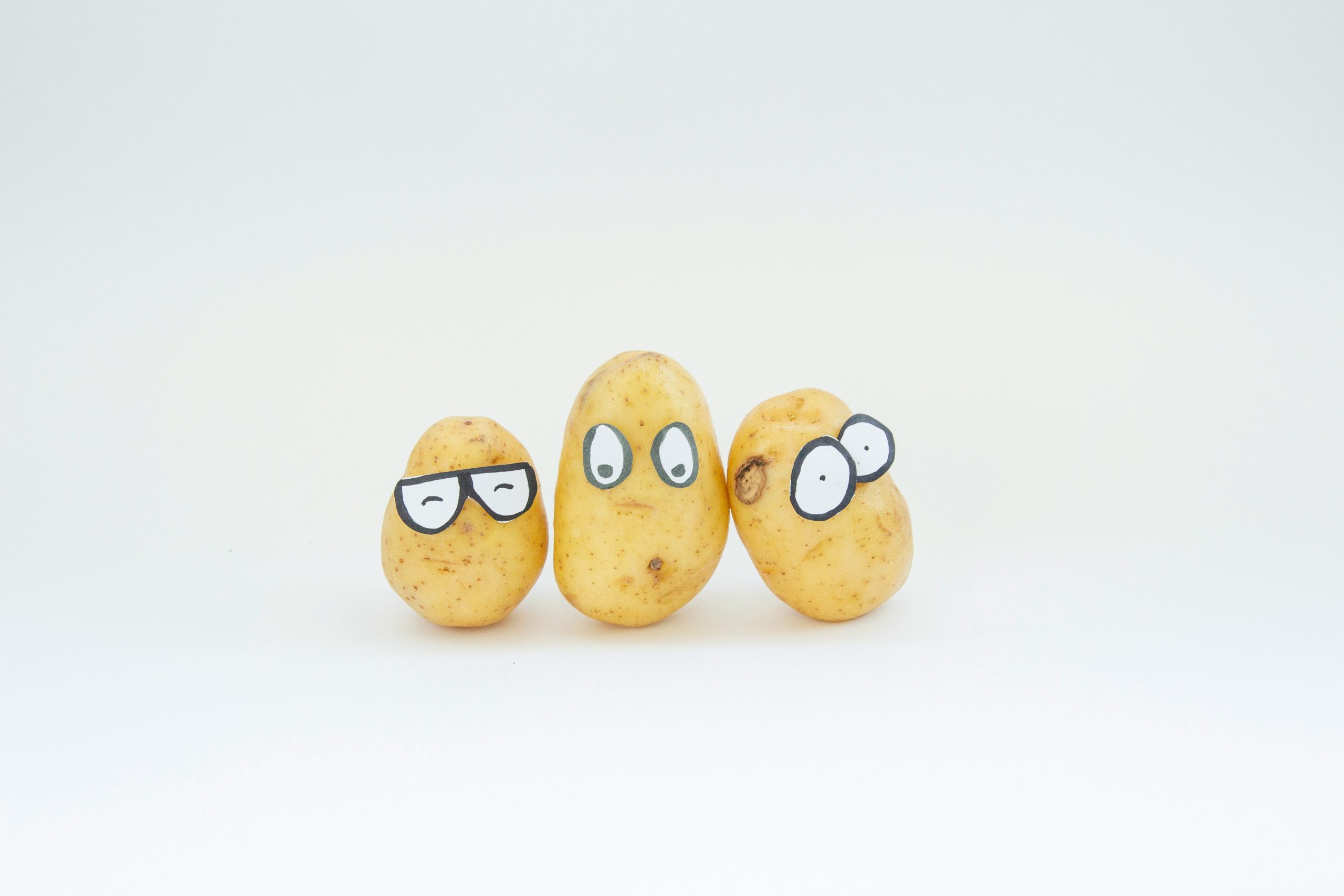
We have Spuddy, the Spud Toss, the Humming Board, Chippy, Sweety, Fruitloop, Pineapple, and a whole potato culture that probably makes perfect sense if you live inside it and looks mildly alarming if you arrive from the outside.
These words matter.
They are not decoration.
They carry memory, humour, affection, continuity and identity. They make the work ours. They turn systems into characters. They make admin slightly less dead.
But AI does not always know what to do with them.
It tries to interpret them too literally, or too generally, or not at all. It wants clean categories. It wants standard terms. It prefers “member-care workflow” to “Spud Toss.”
And that raises an uncomfortable question.
If AI struggles with quirky language, will we slowly stop using quirky language?
Will we flatten our vocabulary to make ourselves more machine-readable?
Will the future reward those who speak in clean, standardised, prompt-friendly phrases?
The jury is out on that one.
But it is worth noticing.
Because language is not only how we communicate. It is how we belong.
If the tool quietly pressures us to abandon the words that make a culture feel alive, then the cost is not merely technical.
It is human.
Of course, I could join the modern trend and go off grid.
No AI.
No subscriptions.
No prompts.
No sixteen-page instructions for a two-minute video.
No Spud Toss automation attempting to eat its own tail.
Just silence, trees, notebooks, and possibly a suspicious goat.
Tempting.
But would that be balance?
I am not sure.
Going off grid may remove one set of pressures, but it also removes one set of possibilities. The question is not whether technology is good or bad. That is too easy. The harder question is how to live with powerful tools without letting them quietly redesign our language, our attention, our patience, our relationships, and our sense of what a useful day looks like.
By this stage, the day had already escaped the boundaries of anything resembling balance.
My wife had her own expectations for the day. Reasonable expectations. After all, I had confidently announced that this little project would only take a couple of hours.
Several hours later, I was still mentally wandering through a maze of prompts, workflows and half-finished ideas.
At the same time, my mother asked me a question.
The same question she had asked the day before.
And the day before that.
She lives with short-term memory loss. For her, it was a new question. For me, it was the third repetition.
Neither of us was wrong.
We were simply living in different realities.
That may be the biggest lesson of all.
The modern world talks endlessly about balance as though it were some achievable state. Get the right app. Create the right system. Build the right routine. Find equilibrium.
I am becoming increasingly sceptical.
Life does not seem to operate that way.
Instead, life appears to consist of competing realities.
A project demanding attention.
A wife demanding presence.
A mother demanding patience.
A colleague 9,000 kilometres away needing Brida to be structured enough not to become another mountain in her day.
A mind demanding understanding.
Each reality is legitimate. Each reality believes it should come first.
The challenge is not balancing them perfectly.
The challenge is surviving the collision without forgetting the people inside it.
What struck me most about the day was how often the accepted wisdom turned out to be backwards.
The automation that was supposed to save time wasted time.
The failed experiment produced success.
The machine designed to reduce thinking demanded more thinking.
The efficient tool created a subscription decision.
The language of culture became a possible obstacle.
The attempt to help someone far away disrupted the people nearby.
The inefficient path generated the most valuable insights.
And the moment I abandoned the original plan was the moment I finally understood the problem.
People sometimes claim that AI will stop us from thinking critically.
My experience suggests the opposite.
Had I not thought critically, I would still be building the wrong system.
Critical thinking was not replaced.
It was required.
The machine did not tell me my assumptions were wrong. The machine gave me enough resistance to discover it for myself.
Perhaps that is where balance really lives.
Not online or offline.
Not human or AI.
Not efficient or slow.
Not in productivity.
Not in perfectly organised calendars.
But in the willingness to stop, look at the evidence, and admit that the path you started on may not be the path you should continue walking.
That takes time.
It takes patience.
Occasionally it takes seven hours.
And apparently, if you want a two-minute video, it may also require sixteen pages of instructions, a twenty-four-hour pause, and a small conversation with your subscription settings.
Welcome to the Paradox Department.
We appear to be hiring.
Payment plans available.
Laundry experience preferred.