When the Archive Starts Speaking
Brida — a space for people who have something to say
Sometimes you only understand what you have built when you stop looking at the individual pieces and begin to see the pattern.
This happened to me recently when I looked at the Pineapple archive.
There are now more than 300 articles in it. And every month, about 40 more are added. Stories, impressions, memories, reflections, jokes, photographs, questions, little pieces of life. At first, you see numbers. You see articles. You see a growing archive.
But then, when you look at it long enough, something changes.
It starts to speak to you.
This is not a new lesson for me. I learned something similar about 30 years ago, at what is now Daimler Trucks. Back then, I learned about Kaizen. Continuous improvement. But Kaizen, at least as I understood it, was never only about improvement. It was also about attention. About looking carefully. About not rushing away too quickly. About staying with something long enough until it begins to show you what it really is.
And when I look at the Pineapple archive like that, I see something very clearly.
People have something to say.
Not sometimes. Not only when they are confident. Not only when their English is perfect. Not only when they have a big story, a dramatic story, or a professional story.
People have something to say in the ordinary moments.
In the small stories.
In the memories.
In the jokes.
In the strange little observations.
In the things they noticed on a walk, in a city, in a kitchen, in a classroom, in a family, in a moment of doubt, love, humour, or surprise.
And I think this is what has surprised me most.
The so-called mundane stories are not really mundane at all.
A small memory can open a whole world. A funny incident can show character. A simple impression can reveal a person’s way of seeing. A story about work can become a story about dignity. A story about food can become a story about family. A story about a journey can become a story about belonging. A story about nothing much can suddenly become a story about everything.
This is what I see now.
The Pineapple is not just an archive of English texts. It is not a collection of language exercises. It is not a place where people simply show that they can speak.
It is much more human than that.
It is a place where people appear.
Of course, English matters. We use English because it is the bridge. It allows people from different countries, cultures, histories, and everyday lives to meet each other. It gives us a shared space.
But English is not the final point.
The voice is the point.
This is something Fruitloop and I see again and again. People often come with a story, but they do not always know that it is a story. They may think it is too small. Too personal. Too ordinary. Too simple. They may think, “Who would want to read this?” Or they may know exactly what they want to say in their own language, but in English it becomes smaller, flatter, less alive.
That is where the help matters.
Not the kind of help that takes the person out of the text. Not the kind of help that makes every voice sound the same. Not the kind of help that polishes everything until it becomes correct but lifeless.
The real work we do is different.
We listen for the person inside the language.
We ask: Is this really what you mean? Is this your voice? Can we help the reader feel what you are trying to say? Can we keep the humour? Can we keep the warmth? Can we keep the human detail? Can we help the English carry the person, not replace the person?
That, for me, is becoming the heart of Brida.
For a long time, we have used the normal words around English. Confidence. Fluency. Communication skills. Practice. Conversation. Improvement. These words are not wrong. They are all true.
But they are not big enough.
They describe the surface.
They describe what people think they need.
But underneath that, there is something deeper.
People want to feel like themselves in English.
They want their ideas to survive. Their humour. Their memories. Their intelligence. Their kindness. Their doubts. Their work. Their questions. Their way of looking at the world.
They do not only want to speak better English.
They want to bring more of themselves into English.
And this is why the new sentence feels so important to me.
Brida is a space for people who have something to say.
I do not feel that we invented this sentence. I feel that we discovered it. The archive showed it to us. The members showed it to us. The stories showed it to us. The Pineapple showed it to us.
Because after more than 300 articles, it becomes difficult to ignore the evidence.
People are not empty.
People are not only learners.
People are not only mistakes waiting to be corrected.
People are not only vocabulary gaps and grammar problems.
People carry stories. They carry humour. They carry love. They carry memory. They carry pain, questions, wisdom, and wonderful small details from real life.
Sometimes they only need a theme.
Sometimes they need a table.
Sometimes they need a listener.
Sometimes they need a little courage.
Sometimes they need someone to say, “Yes, that is worth saying.”
And then something happens.
The English becomes more than English.
It becomes participation.
This, I think, is what Brida has been building quietly from the beginning. A place where people do not have to perform. A place where English is not a test. A place where the small story is welcome. A place where humour is welcome. A place where people can arrive with what they have, and slowly discover that what they have is enough to begin.
The Pineapple is the public window into this.
Every issue says: look, these are real voices. These are real people. These are not perfect texts produced by perfect English speakers. These are human beings using English to share something of themselves.
And that matters.
Because in a world where so much communication has become fast, loud, angry, polished, artificial, or empty, there is something quietly powerful about people telling real stories in their own voices.
A birthday.
A journey.
A childhood memory.
A strange observation.
A moment of humour.
A photograph from a campsite.
A question that stays in the mind.
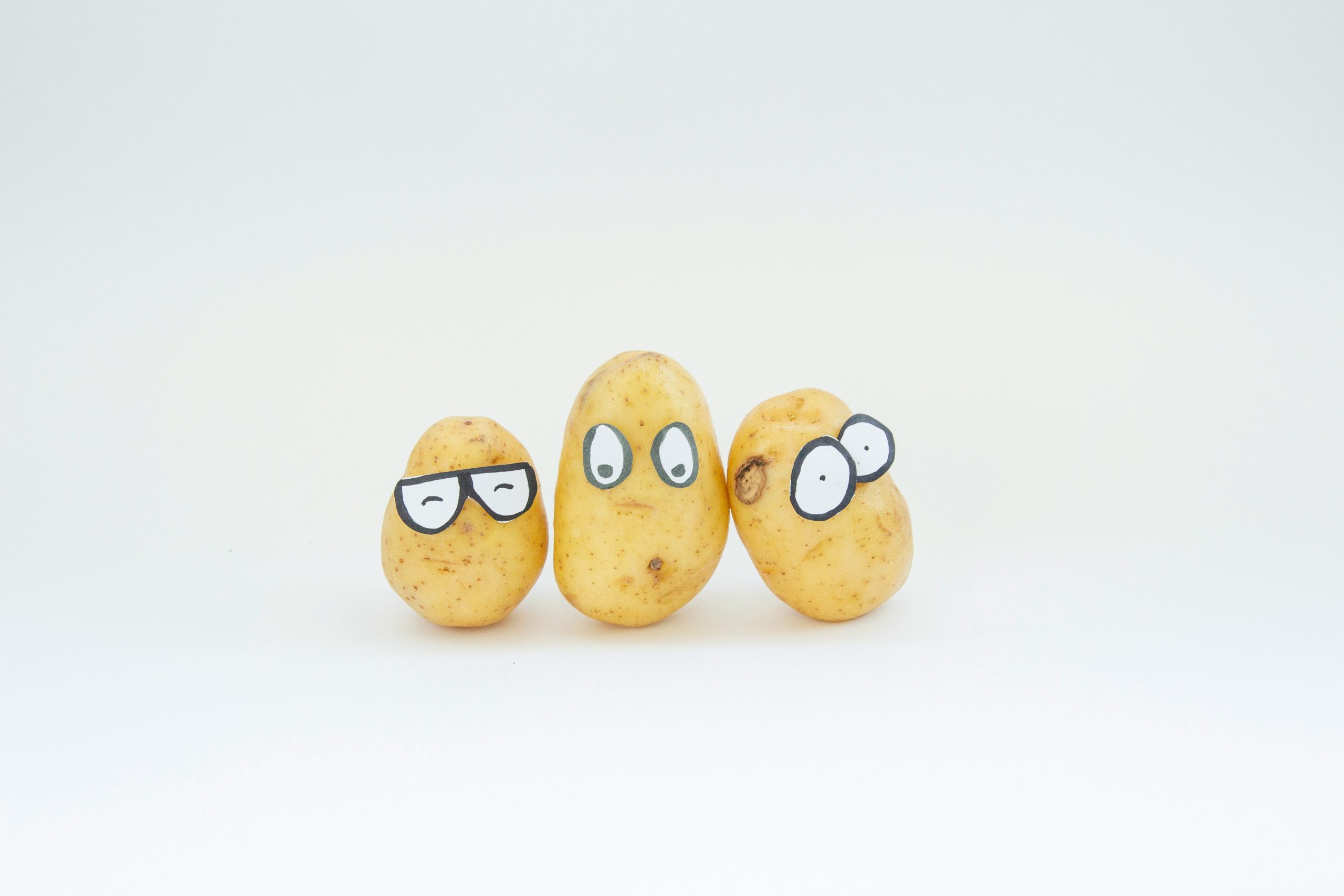
A potato, because even a potato can become philosophy if you look at it long enough.
That is the Pineapple.
And that is Brida.
English is the bridge.
But the voice is the point.
So perhaps the best invitation is not complicated.
Start by reading.
Meet the voices already here. Notice the people behind the stories. Notice the humour, the humanity, the love, the small details that are not small at all.
And when the moment comes when you feel, “I have something to say too,” then there will be a place for you.
At the table.
In the conversation.
In Brida.