
The Best Childhood Was Outside
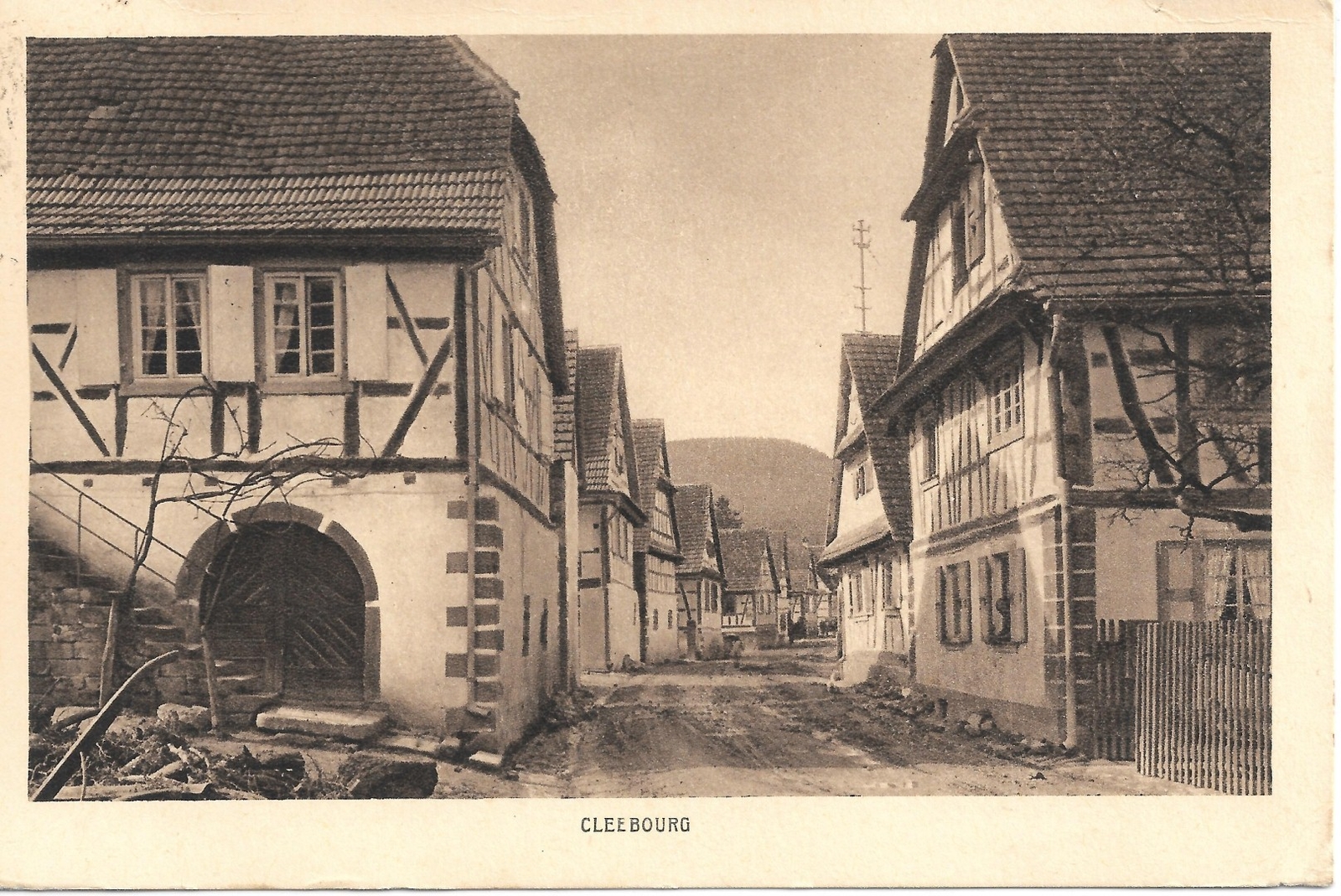
My name is Fabrice. I was born in Wissembourg in 1967, but I grew up here in Cleebourg. For me, Cleebourg is not just a village. It is my village. My childhood friends were here. Some of them are still here. My family was here too — my grandfather, my grandmother, everyone. I went to school here in Cleebourg from the age of six to ten, and after that I went to Wissembourg.
When I spoke with The Mayor, we were sitting in his house, but for me this house is not only his house. I knew it before. It was the Catholic presbytery. When I was young, I made my first communion and my great communion here. The priest was called Richard. We worked for him sometimes. We brought wood into the house for the fire, and sometimes we slept in the rooms on the first floor. On one side there was the room for the girls. On the other side there was the room for the boys.
Now the girls’ room is the living room of The Mayor’s mother, and the boys’ room is the bedroom of him and his wife. We were sitting in his office, and I think that room was maybe the priest’s office. Next door, where he has his salon, there was the kitchen. Outside, near the garage, we used to prepare wood for the fire. Today, some things have changed, but some things are still the same.
When I was five, six, or seven years old, we played cowboys and Indians. Today maybe young people do not really know this game, but for us it was normal. There were three or four boys. One group defended, and one group attacked. Sometimes one boy hid, and the others had to search for him. We also made our own bows. We made them ourselves. We had no serious accidents. Maybe a helmet, maybe a leg, but no great injuries.
We did not really need streets. We had the village, the fields, the forest, the garages, the orchards, and the space around us. At that time, Cleebourg was much quieter. There were fewer cars. Some roads and houses that are here today did not exist yet. Near where Philippe lives now, there were fields and fruit trees. There were also old wooden houses. One old house behind Madeleine’s parents’ house was later taken to the museum in Hatten, because it had been a house used by American soldiers during the Second World War.
Sometimes I was a cowboy. Sometimes I was an Indian. It depended on the day.
And yes, we made mistakes.
Behind the church there was a big field. One summer it was very hot and very dry. I do not know who started it, but somebody made a fire, and then the complete field burned. It was not a wheat field, only a grass field, but the grass was dry, and it burned very quickly.
There was also another tradition. In the night from 30 April to 1 May, we made jokes in the village, especially at houses where girls our age lived. We moved shutters from houses. We brought everything to the village square — shutters, small carts, things from tractors, anything we could move. We also went behind one farm where there was a horse called Rabbit. We climbed onto the roof of the stable and took things away. We even moved rabbit houses and other things into the garden. It was practical jokes. At that time, it was normal.
The Mayor laughed and said we must have been very popular. I think we were not more wild than the other children. In other villages it was the same.
My sister is three years younger than me. We had different groups, but when she was very young, sometimes I brought her with us. Most of the time, though, I was with my group — boys and girls born around 1965, 1966, 1967, 1968. We were always together.
There was television, but not very much. I remember watching Flipper, Lassie, and Laurel and Hardy. But most days, school finished at four o’clock. I went home. It took maybe fifteen minutes. I had coffee and cake, and then I went outside. That was normal. Outside was the real world.
We built wooden houses in nature, on the other side of the stream. We were always outside. Today, I know that some children in Cleebourg still build secret wooden houses. Lukas Heimlich and some other children built one somewhere, but it is top secret. He did not tell The Mayor where it is. So perhaps the tradition continues.
When I was young, my mother did not have to call me all the time. After school, I came home, had my coffee and cake, and then went out again until the evening, maybe seven or eight o’clock. The church bell was important then. My grandmother was the godmother of the Catholic church bell. The church is beautiful inside. The Mayor told me the house was built in 1904, and the church around 1901. Before that, Catholics and Protestants used the same church. This place has a long memory.
We also played a little football, but football was not my cup of tea. Other boys in Cleebourg played a lot. Louis, Mario, many boys played football. The president of the football club was Beringer, or maybe Beringer’s father, for many years — perhaps thirty or forty years. But for me, football was not the most important thing. I preferred the fields, the forest, the bikes, the wooden houses, and the adventure.
In winter, we went tobogganing. But we also had another idea. Sometimes, when we did not want to go to school, we went into the fields and loaded a cart with snow. We brought the snow to the road outside Cleebourg. Then we compacted it, like ice, so that in the morning the school bus maybe could not come. Sometimes it worked. Sometimes it did not.
In the house, we played some board games too. Monopoly with my grandparents, checkers, cards. But most of my childhood was not inside. It was outside.
The Mayor asked me if I was a wild child. I said no. I think we were not wilder than others. Playing cowboys and Indians, taking shutters from houses, blocking the road with snow and ice — that was standard for that time. In other villages it was the same.
But my father was worse.
My father was born in 1940, during the war. After the war, in the 1950s, he and his friends found things — maybe grenades, explosives, I do not know exactly. They put them in a friend’s stable, and one day everything went up. My father only said, “The firefighters came.” That was all. But many years later, I spoke with an old woman, the grandmother of Rebat Fried, and she told me the story was bigger. There was a fire, and everything exploded.
My father also made other jokes. At one house, by Robert and Hedwig, he took one of those wooden grape baskets and put it at an angle against the door. The basket was full of horse manure. The door opened inwards. When the person opened the door, everything came inside. That was not good.
Compared with that, I was calm.
When I was young, I also helped the neighbours. I helped with the grape harvest. I helped in the fields. One neighbour had cows, and we went into the fields to bring hay, straw, clover, beetroot, and other things. We loaded everything and brought it home. The grape harvest was not a problem then. People helped each other. After the work, we ate and drank together. Today there are more rules, more administration, more problems with black work and social security. Before, you helped your neighbour, you had a good lunch, maybe some grapes, and next year you continued.
Germany was not far away from us. We are only about seven kilometres from the border. When I was fourteen, I had a small motorcycle, and we went to Impflingen near Landau. In Rott, there was a woman, Iris, and her father had a restaurant in Impflingen. We went there to eat half a chicken. We were fourteen or fifteen boys on motorcycles. It was not a problem.
The only problem was the police.
In Germany, the motorcycle was supposed to go maybe twenty-five kilometres per hour, and there were more rules. We only had a little paper, an insurance ticket. No number plate. But our motorcycles went sixty or sixty-five kilometres per hour. We crossed the border, showed the card, and went to Impflingen for chicken. There was more liberty then.
When I think about what my childhood taught me, I think first of imagination. We were maybe seven, eight, nine, ten children — boys and girls. Every evening after school, we met near the school, on the street side, where there was once the milk depot. There was a platform in front. We waited there. When everyone was there, we asked, “What shall we do?” Someone had an idea. Maybe we went to the fields between Cleebourg and Rott, where there was a very good cherry tree. Maybe we went to the forest. Maybe we built something. We invented everything ourselves.
It also taught me friendship. Of course, when we became eighteen, life changed. Everybody went their own way. That is life. But the childhood was shared.
When I became a teenager and went to school in Wissembourg, at first I stayed with the boys and girls I knew. But after a few weeks, I met people from other villages — Steinseltz, Riedseltz, Rott, and others. When we had two wheels, we could go everywhere. We went to Rott, to Steinseltz, or they came to Cleebourg. There were boys and girls from three or four villages. It was the time of the first flirts, the first girlfriends, the first small parties.
On Saturday evenings, sometimes someone organised a little party at home in Rott or Cleebourg, with records and music. A small village disco. That was our world.
Cleebourg stayed home, but I also wanted to go out. When I was seventeen, I left school. I worked in Wissembourg for one year. Then I joined the army. I was eighteen. I went to the south of France, near the Pyrenees. It was very different from Alsace.
During my military time, I volunteered to go to Lebanon. I spent six months there. Later, I stayed in the army. In 1988 I went to French Guiana in South America. In 1991, after the first Gulf War, I went to Djibouti. In 2006 and 2007, as a reservist, I spent six months in Ivory Coast.
I liked it. I like going out into the world. But I also like coming home.
Today I am fifty-nine years old. I work as a truck driver in Karlsruhe, in Germany, and I start work at six o’clock in the morning. I am also training to walk one hundred kilometres on 5 and 6 June. When I think about this, I think maybe something from my childhood is still inside me. I was always outside — summer, winter, spring, autumn. I still like movement, effort, discipline, and challenge.
When I see children today, two children sitting next to each other, both looking at their phones, I think: go outside. I am happy that when I was young, we had no internet and no mobile phones. For me, it was the best childhood. We were outside. We used our imagination. We made mistakes. We learned. We were free.
Now I want to improve my English. For me, English is another challenge. I would like to speak better English because I like walking abroad, and maybe in the future I will walk in another country. I also know that with my reservist life, English can be useful. I think I am never too old to learn.
The Mayor told me that his mother saw me arrive and asked, “Who was that man?” He told her, “A new client.” I am fifty-nine, and I am starting again with English.
Maybe that is also a game.
Not a child’s game now, but a serious game. A new challenge. And I like challenges.