
The Strange Logic of Ordinary Life
I suppose playful thinking is not so easy for me. The Mayor said this at the beginning, more or less, and I think he was right. Not because I don’t like playfulness, but because sometimes when someone asks me a funny question, my mind goes to the practical side first. I try to understand the situation, the rules, the consequences. Maybe this is not the best way to be funny, but it is how my brain works.
The first question was already strange. Imagine everyone in the city forgot how to greet each other. What greeting would I invent? I said, “Are you alive?” It came naturally to me. Maybe it sounds too direct, maybe a little dramatic. The Mayor laughed a bit, or maybe he was surprised, and he asked if I would say that to my mother. “Hello mother, are you alive?” Of course, then I understood the problem. It is not a very delicate greeting, especially for an older person. So I changed it. Maybe better to ask, “Are you in a good mood?”
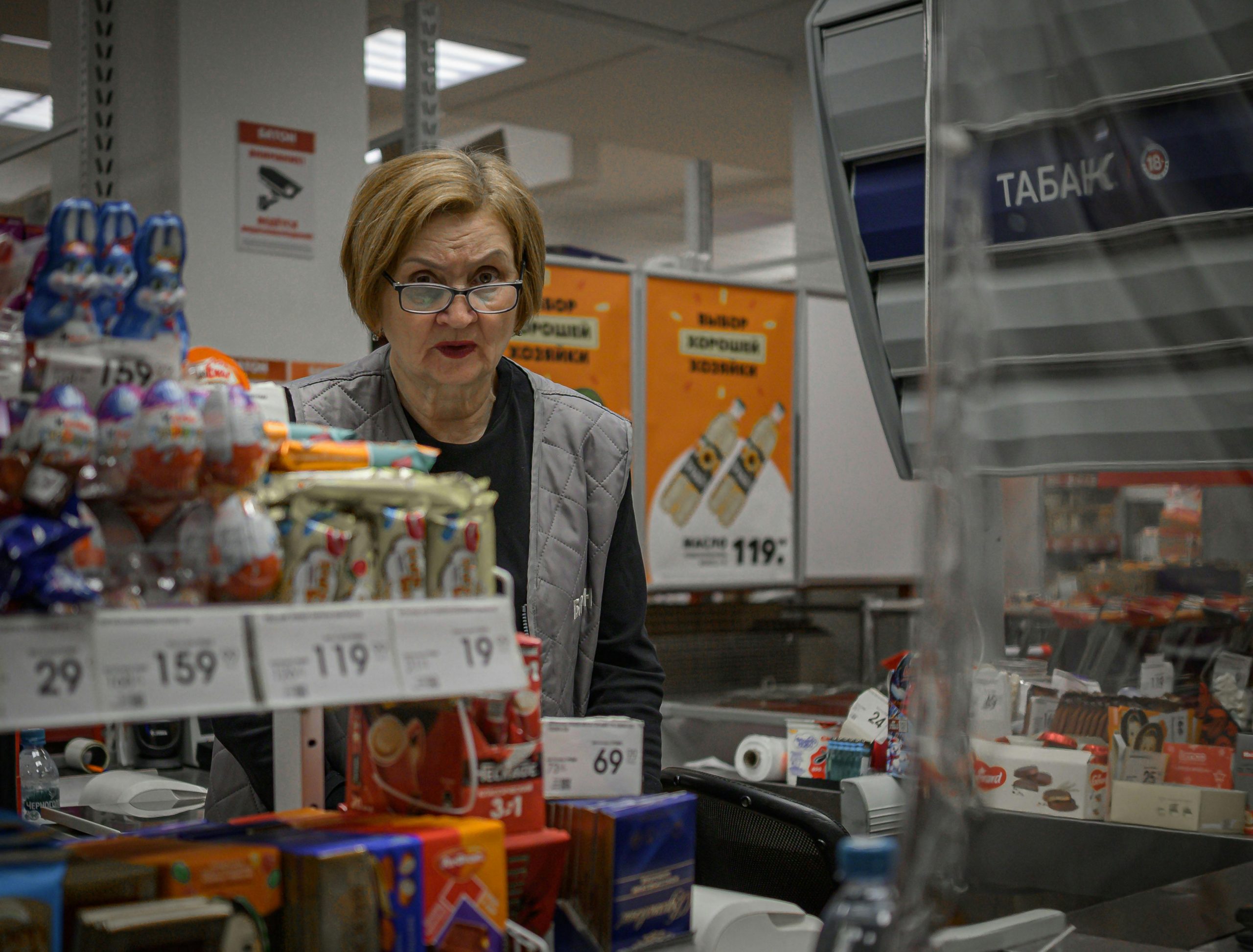
This became more interesting than I expected. If someone says no, then you can respect the person’s time. You don’t have to force conversation. You can ask, “Would you like to stay quiet, or do you want me to try to change your mood?” I think this is not a bad greeting. It gives the other person some choice. But the Mayor imagined me saying this to a cashier in a supermarket on a Monday morning. I could see the scene. A woman tired, maybe badly paid, maybe treated badly by her boss, and I arrive asking, “Are you in a good mood?” Probably she would say no. Maybe my polite answer would not change her life. But maybe it could change a little thing. If her boss was rude and I was polite, perhaps she would feel some contrast. Not a miracle, but something.
This is where I noticed that even in a playful question, I go to the social situation. I think about the person behind the counter. I think about mood, work, tiredness, the small violence of daily life. Maybe this is why humor is not very automatic for me. I don’t know exactly. I can laugh, but first I observe.
Then the Mayor asked what small everyday object I would bring to someone’s home if it had to say something about me. I said my flip-flops. Not as a gift, but to wear inside the house, so I don’t dirty the person’s floor. This is not very poetic, but it is honest. I don’t think I am always so organized, but I believe it is important to not make unnecessary dirt in someone else’s place. Maybe a person can reveal himself by small habits, not by big speeches.
When he asked me to explain adulthood to a child, I had more difficulty. Funny answers are hard for me. I first said that an adult is a child who grew up, which is true but not funny. The Mayor pushed a little. Finally I said that an adult is a child who grew up and now has boring toys, boring parties, maybe a boring life. It is not a good advertisement for adulthood. But perhaps there is some truth. Children have simple toys and serious imagination. Adults have expensive toys and sometimes less imagination. Then we spoke about whether someone can refuse to grow up. I said you don’t have a choice. It is nature. Physically, at least.
But mentally, I think it is more complicated. If a person does not become adult in the mind, maybe he transfers responsibility to others. I thought about someone I know, a man already almost forty, who depends on his parents and on government money. Maybe he has some health problems, yes, but I suspect also that he understood how to avoid responsibility. I don’t know if this is fair to say. Maybe I am too direct. But I see people with more difficulties who still work, still try. So even a playful question about adulthood can arrive in a serious place. This happens with me.
There was also the question about my younger self watching me at the dining table. I think the child Ismar would ask why I don’t drink soft drinks anymore. In Brazil, Coca-Cola or other soft drinks are very common at meals. My adolescent self might ask why I don’t eat barbecue anymore. I changed. For many years I don’t drink soft drinks, because if I have the choice between a Coke and a glass of water, I prefer water. Also I don’t drink while eating, because I think it is not good for digestion. This is the kind of answer I give. Not exciting, but accurate.
The Mayor asked what harmless habit from Brazil I would teach him. I first thought about food, because here people eat a lot of meat, sometimes greasy meat, and I would advise him not to eat too much or his arteries and veins will suffer. This is maybe not the most charming cultural lesson. Then we spoke about greetings, about men and women kissing if they know each other, men shaking hands, people waving if they are not close. It depends on distance and relationship. In Brazil, many things depend on closeness, but also on caution.
He asked about walking and driving here. I said to take care with traffic lights, because some drivers pass even when they should not. Driving in Brazil is possible, of course, but you must pay more attention than maybe in France or England. Some people speed too much. Some streets are not good. Here in Campo Grande, sometimes the streets are like the moon, full of potholes. I know this was supposed to be a light conversation, but Brazil enters the conversation as it is. Brazil is not only music and barbecue. Brazil is also traffic, potholes, buses, and people trying to enter before everyone else.
One question I liked was about bad fashion from youth. The Mayor remembered bell-bottom trousers, wide at the bottom and tight at the waist. I remember them too. I thought they were horrible even at that time. I had some trousers with wider legs, but not so extreme, and not so tight. Now I see this kind of fashion returning. There are trousers like balloons, wide from the waist down. It is becoming difficult to buy a normal trouser. Maybe fashion is a machine that forgets its own mistakes and then repeats them with confidence.
When my kitchen was asked to speak, I imagined it saying, “Oh, Ismar, you are very conventional. You prepare almost the same things most of the time, and in almost the same quantity. Why don’t you change anything?” I would answer that I am hungry at the same time, I like the food I have, and I don’t know how to change and keep the same pleasure of eating. My mother’s kitchen would maybe say I am not very organized, but also not very messy, and that I keep it more or less in a good way. I think “more or less” is a very honest expression for many parts of my life.
The supermarket question was easier. If I were trapped in a supermarket after closing time, I would go first to the fruit and vegetable aisle. Fruits are the food I like most, and they are also the first to rot, so it is logical to eat them first. After that, nuts. Then, if there is a gas stove or some way to cook, chicken or fish. The Mayor imagined that in a big supermarket I could also find a bed and a television, so maybe I would not need to leave so quickly. But after some days there would be trash and smell, because if I cannot take the garbage outside, the place becomes a problem. Again, I know, I made the fantasy practical. But someone has to think about the trash.
There was a gentle question about making friendship with a neighbor using only food. I said I would offer persimmons, the soft kind that my mother and I like. Here we call it by a Portuguese name, and it appears only during some months, roughly from the end of March to July. I would give a pack of three and recommend eating them fast before they rot. This is maybe a strange friendship gesture, but it is sincere. I give something I actually like, something seasonal, something that has its time.
If someone misunderstood my personality and gave me the wrong gift, I said maybe a makeup set for men. Today many men use makeup, shape their eyebrows, and so on. Nothing wrong with that, but it would be very strange for me. Also bell-bottom trousers. If someone gave me makeup and bell-bottom trousers, it would be a complete misunderstanding. I would thank the person and give them to someone else. Not my mother, because she does not use makeup either.
One social rule I would remove for a day is the irregular way people walk on sidewalks. People go left, right, suddenly stop, cross in front of you. I think people could use one side to go and the other to return, like on stairs in the London subway. The Mayor said it would only be for one day. I said people would move better for one day, because it is not possible to change people’s minds permanently. Maybe this is pessimistic, or maybe just experience.
The “National Day of Doing Things Slowly” made me think about buses. Here people often don’t stand in line. They try to enter first. If everyone entered slowly, one by one, it would be better. But I think it is impossible here. I don’t take the bus every day. Sometimes I leave my car at home and take the bus to observe the city and live a little like most people live. When I drive, I cannot look around so much. If there is a mess at the bus door, I wait. I don’t push. Sometimes this means I may have to wait for the next bus. If I had to take the bus every day, maybe I would change my behavior. I don’t know. Daily necessity changes people.
When the Mayor asked me to explain my sense of humor to someone from another planet, I struggled. I said humor is good for a pleasant daily life, but it is not good to humiliate someone, or to use racist jokes, or pornographic jokes. I know this sounds more like a moral rule than an example of humor. But for me it matters. Fun should not be built on making someone smaller. Maybe I did not answer well. Sometimes I don’t understand the question quickly enough. But I think my humor, when it appears, is more in observing absurdity than in attacking people.
At the end, there was a picnic. If I could bring only one item, I would bring water. I cannot forget water. I hoped my mother would bring cheese sandwiches, and I think she would not forget. Then came the idea of giving someone an unserious title. I thought of “king or queen of junk food,” because here many people eat snacks, Cheetos and similar things, and French fries all the time. I told the Mayor about an acquaintance who often sends photos of food, and many times she is eating fries. I tell her it is not good for her health, and she says it is nice.
Maybe that is the whole conversation in a small picture. I try to warn people about arteries, traffic, trash, digestion, and sidewalk order. The Mayor tries to pull me toward playfulness, and sometimes I go there, but by my own road. I don’t become a clown. I remain myself, maybe too serious, maybe too practical, but not without humor. I suppose there is a lighter side in this too. Not laughing loudly all the time, but seeing the strange logic of ordinary life: a greeting that asks about mood, a kitchen that complains, a supermarket that becomes a temporary home, and a man in Campo Grande who would rather bring water to a picnic than forget the most necessary thing.