
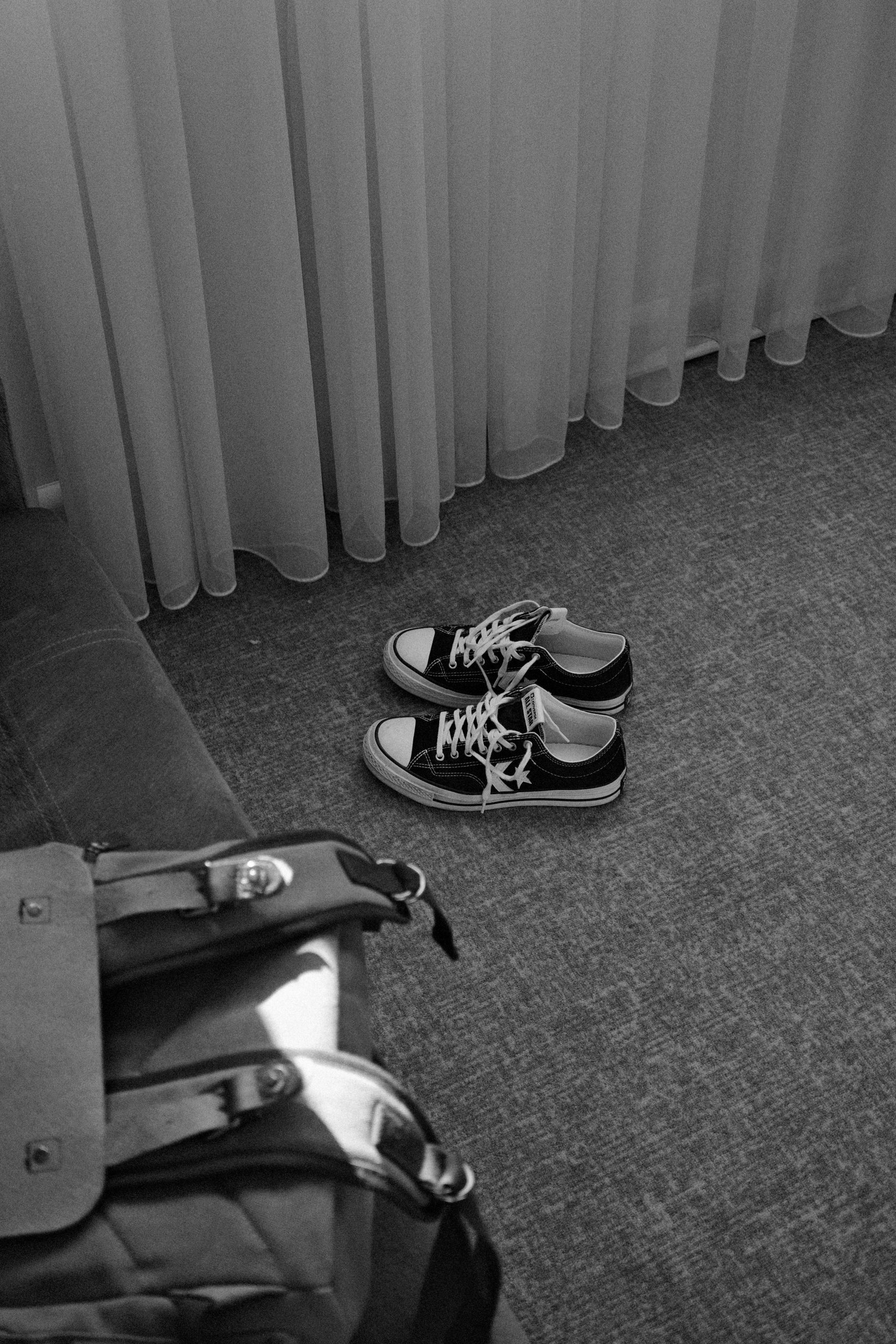
Shoes in the Hallway, Soup on the Stove, and Other Small Games of Daily Life
Yesterday, Janita had rain all day. The real kind of rain. The kind that settles in for hours and makes the whole world feel grey and wet and slightly tired. Her father had measured fifty millimetres in the garden and she repeated the number twice, laughing a little at how serious it sounded. By morning the rain had stopped, but winter had arrived properly. Cold wind. Thirteen degrees. Streets still shining from water.
Meanwhile, Sylvie sat in completely different weather.
Warm again. Twenty-six degrees one day, cooler the next, then warm again by the weekend. Up and down all the time lately. Through the window the light still looked soft and comfortable, the kind of weather that makes people open doors instead of closing them.
Still, despite the difference between sunshine and rain, the mood between the two women settled into the same cosy rhythm almost immediately. Coffee. Small complaints. Family news first before anything else.
Sylvie’s daughter had just finished important school interviews. The important school. The one she truly wanted. There had been interviews with teachers and directors and tests in French, English and mathematics. Afterwards her daughter admitted quietly that the French test had not gone very well.
Now came the difficult part — waiting.
Waiting until July. Waiting for results. Waiting while life continues normally around you even though your mind keeps returning to the same questions.
So naturally, Sylvie cleaned.
Not because cleaning relaxed her exactly. She was honest enough to admit that. But she liked the feeling afterwards. The order. The quiet. The satisfaction when everything was finally back where it belonged.
Although in her house, things rarely stayed there long.
Especially shoes.
Shoes in the winter garden. Shoes by the entrance. Shoes in the garage. Shoes abandoned in every possible place except the cupboard where they should actually live. Every evening she repeated herself again and again, already knowing nobody was truly listening anymore.
Janita laughed because she understood immediately.
Families everywhere seemed to live inside the same chaos.
Sylvie called herself “a little maniac” while describing it, though she smiled when she said it. She liked neatness. She liked putting groceries away properly after returning from the supermarket. Sometimes she even rearranged ingredients inside cupboards for no real reason except that it looked better afterwards.
There was comfort in small order.
Cooking felt different though. Cooking invited improvisation.
She spoke about a friend who called it “IKEA cooking” — opening the freezer, finding random ingredients and somehow turning them into dinner. A little meat. Forgotten vegetables. Rice. Strange sauces nobody remembered buying. Somehow it worked.
Most of the time.
Other times, not at all.
Kitchen disasters arrived quietly and regularly in both their lives.
Sylvie still remembered her oven breaking while guests sat waiting for potato gratin with cheese. Everything already inside cooking slowly for hours and then suddenly — nothing. Dead. Cold. Finished. She rushed the dishes to her sister-in-law’s house at the last minute trying to save dinner before the evening collapsed completely.
Then there was the calf meat she preferred medium, still soft and slightly pink inside, cooked too long until nobody wanted to eat it anymore.
Janita shared her own disasters too. Expensive meat ruined with too much salt during the early years of marriage. Standing in the kitchen furious because it had cost money and effort and now nobody could even enjoy it.
At least later these things become funny.
Not immediately. But later.
Even Sylvie’s daughter recently joined the tradition with a failed lemon cake. Usually she baked brownies because chocolate was safe territory, but that day there had not been enough chocolate in the house. So she tried something different.
The result was… disappointing.
Even the daughter who baked it barely touched it afterwards.
The conversation drifted the way warm conversations always do — slowly, naturally, without anybody trying to direct it too much.
They spoke about football matches nobody cared enough about to actually watch seriously, except there would be pizza and aperitifs involved, which changed everything slightly.
About loud summer music beside swimming pools.
About husbands who preferred rugby and cricket.
About neighbours forced politely to tolerate parties.
And then suddenly they were talking about childhood.
Both women had grown up partly on farms. Fields. Tractors. Animals. Cousins everywhere. Long afternoons spent outside inventing trouble simply because there was nothing else to do.
Sylvie remembered making messes with cousins close to her age while the older cousins became irritated with them constantly. At the time it felt hilarious. Years later, when they met again, those were still the stories everybody laughed about first.
Janita understood immediately because her childhood sounded much the same.
Back then children stayed outside until dark because outside was where life happened.
No smartphones. No Netflix. No endless scrolling through other people’s lives.
Just bicycles. Cricket games. Mud. Noise. Animals. Fields.
Sylvie noticed how often her daughters spoke about missing something they had never even experienced. They imagined that freedom — staying outside until evening without constant messages or screens or worry. Modern teenagers disappeared into bedrooms now instead.
Adults too, perhaps.
Too stressed. Too busy. Always saying there was no time.
That thought stayed quietly between them for a moment.
Because both women understood it.
Sylvie admitted that even cleaning sometimes stressed her more than it helped. The moment she started cleaning one thing, she immediately noticed five more things needing attention.
Gardening was different.
Gardening slowed her mind down.
Soon they would plant vegetables again, and she already looked forward to watching them grow slowly through winter into something useful and alive. That felt satisfying in a deeper way than cleaning ever could.
Cleaning simply became dirty again tomorrow.
Gardening rewarded patience.
As evening approached, the conversation softened even more.
Candles. Chimneys. Blankets on sofas.
Janita described sitting beside the fire on cold evenings, sometimes not even bothering to watch television because the warmth itself was enough entertainment. Sylvie understood immediately. There was something calming about watching fire quietly move while the room slowly warmed around you.
At one point Janita’s cat wandered into the winter garden looking for attention, suddenly affectionate because she wanted food or warmth or both.
Cats rarely pretend otherwise.
And somehow that small interruption suited the entire conversation perfectly.
Nothing dramatic happened between the two women that afternoon. No grand revelations. No extraordinary stories.
Just weather and daughters and gardens and cakes and fireplaces and flea markets and messy hallways full of shoes.
But perhaps that was exactly why the conversation felt so warm afterwards.
Because ordinary life, when people speak honestly about it, is rarely ordinary at all.