
The Problem With More Time
In Brida, Fruitloop and I run a highly automated system.
Our standard advertising campaign is set up weeks in advance. Our routine processes are linked to the various tools we use. The Fruitbowl hums away in the background. Jaffelpuff does what Jaffelpuff does. Pineapples and Spuds take on certain invisible tasks. Most of the time, by the time something needs doing, something else has already poked us, reminded us, prepared us, or quietly cleared the path.
This is, of course, very modern.
It is also slightly ridiculous.
Last week, to avoid having my 89-year-old mother drive 200 km, I informed her — gently, lovingly, and with absolutely no room for negotiation — that she had no choice in the matter. I would prepare lunch. I would drive her to her afternoon rendez-vous. While she was doing her thing, I would install myself somewhere and unwind.
And that is what happened.
I sat in the garden of the place where she was doing her thing, stared at the greenery, switched off, and somehow whipped up three cartoons on my phone.
Because technology allows me to do that now.
There was a time, not all that long ago in historical terms, when creating something visual required sitting at a desk, opening proper software, knowing what one was doing, and possibly being a trained graphic designer.
Fruitloop is a trained graphic designer.
Her work was prominently displayed about a year ago when, after rebuilding the town, she collected all her paint pots and started splashing colour all over the place. It was a marvellous phase. Brida looked as if someone had opened the windows, thrown out the grey, and given the place permission to breathe.
Then winter arrived in the northern hemisphere.
And my thinking took over.
Ever since then, I have been quietly changing Brida.
Not dramatically. Not with a marching band and a mayoral decree. More like someone walking through the town at night, adjusting lamps, moving benches, changing signs, opening little alleyways, adding secret doors, and then pretending nothing happened.
Every time I think I am done, the results show me a slightly different picture than the one I had anticipated.
The cartoons are one such development.
And here is the strange thing.
In our spud list there is now a point called: Fruitloop’s cartoon order.
Think about that for a moment.
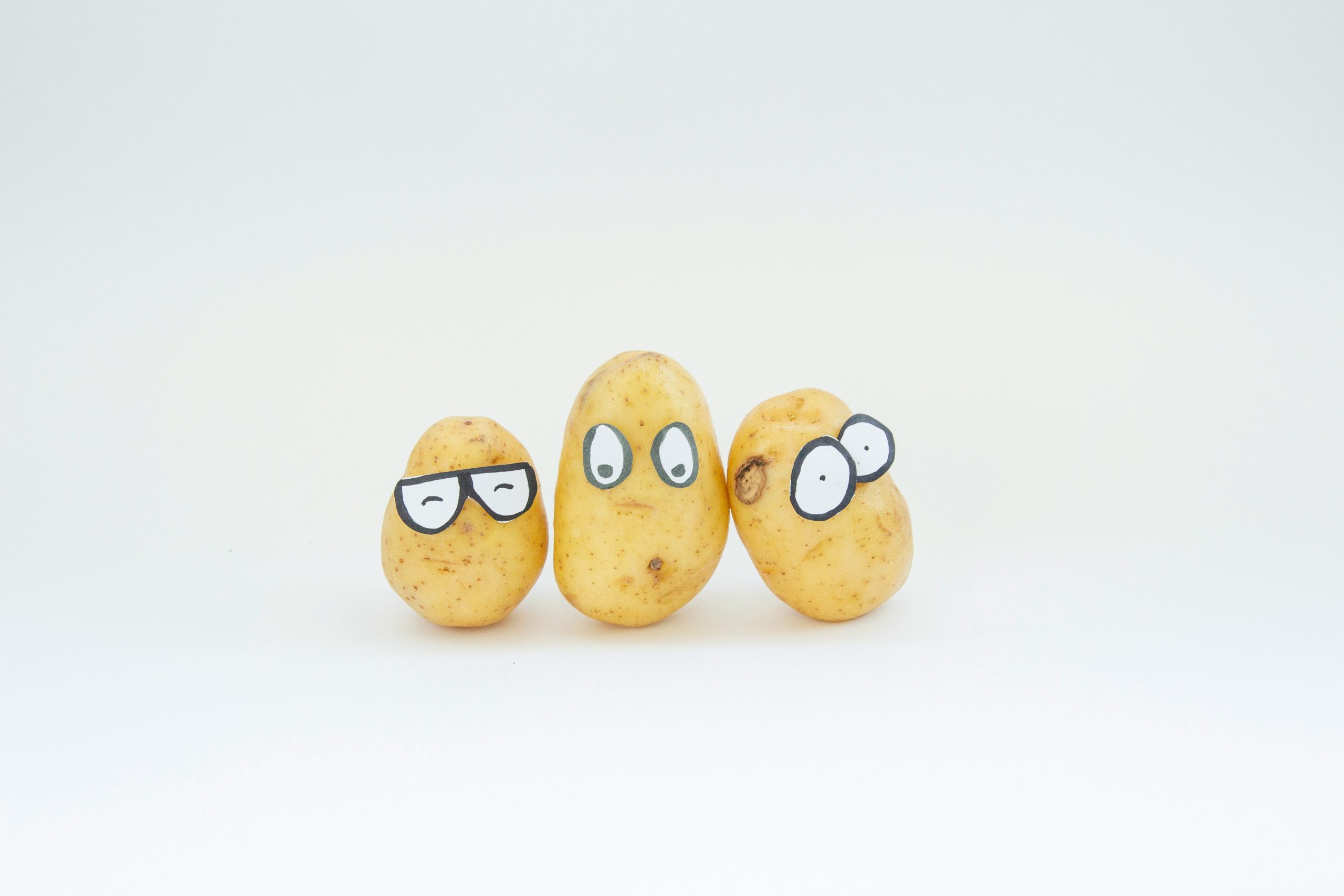
The trained graphic designer sends the Mayor a cartoon request because the Mayor has tweaked the Fruitbowl in such a way that the cartoon order can be completed in a short time.
This is not normal.
But then again, normal left Brida some time ago, probably muttering something about needing a quieter place to live.
I never really understood social media marketing.
I understood people. I understood rooms. I understood conversations. I understood what happens when someone sits opposite you and slowly, almost accidentally, becomes more themselves in another language. I understood books. I understood training. I understood getting people to talk, laugh, argue, think, and occasionally surprise themselves.
But social media marketing?
For a long time, it looked like a carnival run by people shouting into tiny rectangles.
Then I started playing with the Fruitbowl.
And eventually, the Fruitbowl started telling me where to go, what to do, what to test, what to repeat, what to stop doing, and what to quietly ignore. My grand plans of going out to greet and shake the hands of humans have, for the moment, been replaced by me sitting in the office, devising campaigns, adjusting little mechanisms, watching the numbers, and trying to understand which way the wind is blowing.
The strange thing is: it is working.
Slowly. Unevenly. With the usual collection of errors, corrections, face-palms, and “ah, now I see it” moments.
But it is moving in the right direction.
And it is cheaper.
When I started this training lark, I used books, people.
Books.
People.
Thirty-two years later, I am learning the ropes of internet marketing, creating cartoons, building campaigns, testing systems, making tons of errors along the way, and getting the feeling — cautiously, suspiciously, but unmistakably — that we are moving forward.
There is a price, of course.
There is always a price.
Fruitloop now has three jobs: facilitating, being the CEO of a small family company in South Africa, and maybe still throwing out the occasional design when Brida allows her to remember that she is, in fact, a graphic designer.
Yours truly is facilitating less, delegating more to Fruitloop, and spending more time on strategy, sales and marketing, staring into the crystal ball and trying to make sense of the future.
The crystal ball, I should add, is not always cooperative.
Sometimes it shows me a path.
Sometimes it shows me fog.
Sometimes it appears to be showing me my own reflection, looking slightly tired and wondering why I opened this thing in the first place.
Still, the system works.
Even the spud list, which is divided into daily tasks, is not as heavy as it looks. Most of the things on it are quickly done. They are reminders, really. Little nudges. Tiny domestic spirits tapping the window and saying: remember this, check that, send this, prepare that, keep Brida humming.
And that is what they do.
They keep Brida humming.
Which creates a new problem.
Because when things hum, when the background work is quietly absorbed by tools and systems and Pineapples and Spuds and whatever else we have trained to carry buckets behind the scenes, something unexpected happens.
You get more time.
Fruitloop has more time.
I have more time.
And this is where things become interesting, because there is a difference in how we use it.
If you read Fruitloop’s reflections, they are often about running and organising her family, with all the twists and turns that go with it. The logistics. The people. The emotional weather. The practical storms. The small victories. The unexpected interruptions. The deep, serious, ordinary work of keeping a family moving without losing your mind or your sense of humour.
She has more time to invest in that part of her life because the thing that takes the most time in Brida is also arguably the most important thing in Brida: spending time talking with community members.
The rest of what we do runs silently in the background.
My world is slightly more chaotic.
Less structured.
More prone to sudden explosions of thought.
I can’t switch off properly.
This weekend I had resolved not to do any work. A noble resolution. A clean resolution. A mature resolution. The sort of resolution one makes with a straight face while secretly knowing that ideas do not respect weekends.
On Saturday, an idea arrived.
It looked harmless enough at first.
Just a little idea.
A small thing.
The kind of thing one could examine for a few minutes, perhaps make a note of, and then return to one’s peaceful non-working weekend.
Nine hours later, spread out over the necessary interruptions such as shopping and cooking, the idea had unfolded, expanded, changed shape, been tested, prodded, adjusted, and made itself very much at home.
My wife, being currently in England, could not exert her influence.
This is unfortunate, because she is one of the few people who can look at me and communicate, without words, that I am in danger of disappearing into my own machinery.
Left unsupervised, I disappear quite efficiently.
And that is the strange place I find myself in now.
Brida has become more automated. The Fruitbowl is cleverer. Jaffelpuff is useful. The Pineapples and Spuds are doing their invisible jobs. Fruitloop and I are no longer carrying the same weight in the same way.
The work has shifted.
The roles have shifted.
The town has shifted.
But inside me, something older has not quite caught up.
I still feel guilty if I am not dedicating more time to Brida.
Even when Brida is fine.
Even when the systems are working.
Even when the daily list is mostly a set of quick reminders.
Even when the whole point of building this strange little machine was to create more space for life, conversation, creativity, rest, family, and play.
And there it is.
Play.
That word again.
This month, we are talking about play, and I find myself in the uncomfortable position of needing to listen to my own material.
I should be gamifying my household chores.
I should be playing.
I should be adding playful elements into the routines, the ordinary bits, the kitchen, the shopping, the cooking, the little domestic loops that keep a life from collapsing into socks, crumbs, and unpaid attention.
I should not treat every free pocket of time as a vacancy to be filled by Brida.
The machines are humming.
The town has been rebuilt.
The paint has dried in some places and is still being thrown around in others.
Fruitloop is talking to people, organising a family, and occasionally sending the Mayor cartoon orders.
The Mayor is staring at the crystal ball, trying to understand campaigns, cartoons, marketing, and the future, while also pretending that Saturday ideas are not work if they arrive wearing playful shoes.
Maybe this is the next frontier.
Not another automation.
Not another campaign.
Not another tweak to the Fruitbowl.
Maybe the next experiment is much smaller and much harder.
To let the system do what we built it to do.
To notice the time it gives back.
To stop feeling guilty when Brida hums without me pushing every wheel.
And to remember that if we have built a town where people can play with language, meaning, confidence, identity, and belonging, then perhaps the Mayor should occasionally be allowed to play with the dishes.