
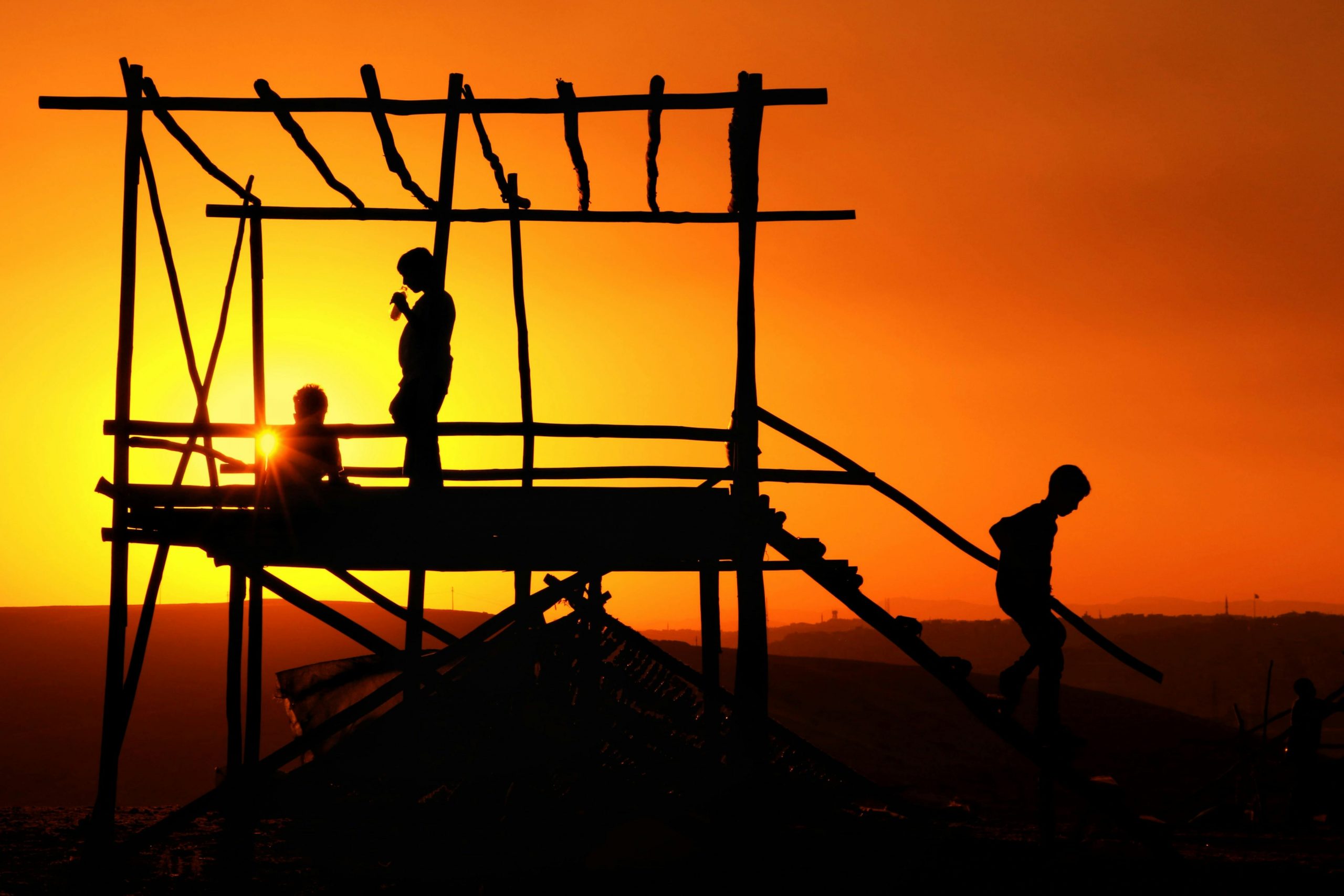
Before Sunset, Everything Was Possible
Ismar: I Think We Had More Interesting Childhoods
When The Mayor asked about the games we loved to play as children, I did not think first about something very special. I thought about soccer.
Maybe this is normal in Brazil. Maybe not only in Brazil. The first memory is not always the most important one, but the one that appears first. For me it was soccer, marbles, hide-and-seek, and that game where one child runs behind another until he touches him. The Mayor called it tag. Yes, tag. We had that. Later, when I was a little bigger, I played chess and dominoes, also.
At that time, soccer was the most interesting for me. Today, if I have to choose, soccer would not be on the top of the list. This is one of the strange things about childhood. What is very important for us at ten or eleven becomes something ordinary later. But in that time, the ball had power.
In my case, sometimes the ball had even more power because I was the owner of the ball. This changed everything. If I owned the ball, I was the first to choose my team. If I was not the owner of the ball, maybe I was one of the last ones chosen, because I was not a very good football player. Ritesh said something very true: the person who holds the bat or the ball plays first. There is no written rule, but it is stronger than many written rules.
The Mayor asked if, as a child, I jumped into games or first analysed the rules, the people, and the risks. I suppose when we are children, we do not analyse much. Someone invites us, and we take part. Maybe the adult remembers himself as more complicated than he was. As a child, I think I was more direct. If there was a game, I played it. If there was no game, I would go home.
School in Brazil at that time was only four hours a day. Sometimes I studied from seven to eleven in the morning. Sometimes from one to five in the afternoon. Later, in high school, I studied at night, because in Brazil many poor people worked during the day and studied at night. I don’t know if this is normal in other countries. The Mayor said it was not normal in his country. For me, it was just part of the system.
Most of the time I lived near school. Once maybe I had to walk one kilometre. But I usually went straight home. I was never a person very connected to groups. Maybe only in adolescence, from thirteen to fifteen, for two or three years. Except this period, I was almost alone. I don’t say this as a tragedy. It was just like this.
When Ritesh described his school in India, it was very different. His primary school was in his village, only about five hundred metres from home. He went from nine in the morning to four in the afternoon. He even went early, waiting for the teacher to come and open the one room. At lunch he went home and came back. Sometimes the teacher sent children to bring other children who were crying and refusing to come to school. I imagined this scene: children pulling other children to school. It is funny, but also serious. In Brazil, at least in my memory, I did not hear much about children not going to school. School was obligatory, maybe until fourteen in my time, now more. We had around forty students in one class.
Ritesh spoke about Kabaddi. I did not know this game. He explained that there are two teams, and one person goes to the other side, repeating “kabaddi, kabaddi,” without breaking the rhythm or taking breath, and he must touch someone and return before being caught. There was also a version in his area with a prisoner in a box and others trying to free him. It sounded physical, but also full of rules invented by children. He spoke also about cricket, but I confess I understood cricket as a variation of baseball. The Mayor said this was only very loosely true. Ritesh tried to explain in less than sixty seconds: two batsmen, one bowler, fielders, a boundary, maximum six. I understood some pieces, not the whole thing.
Cricket seems to me a very long game. The Mayor said one form can last three to five days. Ritesh explained that now there is a shorter version, twenty overs, six balls in one over, and that in India many millions of people watch IPL in the evening. These numbers were difficult for me. In Brazil we have football numbers, but India numbers are another kind of reality.
Some games were more universal. The Mayor noticed this. A child in Brazil and a child in India, without knowing each other, may invent almost the same game. I remembered a game only for boys, where one boy put out his hands or fingers and the other tried to hit them very hard. If he missed, the turn changed. It was a terrible game, painful, but we played. Ritesh knew this immediately. He described the same thing. It seems children everywhere create small tests of courage and pain.
I did not remember inventing games with sticks or stones. Maybe we did, but I don’t remember. Ritesh remembered many things. Bicycle tyres rolled with wooden sticks. Metal rings rolled along narrow village paths. Homemade wooden bats. Mud bricks. Matchbox labels torn off and used in small collecting games. For him, many things became toys because there were not many toys. For me, it was a little different. My family was not rich, but I had enough toys: trucks, military uniform, and, yes, a gun.
When I said gun, Ritesh thought I meant a plastic gun. But I meant a real one. When I was nine, my father let me use a revolver, maybe a .38. When I was ten, I received something like a rifle. I still have a scar on my thigh because it was difficult to close the gun, and I pressed it against my leg and hurt myself. I know this sounds strange to other people. The Mayor said I may be the only person he knows who owned a gun as a child. But on the farm, at that time, this existed.
School uniforms also existed. I wore dark blue trousers and a white shirt until the end of school. Today the government provides uniforms for public school students, but in my time my parents had to buy them. Of course the uniform did not stay clean. We ran a lot. My shirt became sweaty. Once I came home very dirty because a bigger and stronger boy threw me on the ground in the street, where there was asphalt and reddish sand. He was aggressive and fought with almost everyone. After that, we had three days away from school, like a punishment.
I was not usually a child who caused problems to my parents. But once I stayed playing soccer until six in the evening, and my mother and sister went looking for me. My mother reprehended me a lot that day. I remember this because when I played soccer, I lost the sense of time.
There were duties too. On the farm we had a wood stove, and I had to clean it every day when I was eight or nine. Later, in the city, I had to keep the front and back yard free of weeds. I also had to wash my socks and underwear when I was thirteen or fourteen. It was not dramatic. It was just what I had to do.
When The Mayor asked what game I would teach a child from India, I chose a game that maybe Brazilians do not play so much anymore. We can call it burning. There are two squares, maybe five metres by three or four metres. Each team has three, four, or five people. You throw a soccer ball at the other team. If the ball hits someone and he does not catch it, he is out. You continue until you eliminate the other team. It is simple, but interesting. Maybe good for someone who wants to become a goalkeeper, because you must catch the ball.
At the end, The Mayor asked if I miss those days. I said that although we had other kinds of difficulties, I suppose childhood in my time was more interesting than today. In general, children now play video games or surf the internet. I think we had a more interesting and healthier childhood.
Maybe this is not completely fair. Every generation says something like this. But I still think there was something good in running, sweating, losing the time, being dirty, being angry because the team lost, accepting it anyway, and going home before someone came looking for you.
I don’t know exactly if it was better. But it was real. And maybe that is what I miss.
Ritesh: Before Sunset, Everything Was Possible
When The Mayor asked us about childhood games, I first thought of Kabaddi.
For us, in school, especially primary school, Kabaddi was the game. I don’t know if everyone outside India knows it, so I will explain it in a simple way. There are two teams. One person goes to the other side and keeps saying “kabaddi, kabaddi,” without breaking the rhythm. He has to touch someone and come back to his own side before they catch him. It is not only strength. One side is physical, yes. Other side is breath, timing, team coordination, and also some courage.
In our area we had another version also. There was a prisoner kind of person inside a marked box, and the other team had to stop him from coming back home. One person from his team would enter, keep saying “kabaddi,” and try to touch people so that the prisoner could come out. It was not official Kabaddi, but it was our version. In childhood, this happens. You have the official rule somewhere, but on the ground you make your own constitution.
Ismar spoke first about soccer, marbles, tag, hide and seek, chess, and dominoes. I liked that because it showed that some games are very far geographically but very near in childhood. A Brazilian child and an Indian child may never meet, but still they run, hide, chase, argue, and make rules almost in the same way.
I also played marbles, but I was not good at all. And my uncle was very strict. Whenever he saw me playing marbles, he would send me back. I was afraid of him. So Kabaddi was the official safe thing in primary school. Later, in middle school, cricket came. We started forming teams, bunking classes sometimes, and going to play. I was not good at bowling or batting. Or I can say I was thinking I was good, but people were not giving me a chance. They used to say, “You field,” or “You bat seventh down, eighth down.” Sometimes I was not even a proper wicketkeeper, more like a sleeper.
Still, cricket was everywhere. The Mayor asked me to explain cricket to Ismar in less than sixty seconds. This is almost impossible. I said there are fielders, one person bowls, two batsmen stand opposite, the bowler throws the ball, the batters try to score, and if the ball is caught without dropping, the batter is out. Maximum score on one ball is six. I don’t think my explanation was good. Ismar understood it as a variation of baseball. In a very loose sense, The Mayor said, yes, but really they are very different.
Then I explained how cricket changed. Earlier test cricket took five days. One-day cricket was fifty overs. Now twenty-over cricket is very popular. One over has six balls. IPL is going on, and in India so many people watch it every evening. I tried to explain crores and millions also. Indian numbers are another game by themselves.
But the real cricket of childhood was not stadium cricket. It was gali cricket, street cricket. Officially you need eleven players on each side. But what if you have only four or five people? Then you create rules. In our village, we made a boundary ourselves. If you missed three balls continuously, you were out. If the ball bounced once and someone caught it with one hand, you were out. If there were not enough fielders, you adjusted. Now people call it gali cricket, and even advertisements show big players playing with children where children say, “This is not your rule, this is our rule.” I like that. It means something we did out of necessity became a culture.
My primary school was in my village, about five hundred metres from home, on the main road corner. There was one room only then and open land on both sides. School was from nine to four. We went early, maybe fifteen or thirty minutes before, and waited for the teacher to come and open the lock. At lunch we went home and came back. In the evening, our teacher, who was from our village, used to walk back with us. She wanted to make sure we reached home. Sometimes we sneaked out to play.
My mother made my school bag herself, stitching it at home. I wrote on a slate with chalk. Earlier the slate was like a black mud or earthen board. Later we got cardboard slates with plastic corners. Even that became a toy. We would throw it and see who could throw highest. Children don’t need many things. They need time, other children, and some object that adults think is useless.
In primary school, there were maybe one hundred twenty children in the whole school. Sometimes the teacher sent us to someone’s house to bring a child who was crying and refusing to come. We pulled first-standard or second-standard children to school. Today maybe it sounds funny or harsh. At that time it was normal.
After fifth grade I left my village for middle school and high school. Middle school was around one kilometre from home, high school around one and a half. In middle school we still came home for lunch. In high school we carried tiffin boxes. Then tuition started: morning tuition, evening tuition. From middle school to the second year of college, life became school, study, tuition, and scoring marks. So when I remember real games, most of them are from primary school.
We had other games too. There was one where five or six flat items were stacked on each other. One person threw something to break the stack, and others had to rebuild it while someone tried to hit them. We called it PTO. There was also the running-in-a-circle game, where one person touched you and you ran to touch someone else. It was not about achieving anything. It was just fun.
We rolled bicycle tyres with wooden sticks. We rolled metal rings with a holder. The game was to see who could roll longest, sometimes on narrow village paths. I wanted to play those games very much, but I did not always get the chance because I did not get a tyre or ring at home. Some children asked their fathers to go to a builder and make a round metal ring. For us, this was excitement.
We made bats at home from wood. Younger children collected money to buy a bat from a shop, but many of us made it ourselves. We collected mud and made small bricks and played selling things to each other. We took matchboxes, tore off the printed sides, collected them, and played games where if your picture matched mine, everything became yours. There were not many plastic toys. Maybe I had five or six toys in my childhood. Sometimes a small car, sometimes a truck, sometimes a plastic gun from the fair. When Ismar said gun, I thought he meant this kind of plastic gun with small gunpowder caps that only made sound. But he meant a real gun. That surprised me.
The Mayor asked about uniforms. In primary school, we wore our own clothes. Later the government gave money for school dress. In middle school, a uniform became mandatory: sky blue shirt and navy blue pants. In middle school I wore half-pants. In high school I got full pants. Ismar wore dark blue trousers and a white shirt. His parents had to buy it. In my case, later the government helped.
Uniforms did not remain clean. Near our primary school there was a kind of water flow during the rainy season, not exactly a canal, but water came there. Behind the hall there was a brick wall, maybe five feet. We used to climb and cross it, and the wall colour came on our shirts. Many times I tore my pants. Then I had to go home. I was afraid because my mother had Indian-style punishment ready. I tried to find my grandfather or grandmother first and stick to them, because then my mother could not hit me. Timing was important.
The biggest crime was coming home after sunset. Before sunset, somehow there was freedom. After sunset, everything changed. I had to come home, clean the kerosene lamp, and study. We used kerosene lamps. Cleaning the lamp was routine. My father also polished his own shoes and sandals. In India, traditionally some jobs were connected to caste, and there were people who did shoe work, but from childhood I saw my father doing these things himself. Later, in middle and high school, I cleaned my own black shoes. In primary school my mother did everything. When I went to middle school, my grandmother came with us and cooked and cleaned. We just had to study.
There were some games parents opposed strongly. Gilli-danda, for example. It has two sticks. You hit the smaller stick with the bigger one and send it flying. Many children got hurt in the eyes, so if someone in the village saw us playing and told my mother or uncle, they became very angry. My uncle was also strict about cards. Even if children played only for fun, not money, he was against it.
I compare this with my younger brothers and sisters. I feel I did not get the same freedom they got. The older child absorbs more discipline. The good side is that you become responsible. The bad side is sometimes you feel you carried the punishment for everyone.
When The Mayor asked whether I was a good loser, I thought of cricket and Kabaddi. In cricket, because I batted seventh or eighth down, losing was understandable. Sometimes there were only a few balls left, and I could not score. I remember only two games where I scored and my team won because of me. In Kabaddi, we fought more because strength was involved. If one person crossed the line and the other team was losing, they would say, “No, he broke the rhythm,” or something like that. Then arguments happened.
In school, I was not much of a fighter. In primary school I was good at studying and playing both, maybe that helped. In high school some teachers knew my father, and even boys who bullied others were friendly with me. One cousin was in that group, so maybe because of him also. I saw fights, even gunfire once, on the high school grounds because some people wanted to dominate. But I was not the person fighting.
If I had to teach one Indian game to a Brazilian child, I first thought of cricket, obviously. But other than cricket, I would teach Kabaddi. Because it has team coordination, breath control, strength, and mental focus. You have to integrate with others. You have to understand when to attack, when to hold, and when to return. It is a game, but it teaches something without becoming a lecture.
At the end, The Mayor asked whether I miss those days. Definitely I miss them. During the conversation, I started remembering primary school again. Most of the good playful things in my life happened there. After primary, life became progress but also pressure. Study, scoring, tuition, exams. In college, only from the second or third year, I again became connected to friends and explored things.
I even told my father, through my brother, that my younger brothers should go to a school where there are activities, not only studies. Because I felt I did not get that full student life from middle school to college.
Primary school was different. Nothing very wrong happened in that time. There was no pressure. Studying was also fun. Playing was fun. Going early to school was fun. Sneaking out was fun. Even being afraid of going home with torn pants is now a funny memory.
One side is that we cannot go back. The other side is that remembering itself gives something. It shows that before marks, before jobs, before all the seriousness, there was a time when a tyre, a stick, a slate, a muddy shirt, and five minutes before sunset were enough to make a whole world.