
In This Issue
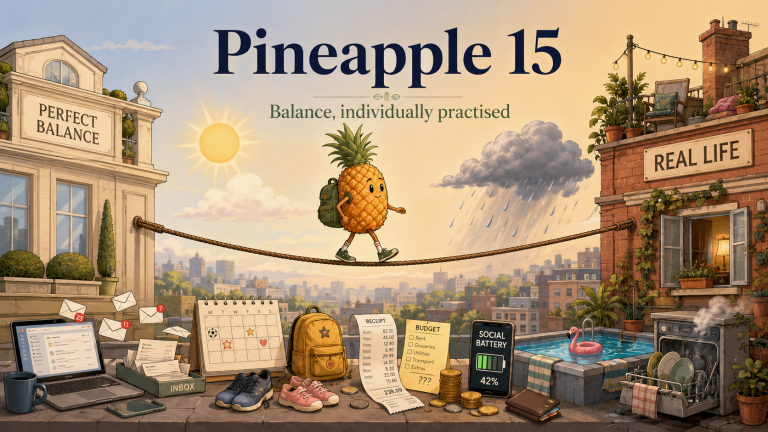
This month’s theme was Balance.
A simple word until real life gets involved.
Because balance rarely arrives as a perfect arrangement. Work does not stay neatly on one side. Rest does not always feel restful. Phones help us and interrupt us. Routines support us and sometimes trap us. Families, weather, friendship, travel, food, sport, imagination and tiredness all arrive together, usually without asking permission.
So this issue became something broader than a neat reflection on balance.
It became a journey through the places where life feels both comfortable and uncomfortable at the same time.
We begin with Maxime in England, because his story gives the issue its clearest contrast. He has left the familiar behind: a new country, new work, new roads, a new language, a new gymnastics club, new loneliness and new confidence. It is uncomfortable. It is also full of life.
From there, The Mayor returns to a question that has been quietly shaping Brida from the inside:
How can we help?
Not how can we grow first.
Not how can we look better from the outside.
Not how can we turn people into numbers, funnels, audiences or prospects.
How can we help?
That question becomes useful when life refuses to stay tidy.
Alexander looks at the phone in his pocket and asks what it costs when one quick email during a break is enough to change the temperature of the mind.
Sarah brings the teenage version of the same tension: school, friends, scout camps, doom scrolling, banana chips, physics on the moon, and a free-time panther strong enough to eat the schoolwork cat.
Then Janita opens the fiction shelf with The House Next Door, a short story of suspicion, fear, shadows, and the dangerous speed at which the mind can turn a neighbour into a monster before the truth has had time to arrive.
After that, we return to ordinary life with slightly sharper eyes.
Sylvie brings a heatwave week of home office, family, running, pool water, Teams messages, lunch guilt and the quiet wisdom of a clean cola with ice.
Babette brings children, homework, sourdough bread, darts, tiredness, and the quiet difficulty of asking for help.
Lunch brings pink shirts, Seoul farewells, coffee in silence, invisible work, singing crocodiles and a royal penguin, all in search of the routines that help us return to ourselves.
Ralf enters the kitchen with a sparkling quark breakfast bowl, proving that healthy food does not need to be punishment food.
Then the issue starts moving again.
Fabrice brings little gifts, long walks, wild boars, cycling, shooting clubs, heat, handbags, Fruitloop, and the dangerous suggestion that the Mayor may one day have to walk 100 kilometres.
The Swimming Club takes us through ferries, lay-bys, trapped phone chargers, Halifax, The Piece Hall, and a Garbage concert that made the ridiculous feel entirely reasonable.
Peeling Potatoes returns with Fruitloop University, where an image, a prompt, and a fictional couple named Jack and Jill become a reflection on ordinary love, second chances, irritation, care, and imagination.
By the end, balance no longer looks like one calm thing.
It looks more like a collection of opposites trying to live together.
Comfort and discomfort.
Work and play.
Heat and rest.
Phones and silence.
Routine and surprise.
Fear and imagination.
Tiredness and movement.
Ordinary life and the strange little moments that make it feel alive again.
Maybe that is why this issue is called:
Comfortably Uncomfortable.
Because sometimes opposites do attract.
A new country can feel frightening and exciting.
A phone can help and disturb.
A routine can support and trap.
A long walk can exhaust and energise.
A ridiculous journey can make perfect sense.
A story can frighten us and wake us up.
This issue lives in those in-between places.
Not perfectly balanced.
But very much alive.
Enjoy reading.