
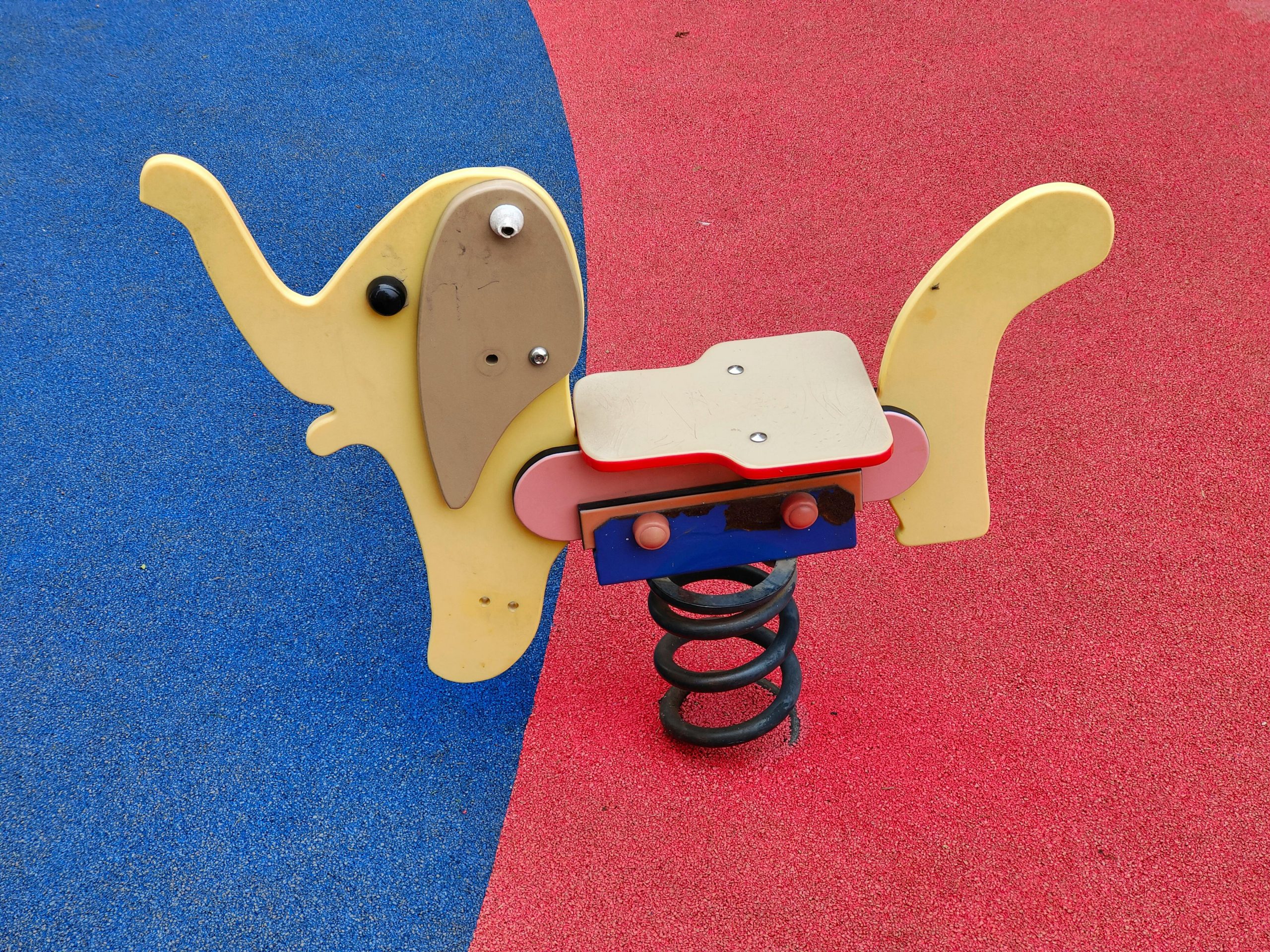
Games Were Never Just Games
I found this conversation more difficult than I expected.
Part of it was the language, of course. When I speak English, I can say what I mean, but sometimes I need time. I search for the right word. I start a sentence, then I stop, then I try again. Some topics are easy because they are practical. Work. Football. Customers. Family routines. Things I can explain step by step.
But play is different.
Play sounds like a light subject. Childhood games. Friends. Football. Hide and seek. A Game Boy. A Teletubby. It should be easy. But for me, subjects like this are not always easy, because they feel like small talk at first. And I am not so comfortable with small talk. I like conversations when there is something real inside them. A reason. A problem. A story. A lesson. When we talk only about games, I first think, “What should I say?” But then, when I start remembering, I notice that games were not only games. They were connected to freedom, trust, friendship, independence, and also to the kind of father I want to be.
The Mayor began by asking me about football, because we had just had our last home game of the season. Next Saturday is the last match, and then we have a small break. Four weeks maybe. Then training starts again in June or July, and after six weeks the new season begins.
Football gives life a structure. There is always the next training, the next game, the next season. Even when one season is difficult, even when you move one league down, the club is still there. The team is still there. The football field is still there.
He asked me who I thought would win the World Cup in the United States, Mexico and Canada. I told him I am not an expert in the World Cup or Bundesliga, but of course I hope Germany wins. I also think France has a good chance. The Mayor joked that maybe the final should be France against Germany and France wins. I said, yes, it can be, but I hope Germany wins.
Of course I do.
The Mayor told me he is not really a football fan. For him, the big football world has become too much about money. The same big clubs win again and again. Bayern Munich in Germany, Paris Saint-Germain in France, the big English clubs, the famous names. He said he does not see the sport in it anymore.
I understood what he meant. I also think that in professional football, sometimes it is more about money than sport. But for me, football is not only the Champions League or the World Cup. It is also the small club. The village team. The Sunday match. The same people standing at the side of the field. The trainer, the team, the fans.
He asked me if I played football as a child.
Yes, I did. I started when I was about ten years old, in the E-youth team. The club was called Deuten. I played there until I was seventeen. Then I had a short break, maybe one year. My brother said to me, “You are too good to stop your football career. Why don’t you come and play with me in my club?”
So I changed clubs. I was seventeen or eighteen. And then I had three or four really difficult years, because the level was higher. The speed was higher. The game was different. I had to learn. I had to wait. I had to become better.
When I was twenty-two or twenty-three, the team was smaller, and I got more chances to play. Since then, football has been part of my Sunday. Every Sunday on the football field. I have now been with the same club for eleven or twelve years.
The Mayor asked why I am still there. Is it the trainer? The team? The fans?
I think it is all of it. In this club, everything is right for me. It is the place where I can play until the end of my career. And when that end comes, maybe I will still help. The president has already asked me if I can take a role, maybe as sports director. I said I can do this when I stop playing. But player and sports director at the same time is too much. Too much time. Too much responsibility.
I will play as long as I can help the team. That is my answer.
Then he brought me back to childhood.
I grew up in Bavaria in the 1990s. When I was very small, five or six or seven years old, I played a lot in our garden. Later, when I grew up, we met at a playground. Every day it was the same place. We played football. We played hide and seek. We rode our bikes. We were outside.
I grew up without a smartphone. We had a telephone at home, but normally we did not use it to organise everything. We talked at school. We said, “Where do we meet today?” And most of the time, it was simple. Same place. Same time. If you had time, you went there. If not, then you did not.
It sounds very simple now, but I think there was something beautiful in this. We did not need many messages. We did not need a group chat. We did not need to check ten times. We had a place, and we trusted the place.
I had a best friend from first class. We met nearly every day. In Weiden, where I grew up, there were different small districts, and my district was Hammerweg. In this district we had a big circle of friends. Only boys. The Mayor asked me what the girls did, and I said honestly, “I don’t know.”
That was our world. Boys, bikes, football, hide and seek, and the playground.
Later, things changed.
When I was fourteen or fifteen, my best friend and I started playing computer games. The game was called Combat Arms. It was an online shooter game. Two teams, usually eight players in each team. The goal was simple: you had to defeat the other team and survive.
At the beginning, it was just funny. But after one year, we became very good. Then we created a clan. A clan is a group of players, like a team. My best friend and I were the bosses of this clan. We searched for good players, invited them, and built something bigger. At first, the players came from all over Germany. Most were the same age as us. Later, we had people from different generations too.
We used TeamSpeak to communicate. It was a little bit like Zoom or Teams today, but for gamers. When we had a clan match, our clan against another clan, we spoke through TeamSpeak.
And this is the part many people do not understand about online games. It was not only the game. It was also the conversations. We spoke about school. We spoke about friends in real life. We knew each other. We built relationships. It was a very nice time, these two or three years.
We were even close to getting sponsorship. But then we realised that if you accept sponsorship, you also have requirements. You have to do things. You have duties. And we said no. We played because it was fun. We did not want to make it something serious.
Later, we joined an international clan, and then I spoke a little bit of English. I told my mother this, because I wanted her to see something positive in the game. She was not enthusiastic about it, like many parents at that time. For her generation, online games were something strange. Maybe dangerous. Maybe a waste of time.
The Mayor asked me about violence in games. This is a difficult question. When terrible things happen, when someone uses weapons in a school, people in the news sometimes say, “He played online games.” I understand why people ask questions. But for us, it was not like that. We were ambitious. We wanted to win. But when we switched off the laptop, we had a normal life. We were not aggressive because of the game.
I think there are people in society who are more susceptible to aggression, and for these people maybe these games are not right. But for us, it was not a problem. It was competition, friendship, communication, and fun.
I do not play video games today. I do not have the time. But in my dream, later, I would like to play with my son. Not too much. Maybe one hour in the evening. And not only violent games. There are many games that are competitive but not aggressive. I also played FIFA, the football game. Did FIFA make me a better football player in real life? No, I don’t think so. Maybe you see one trick, one idea for a one-to-one situation, but real football is different. You have to run. You have to feel the field. You have to know the team.
He asked if my mother had trouble getting me home when I played outside, or getting me outside when I played computer games.
My mother was relaxed. I did not have strict times when I had to come home. But I was not the child who came home extremely late. There was an unwritten law. I had freedom, and I respected the freedom.
That is maybe one of the most important things from my childhood. Trust.
It was the same when I was sixteen or seventeen and went to the disco for the first time. At first my mother said, “Please come home at midnight.” But if it was a little later, she did not say much. It was okay, because she trusted me. And she trusted me because I spoke with her. She knew where I was. She knew who I was with. She knew what I was doing most of the time.
I do not know yet if Julia and I can give this same freedom to our son. You cross the bridge when you get there. We have to see how he develops. If he is always late, if he does bad things, then maybe we need more rules. But if he is honest, if he speaks with us, if we know what he does, then I hope we can trust him.
Trust is not no rules. Trust is a relationship.
Then the conversation went into family, and this was more personal.
The Mayor asked if I played board games with my parents. Monopoly, family games, things like that.
No. Not really.
My father left us when I was two years old. I was alone with my mother, and she worked every day to earn money for us. She did not have much time to play games with me. I was very independent from a young age. I do not say this as a sad thing. It was just my life. I do not feel that I missed everything. But today, when I see Julia’s family and how close they are, I realise that I did not have this kind of relationship with my mother.
Julia comes from a close family. They meet often. There is always something. A visit, a celebration, a meal, a conversation. For her, this is normal. For me, sometimes it is difficult. I need more time for myself. I know this is only my view, and her view is different. But when you grow up independent, too much family closeness can feel like pressure, even when the people are kind.
This will also influence our son. Julia brings the family side. I bring the independence side. I hope he gets something from me, because I think independence is important. But I also see that he needs us a lot now. He is two years old, so of course he needs us. I cannot know how he will be later.
Maybe that is parenting. You think about the future, but you cannot decide it in advance.
At the end, The Mayor asked me about special toys. He told me he loved Lego when he was a child.
For me, I think it was the Game Boy. I also had a big electric car, and I remember it because it was very big. But I cannot remember many games from before the Game Boy time. I said maybe I have to ask my mother. That is my homework.
Then I remembered something else.
I had a Teletubby.
The Mayor reacted strongly to this. He could not believe it. I think it was Tinky Winky, the violet one. I do not know where it is now. Maybe my mother still knows. Maybe it disappeared. Maybe it is waiting somewhere in a box.
It is funny what stays in your mind. A playground. A football field. A clan match on TeamSpeak. Your mother trusting you to come home. A Game Boy. A Teletubby.
When I look back, I see that games were never only games. They were how we learned to organise ourselves. How we learned to win and lose. How we learned to trust friends. How we learned when freedom is possible and when responsibility is needed.
I thought this conversation would be small talk.
But maybe play is not small at all. Maybe childhood games are one of the first places where life quietly teaches you who you are.