

Peeling Potatoes 52: I Sent Fruitloop to the Creative Department of Fruitloop University
We went live for Issue 52 of Peeling Potatoes in what appeared to be a freezing cold South Africa, which meant, naturally, that the first serious academic matter of the day was not Relationship Balance, Digital Balance, or any other official calendar-approved balance, but tights.
Fruitloop appeared dressed in black, and The Mayor immediately wanted to know whether she was in morning, mourning, or simply mourning the laundry pile that had reached such tragic heights that depressing black was all that remained. She assured him that no funeral was taking place. She was merely warm and comfortable. No blanket over the legs, she said. Not even that cold, apparently. The secret was tights underneath her jeans.
This opened a door that probably should have remained politely closed but did not, because this is Peeling Potatoes, and doors do not stay closed when there is a strange hallway behind them. The Mayor, speaking as a man who never wears tights, wanted to know whether they actually keep a person warm. Fruitloop confirmed they do. Like long johns, apparently. Then came the great cultural question: why do men not wear tights if tights are so warm?
Fruitloop did not know. She did point out that cyclists wear tights. Male, female, it does not matter. The Mayor, checking the category very carefully, clarified that these were not the sheer kind with sexy decorations. No, she said. Not those. Thick wool black ones. Winter ones. Functional ones. Nobody would see them under trousers anyway.
The Mayor considered this possibility with great caution. If he ever tried it, he said, he would get changed in a dark closet just in case someone walked in and shouted something alarming. But then, as Fruitloop correctly observed, the first question would not be about his fashion choices. The first question would be: what are you doing in my house? Exactly. Mind your own business.
And so, fully academically warmed by the Great Tights Debate, we arrived at the milestone: Issue 52. One year’s worth of things together. We had been doing this for a little bit more than a year. It felt like a marker, even if the calendar had tried to derail us. The actual scheduled topic was supposed to be Digital Balance, or perhaps digital relationship, or some other modern danger involving screens and human confusion. But The Mayor, in his infinite wisdom and weekly chaos, had wandered into Relationship Balance instead.
Once he realised what he had done, he admitted that Relationship Balance was possibly a thorny, minefield-laden, dangerous territory for a mayor. So, instead of walking straight into it with both shoes untied, he decided to return the favour.
For three weeks, Fruitloop had sent The Mayor to Fruitloop University. He loved the concept. Now he was going to send her to Fruitloop University.
She liked this. Then she immediately wanted to know the academic level. Beginner? Intermediate? Advanced?
The Mayor said this was beyond levels. It was a level of creativity. We could have beginner creativity, intermediate creativity, and advanced creativity. Fruitloop, naturally, was being sent to advanced creativity. He was curious to see how she would react because this one would plug a lot of buttons, push a lot of buttons, and generally behave like a small academic machine with a pineapple stuck in its gears.
The department was not yet decided. Fruitloop said we could decide that at the end. This was wise, because sometimes Fruitloop University only reveals its department once the students have already passed, failed, argued, and invented an Italian couple called Jack and Jill.
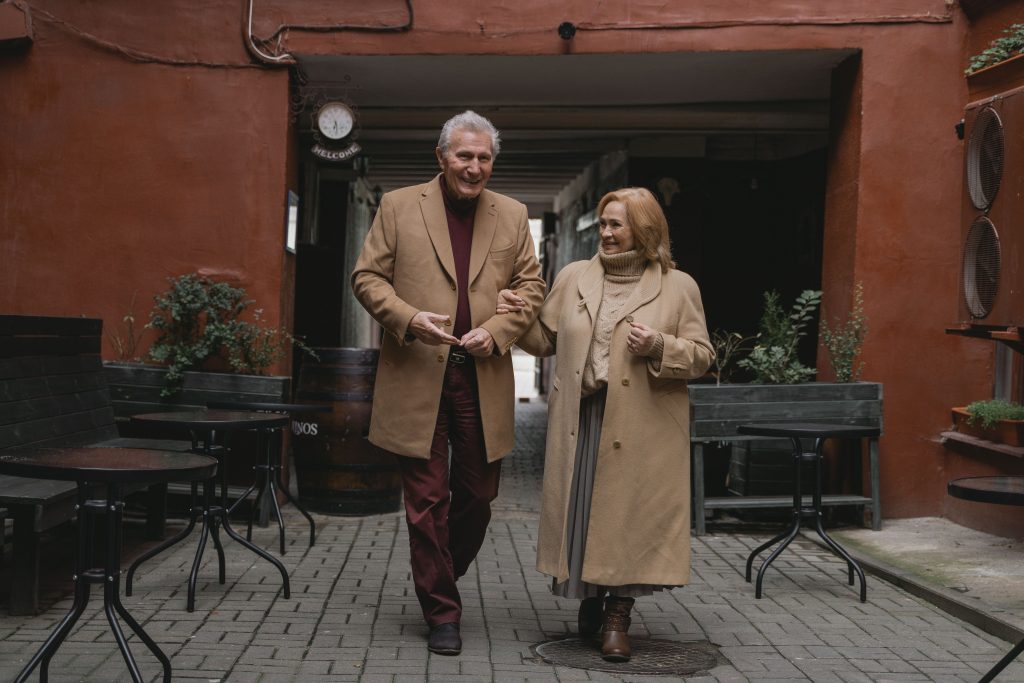
The Mayor shared his screen. After the usual dance of technology, shrinking people, enlarging pictures, and trying to find the correct thing, the image appeared: an older couple walking together, arm in arm, in what was allegedly Rome. That was all Fruitloop was given. A couple. Allegedly Rome. The rest was up to her.
This was the task: The Mayor would ask questions, and with each answer, a story would slowly evolve.
First, the names.
Fruitloop, given an Italian setting and clearly invited toward something like Giovanni and Lucia, chose Jack and Jill.
Not very Italian, The Mayor observed. This was advanced creation, he reminded her. She knew. She chose them anyway. And thus, in Rome, with English names and Italian souls, Jack and Jill arrived.
Jill was about sixty. Jack was maybe sixty-five. Fruitloop did not want to make them too old, even though the picture perhaps whispered slightly older. The Mayor noted that this made him look like a spring chicken. We allowed this small delusion to pass peacefully.
Jack and Jill had lived in Rome their whole lives. They were Romans by birth, born and bred in Rome, despite their suspiciously nursery-rhyme names. When they were younger, they lived in the busy part of the city, the noisy part, the place where Rome breathes loudly and tourists multiply like pigeons. But now, retired or semi-retired, they had moved toward the coast, to a quieter town near the beach. They had traded the loud city for the sea, though Rome still held the bones of their story.
They had been married for twenty-five years.
At first, this sounded like simple arithmetic. Jill was sixty. Jack was sixty-five. Married twenty-five years. That meant she was thirty-five and he was forty when they married. Not impossibly young, not impossibly old, but certainly old enough to have histories. And those histories soon arrived carrying baggage, children, divorce, and a few emotional T-shirts that said: been there, survived that, not doing that nonsense again.
Before all of that, though, there was the first meeting.
Fruitloop placed them in an art museum. The Mayor said perhaps this was not creative enough, but then we discovered that the creativity was not in the building. It was in what happened beside a painting.
Jack noticed Jill first. Obviously Jack. He saw her standing in front of a painting, and the first thing he thought was how beautiful she was. She still was beautiful, Fruitloop said, but then she had been young and carefree. Jill looked at him and thought, “Oh, he’s cute.” The Mayor suggested we might need some European language here, but “he’s cute” remained the first translation of destiny.
It was not annoyance at first sight. Fruitloop was very clear about that. It was also not love at first sight. They noticed each other. There was curiosity. There was a spark. Jack approached her because she was looking at a painting, and he began talking to her about it. They spoke about the colours, the texture, the feeling of it. They did not try to impress each other with art knowledge. No showing off. No pretending to be experts in dramatic museum voices. They simply gave their opinions, and they both liked the painting.
Jack made the first joke. Definitely Jack.
Fruitloop compared it to Sarah’s penguin joke from another time, the kind of joke that is funny partly because it is ridiculous and partly because someone delivers it with complete commitment. Jill laughed out of joy and because of the absurdity. It was not polite laughter. It was the laughter that says: this is nonsense, but I may want more of it.
Then Jack asked if she would like to get coffee sometime. Could he please have her number? Jill was not entirely sure, but she was young and carefree enough to say yes. Let us see what happens, she thought.
Coffee, however, was only the suggestion. Jack escalated. The first proper date became a romantic candlelit dinner in a nice Roman restaurant. Fruitloop imagined good Italian food, wine, conversation, and then, with absolutely no shame, invoked Lady and the Tramp. Yes, the cartoon. Yes, the dogs. Yes, the shared bowl of spaghetti. Jack and Jill shared spaghetti, and perhaps, like the dogs, they ended up kissing. There was wine. There was a lovely conversation. There was tension in the air, but not discomfort. Excitement. A prickly, glowing tension.
Jack was more nervous. Fruitloop said he looked like the nervous kind. Jill spoke too much, perhaps because she was nervous too. But the moment when they realised this person might become important was not the kiss, not the wine, not the painting. It was dessert.
They both ordered tiramisu.
That was the penny-dropping moment. Not crème brûlée, though The Mayor tried to tempt the story in that direction. No. This one belonged to tiramisu. When they ordered the same dessert, something in the universe leaned over the table and said, pay attention, you two.
Jill fell in love first. Jack admitted it first. But Jack still claims that Jill said it first, because although he was the one who said the words, he wanted her to say them first. Women can be stubborn sometimes, The Mayor said. Sometimes or all the time, the room seemed to ask. Fruitloop gave Jill a stubbornness that would become one of the pillars of the whole story.
Jack and Jill took it slowly, but only in a very dramatic European way. Jack had to go to France for work, so they had a long-distance relationship for a while. When he came back, he asked Jill to marry him. She was not hesitant. Not at all. She had been expecting it. Waiting for him to return. This time, they both knew.
The wedding was big. Both had large families: cousins, aunts, uncles, people from work, everyone with a chair, a fork, an opinion, and probably an extra cousin nobody remembered inviting. Around three hundred guests. A large wedding cake. Lots of spaghetti. Lots of tiramisu.
Something had to go wrong, because no wedding story is allowed to leave the building spotless.
The cake tipped over.
It was too big, too heavy, and the table underneath it had legs that were not up to the Italian emotional load. The whole family still talks about it. Not as a tragedy, but as family folklore. It became one of the focal points of the day, apart from the beautiful bride and the gorgeous groom. Everyone laughed then. Everyone still laughs now.
But this was not their first experience of marriage. Here the story deepened. Jack and Jill had both been married before. Both had children. Both had gone through divorce. Both had walked through difficult situations before finding each other. They did not enter this marriage blue-eyed and bushy-tailed. They entered it realistic. They had baggage. They had history. They had already discovered that marriage could begin as a dream and still go downhill. They had raised children, survived painful endings, and started over.
That is why, Fruitloop said, they did not hesitate when they found each other. They had already known what the wrong relationship felt like. This time, they recognised the right one.
Their marriage became what they had once dreamed marriage should be. They were happy. Not perfect. Not untouched by difficulty. But happy. They had good jobs and financial stability, so money was not the main struggle. They had already taken time after their divorces to sort themselves out. The missing puzzle piece was each other.
Still, there was a season when love remained present but liking each other went on holiday.
Fruitloop imagined Jill reaching a point where she needed space. She loved Jack. She cared about him. But she did not like him very much for a while. She packed her bags and travelled through Europe with friends. The Mayor called it a break before the relationship cracked, and Fruitloop agreed. Jill was tired, overworked, stressed, and menopause had entered the building with its hot flushes, irritation, hormones, and general crocodile-fighting atmosphere. Small things Jack did annoyed her more than they should have. So she stepped away before she ruined something she still loved.
Jack also used that time to recuperate. Distance, we remembered, makes the heart grow fonder. Or something like that.
What kept them from giving up? Fruitloop gave the answer she called corny, but it was not corny at all: love. Unconditional love.
The old arguments remained, but they softened into domestic theatre. Jack left towels on the bathroom floor, kicked his shoes behind the door, and left socks on the coffee table. Jill never closed the caps on bottles. They hated each other’s quirks sometimes, in the small marital way where hatred lasts three minutes and is usually wearing slippers.
Jill was more stubborn. Definitely Jill. She would never admit she was stubborn. Jack knew it, but he smiled and told her he loved her for it.
When they were younger, they argued about who would shower first and who would wash the dishes. Now they argued about socks on the coffee table. The fighting had become softer with age. They were at a point where they did not care quite so fiercely. It had become normal. Something to fight about. Familiar thunder, no longer a hurricane.
Jack apologised first. Jack apologised properly. Jill apologised by making coffee and pretending that counted.
To stay together, Jack had to learn to be less clingy. His love language was physical closeness: hugs, kisses, wanting to be near Jill all the time. Jill had to learn how to balance her hormones, stress, work, children, and me-time. Jack had to learn that sometimes Jill needed space, but he also had to support her no matter how angry she was. Good luck with that, we said. Fighting a crocodile.
Jack brought affection into the relationship. Hugs. Kisses. Closeness. Jill brought gifts. She liked buying presents and sweet things. She also brought organisation, coordination, and planning. Jack was the dreamer. Jill was the practical one. But the map, they created together. Jack dreamed about things. Jill planned things. Together, they worked out how to get there.
Then Jack ignored the map and called it an adventure.
Jill worried more. Both comforted well, depending on the situation. Jill needed more quiet, but she also needed more conversation because she was sociable. She could talk a lot, but she also reached points where silence became necessary. They learned not to make their differences into enemies by not interfering with each other’s baggage. The history book was the history book. It was what it was. You deal with your baggage. We deal with ours. We know it is there, but we do not use it as a weapon.
Relationship Balance, after all these years, meant dates and space. They still needed to spend time together without the baggage, without the pressure, without the extended family and old histories climbing into the chairs. They still went out together. In the picture, Fruitloop decided they had gone back to the same restaurant where they had shared that dangerous first meal, the one with spaghetti, wine, and tiramisu. Conveniently, it was just around the corner from where they now lived.
A normal morning in Jack and Jill’s home was quiet and warm. Jack was retired. Jill still worked a little, but not long hours anymore. Jack woke early with the birds. He made the coffee, because, as Fruitloop announced, the Bible says Hebrews. Even her husband laughed at that one. Jack woke Jill with coffee and asked if she needed anything. He made breakfast. He packed lunch for her every day so she had something to eat at work. Their mornings were relaxed.
Jill complained about the weather, even when Rome was perfectly innocent. Fruitloop gave her a bit of her own personality there. Jill hated the cold, and the way she dressed in the picture proved it.
They had breakfast together. Jack cooked. Jack made coffee. Jack packed lunch. Jack’s laugh secretly comforted Jill because he noticed the small funny things. His daily love was practical and tender: coffee, breakfast, lunch, care. Jill’s daily love came home in the form of dessert, pastries, or something sweet, because Jack had a sweet tooth.
They still held hands when they walked, or at least she hooked her arm into his. They talked about people around them. Did you see that dress? Did you see her coat? Look at those shoes. They were not gossiping cruelly. They were doing the old couple’s street-theatre commentary, the kind that turns an ordinary walk into a shared newspaper.
Rome was the third character in the story. The art museum where they met. The restaurant of the first date. The café they had visited for decades. The first house. The streets where they had lived. The city had held their beginning and their second chance. The waiter at their old café knew their order, though sometimes they spiced it up and ordered something different, because even familiar furniture can surprise the room.
There was also a bakery on a street corner. Not just any bakery. The bakery.
Jack had a sweet tooth, and Jill loved buying pastries for him. One day, Jack took her to this bakery to show her how nice it was. But he had arranged everything beforehand. He spoke to the baker and the staff. They set up a little table. They made tiramisu. The baker closed the shop for an hour or two. And inside that bakery on the corner, with tiramisu and conspiracy in the air, Jack asked Jill to marry him.
When they needed to make difficult decisions, they went to the beach. The beach was quiet. It was different from the busy city. They could sit, stare at the ocean, talk, share feelings, and then decide together. When they needed to remember they loved each other, they returned to the bakery or the restaurant. They became part of the furniture there. Good memories turned into permanent seating.
Jack and Jill did not have children together, but both had children from previous relationships. Theirs was a patchwork family. Jill carried more of the family worries because she was the organiser, the planner, the chaos coordinator. She organised meetings with her children, his children, the wider family, and decided where everyone would go. Jack made the home feel safe. Jack also made the home feel alive. He loved music. He loved cooking. He was a good cook. He would play music in the kitchen, prepare dinner, and have a glass of wine waiting for Jill when she came home from work.
They were proud of how they helped each other, cared for each other, supported each other through difficult times and changes, and helped with the children without interfering. They were proud of being there for each other. What did they wish they had done differently? They wished they had met earlier. They wished they had married earlier. Not because the life they had was small, but because the love was so good they wanted more years inside it.
Age changed the way they saw each other. Jack now found Jill’s stubbornness beautiful. He admired her organisation and her love for family, things he may not have understood when younger. Jill admired in Jack the very thing that used to irritate her: his ability not to care. Even the socks on the coffee table became a strange kind of freedom. Sometimes she wished she could just do something and not care.
Age softened the fighting, softened a little of Jill’s stubbornness, and softened insecurity. They knew now they were going to be together until they died. They did not plan on leaving each other. Age made their love, care, and whole relationship stronger.
They still surprised each other. Jack surprised Jill when he picked up his socks and threw them in the wash. Jill surprised Jack when she did something spontaneous without planning. They laughed every day. Jack was silly. He did silly dances. He told silly jokes. He liked making Jill laugh. The last time one of them cried in front of the other may have been when Jack’s father passed away. Jack was close to his father, and Jill cared for him too.
Trust after twenty-five years looked like knowing that the other person could be trusted with decisions, feelings, and the life they had built. Forgiveness looked like forgetting what the fight was even about because, later, it did not matter. Romance looked like small things: coffee, breakfast, lunch packed for work, sweet treats, cakes, pastries, patience, and ordinary care done repeatedly until it became sacred.
Then we returned to the picture.
Where were they walking? Fruitloop decided it was daytime, so they had probably just had lunch at their old restaurant. They were now going to the supermarket or a marketplace to buy fresh ingredients for dinner. Jill was holding Jack’s arm because she loved him and wanted to be close to him. He had likely just made a funny joke with the waiter. Jill told him to stop with his nonsense, and then they laughed at each other. The smile in the picture was familiar territory. Comfortable territory.
It was not necessarily a grand special day. There had been some planning: lunch, then shopping, then dinner later because Jill had invited the children. But perhaps the lunch itself was spontaneous. An ordinary day became special because someone noticed it.
The walk revealed their whole marriage: care, deep trust, familiarity, knowing each other inside out, and still liking spending time together.
Then came the Fruitloop University deep dive.
What was the secret ingredient of their relationship? Fruitloop would not reduce it to one thing. There were many ingredients: trust, honesty, respect, love, care, understanding, listening, really listening, not just listening to answer. Spending time together. Doing things together. Hating each other for a few moments or minutes, then learning how to love each other again afterward. Not one thing. Many things combined.
What almost destroyed their balance? Hormones. Menopause.
What restored it? Jill going to the doctor. Taking a break. Spending time with friends. Jack learning how to deal with Jill’s outbursts and hot flushes and everything else.
What did they have to give up? Fear. They had both been married and divorced. They had both feared another relationship. What if it did not work out? They had to give up that fear.
What did they refuse to give up? Hope and family.
What had they learned about silence? Silence is golden. Sometimes it is better to stay quiet and not say things one should not say. What had they learned about speaking? Communication is very important. Partners have to say how they feel. They have to say when something is wrong. They have to admit when they are wrong. They have to give opinions. But they also have to choose wisely. Jack could say, “I don’t like your shoes,” or he could say nothing. Better still, he could say, “I love your shoes,” or, “You look nice.” Silence and speech both matter. The skill is knowing which one love needs in the moment.
What had they learned about being right? You cannot always be right. You have to admit when you are wrong.
What had they learned about being kind? They had to be kind to each other, though Fruitloop thought they probably already had that kindness before they met.
And then, looking at Jack and Jill after twenty-five years, with their second-chance marriage, their baggage, their children, their bakery, their restaurant, their beach, their socks, their bottle caps, their hot flushes, their coffee, their tiramisu, and their ordinary walk through an allegedly Roman courtyard, we asked what advice they would give to young lovers who think love should always feel easy.
Obviously, they would say it is not easy. Never give up. Fight for each other. Work for each other. Take care of each other. Love is not easy.
And what would they say to a couple who are tired but not finished?
Take a short break. Go to Vegas or the Maldives, or just apart from each other for a little while. Do something different. Have fun.
And that was Fruitloop University: Creative Department, intermediate level, despite The Mayor’s dramatic claim that it was advanced creativity. The course name became Creative Thinking. Fruitloop thought it was easy. The Mayor accepted the academic demotion with reasonable dignity.
We closed the session with birthday plans that were not state secrets but also not finalised, which sounds exactly like a state secret. Fruitloop had her husband’s birthday and her mother’s birthday to celebrate. The Mayor thanked her for everything she had done that week. She wished him a good weekend. He wished her good celebrations. A bit of sun appeared, proving that even South Africa’s freezing morning could behave itself eventually.
Next week, if The Mayor did not mess up the calendar again, we would talk about Digital Balance. Or perhaps Fruitloop would send him back to Fruitloop University. That would make it four to one, maybe. We would decide during the week.
But for this week, we left with Jack and Jill.
Not Italian names. Not a perfect marriage. Not a smooth road. But a story with an art museum, a shared tiramisu, a cake that collapsed, a bakery proposal, a beach for hard decisions, a restaurant for remembering, and a couple who still walk arm in arm because balance is not standing perfectly still.
Balance is leaning into the person who has learned how to walk beside you.