
My Home Is My Castle, Even on a Camping Site
When The Mayor asked me about buying an RV or a caravan, I had to smile a little, because for me this is not only a practical question. It is also a question about what kind of holiday a person really wants.
I have been travelling with a caravan around Europe for about twenty years now, and I would say this first: camping is one of the last bastions of real holiday and freedom. In a hotel, I always feel that I have to conform to someone else’s rhythm. I have to get dressed for breakfast. If I have full board, I have to appear for food at a specific time. There are rules everywhere. Not bad rules, necessarily, but they are not my rhythm.
With camping, I take my home with me. That changes everything. My home is my castle, even when my castle is standing on a camping site and connected to a power socket. Of course, the camping site has local rules, and that is good. It is like at home. There are boundaries, there is structure, and within that structure I can live as I want to live. I can be in nature, but I do not have to give up my own space.
That space is important. The Mayor knows this now, because I made it very clear to him. On a camping site, the space I rent for a period of time is my space. People should not violate it. They should not cross it just because it is a shortcut to somewhere else. This is one of the unwritten rules of camping. Seasoned campers understand this immediately. Some younger campers, I think, have more difficulty with it. They see an empty corner and think they can just walk across. But they are walking through somebody’s temporary home. That is not nothing.
There are many unwritten rules like that. Camping is not lawless freedom. It is freedom with respect. That is what makes it work.
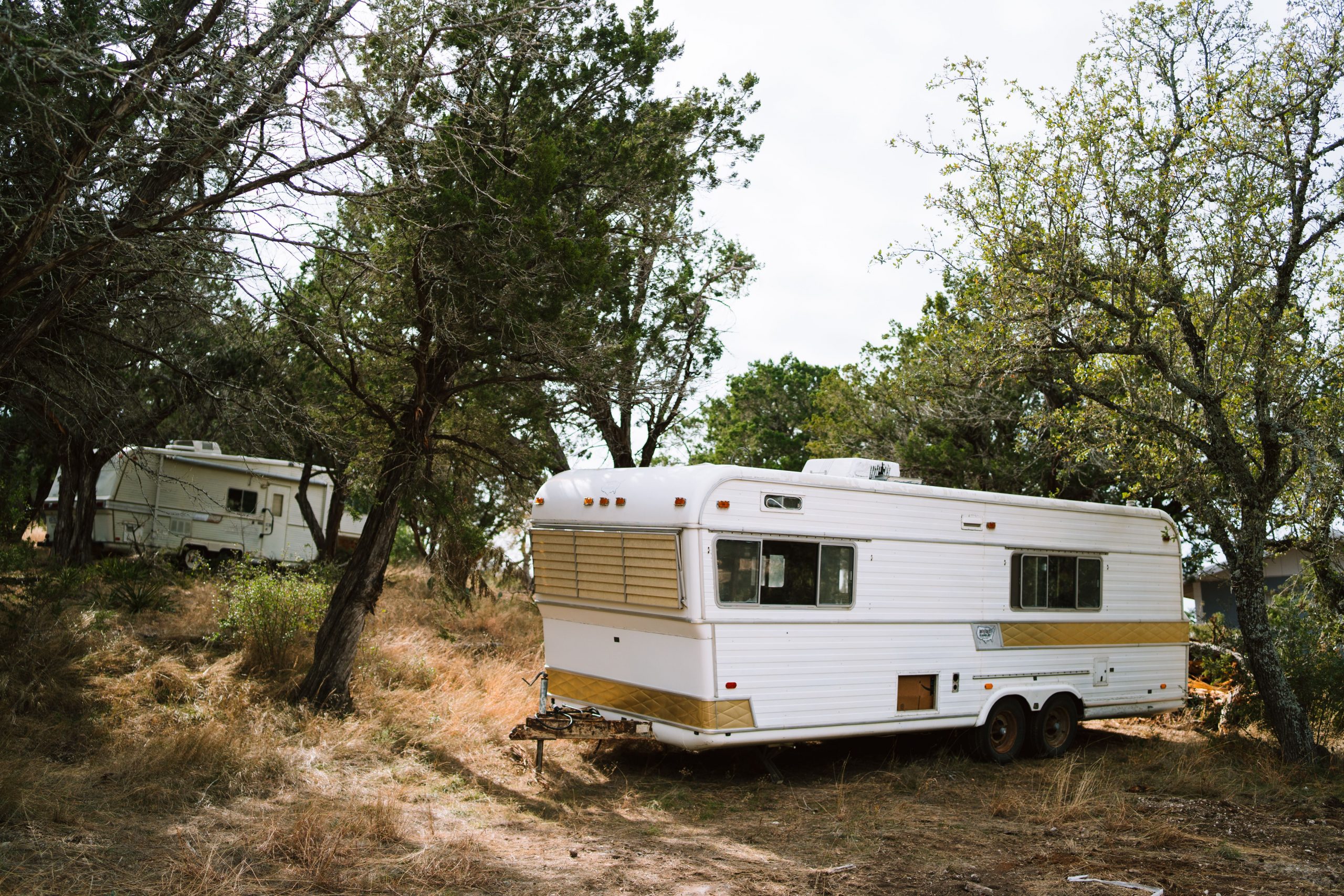
When he asked me about the difference between a caravan and a motorhome, I told The Mayor that this is really about the type of holiday a person wants. A caravan stays put, and this works very well if you want to make a place your base. You arrive, you set it up, you make yourself comfortable, and then the car gives you mobility. You can go shopping, visit a town, drive to the beach, or explore the region without taking your whole house with you.
An RV or motorhome is different. That is more about travelling without resting too much. You drive, you park, you sleep, you move on. Of course, if you have bicycles or very good public transport nearby, you can stay longer in one place. But in general, with a motorhome you have less flexibility once you are parked. Your vehicle is also your home. If you need to go somewhere, you either take everything with you again or you find another solution.
So my first question is always: what do you want to do? Do you want to travel from place to place, or do you want a home away from home?
Driving is also different. Driving with a caravan is not the same as driving with an RV. You have to think differently, especially because of the length and the way it moves behind the car. But when you arrive, the caravan also takes time. You do not simply stop and live. You set it up. You level it. You connect the power. You prepare the space. This is part of the ritual. For some people it is work. For me it is the beginning of the holiday.
The RV world is more “drive and park.” The caravan world is more “arrive and build your small home.” I prefer the second one.
There is also a difference in where people stay. RV staying places are often greater in number than camping sites, and many of them are more transient. But they also come with a certain image. In some places, the motorhome has the image of the traveller, sometimes not in the romantic sense. The media pushes the RV very hard, in my opinion. You see the picture: you and your RV in paradise, completely free, parked somewhere beautiful, nobody around, sunset, freedom. But this is not reality. It is wrong. Parking in the wild is usually illegal. People should know this before they buy into the dream.
With food and cooking, I do not see a big difference between caravan and RV. In both cases, you can be flexible. With an RV, you can park, cook, eat, and move on. With a caravan, you are more tied to the camping site once you are stationary, especially because you normally need an energy connection and a power socket. But the joy of cooking is there in both worlds.
For me, camping and barbecue are almost synonymous. A camping holiday without BBQ is difficult to imagine. I usually buy from my preferred source, and I like to vacuum seal the meat. It makes things easier, cleaner, and more practical. But the holiday is about enjoyment, so I also say: try local produce at the destination. If that is enjoyable, do it. If it becomes stressful, do not do it. There is no need to turn a holiday into a mission.
Outdoor cooking and eating is the best detox. I really believe that. Sitting outside, cooking something simple, eating in the fresh air, not rushing, not pretending — this brings a person back to normal.
Route planning depends a little on whether you have an RV or a caravan, but not as much as people think. The main issue is length. You need to know where you can drive, where you can turn, where you can park, and what roads are suitable. Modern satnavs often have special settings for RVs and caravans, and I think that is useful. You put in the dimensions and it helps you avoid unsuitable roads. It is not perfect, but it is better than driving blindly into a village with narrow streets and hoping that optimism will reduce the width of your vehicle.
The Mayor also asked whether camping is cheaper than a hotel or apartment. I told him: not necessarily. It depends on the site and the season. A camping site is a holiday destination, just like a hotel room is a holiday destination. You pay for location, facilities, demand, and the time of year. Some places are not cheap at all.
A “Stellplatz” is something else. That is more like a parking place, more transient. I compare it a little to a McDonald’s drive-through. You drive, you stop, you collect what you need, and then you move on. It serves a purpose, but it is not the same as making yourself comfortable on a camping site.
Over the years I have travelled with the caravan to many countries: Croatia, France, the Netherlands, Spain, Germany, the Czech Republic, Hungary, Austria, Switzerland, and Italy. Each country has its own flavour.
France is one of my favourites. The French have something called “camping municipales,” and this is a real French speciality. These are municipal camping sites, often managed by local councils. They usually offer good basics, and there is a wide network of them. In France, I always have the feeling that I will find a space somewhere, except of course in the hot spots during high season. These places are also good for hidden gems. You find towns and areas that are not in the glossy brochures, but they are real.
France has been very friendly and hospitable to me. I also learned that even a basic knowledge of French opens more doors. Just a few words make a difference. It shows respect. Be human, be down to earth, and things usually go well.
The South of France is beautiful, but I also told The Mayor to be careful. Do not park on lay-bys. There is a risk of robbery, and an RV or caravan can send a signal that there is something worth taking. People should not be naïve. Freedom does not mean switching off your brain.
The Netherlands is also interesting. There is the old cliché that the Dutch conquer Europe, and Europe conquers the Netherlands. I always enjoy driving there. It is a very small country, but it has many good camping options, including farm camping spots. These are often a side line for the farm, maybe twenty or thirty places, and they can be very nice. Smaller, simpler, more personal.
Croatia is also very enjoyable. German is widely understood and spoken there, which makes things easier for German campers. It is beautiful, practical, and welcoming.
In truth, I have found all these countries to be hospitable in their own ways. Warm, welcoming, and interesting, if you approach them properly.
There is also a camping scene, of course. Today much of it is on the internet. Camping forums can provide good information, tips, and advice. You can learn a lot from people who have already made the mistakes, which is always cheaper than making all of them yourself.
But the camping generation is changing. This is something I feel strongly. Camping sites used to be more communal. You arrived, your neighbours arrived, and people helped each other. There were opportunities to meet people, make acquaintances, even make friends. You saw somebody struggling with the awning and you helped. You shared advice. You talked. Stories developed.
This is changing. I see more self-centred behaviour, especially among some younger campers. There is less awareness of personal space and less understanding of the unwritten rules. I think it reflects modern society, and I find that a shame. Camping used to be a place where the human came first. Not the status. Not the job. Not the lifestyle performance.
On a camping site, people were more level. First you were a camper. Then, slowly, it emerged who you were, where you came from, what your story was. That was part of the beauty. Humanity lives in those small conversations.
There are no typical campers, really. There are only people who enjoy camping. That is what makes it diverse. You meet interesting people, speak with them, hear their stories, and sometimes you are surprised by who is sitting in the chair next to you with a coffee or a beer.
Of course, luxury camping exists too. There are very expensive RVs, and sometimes they reflect a certain lifestyle. Champagne in the morning, elitist attitudes, a little bit of showing what you have. That exists. I do not deny it.
But in general, the camping lifestyle is still a great equalizer. You are closer to nature, closer to the basics, reduced to the essentials. It makes people more normal, more down to earth, more natural, and less pretentious.
That, for me, is the real value. Not the vehicle. Not the equipment. Not the perfect destination photo.
The real value is the feeling that I have taken my home with me, placed it somewhere beautiful, respected the rules, respected my neighbours, and created a small space of freedom.
My home is my castle. Even when the castle has wheels.