
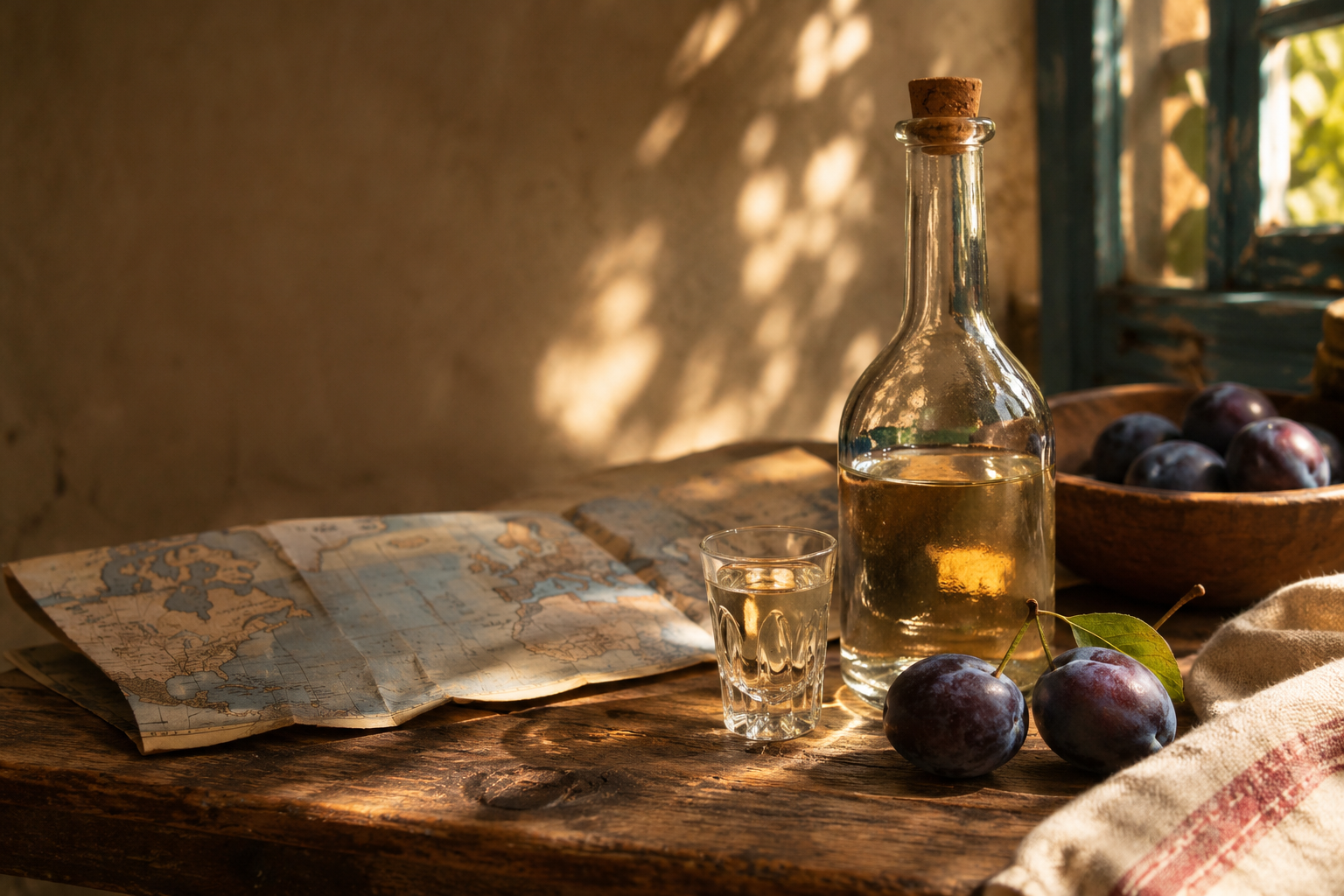
Faith No More, Rakija, and a Dead Relative.
Life is full of chance encounters. Sometimes a little curiosity is all it takes to connect people, places and stories in ways nobody could possibly have imagined.
By Ivan Abičić, Croatia.
A note from the editors.
This story contains some strong language. We have chosen to preserve the author’s original words, as they are part of the character and spirit of the story.
Some years ago I was browsing around the internet and for no particular reason other than
curiosity and perhaps a pinch of nostalgia I decided to check what was happening with Faith No More, an American rock band I used to listen to quite a lot when I was younger. I still enjoy their music from time to time when the mood is right, so I was simply wondering what the guys were up to these days and whether they were still making music or had gone their separate ways to pursue something completely different.
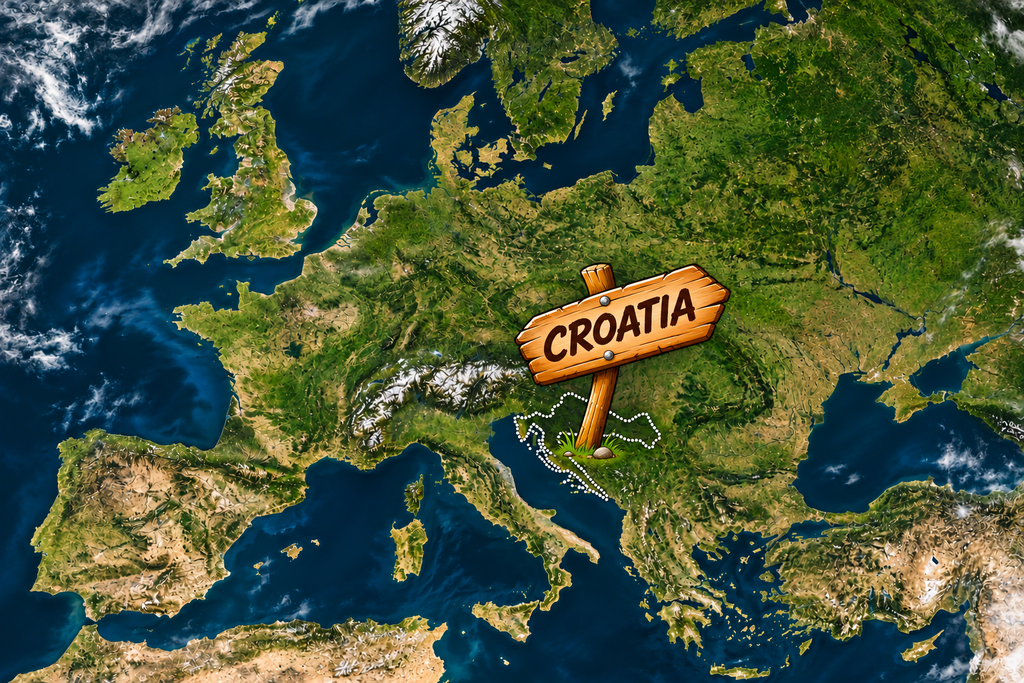
Well, apparently their bass player Billy Gould had found himself a rather interesting occupation because the guy was selling rakija in the United States of all places! Serbian plum brandy, to be precise, under the amusing brand name Yebiga. Being Croatian, I knew perfectly well what that particular word meant, and I must admit that the name brought a smile to my face. Quite a clever choice, actually.
Now, having grown up in Slavonia in the eastern part of Croatia, I happen to know a thing or two about rakija since it is practically impossible to spend your childhood around our villages without encountering the stuff in one form or another. We don’t even say that we distil rakija, which would technically be the correct expression, but that we “bake” it. And there is a whole culture surrounding this activity involving orchards, old copper stills, family gatherings, and the occasional argument about whose rakija is better. Not to mention those who are sometimes a little too enthusiastic about sampling the final product!
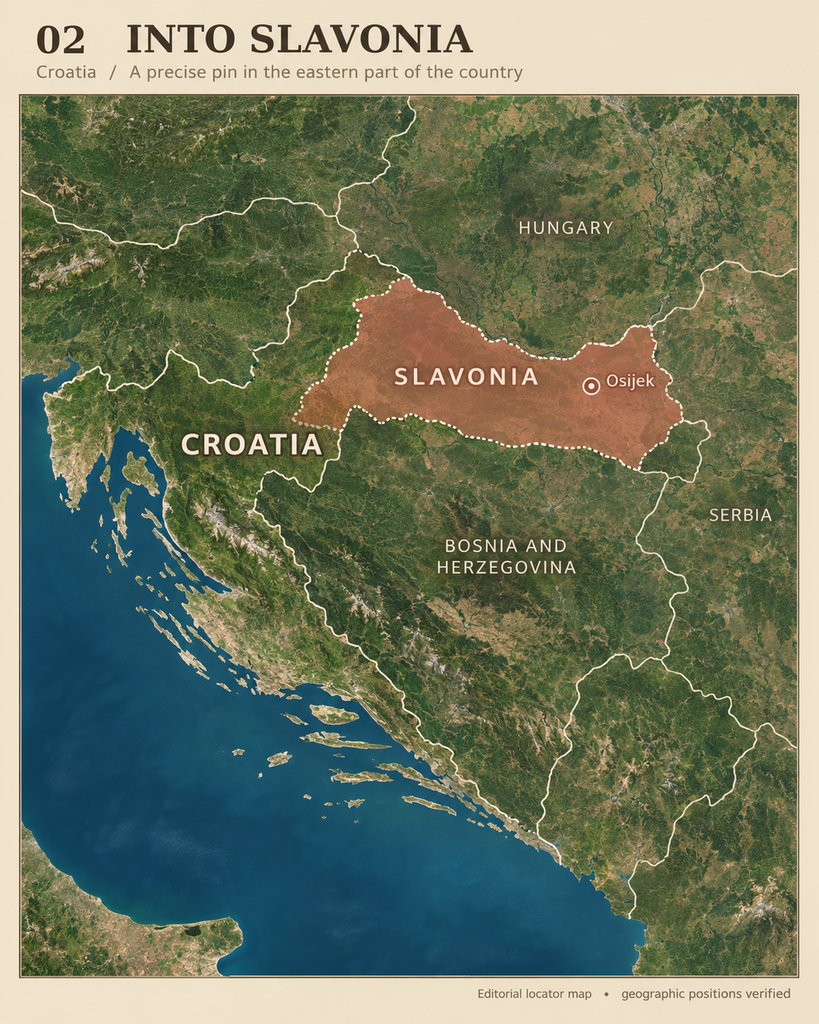
I grew up around these traditions and still practice some of them myself despite being a scientist who spends most of his working days dealing with barley genetics and plant breeding. So naturally I became curious about what kind of rakija an American rock musician was selling across the Atlantic and decided to check out his brand online.
I expected to find some nice bottles, a bit of marketing, and perhaps a story about Balkan tradition. Nothing extraordinary.

But then I saw the photograph.
There was an elderly woman on the label wearing one of those traditional headscarves that practically every grandmother in our villages used to wear back in the day. Something about her seemed immediately familiar, and it took me only a moment to realize that I actually knew this woman!
Holy shit!
Her name was Ljubica Abičić, and she was a distant relative of mine from a small Croatian village called Šaptinovci, which would translate into English as something like Whisperville. Both of my parents’ families stem from this very village, and I remembered Ljubica from my childhood visits to my grandparents. She was a rather peculiar old lady, slim and quite noisy with a good sense of humor and a tendency to speak her mind without worrying too much about how it sounded. She also had quite an affection for rakija and was apparently very good at making it.
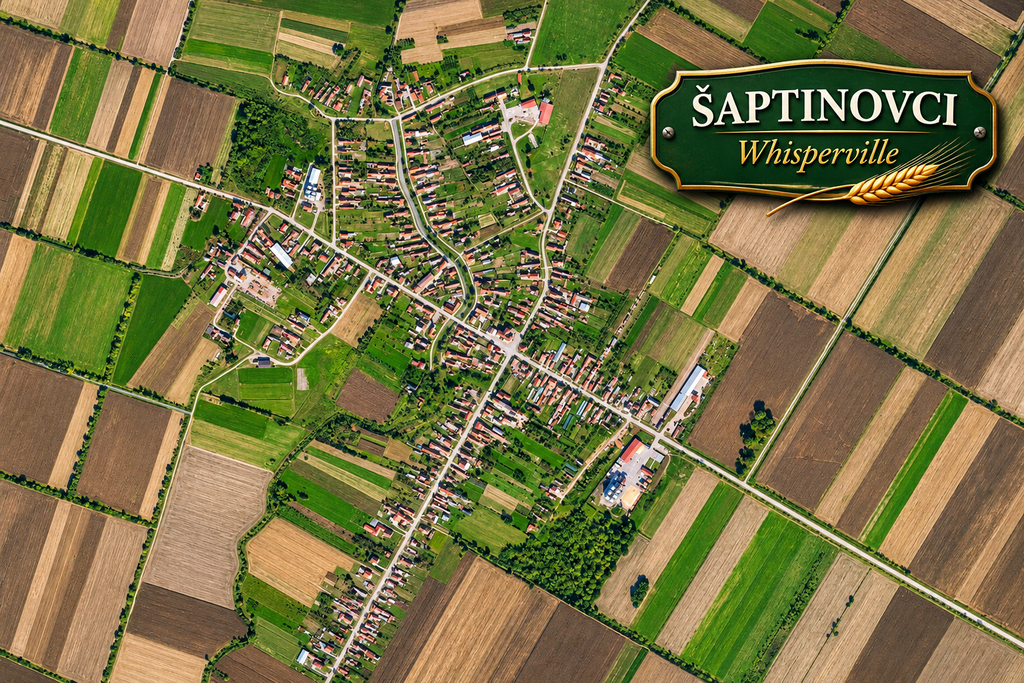
Not exactly the whispering type herself, if you know what I mean.
And there she was. Years after I had last seen her and after she had passed away, looking at me from a bottle of Serbian rakija being sold in America by the bass player of Faith No More.
I mean seriously, what the fuck are the odds of that happening?
Now, after the initial shock had settled a little, I started wondering where that particular photograph had come from because I was quite certain I had seen it somewhere before. It wasn’t one of those old family photographs that occasionally resurface from somebody’s dusty drawer but something more familiar in a public sort of way. And sure enough, after digging around a bit, I found an article published back in 2013 by a Croatian news portal called 24sata.
There she was again. Baka Ljubica, or Grandma Ljubica, as we would say in English, proudly demonstrating her expertise in making rakija at the rather impressive age of 97. The article described how she was still involved in producing the stuff using traditional methods, which I found quite amusing because from what I remembered of her, it was probably one of the last things she would ever have considered giving up.
You see, I don’t have some spectacular childhood memory involving Ljubica that would make a perfect little anecdote for this story. I was a kid back then, and as the years went by, I visited my grandparents less frequently, especially after leaving home to pursue my studies. What remained in my memory was more an impression of the woman herself. The headscarf, the slim figure, her rather loud personality, and that wonderfully unfiltered way of speaking, which was quite common among some of the older village people.
She wasn’t exactly what you would call a delicate old flower.
And apparently she knew her way around a copper still better than many people half her age.
Anyway, having established that the photograph was indeed of my distant relative, I returned to the Yebiga brand and started looking at the whole thing from a slightly different perspective. The product itself was made in Serbia and advertised as Serbian plum brandy, which made perfect sense as far as its geographical origin was concerned, but the woman on the bottle was Croatian. Not just Croatian in some vague regional sense either, but from the very village where both sides of my family originated.
To someone living in California this distinction might seem almost irrelevant, and under ordinary circumstances I would probably agree that a good rakija doesn’t become any better or worse simply because somebody drew a national border around the place where it was made.
However, this is the Balkans we’re talking about.
And the Balkans have a rather peculiar habit of turning relatively innocent things into complicated affairs, especially when history, nationality, and religion decide to join the party.
Croatia and Serbia fought a bloody war during the 1990s, and even though quite some time had passed since those events, the memories were still very much alive in parts of the region. My own attitude toward Serbian people was and remains quite uncomplicated. I have worked with colleagues from Novi Sad for years, visited Serbia, hosted Serbian colleagues in Croatia, attended conferences together, and generally enjoyed perfectly normal professional and personal relationships.
But my attitude doesn’t necessarily represent everybody else’s, particularly among older generations who experienced those turbulent times differently.
And that got me thinking.
What would Ljubica’s surviving relatives make of seeing her photograph on a bottle of Serbian rakija being marketed in America? Had anyone explained the whole thing to them? Would they find it amusing, flattering, or perhaps a little uncomfortable?
I honestly had no idea.
Still, considering the rather unusual circumstances, I thought it might be useful to inform Billy about the background of the lady whose face he had chosen for his brand. After all, he was an American musician trying to introduce a traditional Balkan product to people who probably couldn’t distinguish rakija from rocket fuel, and I couldn’t reasonably expect him to know every historical and cultural detail concerning a small village somewhere in eastern Croatia.
So I decided to write him an email.
Now, I’m not exactly the type of person who sends fan letters to musicians or celebrities, and I certainly wasn’t expecting anything spectacular to come out of this. But since I had something rather specific to tell him and an actual personal connection to the woman on his bottle, I figured there was no harm in giving it a shot.
I introduced myself as a Croatian scientist and barley breeder from Osijek and explained that I had been a fan of Faith No More for quite some time. Then I told him about Ljubica, her village, and the rather peculiar coincidence of recognizing her photograph on his product. Naturally, being somewhat of a history buff, I couldn’t resist throwing in a few details about the village itself and its long history, along with some agricultural observations about why plum trees thrive so well in that particular part of Slavonia.
Yes, I know. The man probably just wanted to sell some decent booze, and here comes a Croatian scientist giving him a small lecture on village history and fruit production.
Jebiga!
But I also wanted to make something clear. My intention was not to criticize his business or stir up some nationalistic nonsense. Quite the contrary actually, because I thought that popularizing rakija in the United States was a pretty interesting idea, and I wished him success with it.
What bothered me slightly was the possibility that the Croatian identity of the woman on the label might clash with the Serbian nationality of the product, particularly if someone decided to make an issue out of it. So I suggested that perhaps Balkan plum brandy would be a more inclusive description and one that could potentially serve the brand better in the long run.
I even warned him that the sentiment around such matters could get rather “spirited.”
Yes, I actually wrote that. Couldn’t resist.
Having sent the message, I more or less forgot about the whole thing. I had done what I thought was appropriate, and if Billy never answered, that would have been perfectly understandable. Famous musicians probably receive all sorts of strange messages, and I can only imagine where an email about somebody’s deceased Croatian relative would rank on that particular list.
But then he replied.
And to my considerable surprise, it wasn’t some generic response written by a public relations department but a rather thoughtful and informative message from Billy himself.
He thanked me for getting in touch and explained what he was actually trying to accomplish with Yebiga. Apparently, rakija was still largely unknown among the general American public, and the few examples available on the market were mostly industrial products. His intention was to introduce a traditional and naturally produced spirit that could serve as a reference point for Americans who had never experienced the real thing.
Fair enough, I thought. Quite a noble mission for a bass player!
He also explained why Ljubica had caught his attention in the first place. To him she represented the tradition and integrity of rakija production, particularly because she had continued making it until an extraordinarily advanced age. He was clearly impressed by her dedication to the craft and I found that rather touching, especially considering that this was the same somewhat eccentric old woman I remembered from my childhood.
Here was a man from California who had never known her personally but nevertheless recognized something valuable in what she represented.
Then came the explanation about the Serbian label.
It turned out that Billy had already encountered a rather formidable opponent in his efforts to introduce rakija to the American market, namely the United States government and its alcohol regulations. According to him the whole approval process had taken about a year, with all sorts of bureaucratic complications concerning the classification of the product and the information required on its label.
For starters, American regulators wouldn’t even recognize rakija as a separate category and insisted on calling it brandy. And since the spirit was actually produced in Serbia the country of origin had to be stated accordingly.
So much for my brilliant marketing suggestion!
But what I particularly appreciated was that Billy actually shared the broader idea behind his project. He didn’t see rakija as something exclusively Serbian and hoped to introduce quality spirits from Croatia, Montenegro and Macedonia as well. His vision was much closer to a regional appreciation of the tradition than to some narrowly national interpretation of it.
In other words, we were pretty much on the same page.
He even mentioned that he had travelled through Slavonia while touring with a band and remembered the region as beautiful, with landscapes that reminded him of parts of California. At the same time he had noticed that the consequences of the war still seemed quite present around Osijek.
I must admit that this part of his message made an impression on me because he obviously hadn’t dismissed the historical concerns I had raised. He had seen enough of the region to understand that some things weren’t quite as simple as they might appear from a distance.
Anyway, by this point I was genuinely pleased with the conversation and decided to send him one final reply.
The tone had become considerably more relaxed and I even addressed him as Bill rather than Mr. Billy, which I suppose tells you something about how naturally the exchange had developed. I thanked him for the explanation, supported his efforts to bring proper rakija to the American public and then wandered into a few subjects that were probably not strictly necessary but seemed perfectly appropriate at the time.
Bureaucracy, for instance.
Having travelled quite extensively around the world I knew a thing or two about dealing with administrative systems, particularly after visiting Brazil and spending part of my life in Germany. Croatia has its own bureaucratic peculiarities as well, although some things have improved since joining the European Union.
And then there was the matter of traditional Balkan life.
I explained that despite being a scientist and having lived abroad I was still very much attached to the customs I had grown up with. Making rakija, working in vineyards and orchards, preparing traditional meat products and smoking them by hand were all familiar parts of my background, and some of these activities I still practice today.
Pig slaughtering and preparing your own smoked meat might sound rather exotic to someone accustomed to buying everything neatly packaged in a supermarket, but around here it was simply part of life. You learned these things from older generations and carried them forward because they made sense to you, not because somebody had suddenly discovered them as a fashionable lifestyle trend.
And yes, I still enjoy all that old-school stuff.
Even though I’m a goddamn scientist.
I also told him about a traditional rakija from Istria called biska, which is flavored with mistletoe and associated with some rather ancient traditions. I even enthusiastically described it as a two-thousand-year-old Celtic recipe, because apparently I hadn’t yet exhausted my supply of historical trivia for the poor man.
But that was pretty much it.
I wished him well and offered to introduce him to some people producing quality spirits in Croatia if he ever decided to expand his business in that direction. Then I thanked him for his time and concluded the correspondence.
No further requests, no business proposals and certainly no expectations of becoming some kind of Balkan representative for his brand.
I was simply glad that we had exchanged a few thoughts and that the man had taken the time to respond in such a friendly manner.
And life went on.
Some time later my brother mentioned something rather unusual during one of our conversations. Apparently he had heard that the bass player of Faith No More wanted to come to Šaptinovci for some reason and there was talk involving our distant relatives from the village.
Well, well, well.
Now that sounded familiar!
I told him about my correspondence with Billy and explained how the whole thing had started with my rather accidental discovery of Ljubica’s photograph. My brother was naturally curious so I forwarded him the emails, which also allowed him to confirm the story when discussing it with some of our friends and acquaintances.
As you might imagine, news has a rather interesting way of travelling through small villages and family networks. You don’t always know who first said what or how a particular piece of information reached somebody, but sooner or later a few scattered details find their way back to you.
And apparently that was exactly what happened here.
Through my brother and other people who knew something about the situation I later heard that Billy or people representing his business had made contact with Ljubica’s surviving relatives concerning permission to use her photograph.
Whether my original email directly prompted that process or simply contributed to a conversation already taking place is something I cannot establish with certainty. Billy and I never discussed it further, and I had no particular reason to investigate.
As far as I was concerned my involvement had ended with that final friendly email.
And that was perfectly fine with me.
Looking back at the whole thing I still find it rather amusing how an ordinary moment of musical nostalgia managed to connect so many seemingly unrelated things. An American bass player, a Serbian distillery, an elderly Croatian woman from a tiny Slavonian village, a photograph published in a local newspaper and a scientist who happened to recognize his distant relative on a bottle of booze.
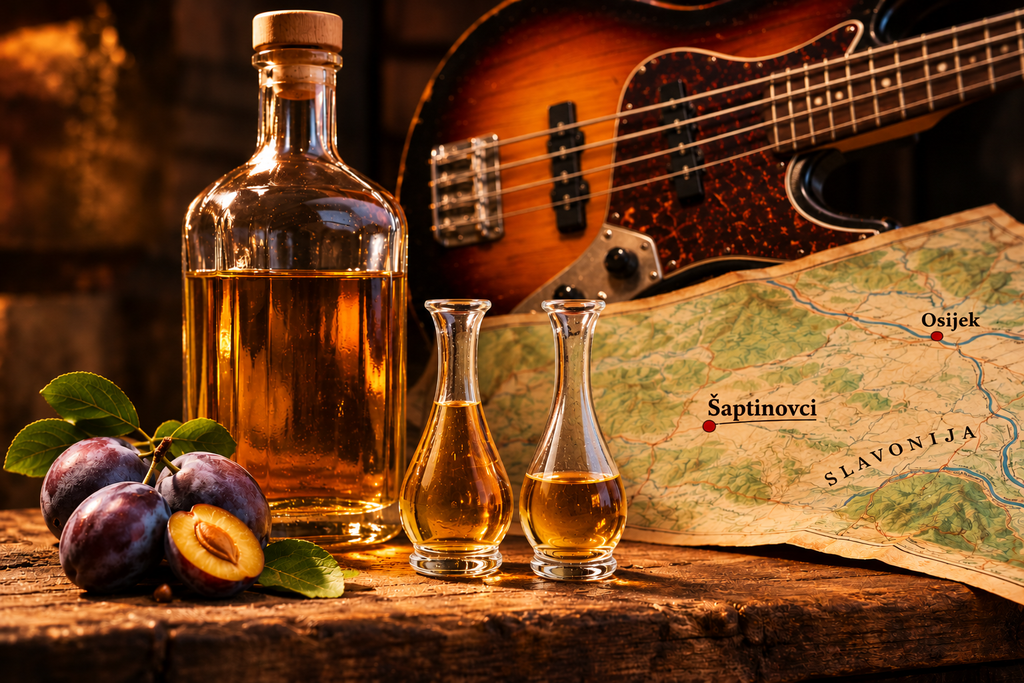
Somewhere along the way we even managed to squeeze in American alcohol regulations, the Balkan wars, old copper stills, mistletoe recipes and the peculiarities of Brazilian bureaucracy.
Quite a journey for a few emails, wouldn’t you say?
What makes the whole affair particularly entertaining to me is that none of us appears to have set out to create this sequence of events. Billy wanted to introduce good rakija to Americans, Ljubica had spent much of her life making the stuff in her own village and I was simply curious about what happened to a rock band I liked when I was younger.
Nothing particularly extraordinary about any of those things when considered separately.
And yet somehow they all ended up connected.
I sometimes wonder what Ljubica would have said if somebody had explained to her that her photograph would eventually appear on bottles of rakija sold across the Atlantic Ocean by a musician from one of America’s most recognizable alternative rock bands. Knowing what little I remember of her personality I suspect the conversation would have been rather entertaining, although I wouldn’t dare invent her actual response. She might have appreciated the whole thing. Or perhaps she would have had a few choice words about it.
Who knows?
What I do know is that the woman came from a village whose name translates rather poetically into Whisperville, despite being remembered by me as anything but quiet.
And somehow her face travelled halfway around the world without her ever having to leave that little corner of Slavonia.
As for me, I went looking for a bass player and ended up finding a dead relative.
Not bad for an afternoon of browsing the internet.
Jebiga!
© 2026 Ivan Abičić. All rights reserved. Published in The Pineapple by permission of the author.