
After Is Better
When I think back to the evening of June 5th, the first scene I remember is the start.
It was in a field. A simple field, but already full of people, movement, and energy. The first thing I saw was a big tent. The second thing was the barbecue area, which was very nice. And then I saw the start line.
Before the walk began, the organisation made a speech. Then four parachutists jumped into the field. After that, two planes passed over us. It felt serious and exciting at the same time. I did not really know what to expect. I only knew one thing: I was going to start.
At five minutes to six, the gun went off.
Then I said to myself, “Okay. Let’s go for 100 kilometres.”
At the start, we were like sheep. Everybody together. Many people, many feet, many small steps. But after one or two hours, the group began to spread out. People found their own rhythm. The 100 kilometres became real under my feet.
For the first kilometres, my mind was simple. I did not think about the whole night, or the 21 to 23 hours I had calculated before. I only thought, “Let’s go.” That was enough.
I had not slept much before the event. From Thursday to Friday, I slept maybe three or three and a half hours. I was excited. On Friday morning, I got up at 8:00 and went to a sports shop because my GPS had a problem. They repaired it. Then I went home, ate, took a shower, and later I brought my car to the finish. After that, I went to the start line.
We arrived early, around four o’clock. We relaxed a little. I even slept under a tree while we waited for the departure. Then came the speech, the parachutes, the planes, and finally the gun.
There were 71 people registered for the 100 kilometres, and 40 for the 17 kilometres. But only 55 started the 100 kilometres. At the end, only 34 finished. Twenty-one people stopped between 30 and 80 kilometres. Most had foot problems, muscular problems, or blisters.
I also had problems. Not with my legs. My legs were okay. My muscles were okay. My breathing was okay. The only real problem was the soles of my feet. I had two big blisters and many little blisters. The feet were the battlefield.
The night was one of the most beautiful parts of the walk.
We spent two or three hours in the forest. It was very quiet. There were four of us walking together. We had red lights, a small path, and almost no noise. Just our steps, a little talking, and an owl. That silence in the night forest stayed with me. It was very, very nice. I loved that.
During the night, the temperature was perfect for walking. Not too cold, not too warm. The mood was good. The silence was good. My energy was still okay. The only problem was my feet.
But the route was hard. Maybe 60 or 70 percent was asphalt or concrete. That was very difficult for the feet. Asphalt and concrete are not friendly after many hours. They do not forgive you.
And then there was the GPS.
The first time, it was my fault. I looked at the GPS and thought I was right. After one kilometre, I saw that I should have turned left one kilometre before. So we had to go back.
The second time, the GPS froze. I kept going and suddenly I was in a village where I should not be. So I made maybe five or six kilometres more than planned. It was not exactly 100 kilometres for me. It was a little more.
But in the army, we say, when you are lost, okay, you are lost. But you are lost together.
I walked from the beginning to the end with Marc. He is 64 years old. He had not really trained for the 100 kilometres. One week before the trail, he simply said, “Okay, I am going.” So we went together. From the first step to the last step. We also got lost together.
Marc helped me a lot. He made jokes. He talked. He spoke about everything. During 27 hours, you have time to speak about everything. You also have time to think about everything. Memories, life, family, priorities, your body, your weakness, your will.
I ate very simply. One banana, two or three apples, protein bars, one cake, and some glucose. I drank water and electrolytes. I also drank Coca-Cola. Normally, I never drink Coca-Cola, but that Saturday I think I drank more Coca-Cola than I usually drink in one year.
Every 10 or 12 kilometres, there was a checkpoint, like a pit stop. There was water, biscuits, bread, fruit, sugar, and sometimes small things that helped. You eat, you drink, and then you go again.
But stopping was dangerous.
When I stopped, it was good for the feet. For ten or fifteen minutes, the pain became quiet. But when I stood up again, the first ten minutes were very hard. Very hard. My feet did not want to start again. I thought an 80-year-old grandpa could walk faster than me.
The hardest moment was between 50 and 60 kilometres.
I do not know exactly why. I had already done 50 kilometres, and that was not the problem. But it was long. Very long. The mind begins to go down. Many people feel this between 50 and 60 kilometres. You begin to think, “I stop. This is enough.”
I also had this thought.
Then after 60 kilometres, I told myself, “Okay. I go to 70.” Then I said, “I go to the next checkpoint.” Then I said, “My wife is waiting.” And step by step, I continued.
At checkpoint 8, near the border, Marion was there with a friend. Before the walk, Marion had told me something very important. She said, “If I come to you and you are not okay, I must not say stop. I must motivate you.”
So when I arrived, I was tired. I sat down. Marion’s friend came to me and said, “Fabrice, 100 kilometres is 100 kilometres.”
That was the sentence.
Not 83 kilometres. Not 90 kilometres. Not almost. 100 kilometres is 100 kilometres.
So I stood up. I turned to the right side. And I went.
After that, I walked slower. Maybe four kilometres per hour, because my feet were painful. But I continued.
The Mayor had asked me before if I thought about the sentence I had said the week before: “After is better.” Yes, I thought about it. But mostly after 70 kilometres. I told myself, “After is better.” When you are finished, it is better. When it is done, it is better.
And I saw something else that helped me.
I saw younger people stop. People of 20, 30, 40 years old. Strong people. They stopped. I am 59, and I continued. That gave me something. I said to myself, “You can do it.”
There were many strong people on that route. Some walked very fast. The first person finished in about 18 hours and 20 minutes. That is incredible. But my first benchmark is not that. My first benchmark is under 24 hours.
This time I finished in 27 hours.
For me, that is not okay. I am happy I finished, yes. But I wanted under 24 hours. So I learned something important. My body and my mind told me I must train harder. Not just train, but train harder. Faster walking, stronger preparation, more discipline.
I had only trained for ten weeks before this 100 kilometres. Now I know that is not enough for the result I want.
The landscape changed during the walk. At night, the forest was beautiful. Later, there were fields, villages, hills, and roads. On the French side, there was almost no forest. Fields, villages, fields again. After many hours, I did not really look left or right anymore. There was only the way.
There were some climbs too. Not mountains, but after 80 kilometres, even a small climb is hard. In the beginning, a climb is hard. At the end, it is harder. Much harder.
When people ask me now, “How was the 100 kilometres?” my honest first answer is simple.
Hard.
That is the first word. Hard.
Then I can say it was interesting. Then I can say it was a very good experience. But the first word is hard.
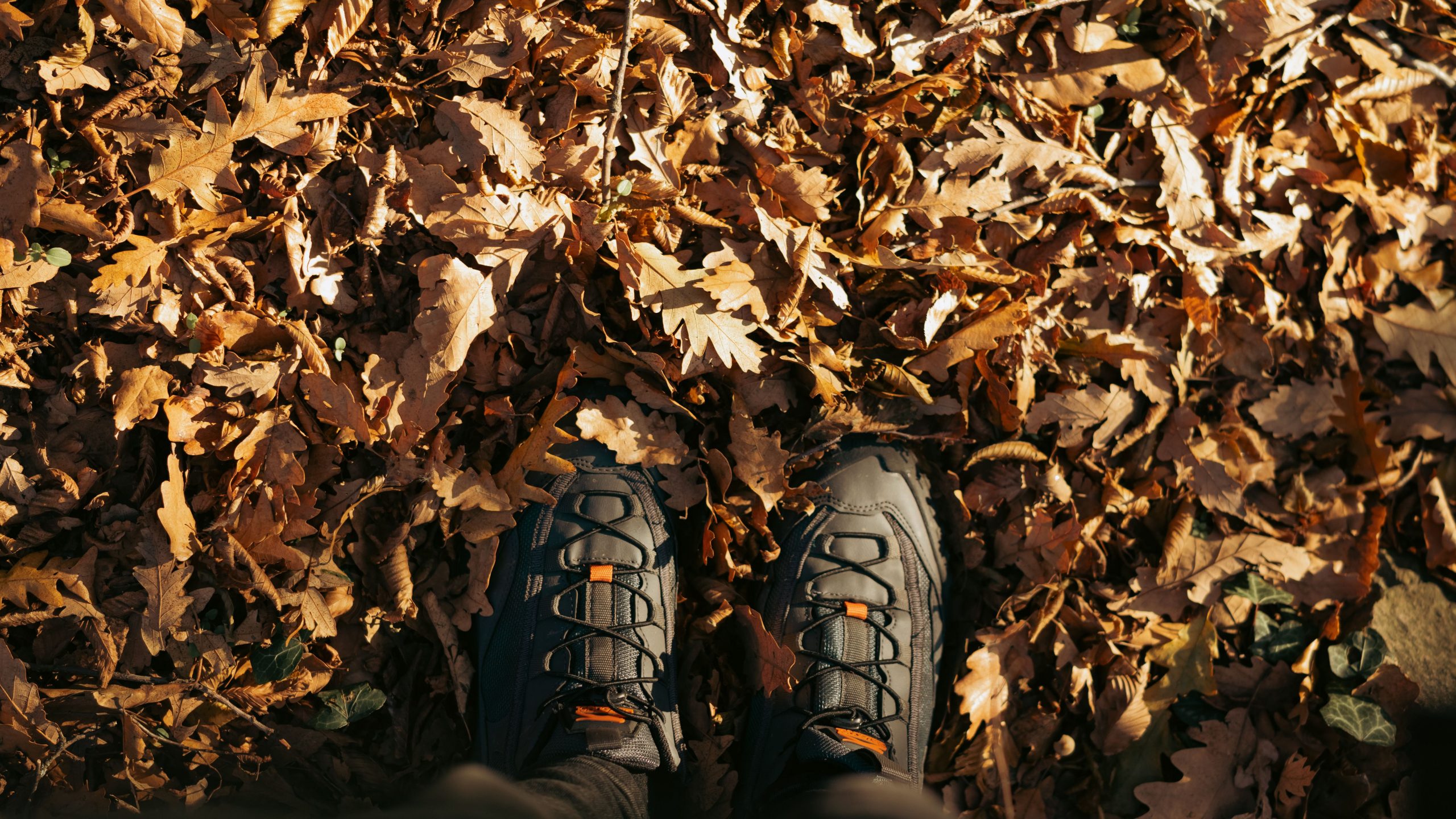
At the finish, I was not thinking about glory. I was thinking about my shoes. I wanted to take off my shoes. That was the most important thing.
After the walk, I still went to a birthday party. Later, around midnight, I went home. I took a big container with cold water, took off my shoes and socks, and put my feet in the water for 15 or 20 minutes. Then I slept outside under the canopy. Not in bed. Under the canopy.
The next morning, I showered. In the evening, I put my feet in cold water again, dried them, and slept under the canopy again. Marion spoke to me, but I was already asleep.
My body was tired, but my mind was already working.
Because now I know I can do 100 kilometres.
I also know I can do it better.
This walk showed me my weakness. It showed me my feet, my preparation, my limits, and my mind. But it also gave me more. I think this was not my only 100 kilometres. I think I must make a second one.
Maybe next year. Maybe another march before that. I do not know yet.
But I know one thing.
100 kilometres is 100 kilometres.
And after is better.