

The Library in Our Pocket.
By Ismar, Brazil and Ritesh, India.
From shared schoolbooks and battery radios to AI companions, Ritesh and Ismar trace what happens when finding an answer becomes easy—and judgement becomes the harder part.
There was a time when finding an answer could mean walking for an hour, asking an older relative, waiting for a newspaper, listening carefully to a battery-powered radio—or simply working the problem out for yourself.
Ritesh knows that world through the stories of his parents in India. Ismar knows it from his own childhood and from his parents’ lives in rural Brazil.
Today, Ritesh opens his laptop at work and asks an AI assistant, “What is there for me today?” Ismar, now sixty-five and back at university, carries what he describes as a teacher on his phone.
The distance between those worlds is barely a lifetime.
And perhaps the most important change is not that we suddenly know more. It is that the difficult part has moved.
Once, the problem was finding an answer. Now it may be deciding what to do with all the answers we have.
When Knowledge Was Scarce.
Ritesh’s father did not have an easy journey to school. After moving away from his parents to live with relatives, he walked for about an hour in the morning and again in the evening. There were few teachers. Sometimes one or two had to look after much of the school, and bright older pupils could be sent to teach younger children.
Ritesh’s father was one of those good students.
He belonged to a generation for whom education was becoming increasingly important. Ritesh remembers his grandfather as someone who could write his name and the names of family members, but who had received little formal education. His father’s generation was encouraged to study rather than spend the whole day working on the farm.
His mother’s experience was different again. She walked several kilometres to school, but household work still had to be done before and after class. Her brothers wanted their sisters educated, partly because an educated girl was considered more likely to marry into a good family.
School was strict. Teachers carried authority. Mathematics, science and language mattered. Extracurricular activities barely featured.
And when a schoolbook could not answer a question, you asked somebody.
An older relative, a more advanced student or a teacher became the search engine. There were few books beyond those required for school. If several children wanted another one, Ritesh remembers, they might pool their money and buy a single copy to share.
Information travelled through people, and it travelled slowly.
A newspaper might arrive in a nearby centre. Radio brought government news and songs. Sometimes the person with the most connections became the person who knew what was happening. Something might have happened days earlier before the village heard about it.
That was simply how information moved.
Ismar’s family story stretches further back. His parents, born in the 1930s, had only brief periods of formal schooling. His mother spent some months at a school in Campo Grande, but much of her education took place on a farm, where a teacher was hired to teach her and her sisters.
Years later, after becoming a widow and approaching forty, she returned to education and started high school. Eventually she stopped. Mathematics and physics had become too difficult.
For the rural generation in which she grew up, school had not carried the same importance it later would.
There was also nowhere obvious to turn when a problem appeared. The nearest neighbour was about five kilometres away. There was no telephone, no internet and, for a time, no collection of books at home.
“They had to discover by themselves,” Ismar said.
His father owned tractors and cars and repaired almost everything himself. If something broke, there was no YouTube tutorial waiting. You looked at the machine, tried something and learned.
Later, dictionaries and an encyclopaedia appeared in the house. The family had a radio powered by batteries because there was no electricity. That radio became their connection to the wider world.
The nearest significant city was around 120 kilometres away.
Knowledge existed somewhere. Distance stood between you and it.
When the News Comes Looking for Us.
Today, the problem is almost reversed.
In Campo Grande, Ismar starts with his phone, scanning headlines from a major news site and an online newspaper to which he subscribes. Printed newspapers, he says, are becoming difficult to find.
In Bangalore, Ritesh no longer watches conventional television news or reads a newspaper. Much of what reaches him comes through X and YouTube.
But he has deliberately reduced the amount of news he consumes.
There was a period when he followed too much of it, too often. Now a headline may be enough. If something genuinely catches his attention, he goes deeper, checking other sources, journalists and competing points of view.
That distinction matters because speed and repetition do not make something true.
Ritesh has watched dramatic claims spread during recent international conflicts, sometimes across mainstream news as well as social media, only to be contradicted later. His response is practical: follow people you agree with, but also people you do not. Find journalists who are prepared to report inconvenient facts. Do not depend entirely on one channel.
Ismar is more sceptical still. When something reaches him, he said, he cannot always know whether it is true. What the public receives may only be one part of what has happened.
We can now hear within minutes that something has happened on the other side of the planet.
Understanding it is another matter.
Ritesh described becoming fascinated by reports about efforts to create alternative international payment systems. He started searching, watching specialist discussions and comparing reports. The more he looked, the less concrete information he found. Eventually the subject lost its grip on him.
The information was abundant.
Understanding remained difficult.
A Teacher on the Phone.
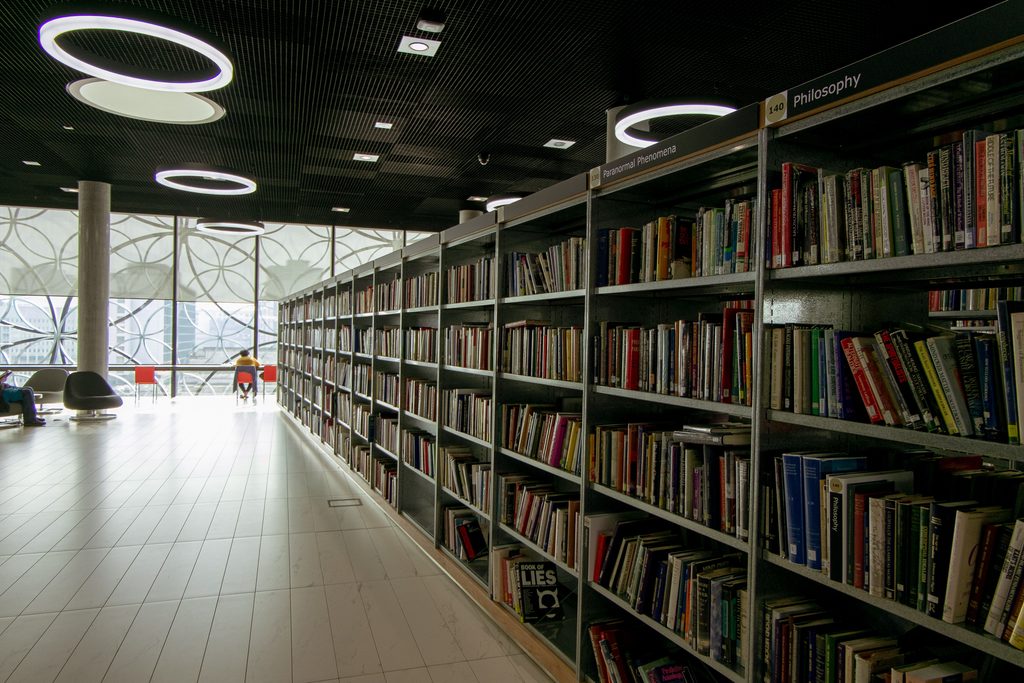
Years ago, Ismar imagined owning a personal library of around 3,000 books.
Then he began thinking about the practical problem. What if he had to move? Thousands of volumes would become a burden.
Gradually another idea replaced the dream.
The internet, he decided, was “a movable library.”
Artificial intelligence has taken that thought one step further.
“I think it’s a teacher that I can have on my cell phone, on my laptop all the time,” he said.
It can correct his writing. It can help with university work. It can answer in seconds a question that might once have required hours of searching.
The speed still astonishes him.
But his trust has changed. At first, Ismar says, he believed AI almost completely. Now he compares answers from different systems because he knows they can be wrong.
He also draws a line between using AI and passing its work off as his own. He can often recognise writing that sounds artificially produced, and he does not want the machine to replace his own contribution.
The reaction is a mixture of admiration and suspicion.
How can something answer so quickly? And if it answers that quickly, how much should we believe it?
For Ritesh, the relationship with AI has become even more practical.
Every morning at work, he opens his laptop and clicks Copilot.
“What is there for me today?”
It shows his meetings, suggests what may need preparation, identifies unread emails and points out messages in which he has been mentioned.
Instead of opening Outlook and allowing the inbox to control the morning, Ritesh can see what is waiting and decide his own priorities.
That matters because his career is changing. He is moving from senior technical writing towards product analysis.
In his previous work, writing was central. A technical specialist might provide difficult material and Ritesh would restructure it, simplify it and make it understandable. AI’s ability to generate and rewrite text naturally made that kind of work feel vulnerable.
His new role requires something different: asking good questions, setting priorities, understanding products and making decisions.
Here AI feels less like a competitor and more like a companion.
When he asks about design thinking, APIs or unfamiliar technology, the system does not merely define the term. Because it knows something about his work, it can explain why that knowledge matters to his new role and suggest what he should study next.
“I feel that I have a system who is so knowledgeable,” Ritesh said. “I have a person who’s a companion.”
For someone entering unfamiliar professional territory, that has reduced the fear of not knowing.
It has also changed what can be created. Ritesh described prototypes that once demanded significant specialist time but can now be produced quickly with AI-assisted tools.
“Bringing your ideas to life, especially in the digital world, has become so easy,” he said.
Then came the qualification.
Creating is easier. Sustaining, scaling and deciding what is worth creating remain harder.
The Answer Is Not the Decision.
Ritesh has already seen what happens when an AI gives a confident answer from the wrong source.
At work, Copilot can search shared company documents. But if five versions of the same file exist, the system may find an older version that appears to match the question and build its answer from that.
A person familiar with the work knows the document is outdated.
The machine may not.
Suddenly, expertise, organisation and judgement matter more, not less.
The same happens with something as ordinary as an email. Ritesh can ask AI to draft a response. It may write flawless English and still get the meaning wrong. He changes the context, adjusts the instruction and asks again.
The grammar worries him less now.
The judgement matters more.
“Our judgement, our intervention is required to make that perfect,” he said.
That may be the deeper change taking place around us. The easier it becomes to produce an answer, the more valuable it becomes to recognise a good one.
And that brought the conversation back to education.
At nineteen, Ismar remembers admiring many of his university professors. At sixty-five, back in university with professors younger than he is, his relationship with authority has changed.
Sometimes he wonders whether today’s professors possess the breadth of knowledge he remembers from the past. Then he questions his own conclusion.
Perhaps the professors have changed.
Perhaps he has.
“Maybe my level of criticism” is higher now, he suggested.
He does not have a definitive answer.
Ritesh approached the same question differently. What still has to be learned slowly?
“Patience,” he said.
And intention.
He remembers teachers who were not always exceptional experts but who turned up, worked through the curriculum and took the responsibility seriously. He also remembers discovering outstanding university teaching online—not somebody simply reading from slides, but a teacher connecting theory with experience and explaining why something mattered.
The information itself can be found in a book, on a website or now through AI.
The connection still has to be made.
So does the ability to sit in a classroom, concentrate, return the next day, practise, listen and continue when an answer is not immediate.
Near the end, Ritesh returned to books.
As a child and later as a student, he used to watch interviews with knowledgeable people sitting in front of shelves filled with them. He wanted that background for himself. One day, he thought, he would build a library.
Now almost every book he could want is accessible.
What he lacks is time.
He still imagines buying books, reading them and eventually sending them back to his family home, slowly building the library he once dreamed of.
Then he looked across the screen at Ismar, sitting in front of what appeared to be an impressive wall of books. Ritesh admired it. He thought perhaps Ismar was joining the conversation from a university library.
Ismar smiled.
The library was virtual.
It was a fitting final image.
One generation shared books because they were scarce. Another carried news through battery radios. Today we can place an entire library—and something resembling a teacher—inside a phone.
The answers have arrived.
What we do with them may still take a lifetime to learn.