
The Rules I Keep, and the Ones I Question.
By Alexander, Germany.
After a 4–1 win, an offside thought experiment and a difficult team discussion, one question became harder than it first looked: when is a rule useful, and when are we simply used to it?
On Monday morning, I was not really ready for difficult questions.
Everything hurt. My head was still somewhere in the weekend. But there was a good reason for that.
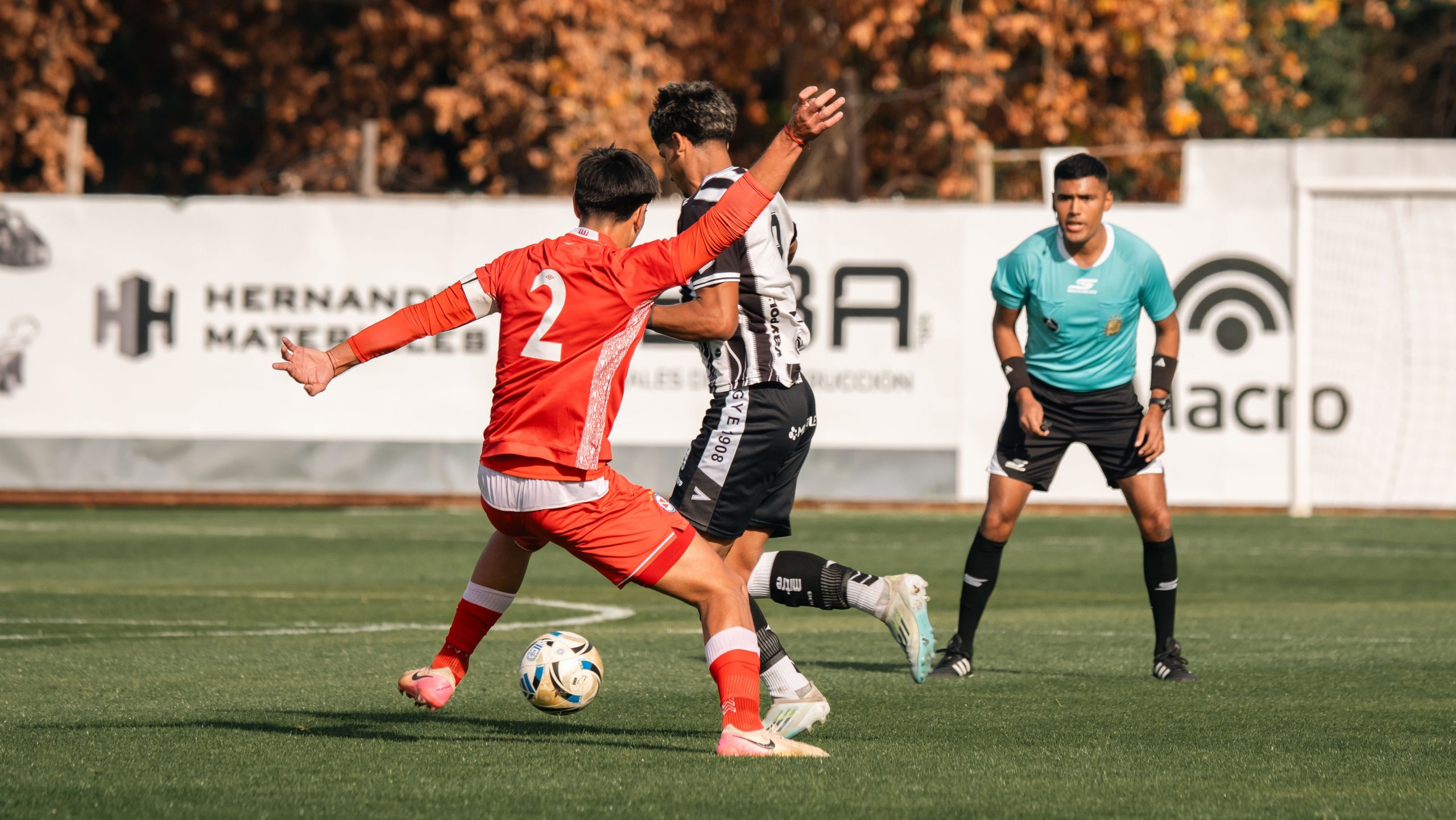
The day before, we had won our football match 4–1. I had played in a different position, scored one goal and assisted another.
So naturally, the first question was:
What would happen if FIFA removed the offside rule?
I had never really thought about it.
My first reaction was that it could be good and bad at the same time. I am quite fast, so without offside I could stay higher up the pitch. If our defence played a long ball, I could simply run towards the goal.
That sounds good.
But then I thought about the rest of the game. Defenders would stay deeper. Huge spaces would appear in midfield. The whole shape of football would change.
And suddenly I realised something simple.
I think the offside rule is a very good rule.
Stupid at first, sensible later.
We already have several new football rules this season.
One concerns substitutions. When a player is taken off, he has only a short time to leave the pitch.
On Sunday, I was substituted after about 80 minutes. Normally, I would walk off slowly.
This time the referee started counting.
Five. Four. Three.
If I had taken too long, the new player would have had to wait before coming onto the pitch.
I made it.
At first, this kind of rule feels stupid.
But I understand why it exists.
Players use substitutions to waste time. The same happens when goalkeepers hold the ball or teams take too long over a throw-in. Now the referee counts, and everybody knows what has to happen.
The rule can annoy you and still improve the game.
That is an important difference.
A rule should have a reason.
Why Monday?
Then the questions moved away from football.
Why does our Stammtisch meet on Monday evening?
My answer was obvious: people have commitments. They have to work.
Why not meet at lunchtime and go back to work afterwards?
Well, because we might drink alcohol.
You do not have to drink alcohol.
That made things more difficult.
The truth is, we chose Monday because it gave us something good at the beginning of the week.
It was Monday, yes.
But in the evening, we had Stammtisch.
And then we simply carried on.
We have not seriously discussed the day or the time for years.
Maybe there is nothing wrong with Monday evening. I still think it is a good choice.
But I had to admit something.
Sometimes “we have always done it like this” is not really an argument.
It is just a description.
I hear that sentence all the time.
In sales, I know that sentence very well.
“We have always done it this way.”
I hear it all the time, and professionally I cannot simply accept it.
In an earlier job, part of my work was getting customers to use a new webshop.
That sounds easy until you sit with people who already have a system they know. The new webshop is unfamiliar. They do not know where anything is. Their old process works.
Why should they change?
That was difficult.
I remember learning in a training course that people need repeated contact with something new before it stops feeling new. Whether the exact number was 27 times or something around that, the idea stayed with me.
Change becomes easier through repetition.
People do not always resist something because the new idea is bad.
Sometimes the old way simply feels normal.
But that does not mean every new idea is better.
That became much clearer when we came back to football.
The harder question.
Our team had a bad start to the season.
On Friday, we had a serious discussion about what we could change. One idea was to bring back some older players who had already stopped playing regularly.
Most people thought this was a good idea.
I did not.
Not because the older players are bad. They could probably help us immediately. We might win more matches and improve our position.
But for me, that gives us a better picture without necessarily solving the real problem.
At some point, we have to change.
We have to learn to play without always bringing the old players back.
There is also another side.
We have younger players who come to training all the time. If experienced former players return whenever things become difficult, those younger players train all week and then sit on the side during the match.
For me, that is not fair.
My brother had a strong argument against my position.
If we are relegated at the end of the season, he thinks the situation could become much worse. Players may lose interest. The whole team could suffer.
I understand that.
It is a good argument.
But then Sunday came.
We played with the new players.
And we won 4–1.
Maybe the question is the important part.
One victory does not prove that I am right.
Perhaps the older players will still be needed. Perhaps the younger players need more time. Perhaps, at the end of the season, we will look back and decide another solution would have been better.
I do not know.
But there is a difference between keeping something because it works and keeping it because we are afraid to change it.
There is also a difference between changing something because it is necessary and changing it simply because it is new.
The offside rule still makes sense to me.
The new time rules annoyed me at first, but I understand their purpose.
Monday evening is still a good time for Stammtisch, even if nobody has questioned it for years.
And with my football team, I would rather find out whether the new generation can succeed than immediately return to the old solution when things become difficult.
Apparently, even on a Monday morning, with your whole body hurting and your head still tired from football, a strange question can make very normal things look different.
That does not mean you have to change them.
Sometimes it is enough to know why you want to keep them.