
Embracing the What If: Monday at Eight Was Already Gone
Monday, eight o’clock in the morning, and the day was already gone.
Finished.
That is what I said to The Mayor when we started our weekly meeting. Monday was there, yes, but in my head it was already running away from me. The week had begun, the work was waiting, the normal things were standing in line, and then The Mayor came with this question.
“So, Ralf,” he said, “what if? What if you woke up tomorrow morning — not this morning, because Monday is already finished — but tomorrow, Tuesday, and you could say yes to one completely crazy idea? What would that be?”
I did not need long.
“Crazy idea?” I said. “I call my friend and say, ‘You can come to me. Put all the barbecues in the van.’ And then I call the Schickling brothers and say to them, ‘Please send me the big rocket.’”
The Mayor laughed a little and asked, “And what would you do then?”
“I will make, in the evening, a nice barbecue,” I said. “I would make a nice barbecue for my wife.”
He reminded me then of the barbecue from the weekend. “You had a barbecue with Dorad,” he said. “Would it be nicer than that barbecue? That was already a good barbecue.”
“Yes,” I said, “it was okay, it was good. But it was normal. It was only like on a fire box, and we smoked the fish. That is a normal barbecue.”
“So what would you make for your wife that is different?”
I had the picture directly.
“She likes tenderloin,” I said. “In Germany we have a name for this, and the cow has only one from this. It is a very special part. My wife likes it. It has a special smell, a special taste. When I say, ‘Oh, I have tenderloin,’ she says, ‘Oh, it’s great.’”
And then, because for me a barbecue is not only meat, I told him about the tomatoes.
“She likes small cherry tomatoes,” I said, “with the green stems still on them. I put them in a small box with olive oil. Then there is a red spice. It is like chili, but it is not chili. I put this over the tomatoes, and then a little bit of sugar. Only a little bit. Then it comes into the barbecue, not high temperature, low temperature. And then the tomatoes become like a very good paste.”
The Mayor said, “So your crazy Tuesday is: invite your friend, get all the barbecues, call Schickling for the big rocket, and barbecue for your wife.”
“Yes,” I said. “That is it.”
“Shall I tell your boss,” he asked, “or will you tell your boss that you are not working tomorrow?”
“I tell it to him,” I said.
That was easy. I am old enough to tell my boss when the big rocket barbecue is calling.
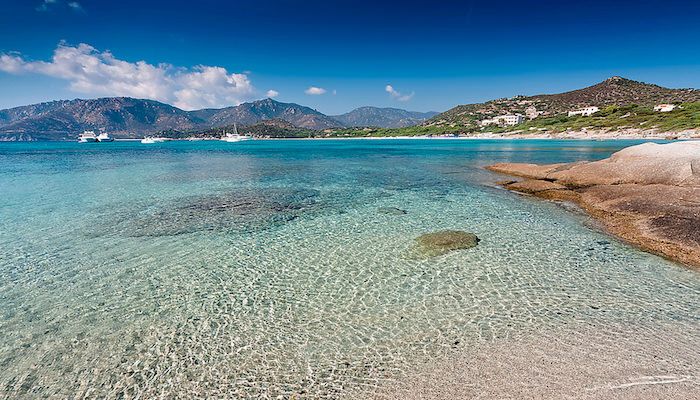
Then The Mayor took me further away. Not to Tuesday, but to Sardinia.
“Imagine,” he said, “you could live for one year on Sardinia. Not back then when you were there with the military, but now. What would your day look like, from morning to evening?”
I went there immediately in my head. I could see the roads, the beach, the old memory.
“When I stay on the island,” I said, “I drive from Olia in the south to a village called Geremeas. When I was in Sardinia in 1994, we stood in front of small houses there. Two houses next to each other. My friend said, ‘This only costs 70,000 German marks.’ So, only 35,000 euro.”
I still feel this sentence now.
“The house had about 80 square meters,” I said, “but no heating. Only a small oven with oil. At that time we said, ‘No, this is not good when it is cold.’ And now I think, why didn’t we do this? Why didn’t we buy this house? It was near the ocean. Geremeas has a long, slow sloping beach. It is so fantastic.”
“So now you would buy it?” The Mayor asked.
“Yes,” I said. “Now I drive to Geremeas and buy this house. Or I drive to Alghero and buy me a house in Alghero.”
“And what would you do all day in one of these places?”
“In the first time,” I said, “I drive to the market every day. I buy fresh ingredients for my meal. Fish, vegetables, tomatoes, herbs. This market is fantastic. Then I drive to Cagliari, to the big, big, big supermarket. There you have so many things about cooking. You can buy everything there. And around there are many small shops. Oh my God, so many small shops. It is very fantastic.”
I could smell it already — the fish, the fruit, the bread, the warm air.
“When I put the things in the house,” I said, “then if I live there, I have a dog. I go with the dog on the beach. And every second day I go to play golf.”
The Mayor said, “And you said when you retire you want to write children’s books. Would you do that there? You divide the day — market, beach, golf, and writing?”
“Yes,” I said. “Children’s books. Hedgehogs.”
I like this idea very much. A hedgehog can have many adventures. Small legs, big world.
“I had a problem before,” I told him. “When I write down the story, I have no pictures. I said this to my wife. But now I know you can make the pictures with artificial intelligence. I know from you that I can use AI to make pictures for the book.”
The Mayor smiled and said, “When the time comes, we will sit down and I will show you the process.”
“Yes,” I said. “Because it is good fun. I like the cartoons and the pictures. It is very, very fine.”
Then he kept me in Sardinia, but he put my coffee machine there too.
“You are on Sardinia,” he said, “relaxed, everything is nice. And your coffee machine could talk. What would it say about you?”
I laughed.
“It drinks too much coffee,” I said.
Then I thought of Sebastian.
“And she is calling Sebastian,” I said, “and says, ‘What is with your coffee machine?’ He has a very, very high-end coffee machine. The beans, the grams, the grinding — everything is very complicated when Sebastian makes a coffee.”
The Mayor said, “I think if you visit Sebastian, you have to give him six months warning, because it takes him six months to make the coffee.”
“Yes,” I said. “And my coffee machine has a problem. She thinks I will buy a new coffee machine, and she is going on retirement.”
“What does your coffee machine have to do to stay with you?” he asked. “So she does not need to be afraid?”
“Nothing,” I said. “She is perfect. She is old, and she is perfect. I have three other machines that maybe can be put together in one machine, but she is only working.”
Then The Mayor stopped me, gently.
“You are thinking in German,” he said. “Die Kaffeemaschine. You say she. In English, objects are not he or she. It is ‘it.’”
“Ah,” I said. “Okay.”
“So your coffee machine is an old perfect woman.”
“Yes,” I said. “Okay.”
And for me this is true. She is old and perfect. Some machines do not need to be new. They need only to work and to be loved a little bit.
Then The Mayor asked who I would invite.
“Still in Sardinia,” he said. “You have the food, the ingredients, the barbecues. You invite three people from your life for a holiday. Old bosses, friends, family, good bosses, bad bosses. You, your wife, and three other people. Who sits at the table?”
“If I can put them on a ship,” I said, “I take my best friend Thomas and his wife. Then Lothar and his wife. And Oliver from work with his wife.”
“They all know each other?”
“Yes,” I said. “Oliver knows the others from my talking about these people.”
“So what makes the first dinner special?” he asked.
“I buy, with this house, an outdoor kitchen,” I said. “Then the women can make holiday, and the boys come to me, and we cook together — without Thomas.”
“Without Thomas?”
“Yes,” I said. “Thomas is clear. He does not have to.”
That is friendship also. You know who cuts, who grills, who talks, who sits.
“We drive to the market,” I said, “and buy good fish. We grill the fish and put fresh herbs on it. Some potatoes. Some green lettuce. And all the men must take a little bit from the work.”
The Mayor then turned the table on me.
“As a thank you,” he said, “you and your wife change roles for one day. You do no cooking, no preparation, nothing. She takes over the cooking and everything. What would go well, and what would be total chaos?”
“Then we have a problem,” I said. “We have only noodles. Pasta. Pasta with smoked salmon and cheese with oil in the oven. This is the only one she can make now. She can make goulash, but it is not very good.”
I had to laugh, but also I had to be honest.
“Since 2006,” I said, “when we became a couple, I said to her, ‘I make cooking and grilling and barbecue.’ And she said, ‘Oh yes, this is fine, this is very good.’ So I think it is my fault. I don’t let her go in the kitchen and work there.”
“So she can cook?” The Mayor asked.
“Yes,” I said. “She can cook, but not so fantastic.”
And that is funny, because she comes from a butcher family.
“Her father had a butcher shop,” I said, “and he made catering. At lunchtime they made food for people who came into the butcher shop — chops, burgers, things like this.”
“Was her father a good butcher?” The Mayor asked.
“Yes,” I said directly. “He made liverwurst. The best liverwurst I have ever eaten. Coarse liverwurst. Fantastic.”
After he died, his last apprentice said he could make the sausage, but he could not make anything near it.
“He also made a red sausage,” I said, “a blood sausage…black pudding in English.”
Then another old idea came to me.
“When he was alive,” I said, “I wanted to buy a field and say to him, ‘Open your butcher service again. We put Galloway, Angus, and Highland cows on the field, and we make something special with the meat.’”
That would have been nice. Good animals, good meat, good work. Not this cheap thing. Something with respect.
The Mayor came back to the women in Sardinia.
“What would the four women do while you were in the kitchen?” he asked. “Your wife and the three wives?”
“They go to the beach,” I said. “They swim, they lie in the sun, they go shopping and so on.”
“And your wife would probably train for her next triathlon.”
“Yes,” I said.
“When is her first meeting?”
“On the 6th of June,” I said. “And the big event is on the 15th of August. Her half Ironman. Near Flensburg.”
Then The Mayor moved me from Sardinia back to the road, to work.
“What if everybody had to spend one day on the road with you selling something?” he asked. “What would they learn about people?”
“They would learn about me and my network,” I said. “They would learn that people are not the same.”
This is one of the most important things in sales. People are not the same, so you cannot be the same with everyone.
“When I come to people in Hamburg,” I said, “maybe I say, ‘Hello, Mister…’ Then I drive somewhere else and say, ‘Hey, Dirk!’ It is different. You learn how different people are in the sales job. You must see what mood he is in. Good mood, bad mood.”
“So you read people?” The Mayor asked.
“Yes,” I said. “I think I am a good man who can take a look inside people. I can read between the lines. Maybe also between the silence.”
And I see it at home too.
“When my wife comes home from work,” I said, “from the first moment, from her first word, I can see if it was a good day or a bad day. Sometimes she comes to me and says, ‘Do you know what we eat this evening?’ And I say, ‘Yes, but with tzatziki.’ And she says, ‘Why do you know that we go to the Greek restaurant?’ I say, ‘I don’t know. I am thinking.’”
The Mayor said, “That is a special connection.”
“Yes,” I said. “Between my wife and me, it is like this.”
Then came a serious question. I felt it before I answered.
The Mayor said, “We are both over 60. Maybe there are things in modern life we don’t really like anymore. If you could repair something in modern life, like you repair a machine, what would you fix?”
I did not answer with modern life. I answered with my father.
“I would fix my father,” I said. “I would say, ‘Go to the doctor and take a look at your heart.’”
The Mayor became quiet.
“He could have lived much longer,” I said. “He was only 58. It was 1988, on my birthday, and he had a headache. I would say to him, ‘Go to the doctor. Take a look in your body and your heart.’”
“So health is the most important thing in a person’s life,” The Mayor said.
“Yes,” I said.
Because everything else can wait. The barbecue can wait. The car can wait. The house can wait. But the heart cannot wait.
Then he asked me about young people.
“What if a young person, somebody 20 years old, comes to you and says, ‘Ralf, what makes a good life?’ What story would you tell him or her?”
“For a good life,” I said, “you need a good partner. You need good parents, a good background, and you must have contact to your parents. You need a good education. But the main part is a good partner and good friends.”
I believe this with my whole body.
“When you have a problem,” I said, “and you can go to your friends and say, ‘I have a problem, can you help me?’ — friends can be better than their own family.”
“In English,” The Mayor said, “we say you can choose your friends, but you cannot choose your family.”
“Yes,” I said. “But I have a good family. Not my sister, she is a problem, but it is okay.”
Then he asked me about my old yeses and noes.
“If you had said yes more often in your life,” The Mayor asked, “what might have happened?”
I thought about school first.
“When I was at middle school, Realschule,” I said, “the teachers asked my parents and said I could go to high school. They said, ‘He can do it, but his concentration is not good, and he is lazy. You must look that he does his homework and learns.’ My parents asked me, ‘Do you want to go to high school, or do you want to go working and make money?’ And I said, ‘Go working and make some money.’”
“And now?” The Mayor asked.
“Now I would say it was better to go to high school,” I said. “But well, it is okay.”
Then I remembered the bigger no.
“When I went to the army,” I said, “to the Marine air service, they said they needed pilots. You could become a pilot without Abitur, without high school, and fly helicopters. And I said no. That was a bad mistake in my life. After grilling, I want flying. I did not take the chance. I only worked on an airplane.”
There are things you say and laugh, and there are things you say and they stay in the room a little longer. This was one of them.
Then The Mayor asked a strange but good question.
“If you could have dinner,” he said, “with the younger Ralf, the working Ralf now, and the retired Ralf from the future, would they like each other?”
“Yes,” I said. “Because they can learn from each other.”
I liked the picture. Three Ralfs sitting together. Maybe too much talking, yes, but good talking.
“The retired man,” I said, “can say to the working man and the young man what they can make better in their life, from the beginning or from the middle. And the younger people can teach the older people better working with WhatsApp, with AI, and with ChatGPT. When all three men put their ideas together, they have fantastic thinking and doing.”
The Mayor liked that. We both think it is important to speak with older and younger people. The old ones know things. The young ones know things. And if nobody speaks, everybody stays stupid.
Then he asked about decisions.
“If you look at life,” he said, “do you think the most important things are not the big decisions, but the small everyday repeated decisions?”
At first I said, “I don’t know what you mean.”
So we found the difference together.
“The small decisions,” I said, “are normally every day in my life. What we eat, where we go, the normal things. But the big decisions are very important. You must think: Will you buy a house? Do we need a new car? Have we the money for this? What will you work? What will you make in your life? Marry or not marry? Children or no children?”
Then I said one hard thing.
“My bad decision,” I said, “was when I said yes to my first wife, yes, we can marry. I would make it now better.”
“And what would you do?” The Mayor asked.
“I would go, as a younger man, to the bus service or to Brand and ask, ‘Where is your daughter?’”
Because now I know who was the right woman for me.
Then The Mayor took me to the future.
“You are in your 60s,” he said. “Retirement is not very far away. You have one more wild chapter still waiting. What would you secretly hope it is?”
“The new chapter is beginning,” I said.
And then I told him about yesterday.
“We drove with our bicycles,” I said, “and our neighbor has a new car, a big van, a mobile home. He said, ‘Please come inside and take a look.’ We looked at this and this and this, and we said, ‘It is so fantastic.’”
Then we looked on the website from Niesmann camping.
“There was a car,” I said. “I said, ‘This is very nice.’ It is diesel and electric, no gas. So you are autonomous. We said, this is fantastic. We can take this car to the sporting events for my wife, put her bicycle inside, and our bicycles outside.”
But the best thing, of course, was the barbecue.
“It was a rental car before,” I said, “and it is fully complete. With barbecue. A very good barbecue. Outside you can open a door and pull out a drawer, and there is the grill. I said, ‘Hey, this is very, very good.’”
The Mayor knew exactly what this meant. For other people it is maybe a small detail. For me it is a sign from heaven. A barbecue drawer in a mobile home? This is not a car anymore. This is a life plan.
“Since yesterday,” I said, “we have the next chapter in our life. We said yes, we buy this car when the estate from my mother-in-law is cleared.”
Then I explained the bigger plan.
“My wife is 54 now,” I said. “Normally she must work until 67, so 13 more years. But we will have income from three houses, and we want her to work only three days. She has already worked 34 years, and she needs minimum 35 years so she can retire and get money for this working time. If her boss says yes, she works only three days a week.”
“And then?” The Mayor asked.
“Then maybe she has not 30 holiday days anymore, but 24,” I said. “But for one week we need only three days holiday, because Thursday, Friday, Saturday, and Sunday are free. Then we take this car and drive to the Rhine, or to the Baltic Sea, and so on.”
“And later?”
“Later, when my wife is retired,” I said, “we drive through Europe with two dogs and three or four barbecues. The car will be an all-days car for me. Maybe we sleep in a hotel, but if the hotel has no place for us, or we cannot put the dogs inside, then we live in our car and sleep there.”
And this, for me, is a very good what if.
Monday at eight o’clock was already gone, yes, but when I finished talking with The Mayor, I had travelled already. I had gone to Tuesday with the big rocket barbecue. I had gone to Sardinia, to Geremeas, to Alghero, to the market in Cagliari, to the beach with the dog. I had gone back to 1994, back to school, back to the army, back to my father in 1988. I had gone forward to the mobile home, the dogs, the bicycles, my wife’s triathlon, and the barbecue drawer somewhere on a road through Europe.
This is the funny thing with “what if.”
At first it sounds like a game. Then suddenly it opens the whole life.