
The World at Lunch: A Small Table, a Wide Horizon
It was lunchtime for one of us, night for another, dawn for a third. The screen sliced the world into four gentle windows: Janita in South Africa hosting, Frank (“the Mayor”) in a quiet French village, Rosii in the noise and brightness of São Paulo, and Monica in Adelaide, where the day had already given way to streetlamps and yawns. A practical miracle—this ordinary, extraordinary call—was how the conversation began: a few voices, four time zones, and a shared appetite for understanding what life looks like when you step past the edge of your own map.
A table set by the internet
“Are we live?” Janita grinned. “Rock and roll,” came the chorus, half joke and wholly true. What followed was less an interview and more a living room with global weather: French autumn, Brazilian morning, Australian evening, and a South African lunch break that kept the rhythm.
This is the Pineapple kind of scene—part travelogue, part kitchen talk—where “global perspectives” are not a topic but a habit. We weren’t there for data; we were there for what happens when personal stories rub against the grain of distant places: toilet-paper panics and egg shortages; alpine fantasies and bush devotion; the feeling of being a “speck” in a vast universe, and the consolation that, despite the distances, our needs rhyme.
What can I take from this? Sometimes the most expansive journeys begin at a very small table.
Four windows, four ways of seeing
Janita (South Africa): Host of the human weather
Janita holds the space with questions that feel like invitations. Why know how others live? Because understanding is a kind of travel—and travel changes you even when your feet don’t move. She tells a poolside story from Kruger: murky water, Spanish tourists, a translator friend, the shared logic of caution when you can’t see the bottom. Different contexts, same human instinct. Fear becomes empathy with one sentence of context.
Later, she describes shelves emptied by supply shocks and the tender absurdity of rationed toilet paper. It’s funny until it isn’t; scarcity is never just a headline when it touches your kitchen and your neighbors.
What can I take from this? Curiosity is a civic action. Ask one more question before you judge.
Frank (France): The village philosopher
Frank’s tiny Alsatian village could be a fable: 700 people, “no problems” except what to have for lunch. He teases himself as an “autocrat” of humour, then turns thoughtful. Global perspective matters, he says, because it reveals better ways to do ordinary things. He remembers the price of a transcontinental phone call when he was younger—crackling lines, pre-dawn schedules, a cost counted in “two arms and six legs.” Now the internet makes this conversation almost free. Technology didn’t just connect places; it connected temperaments, letting a German-born, France-happiest “snail” stretch his house across continents.
He speaks of astronauts—how none returns, saying Earth is ordinary. Viewed from space, our differences diminish; our responsibilities enlarge. “There is no Plan B,” he says with wry tenderness. If that’s bleak, it’s also galvanizing.
What can I take from this? The globe is not a metaphor. It’s a home. Maintenance is everyone’s job.
Rosii (Brazil): Morning optimism, sweet-salty truth
The connection to São Paulo flickers, and Rosii laughs through the glitches, insisting the simplest truth: the internet is the easiest bridge. WhatsApp, weekly calls, this very meeting—it means she now has foreign friends in France, Australia, South Africa. “Almost a family,” she smiles. Her image of France through Frank’s neighborhood is cinematic: calm, beautiful, a different quality of life. She doesn’t trivialize São Paulo’s noise; she simply names another frequency and says, I can hear it.
At one point, she’s asked what flavor Brazil might be. “Sweet,” she answers, then corrects herself: “Sweet and salty. Salted caramel.” The metaphor lingers. Brazil contains multitudes—spiced with contradictions, balanced by joy.
What can I take from this? Connection is more than contact. It’s an update to your imagination.
Monica (Australia): The practical dreamer
Monica answers the “year abroad” question with maps and mouthfeel. Switzerland or Austria—mountains, cold, lakes, languages she can speak, chocolate she can afford. Norway tempts her fish heart, though she only knows “takk.” It’s the most human kind of calculus: vistas + vocabulary + dessert = a livable year.
Her Australia is a multicultural classroom in real time. Harmony Day assemblies. Dinner menus that casually range from sushi to spaghetti to curry. The festive mess of a city whose demographic tides have brought Greek, Vietnamese, Sudanese, Indian, and Chinese communities into the neighborhood. She talks about tolerance, then about practical education—the basics of a mortgage, a job application, the social grammar of respecting the person who collects your bins as much as the prime minister. She tells stories of backpackers gone and fruit left unpicked, of trams and doorways, of homelessness you don’t notice until suddenly you do.
What can I take from this? Diversity is a banquet, but it still asks us to set the table together.
The thread that stitches a world
What changed in the last decade? Everything and nothing. Costs dropped and bandwidth rose, yet the ancient work remains: listening without fear. The group laughs about Chinese supermarkets and fussy village marriages (“four kilometres is foreign!”), then admits the contradictions we all live with: suspicion at the border, delight at the restaurant. These frictions aren’t moral failures so much as old brain, new world.
Monica confesses to scrolling “too much” on her phone, yet what she finds is a library of hope: wave turbines under Scandinavian seas, German shelters for the homeless built from the bones of retired wind blades. Her screenshots turn into proof that small populations can dream at planetary scale. We are all, she suggests, apprentices to each other’s best experiments.
Frank brings levity: sport as a global language, a “good laugh, a couple of beers,” and then back to work. But the laughter is cover for something real: rivalry without rupture, friction without fracture. If sport can teach us that lesson, perhaps politics can, too.
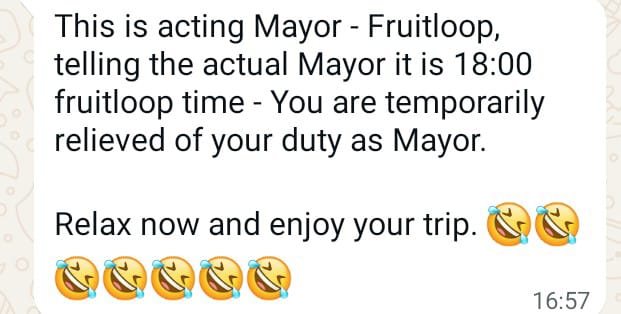
Rosii measures distances by friendships. She’s at 7:23 a.m., smiling at how time zones become inside jokes—Frank’s two clocks, the “Auntie Fruitloop” moniker that sticks to Janita like a playful badge. These are not just participants; they’re a practice. The weekly cadence builds a kind of family that is denser than a newsfeed and lighter than a duty. This is how global perspective becomes a muscle.
What can I take from this? Culture isn’t “out there.” It’s what you and your friends make every Tuesday, in whatever time zone you can borrow.
Begin where you are, with who you have
By the end, the “topic” had dissolved into what it always was: four people living what they preach. If the world is a lunch table, Janita is the only one actually eating; the rest of us bring our own weather. The absent regulars—Nathalie in Seoul, Bruce in London—leave small shadows that feel like empty chairs saved by coats. The point writes itself: global perspective is not a grand gesture; it’s showing up.
So, here’s the quiet invitation. Before the next argument about borders, inflation, or the latest shortage—eggs, potatoes, plans—ask a different kind of question: Whose window can I look through today? Not to borrow their certainty, but to borrow their light.
Frank, given the last word, joked about clocks and time zones—then said the wisest thing anyone can say on a cold day: we can’t control the season, but we can warm the room. The conversation didn’t end so much as settle—like the feeling after a nourishing meal.
What can I take from this? There may be no Plan B, but there is always another person to ask, “How does life look from where you are?”
Identify your season. Create your own summer. Begin with one call.