
The Rules I Never Knew I Had
It started with a drawer full of random things. It ended with the quiet rules I learned from my mother, and the question of which of those rules still matter now.
By Alexander, Germany.
The famous drawers.
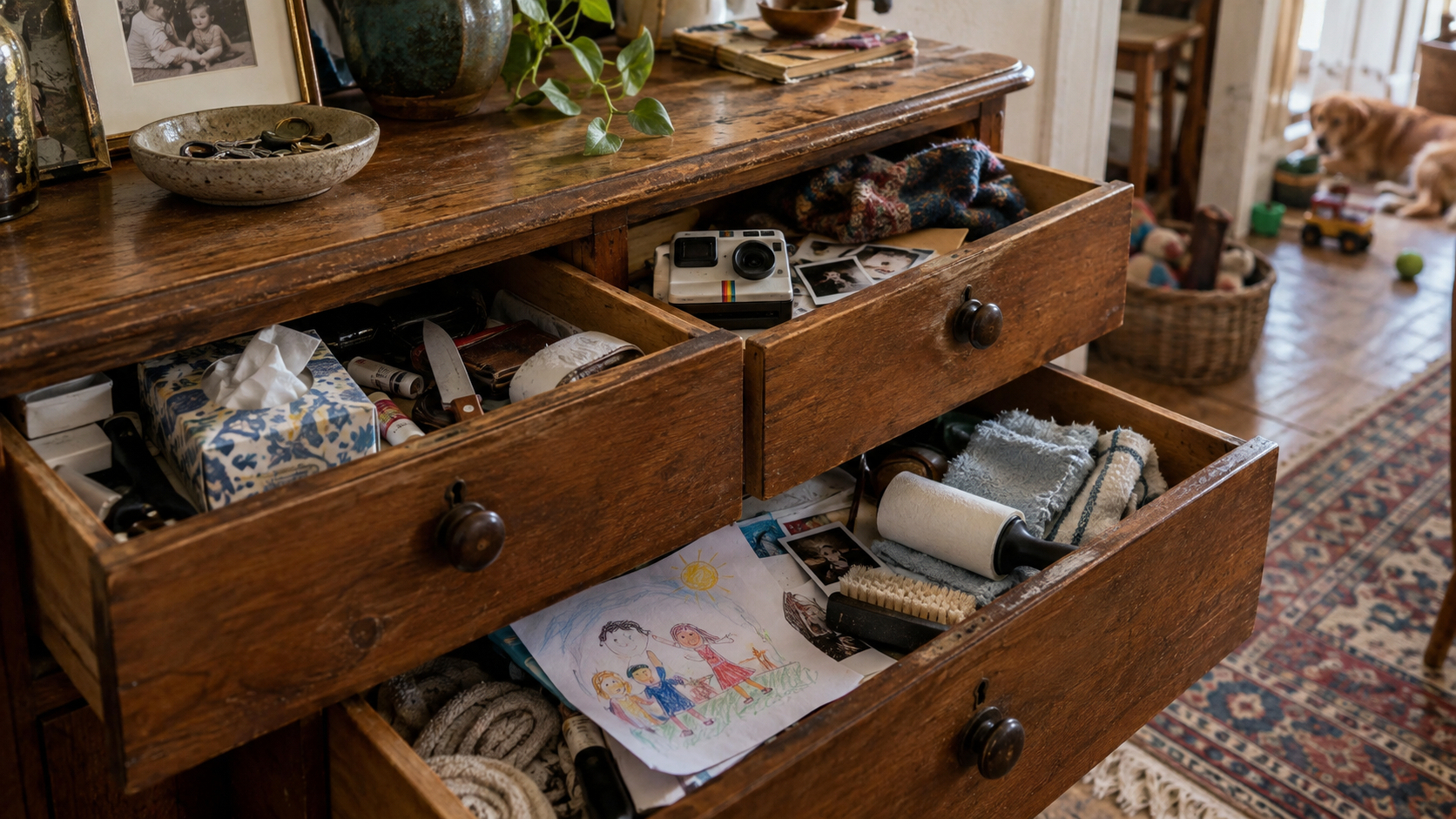
We do not have one of those famous drawers where everything goes when nobody knows where else to put it.
We have many.
I think there is one in nearly every room of our house. In the entrance hall we have a cabinet with four drawers that all look exactly the same. Inside you can find almost anything: tissues, a knife, a roller for cleaning clothes, games, a Polaroid-style camera and other things where, if I showed them to you, you might ask, “Why is that in there?”
That is a good question.
Every year I clean these drawers. I sort everything out and put things where I think they belong. Then, perhaps one week later, I open a drawer and it looks almost exactly as it did before.
Years ago, this would probably have irritated me much more. Today I can look at it and think: it is not nice, but it is also not so important.
That has taken some learning.
I am normally quite clear about things. I know what I need and what I can throw away. At least, that is what I like to think.
But I also have a cardboard box on top of the wardrobe. Inside are old boxes from my phone, my tablet and other things. I hardly ever look inside it, and I cannot really explain why I have not thrown these boxes away.
So I am not completely innocent.
There is another kind of box too. When my son was born, we received a wooden box where we keep things with sentimental value: drawings he has made, a handprint and the first lock of hair from his first haircut.
Those things are different. They have a reason to stay.
For me, the interesting question is where that difference comes from. Why am I so clear that some things have a place, some things should disappear and some things must be kept?
I think the answer begins much earlier.
The rules I learned without being told.
I grew up with my mother. It was just the two of us.
She was, and still is, a very clean and tidy person. I think I was also a very tidy child. My room was normally clean. I do not remember my mother having to tell me again and again to tidy it.
I also had a drawer for my toys. The difference was that when I finished playing, I put everything away again.
Nobody sat me down and explained a philosophy of tidiness. I simply saw it every day.
Clean up your things. Keep things clean. Do what needs to be done.
It became an unwritten rule.
There were other rules like that. My mother did not always give me an exact time when I had to be home. I would tell her where I was going, and somehow I knew when it was time to come back.
Once, when I was younger, I was on the other side of the city with friends from school and missed the last bus. I had to walk perhaps eight or ten kilometres home. I arrived around one and a half hours later than expected.
At that time you needed credit on your mobile phone, and I had none left. I could not call or send an SMS.
My mother was not happy, of course, but it did not become a huge drama. I explained what had happened. She was glad I was home, and she told me that next time I should find another way to handle the situation.
That was her way.
There were expectations, but there was also trust.
When a rule becomes automatic.
When I was six, I got a cat.
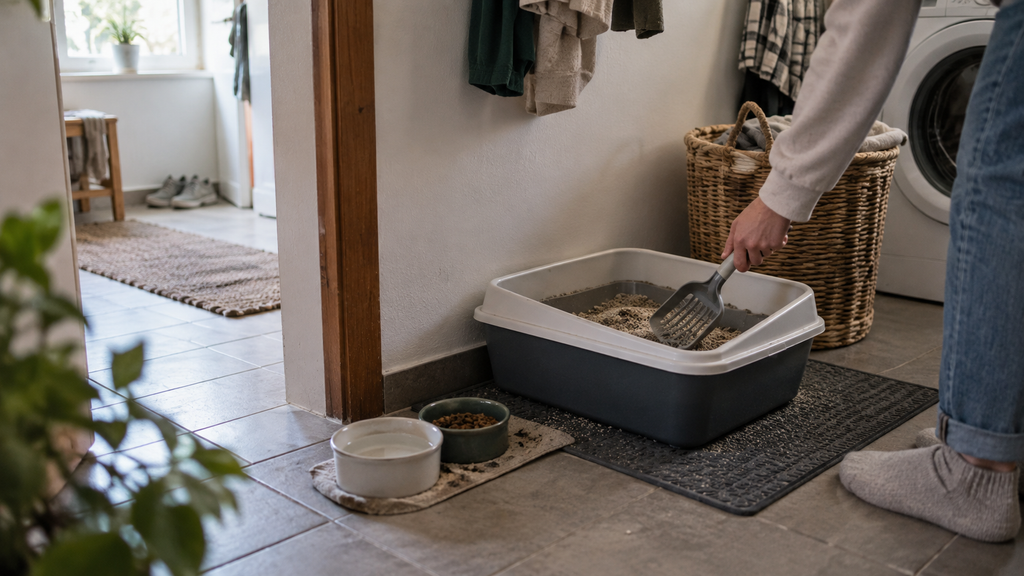
It was my present, so my mother made something very clear: the cat was also my responsibility. I had to clean the litter tray every day.
I did it.
Years later, when I was maybe sixteen or seventeen, my friends often came to our house before we went to a disco or a bar. We would meet at my place, spend some time together and then go out.
Even on those evenings, my mother would remind me: before you leave, clean the cat toilet.
One evening my best friend said to me, “Alex, you have to clean the toilet.”
And I did.
That was one of those small moments when I suddenly thought: Why am I doing this now? Why do I always wait until this exact moment? I could have cleaned it before my friends arrived.
The rule had become so normal that I was following it without thinking about whether there might be another way.
I had the same attitude with other jobs. If my mother said the lawn needed mowing, I mowed the lawn. In my thinking, I was the man at home, so I should do the heavier things.
It did not feel like a big story at the time. Life at home was quite relaxed. This was simply how our household worked.
But looking back, I can see that those small routines became part of how I think today.
When something has to be done, my first instinct is often: do it now.
Then it is finished.
Leaving home changed the rule.
There was a point when I had to learn that responsibility also has a limit.
When I was eighteen or nineteen, I left home and moved in with my first girlfriend. For some time afterwards, my mother would still call when the lawn needed mowing or when snow had to be cleared.
Eventually I said, “Sorry, Mum. I was happy to help you all these years, but I do not live there anymore. Now you have to find a way to do the normal things yourself.”
We had a big discussion.
Today we have found a good balance. I do not go over to do the normal everyday jobs, but if there is something special, I help.
Recently, for example, she called because her garage door went up and immediately came back down again. That is the kind of problem I will look at.
For me, that works.
Helping somebody does not have to mean doing everything for them.
Another person’s logic.
Maybe this is also what I am learning in my relationship now.
My partner and I do many things differently.
I like order. I like finishing things. If something can be done now, I normally do not understand why it should wait until later.

She has her own way.
After more than three years together, I would not say that everything she does differently is suddenly fine for me. But I have become much more relaxed about the things that are not important.
The drawers are a good example.
I can clean one, open it again a week later and see that everything has returned. I may not like it, but I can also say: okay, that is her way.
There are other differences where I simply do not understand the method. If she has some work to finish and chooses to do it much later than I would, I might think, Why wait?
But if it is her project, I can stay relaxed.
She is clever. If she has something to do, she will do it. The way she gets there does not have to be my way.
Sometimes compromise is very practical. I hate supermarket shopping. She does not mind going much more often. Our middle way is that we usually go together once a week and buy what we need for the whole week.
It is not exactly my ideal system or her ideal system.
It is our system.
I think that is what happens when two people build a life together. You slowly discover which things are genuinely important and which things are only important because you are used to doing them in a certain way.
If another person’s way works, they do not automatically need to change just because I would do it differently.
At the same time, being in a relationship means looking at both people. I may love going to football training, playing a match and meeting my Stammtisch. But if something important comes up at home, I sometimes have to accept that my own plan cannot come first.
That works in both directions.
Today, I think I understand my partner’s logic better. I do not understand it every time.
But I understand that there is a logic.
Perhaps that is the biggest difference between the child who automatically cleaned the cat toilet because that was the rule, and the person I am now.
Some rules are useful.
Some are habits.
And some only make sense until another person comes along and shows you that there is more than one way to live.