
The Problem AI Cannot Solve for Us.
Frank Peters and Bruce Lloyd begin with a question about the future in 2050. They end up somewhere rather more familiar: human nature, political power, ordinary decency and why having a sensible answer is not the same as getting anybody to act on it.
By Bruce Lloyd, London.
“Morning, Frank.”
“Good morning, Bruce. How are you?”
“Well, I’m still here.”
“For the moment.”
It was a fairly typical beginning to a conversation with Frank. A little humour, an acknowledgement of mortality, and then, before we knew it, we were discussing artificial intelligence and the future of civilisation.
Frank had been having some difficult nights: four hours of sleep, followed by thinking, working and generally trying to keep up with everything he had going on.
I wondered whether there was an aspect of AI that we had not sufficiently recognised. The technology gives us so many more choices, so much more to think about, so many additional possibilities.
Which sounds wonderful. But every additional possibility is also a potential distraction.
The challenge is to remain focused rather than being pulled in every direction by everything that has suddenly become possible.
Frank recognised the problem immediately. He had been thinking about the value of switching off completely, even imagining the peace of sitting quietly in a magnificent church with a little music and the possibility that there might be something bigger than ourselves.
We were approaching the same difficulty from different directions.
AI had made it easier to do almost anything. Perhaps it was also making it harder to decide what was worth doing.
Looking towards 2050.
Frank wanted to know about an experiment I had been conducting.
I had taken several books dealing with humanity and the future, asked different AI systems to identify their principal arguments, and then invited them to examine those ideas from the perspective of 2050.
I was interested in their conclusions, but equally interested in how the different systems approached the exercise.
“What made you go down that road?” Frank asked.
Partly curiosity. I had come across the books and wanted to explore the relationships between their arguments. Rather than read or listen to every one in full, I wanted to see what AI could extract from them, and then ask what those ideas might mean when projected forward to 2050.
Frank went further.
We had both lived through a period of astonishing technological change. In the 1950s, the moon was still an almost unimaginably distant destination. By 1969, human beings had walked on it. Now we were asking computers to make predictions about the next quarter-century.
“Is the line between 1950 and 2050 broadly consistent?”
Yes and no.
Science has changed enormously. Our capabilities have changed. The framework within which we live has changed.
But human behaviour?
I am far less certain.
Go back to the Greeks or Shakespeare and you find remarkably sophisticated accounts of ambition, jealousy, greed, loyalty, power and responsibility. In many respects, Shakespeare understood human beings as well as we do today.
“A lot of people would argue that we haven’t really come up with any new wisdom,” I said.
The important elements have existed for hundreds, perhaps thousands, of years. What we have become particularly good at is recycling them without necessarily learning from them.
And if that is true, what exactly are we expecting artificial intelligence to change?
The machine that got it wrong.
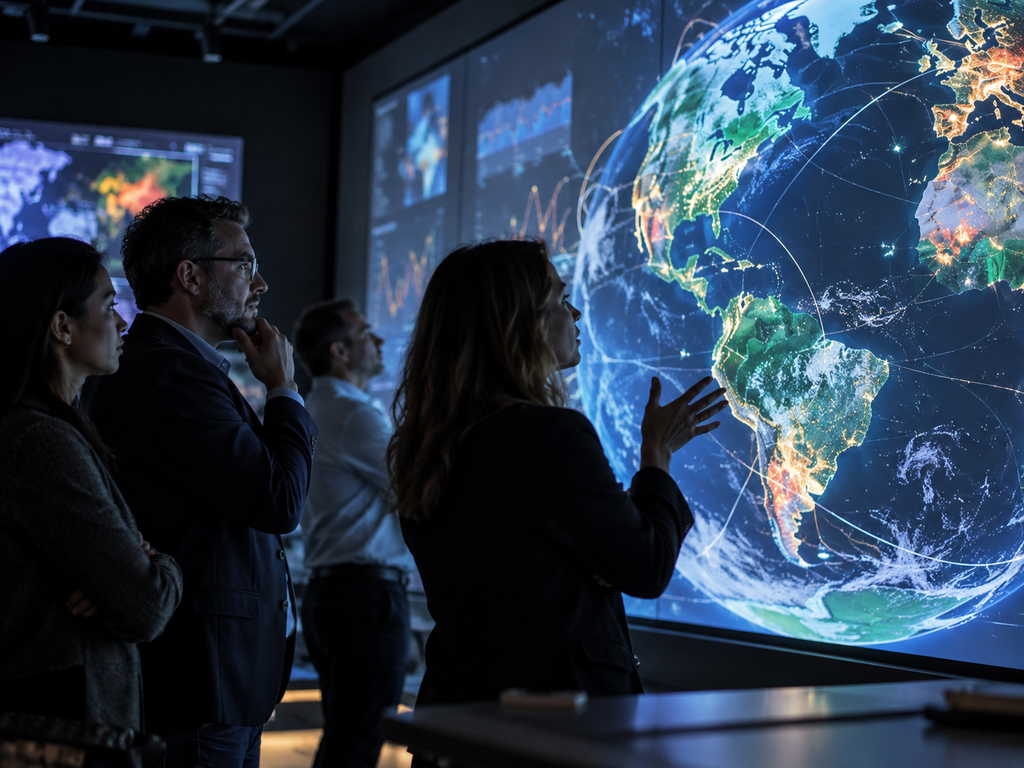
Frank had a practical example.
He had been developing a system involving two software plugins. Information needed to pass from one to the other, and he suspected that both would need to be modified.
He asked AI.
The system told him that only the first plugin needed updating. It explained why and assured him that the second could be left alone.
So he followed its advice.
“It didn’t work.”
When he returned to the problem, AI acknowledged that Frank had been right. The second plugin needed updating after all.
What struck him was not simply that AI had made a mistake. He had spotted a relationship between the two parts of the system that the machine had missed.
“I could see something AI couldn’t see.”
And he was doing this with almost no previous coding experience beyond what he had learned during the preceding six months.
That raised two questions for me. If he ran the exercise again, would the AI have learned from its mistake? And why had it made the mistake in the first place?
“I often ask AI, ‘Why didn’t you get it right the first time?’”
The explanations can be fascinating. Sometimes useful. Sometimes rather like excuses.
I have noticed that certain systems, particularly DeepSeek in my experience, can be extraordinarily apologetic. Once they have apologised, there is almost a sense that they have brought the exchange to a conclusion. You feel slightly reluctant to continue interrogating them.
Frank laughed.
“We’re trying to humanise a system that runs on ones and zeros.”
He had a point.
We talk about what AI thinks, understands, remembers and learns. We give it human voices. We produce artificial conversations in which one simulated person debates another.
But the more important question is whether it can genuinely improve its performance following an error.
Learning from mistakes is one of the foundations of human development.
How well will AI manage it?
And, perhaps more importantly, how well do we?
Has human nature really changed?
Frank returned to the question of continuity.
“What has been consistent in human behaviour over the last seventy-odd years?”
I came back to something we had discussed before: the relationship between the individual and the community.
Human beings continually try to find a balance between their own interests and those of others. There is no single correct balance.
In a small community, your wellbeing and the wellbeing of the community may be closely connected. You know the people around you. You can see the consequences of your behaviour.
As communities become larger and more global, those relationships become less obvious. At the same time, competitive pressure increases. Individuals, businesses and organisations are encouraged to pursue their own success, often without giving sufficient thought to the effects on everybody else.
Frank then introduced a story he had heard that morning.
A British man had spent decades attempting to travel home on foot from the southern tip of South America. He had crossed extraordinary distances and met enormous numbers of people.
What interested Frank was the traveller’s reported observation that almost everybody he encountered had been decent and helpful.
Yet public conversation, particularly the news, seemed to concentrate on the small minority who were not.
That contradiction stayed with me.
If most people are fundamentally decent, why do our political and institutional systems so often appear to operate on the assumption that they are not?
Frank took the thought elsewhere.
Human wisdom, he suggested, sits in individuals. It moves between people, sometimes within small communities, often through ordinary interaction. You cannot simply assume it will be available. You have to ask. Somebody has to be willing to share it.
And what you receive depends on the relationship, the circumstances and the person.
AI can make information available on an astonishing scale.
Human wisdom is not quite the same thing.
Politics and the problem of power.
From there, inevitably, we arrived at politics.
Frank had been following protests by students in France over the condition of their schools: complaints about inadequate facilities, overcrowded classrooms and shortages of teachers, with some teachers joining the demonstrations.
He was also watching the increasingly polarised political atmosphere ahead of the French presidential election.
I wondered whether some familiar political patterns were simply repeating themselves. People become dissatisfied with those in power and vote for an alternative without always thinking carefully about what that alternative will actually do.
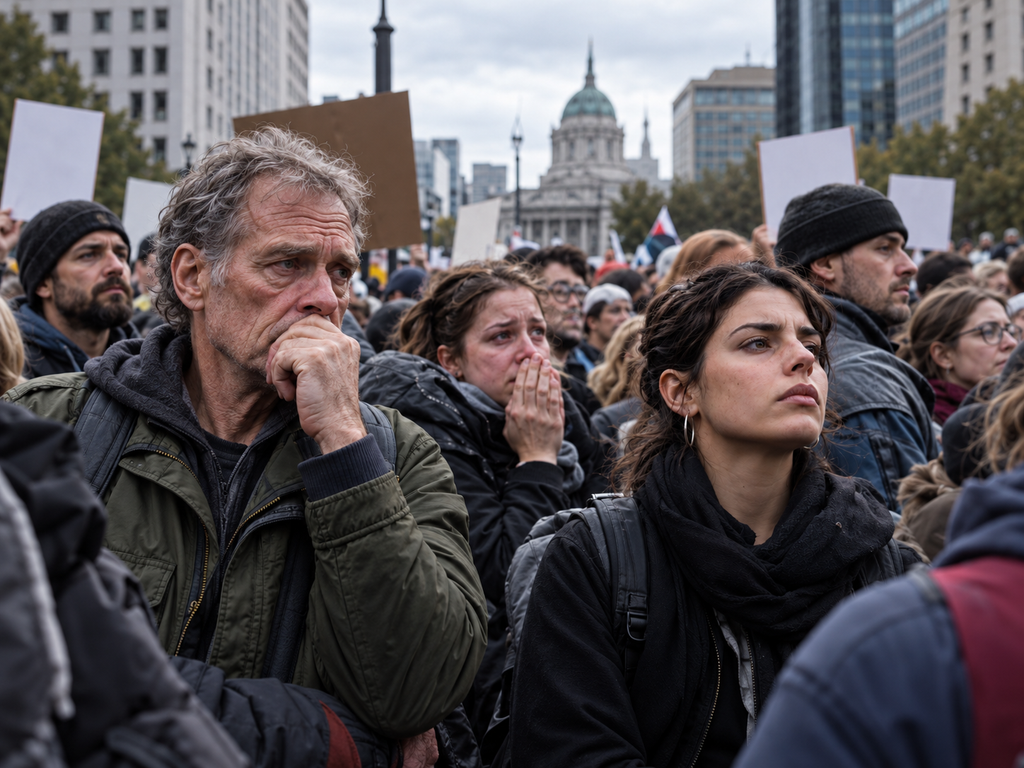
The incoming politicians interpret victory as an endorsement of their programme, although many voters may simply have wanted to remove their predecessors.
Then the new government discovers that governing is considerably more complicated than campaigning.
Frank thought politics was becoming less about solving problems and more about ideology.
I had a theory of my own.
“The more ideological the policy, the worse it tends to work in practice.”
Perhaps that is too sweeping. But if you begin with an ideological conclusion, you risk giving too little attention to the practical difficulties of implementation.
And practical difficulties have an unfortunate habit of asserting themselves.
Frank wondered whether AI might eventually offer people a route around some of these frustrations. If technology allowed people to solve more of their own problems, perhaps they would become less concerned with the political environment around them.
He mentioned people who choose to live in cities where they find communities of like-minded individuals even when they disagree with the politics of the wider country.
“Maybe we’re creating AI-driven bubbles.”
Possibly.
But there is a danger in that too.
The more we surround ourselves with people, information and systems that reinforce what we already believe, the less often we encounter arguments that challenge us.
And whenever somebody presents an attractive explanation, I like to ask another question:
Whose interests does it serve?
That includes AI.
A sensible answer nobody wants.
I told Frank about another experiment.
I had asked an AI system to develop a possible approach to resolving the conflict in Ukraine, taking account of the different stakeholders and producing a practical roadmap.
The response struck me as thoughtful. It explored stopping the fighting, freezing the immediate situation, exchanging prisoners and beginning reconstruction. It also distinguished between two matters often treated as identical: territorial control and legal sovereignty.
The suggestion was that these might be handled separately, at least temporarily, as part of a longer process.
I was not suggesting this amounted to a definitive peace agreement, or that the parties would accept it.
But the exercise demonstrated that the system could identify possibilities that might form the basis of negotiation.
Frank saw the problem immediately.
Political leaders have ambitions, pressures, obligations and constituencies. Something that appears sensible in theory may be completely unacceptable in practice.
There are also vested interests surrounding the continuation of conflict, including the extraordinary financial and technological resources committed to defence.
Which raised another question.
What if countries could reduce military spending substantially and redirect those resources towards education?
I suggested that if everybody could cut their defence budgets in half over five years and spend the difference on education, the world might become a considerably better place.
“But how the hell do you get there?”
Frank had the answer.
“You ask AI.”
Quite.
“But will anybody listen?”
That was the difficulty in miniature.
We may have a system capable of identifying sensible alternatives. That does not mean the people with the authority to implement them have any interest in doing so.
Why the words matter.
Our conversation moved towards language.
Frank was becoming increasingly conscious of the importance of precision, not only in ordinary human exchanges but when working with AI, making decisions or conducting international negotiations.
At major diplomatic meetings, leaders and officials can spend hours debating the precise wording of a communiqué.
I thought implementation could be more difficult than wording. But Frank’s broader point remained: language can change outcomes.
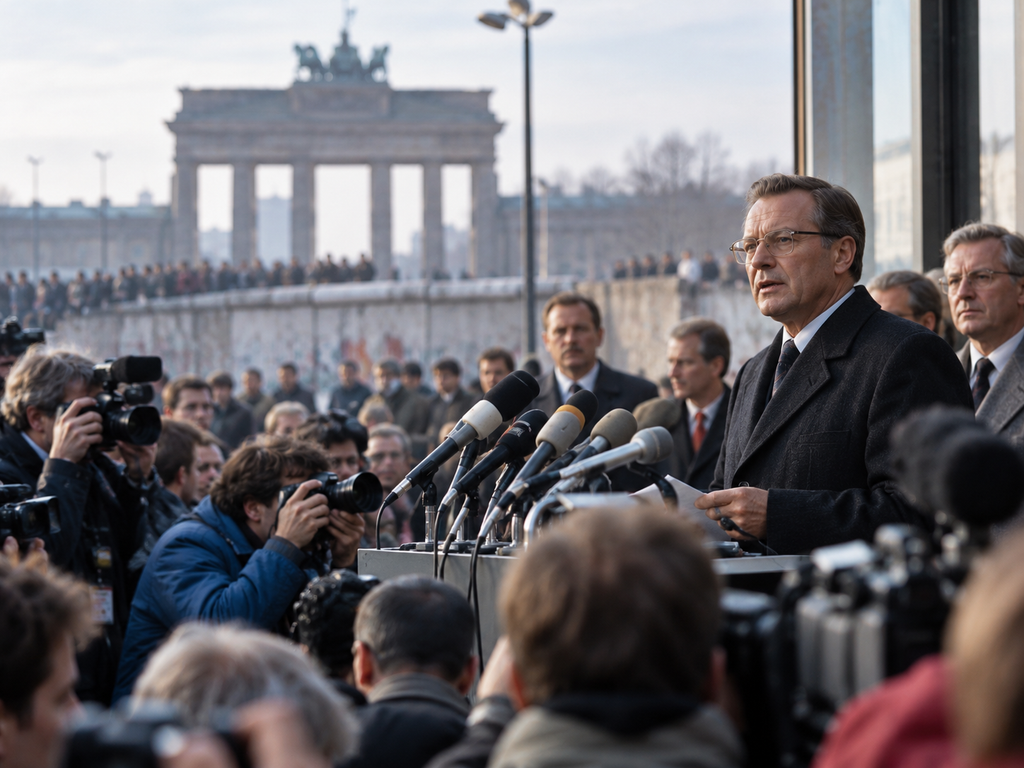
He recalled the press conference in East Berlin on 9 November 1989, when an ambiguous announcement about travel restrictions helped trigger events that led to the opening of the Berlin Wall.
A few words, delivered in a particular way at a particular moment, had enormous consequences.
Which brought us to unintended consequences more generally.
We can often predict that one event will influence another. Forecasting the precise result of those interactions is much harder. Two or three apparently insignificant factors coincide, and something extraordinary happens.
Looking backwards, the sequence can appear obvious.
Looking forwards, anything but.
That is one reason I remain suspicious of the desire for absolute answers. We are dealing with interconnected systems whose behaviour cannot always be predicted, however sophisticated our technology becomes.
Frank had one final example.
He had been preparing to contact businesses in Denmark and had used AI to investigate the rules governing unsolicited business emails.
The system warned him that permission might be required before sending an introductory message.
He questioned the advice. He understood restrictions on unsolicited consumer marketing, but wondered why the same approach should apply to correspondence between businesses.
AI then supplied what it described as the legal basis for its answer.
Frank extended the question to other European countries and found, according to the system’s responses, considerable variation in the rules.
The practical consequence, as he understood the advice, was that he might have to telephone a business and ask permission to send an email introducing himself.
It seemed rather absurd.
Perhaps, I suggested, this was another unintended consequence. We create rules to prevent abuse, then discover that those rules also affect perfectly ordinary activities that were never their original target.
Frank drew a distinction between somebody sending ten thousand unwanted messages with one click and somebody genuinely wishing to introduce himself, listen to another person’s story and explore whether there might be a useful business relationship.
Technology has changed what is possible. Regulation has tried to keep up.
But the old question remains.
How do we deal with the minority who abuse a system without making life unnecessarily difficult for everybody else?
And there we were again, back at human decency.
The conversation had begun with AI in 2050. Now we were confronting a problem as old as organised society.
There are no perfect answers.
I have become increasingly convinced that our obsession with absolute solutions can get in the way of finding sensible processes.
There is a difference between solving a problem once and creating a system capable of dealing with the problems that will inevitably follow.
The latter may be considerably more useful.
We need ways of managing the edges, the exceptions and the circumstances nobody foresaw. That applies to regulation, politics, organisations and certainly the governance of artificial intelligence.
Frank agreed, but returned to his original concern about language.
Were we really talking about human behaviour? Human nature? The capacity for decency?
We did not quite resolve it.
By now he had another appointment.
“I really have to move on.”
There was still time for one more disagreement about lawyers, legislators and the increasing complexity of regulation, followed by some rather unflattering comparisons between political personalities.
Eventually Frank asked whether we had made any progress.
“We haven’t solved all the problems yet,” I said.
“No. We’re getting there.”
I suspect we both knew that was optimistic.
But it was an appropriate way to end.
We had travelled from AI and 2050 to Shakespeare, political conflict, mistakes, language, regulation and human decency. The subjects appeared very different, yet one question kept connecting them.
How much of our difficulty comes from not knowing what to do, and how much comes from being unwilling or unable to do it?
Artificial intelligence may give us extraordinary tools for understanding problems. It can help us compare alternatives, recognise contradictions, simplify complexity and develop more sensible processes.
But it cannot guarantee wisdom, goodwill or the willingness to compromise.
Those remain human responsibilities.
Perhaps that is the question worth carrying towards 2050.
Not simply how intelligent our machines will become.
But whether we will become any better at using the wisdom we already have.