
Rest Is Not Always Sitting Still
Fabrice, Janita, The Mayor, swimming, forest paths, South African dogs, church bells, mushrooms, and the complicated science of doing nothing.
A conversation that began with rest and immediately started walking
This was supposed to be a conversation about Active Rest.
That sounds simple enough. You move a little. You rest a little. Maybe you walk, swim, read, sit, breathe, or disappear into a forest until somebody wonders where you are.
But at Brida, simple things do not always remain simple.
The Mayor began by asking why I was there. Janita said, “To talk to us!” He asked if I wanted to talk to Janita. I said yes. He wanted to know why.
I think the answer was obvious.
To speak English. And maybe also because Janita was there and her world is not my world.
That is Brida. You are never alone, but you are also never completely safe from nonsense.
The first picture: swimming, forest, orchard
Janita asked me the first question.
“When you hear the words active rest, what is the first picture that comes to mind?”
For me, the first pictures were simple.
Swimming.
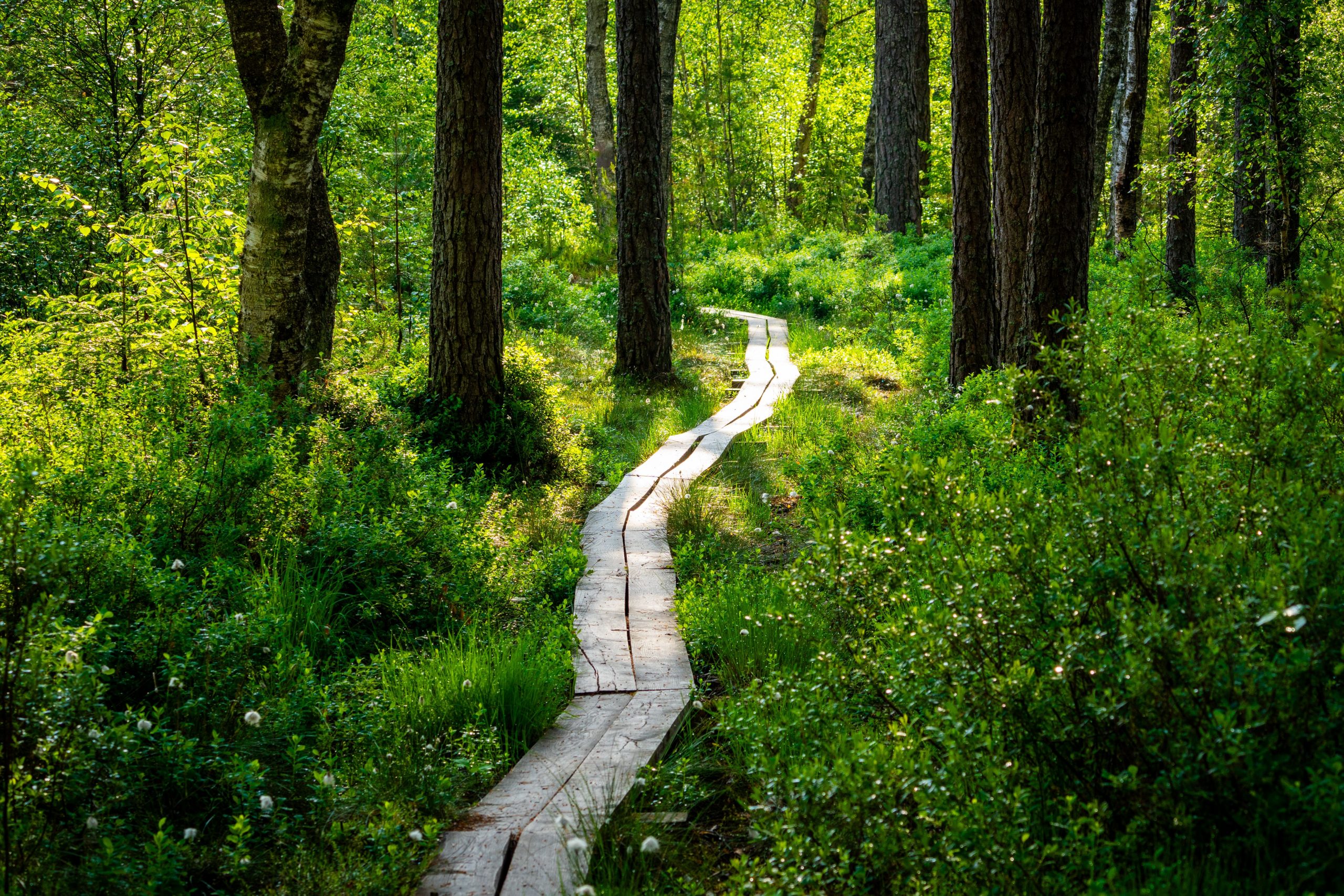
Walking in the forest.
Working in my orchard.
Maybe walking between my apple trees. Maybe cutting branches. Maybe cleaning trees. Maybe just being outside where I can have my own rhythm.
For me, swimming and walking in the forest are very quiet. They are not hard in the same way as sport is hard. They are nice. They give me peace and quiet.
When I go swimming or into the forest, I can keep my own rhythm. Nobody is pushing me. Nobody is timing me. Nobody is saying, “Fabrice, faster.”
It is not like the 100 kilometre walk, where after more kilometres and more kilometres, it becomes more exercise and less pleasure.
Active rest, for me, is half exercise and half pleasure.
That is important.
If it is only exercise, then it is not really rest anymore. If it is only sitting, then sometimes it is not enough for my head.
But when I swim, or walk, or work outside with my hands, something changes. I can calm down. I can think better. My brain works more efficiently.
The Mayor helped me find the words.
Peace and quiet.
Yes.
That is it.
Going on walkabout
When I go into the forest, my wife knows I am going.
But she does not always know when I am coming home.
I do not give an hour.
I may say, “I think I am coming home before midnight.”
The Mayor said there is an Australian word for this.
Walkabout.
You go away, and one day between now and the end of your life, you will come back.
So now I have a new useful English word. I can tell my wife, “I am going on walkabout.”
But I also come home before I am too hungry.
This is important because love still goes through the stomach. There must be some boundaries.
For me, this kind of walking is not stress. It is not pressure. I go into the forest, and I do not have a fixed time to come out. That is different from training. That is different from a challenge. That is different from work.
It is a place where the mind can loosen.
Sometimes I go with somebody. Sometimes I go alone. It depends on my mood.
But when I really need rest, I often go alone.
Not because I hate people.
Just because sometimes, to rest, I need fewer people around me.
Janita’s rest is a book
Then I asked Janita what her first picture of active rest was.
Her answer was completely different.
She said: sitting down somewhere quiet and reading a book.
For me, this was interesting.
For her, rest is a book. Thrillers. Mysteries. Sometimes a love story. Fantasy. Fiction. Harry Potter.
I asked if it was an escape for the brain. A kind of evasion for the senses. A different dimension.
Yes, she said.
The Mayor said Janita has much more fantasy than he does. She read Harry Potter. He tried the first book, read half, and said no.
Too crazy.
Janita said, “Crazy is good!”
The Mayor agreed that crazy is good because normal is boring.
I am not sure this is an official educational method, but it works.
This was the first time in this kind of dialogue that I really started asking Janita questions too. It was not only Janita asking me and me answering. I wanted to know her world. I wanted to know what rest looked like for her.
And her world is different.
For me, rest may be forest and swimming.
For Janita, it may be a chair, a book, and nobody asking anything for a while.
Sitting, cutting branches, escaping people
Janita asked whether real rest for me is more often sitting down, going outside, doing something with my hands, or escaping people for a little while.
The honest answer is: all of them.
Sometimes sitting down.
Sometimes going outside.
Sometimes doing something with my hands.
I cut branches. I clean my trees. I cut dead branches from the apple trees. This is work, yes, but it is also rest. The hands are busy, but the mind is not under pressure.
Escaping people?
Yes. Sometimes.
Going outside is often the same as escaping people. I go into the fields or the forest. Maybe with someone, but often alone. It depends on my mood.
Janita said she likes sitting down.
Not reading. Just sitting.
She described one evening. She had cooked dinner, washed the dishes, tidied the house, and then she sat down and told everyone, “Just leave me alone. I just want to sit.”
That is also active rest, maybe, because after all the activity, the real activity is refusing to move.
In South Africa, in winter, it is cold and dark outside at night. So sitting inside is better.
She also said sometimes rest is going to her mother’s house. Her mother lives only seven or eight kilometres away. But she usually drives, because where she lives, it can be dangerous to just walk anywhere.
This stopped me a little.
For me, walking seven or eight kilometres sounds normal. In Cleebourg, where is the danger? Maybe a hill. Maybe a tractor. Maybe a schnitzel restaurant. Maybe a church bell.
But for Janita, walking to her mother’s house can be dangerous.
That is a different world.
Rest depends on where you are.
When the weekend starts
After a long working week, Janita asked me what tells me I am starting to recover.
Friday afternoon is important. You come home. At some point, the feeling of work begins to go away, and the feeling of the weekend begins.
Sometimes I go to the shooting club. Sometimes I go swimming. Sometimes I make nothing.
But then we had a problem, because The Mayor does not understand how to do nothing.
He said if you do nothing, you are still doing something. If you sit in a chair and watch television, you are sitting in a chair and watching television. If you are very tired and sleep in the chair, you are still doing something.
He said he will die not knowing the secret of doing nothing.
Janita solved the problem.
She said doing nothing means having nothing else to do. You do not have to cook, clean, work, or answer anything. You can just sit.
The Mayor said she had cracked the code after he had been asking the question for 65 years.
So now we know.
Doing nothing is not actually doing nothing.
Doing nothing is having nothing else waiting to attack you.
For Janita, recovery starts more on Saturday morning than Friday evening. On Friday, her son wants movie night because there is no school on Saturday. He wants to stay awake until eleven or midnight.
For him, this is good.
For Janita, less good.
Then there are the dogs.
The dogs may wake her at seven in the morning. Small dogs. Crossbreeds.
I think this is also why rest is different for different people. Some people need the forest. Some people need a book. Some people need the house to stop needing them. Some people need the dogs to sleep a little longer.
Cleebourg rest
Janita asked where in Cleebourg my body can rest even if my feet are still moving.
The forest.
Maybe home.
Not really the streets. The streets are not where I rest. I do not go often to bars. Very seldom. Maybe one or two evenings in a month to drink a beer. Sometimes I go to a restaurant.
But for real rest, I think more of the forest.
Then the church bells arrived in the conversation.
In Cleebourg, the Protestant church bells ring every fifteen minutes between six in the morning and ten at night. They ring at the hour, fifteen, half past, and forty-five.
The Mayor doesn’t need an alarm clock.
If he does not wake up automatically, the six o’clock church bell will wake him.
This is tradition. The bells are part of the day. Part of the rhythm. Maybe not always peaceful, but part of home.
Janita said they only hear church bells on Sundays before church.
That is another difference.
Here the bells are part of the day.
In her world, they are more like an event.
What walking does to my head
When I walk without training for an event, just for myself, what changes in my head?
Nothing changes, and everything changes.
I am quiet for reflection. If I have a problem, or even not a specific problem, walking helps. In the forest, my head calms down. I think better. I relax better.
It is not that I go into the forest and suddenly solve all problems.
It is more that my brain stops fighting itself.
The body moves.
The head becomes clearer.
That is active rest for me.
It is not the same as a 100 kilometre walk. That is another thing. That is effort, pressure, goal, body, time, stubbornness, pain, pride, disappointment, and joy all mixed together.
Walking in the forest is different.
There is no finish line.
There is only the path, the trees, and the decision not to come home until maybe before midnight.
Rest before other people find their socks
Because I start work early, The Mayor asked what kind of rest is possible for a man whose day begins before many people have found their socks.
The drive to work is part of it.
I have around forty-five minutes from home to Karlsruhe. Ninety kilometres. I drive slowly. Karlsruhe can be a horrible place to drive to, but the drive itself gives a little rest.
It is not the same as the forest, but it is a kind of transition. Between home and work, there is the road. Sometimes that helps.
Then we talked about movement again.
I had brought my bicycle to Karlsruhe, and the next morning will would bring me to work. At five in the afternoon, with a colleague, I plan to cycle from Karlsruhe back to Cleebourg. Maybe two and a half hours. Maybe three.
Then Friday evening, there was another plan: a long walk with The Mayor. Maybe leaving at seven in the evening, down through the village, into the forest, and back around midnight.
Janita wanted proof.
Photos.
She said she did not care what time. Just send them.
The Mayor said if we were missing, she should call the pub first before the police.
This was sensible. There would be many chances to find us.
Good tired and bad tired
Janita asked a good question.
Sometimes movement gives energy, and sometimes it steals energy. How do you know the difference?
All movement uses energy. Of course. But some movement also gives energy.
When I swim for one hour, afterwards I feel fit. I feel better. But if I swim two hours or more, after a certain time, the movement starts to steal energy.
The same with cycling. If you make 150 kilometres by bicycle, at the beginning it can give energy. After that, you lose energy. This is normal. It is effort. During the effort, the body uses energy.
But after the effort, there can be joy.
Good tired.
This is different from bad tired. Good tired has pressure inside it, but after the pressure there is joy. Your legs are tired, but your head is satisfied.
Janita understood this very well because she had done 160 kilometres on a bicycle. She said during the ride she was tired, stressed, and under pressure, but after finishing, she felt joy. She felt happy. She had accomplished something.
I told her the pressure was also because she did not want to finish last.
She said yes, but she also wanted to finish. Even if she finished last, she wanted to finish.
But the goal was not to finish last.
That is pride.
And stubbornness.
I told her, “Welcome in the club.”
After 100 kilometres
Then Janita asked about the 100 kilometre walk.
After the 100 kilometres, what kind of rest did my body want, and what kind of rest did my mind want?
My body wanted rest in peace.
That was a joke, but not completely.
My body was finished. But my mind was angry. Furious, really. My mind was furious against my body because my body did not do what my brain wanted.
At the beginning, I wanted to make the 100 kilometres in under 24 hours.
I finished in 27 hours.
For me, that was three hours too long.
Janita said that was pressure I put on myself.
Yes. It is true.
The body had made 100 kilometres.
The mind said, “What the hell? Too slow.”
This is not always logical, but it is honest.
Then I asked Janita the same question about her 160 kilometres by bicycle.
Her body did not want to touch a bicycle for a week. Her body did not want to see a bicycle. But her mind was already thinking, “I can do this again.”
Still, both body and mind needed rest.
Her mind wanted an ice-cold beer, decent food, and sleep.
Then she corrected the order.
Shower.
Beer.
Food.
Sleep.
This is a very good recovery plan.
After 100 kilometres, I smelled so bad that if I went into the same room as a skunk, the skunk would go out.
That is also honest.
The small idea for July
At the end, Janita asked what small active rest idea I would like to keep for July.
For me, the answer was simple.
One walk.
No phone.
Maybe Saturday or Sunday.
One or two hours. Or three hours. I do not know.
Just going into the forest.
The weather had been warm, with rain. If I am lucky, maybe I find mushrooms. This can happen at the end of June if there is rain and warm weather.
Then the mushroom conversation began.
Janita asked if they are the kind you can eat.
The Mayor said you can eat all mushrooms. The question is whether you live to tell the story. Some mushrooms you eat only once.
This is useful information.
In Cleebourg, we live close to nature. Chestnuts, walnuts, mushrooms, berries. There is an abundance for foraging. It is amazing.
But you must be careful.
Some secrets are serious.
Rest that moves
So, what did I learn?
Active rest is not one thing.
For Janita, it may be sitting with a book, or sitting after everyone has finally stopped needing something, or driving to her mother’s house because walking there is not safe.
For me, it may be swimming, walking, the forest, the orchard, cutting branches, driving quietly to work, or going on a walkabout without a fixed return time.
For The Mayor, it may be trying for 65 years to understand how to do nothing and still failing.
Rest is not always sitting still.
Sometimes rest is movement without pressure.
Sometimes rest is being alone, but not lonely.
Sometimes rest is the body doing something simple so the mind can become quiet.
Sometimes rest is good tired, not bad tired.
And sometimes rest is knowing that if you disappear into the forest on Friday evening, Janita will first call the pub before she calls the police.