Monica in Europe
Welcome to Monica’s 2026 European Trip. As you know, Monica lives in Adelaide, Australia and she and her partner are in Europe to visit family & friends in Germany (Monica) and in Scotland (John).
Frankfurt am Main. Germany.
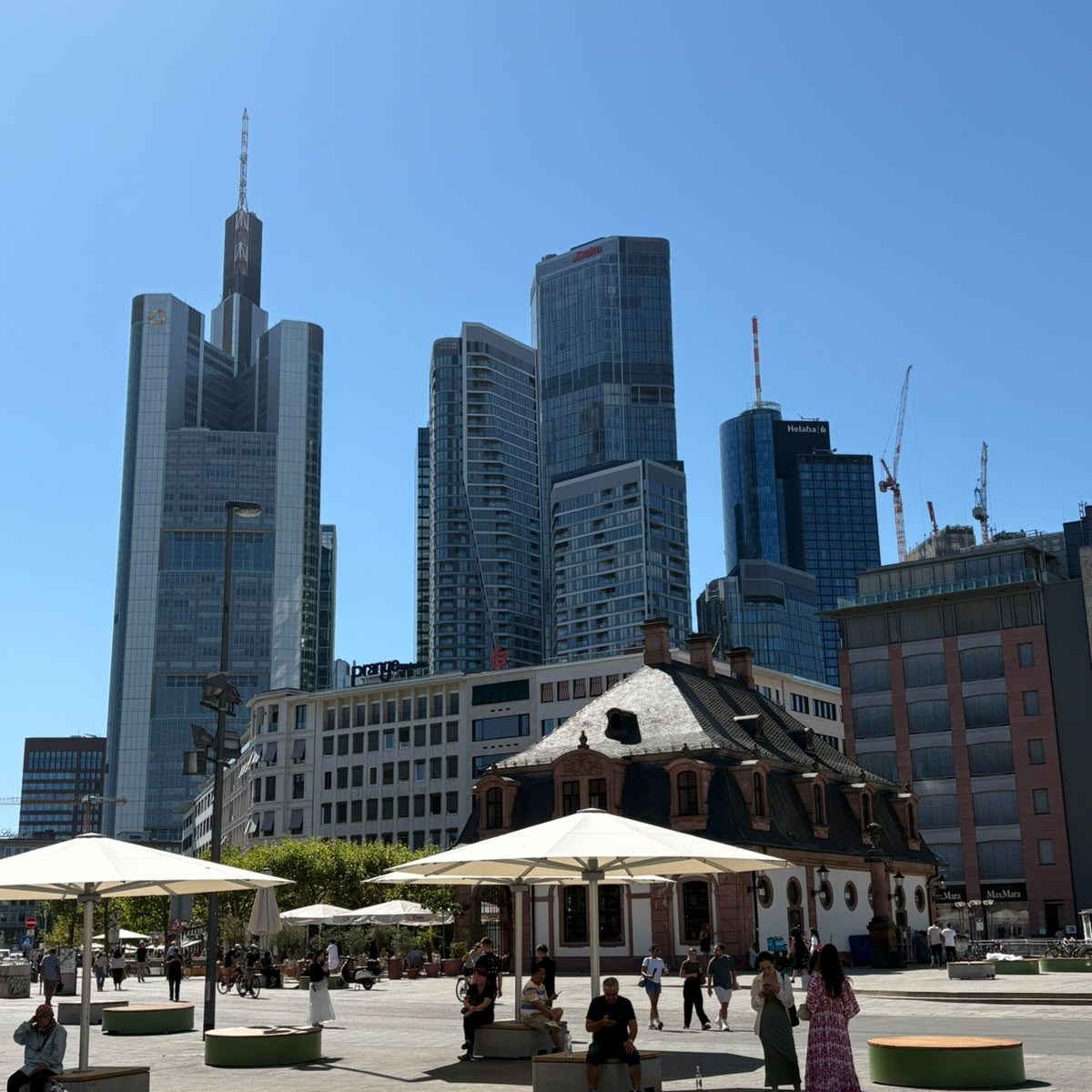
We start in Frankfurt. At the ‘Hauptwache.’ The little Baroque building in the photo was built around 1729–1730 as Frankfurt’s main guardhouse and police station. It also contained a prison. It later became a café, which it still is today. The building actually gave the whole square—An der Hauptwache—its name.
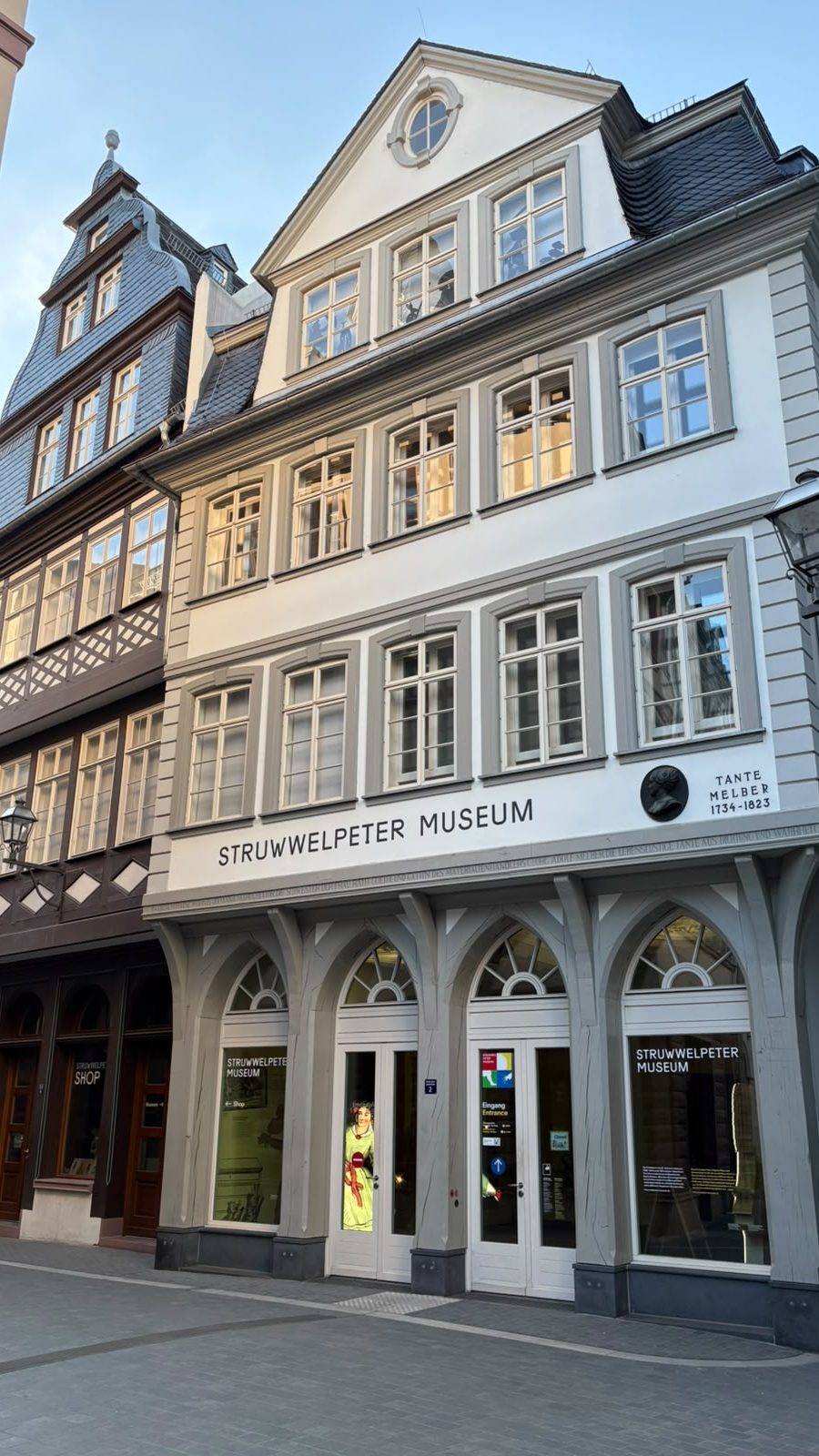
Der Struwwelpeter is one of Germany’s best-known children’s books—and one of its strangest. Created in Frankfurt in 1844 by physician Heinrich Hoffmann after he failed to find a suitable Christmas book for his young son, it tells a series of wildly exaggerated cautionary tales about children who ignore warnings and suffer spectacular consequences.
Thumb-suckers lose their thumbs, a girl playing with matches burns to death, and a boy who refuses his soup wastes away. Grim? Certainly. But also funny, absurd, rhythmic, and unforgettable. The characters became part of German cultural memory, and today Frankfurt has a museum devoted to Hoffmann, his famous book, and his work as a psychiatric reformer.
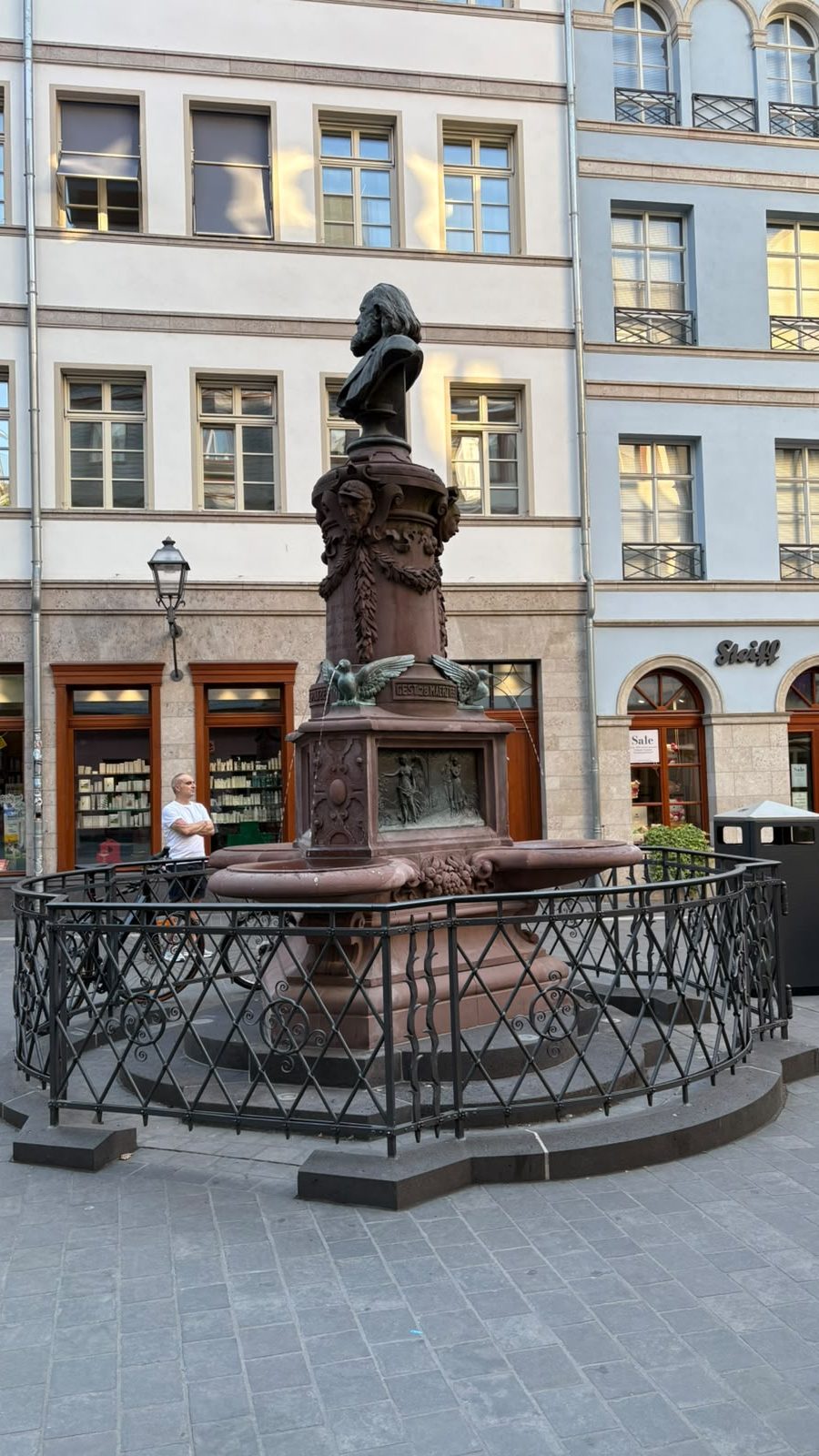
Friedrich Stoltze was one of Frankfurt’s great local voices—a poet, satirist, and journalist who wrote in the city’s own dialect and used humour to poke at politics, authority, and everyday life.
Born in 1816, Stoltze became closely associated with Frankfurt’s democratic tradition and with the character of the city itself. His monument now stands in the reconstructed Old Town, a reminder that Frankfurt’s literary story is not only about Goethe. Stoltze was the man who made the local voice part of the literature.
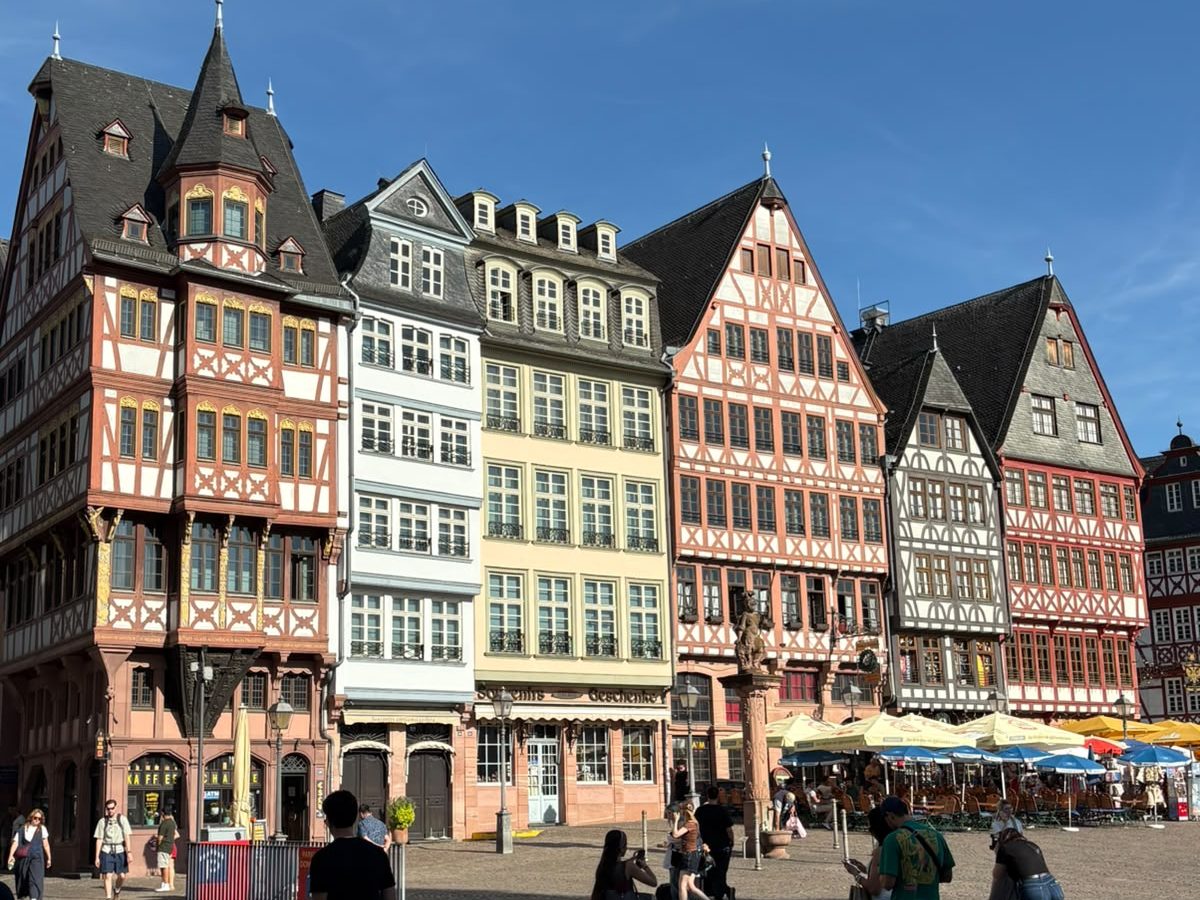
The Römerberg is the historic heart of Frankfurt, surrounded by the half-timbered façades that give the square its unmistakably old-German appearance.
Its most famous building is the Römer, Frankfurt’s town hall for more than 600 years. Despite the name, it has nothing particularly Roman about it. In 1405 the city bought a house already called Zum Römer and converted it into its town hall; eventually the name came to describe the whole complex.
The colourful buildings seen here form the Ostzeile, the eastern side of the Römerberg. They look medieval but were reconstructed after much of Frankfurt’s historic centre was destroyed during the Second World War—another reminder that in Frankfurt, what looks ancient sometimes has a much more complicated story.
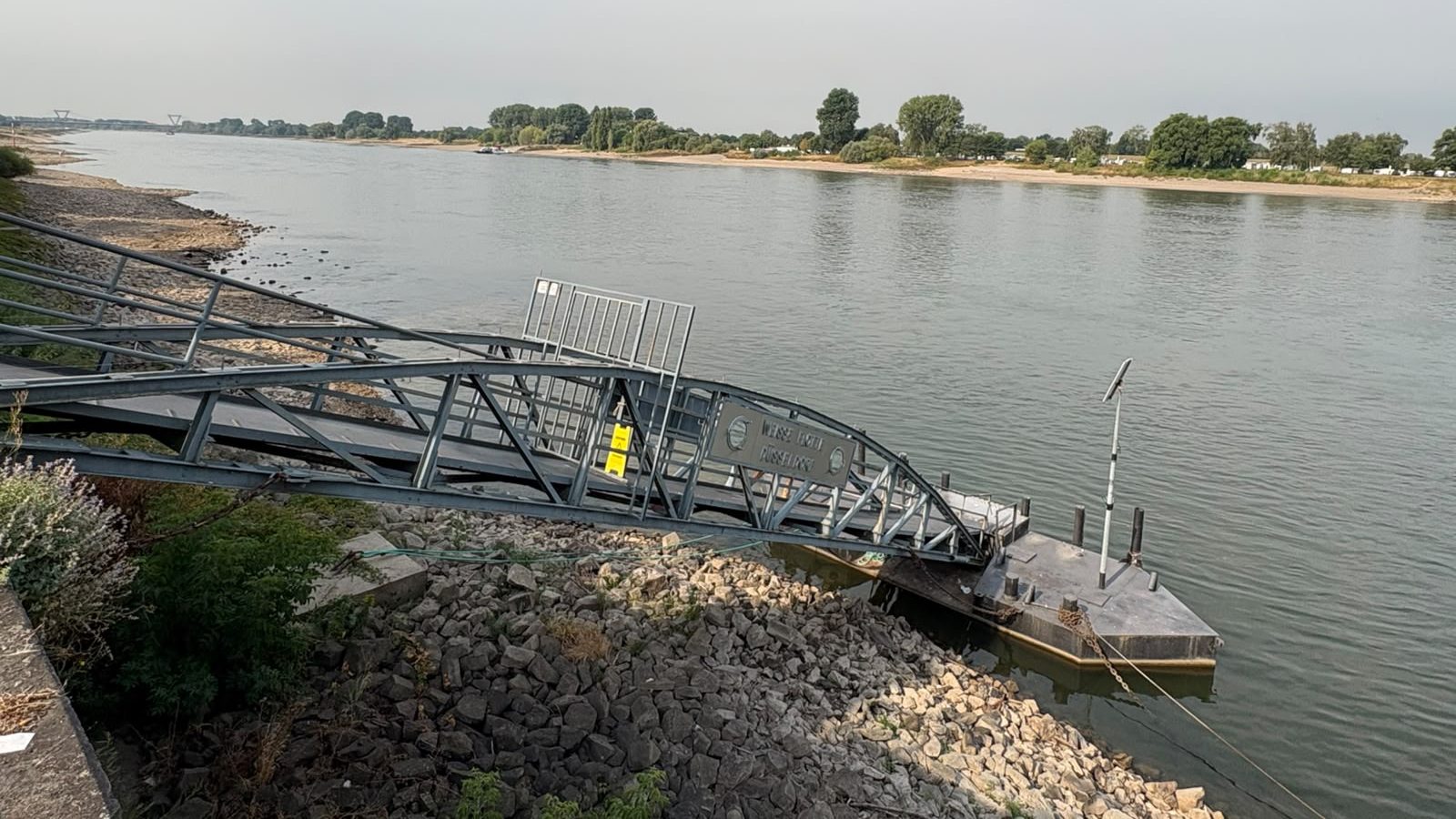
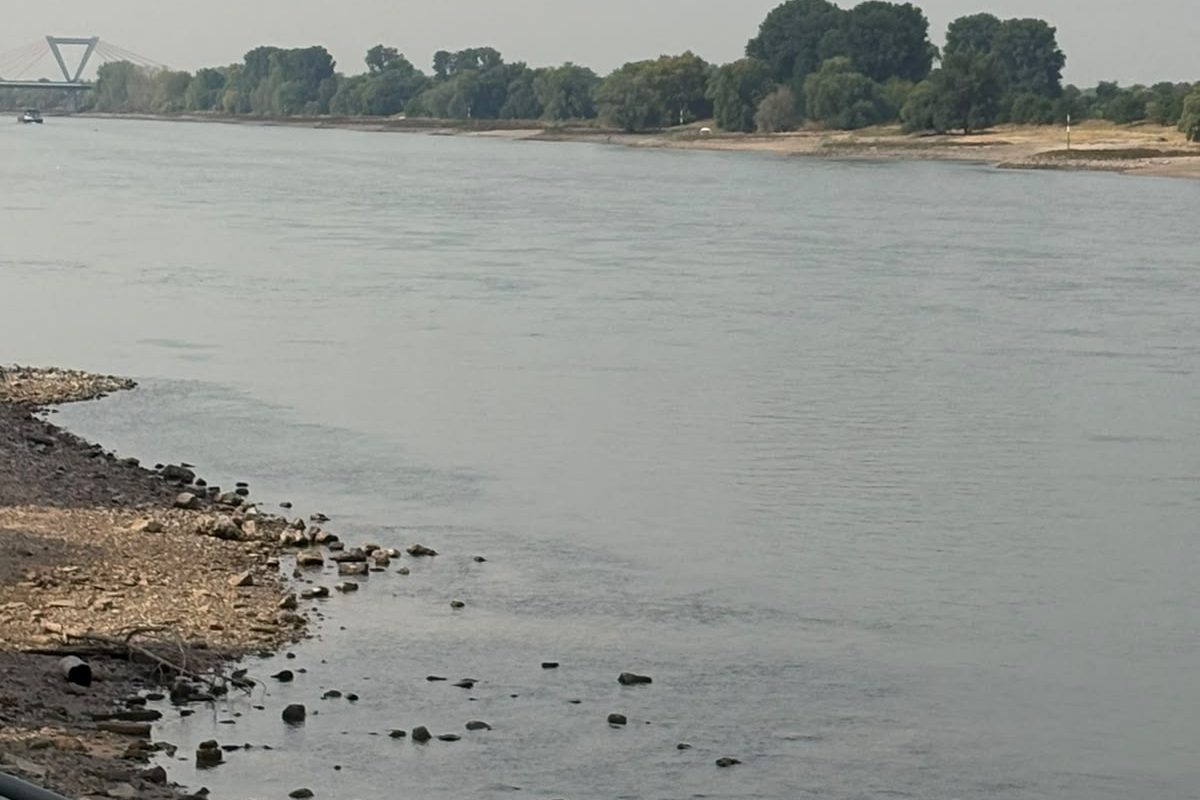
The Rhine at Kaiserswerth, near Düsseldorf
After a long, hot and unusually dry summer, the Rhine has fallen dramatically. Wide stretches of riverbank that would normally be under water are now exposed, and the consequences reach far beyond the view.
The Rhine is one of Europe’s great transport arteries. Barges carry fuel, chemicals, raw materials and other goods north and south every day. When the water becomes too shallow, vessels have to reduce their loads, make more journeys or, in extreme cases, stop altogether.
From the riverbank at Kaiserswerth, it looks almost peaceful. For the crews, companies and industries that depend on the Rhine, low water is anything but.