

Monica in Europe. Wuppertal – Edinburgh – Stockholm.
Wuppertal, Germany.
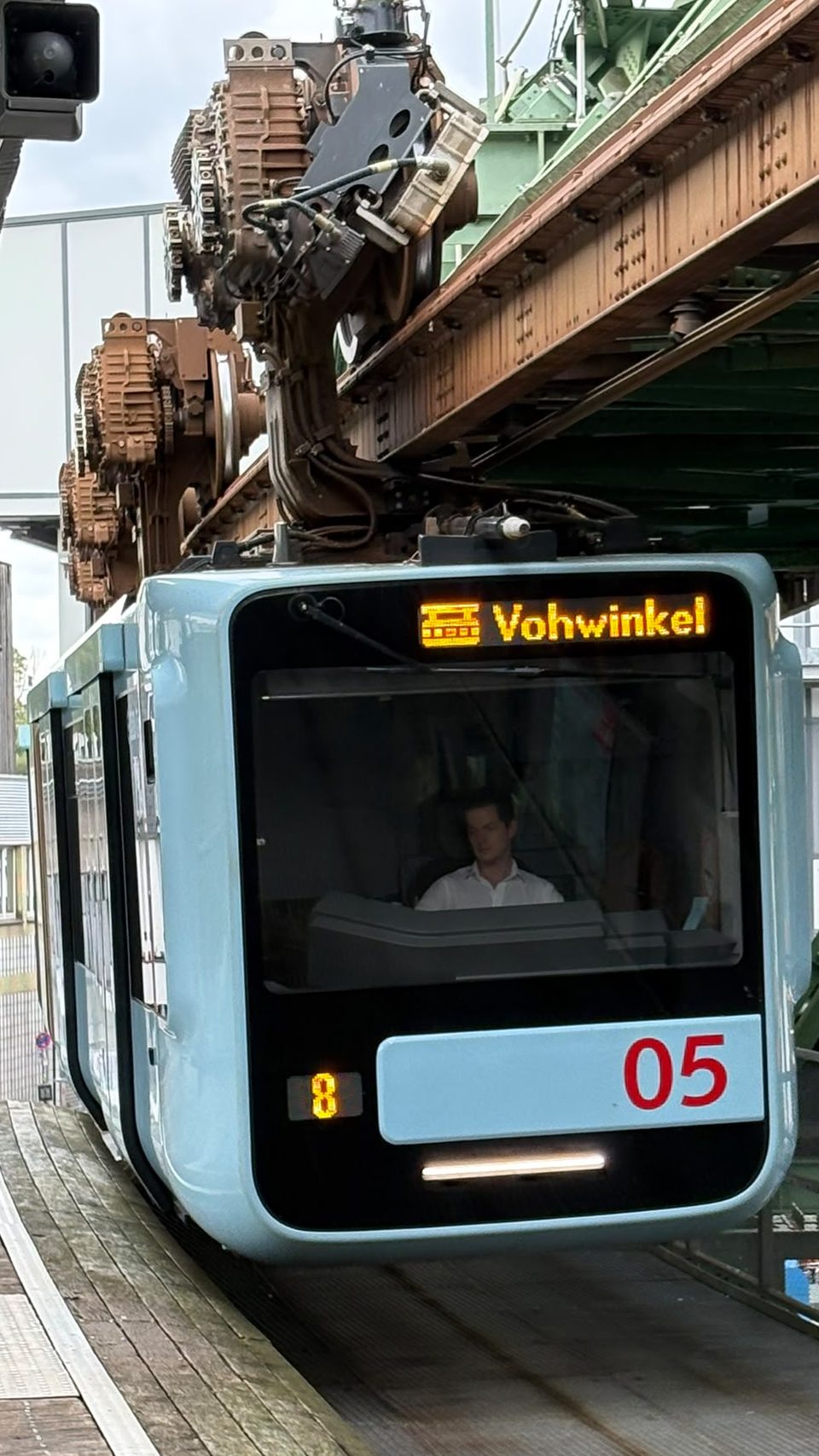
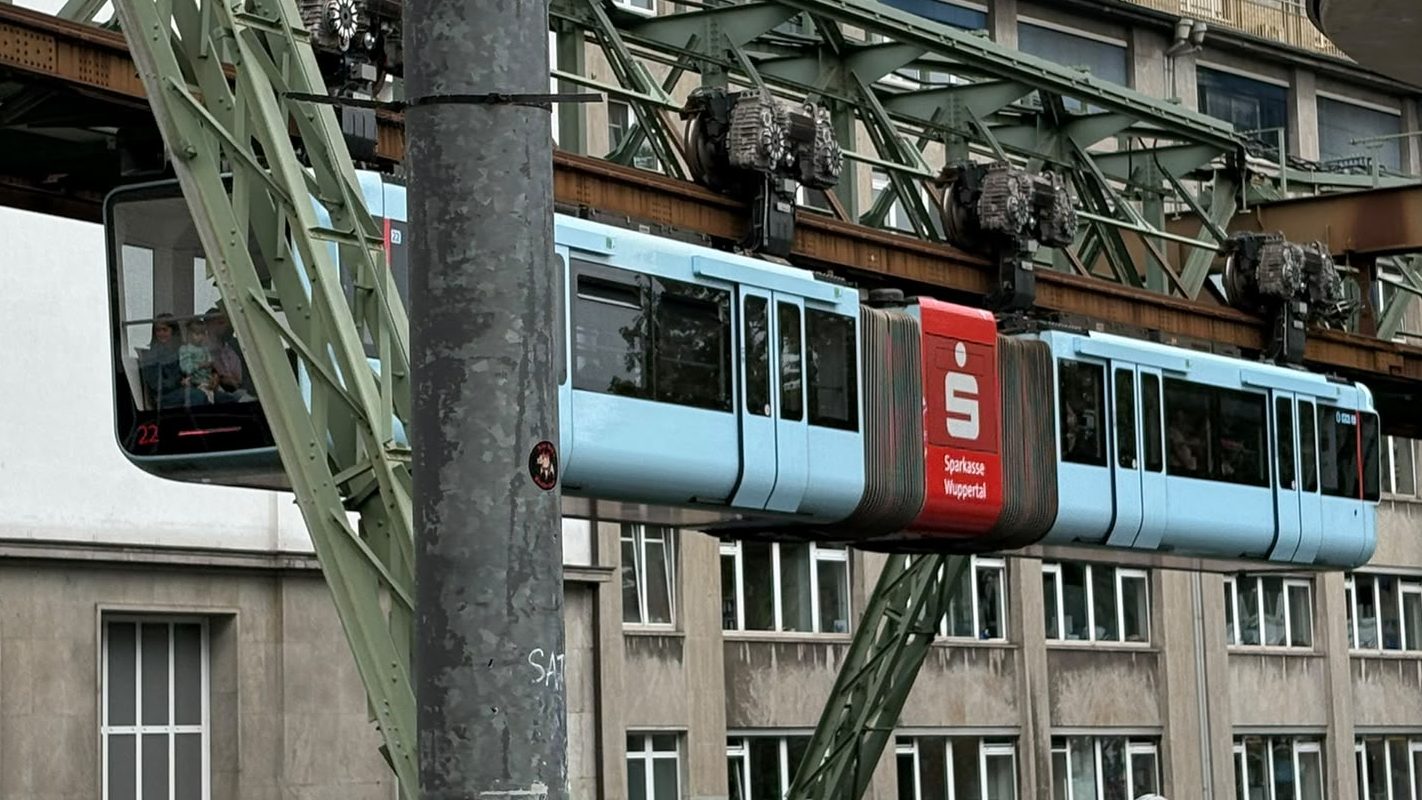
I had seen pictures of the Wuppertal Schwebebahn before, but standing underneath it is something else entirely. It opened in 1901, which means people here were travelling through the city in a suspended railway two years before the Wright brothers made their first powered flight. Somehow, after 125 years, it still looks slightly futuristic.
And then there is the part of its history I wasn’t expecting. In 1950, somebody decided it would be a good idea to put a young circus elephant called Tuffi on board as a publicity stunt. Tuffi disagreed, panicked, broke through the side of the carriage and fell into the River Wupper below. She survived with only minor injuries.
So there I was, admiring one of Germany’s great pieces of engineering history and thinking: of course. Build an extraordinary railway, keep it running for 125 years… and at some point, somebody will put an elephant on it.
Dumffries – Scotland
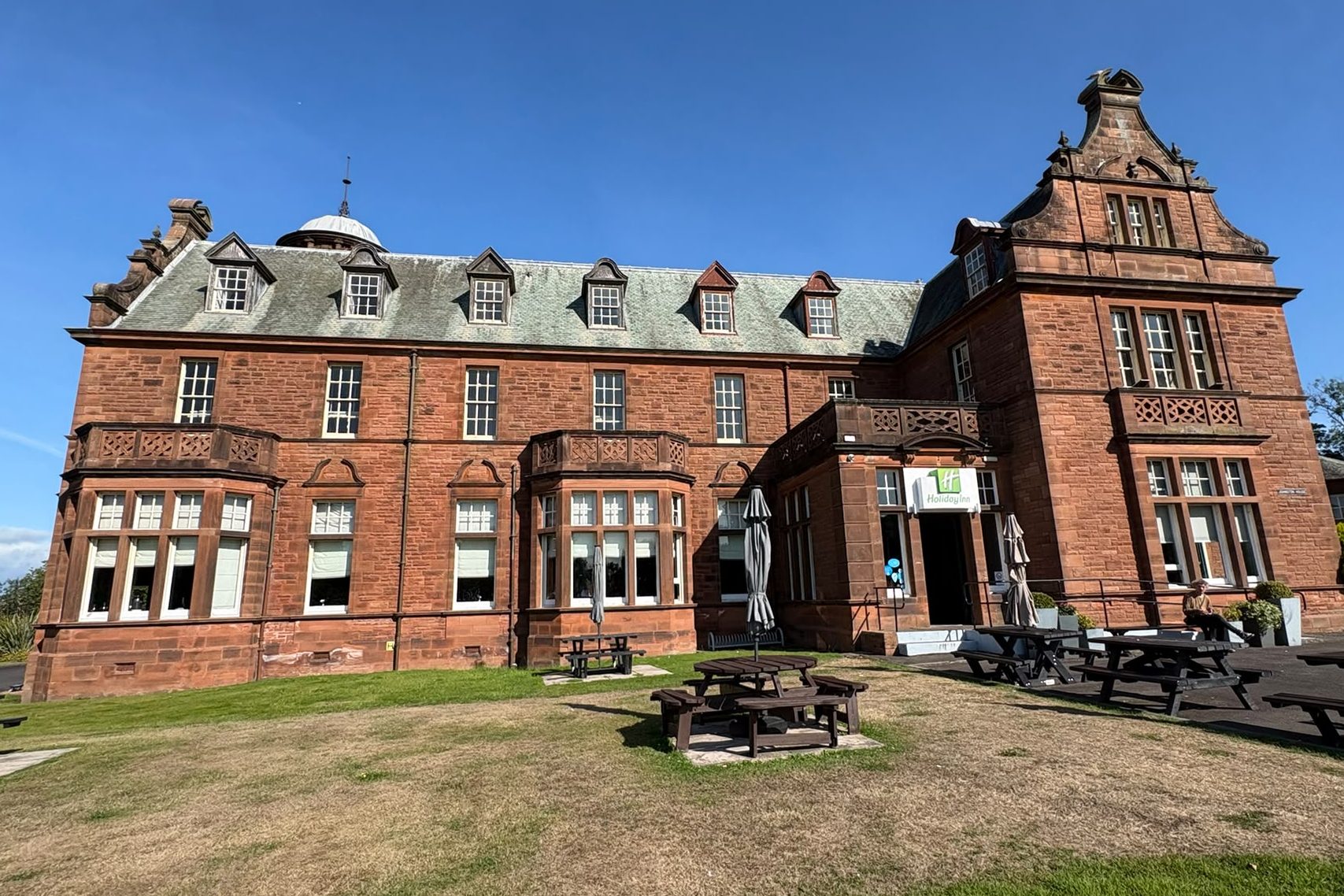
I thought I was simply looking at a rather grand old Scottish hotel. In fact, this building began life around 1901 as part of the Crichton Royal Institution in Dumfries, one of Scotland’s best-known psychiatric hospitals.
More specifically, it was built as a laundry annexe, where female patients worked, before later becoming medical offices and stores. Today, after more than a century of changing uses, it is part of a Holiday Inn.
I rather like that. You arrive expecting a bed, breakfast and perhaps a decent cup of tea, and discover that the building has already lived several completely different lives before you ever walked through the door.
Edinburgh – different!
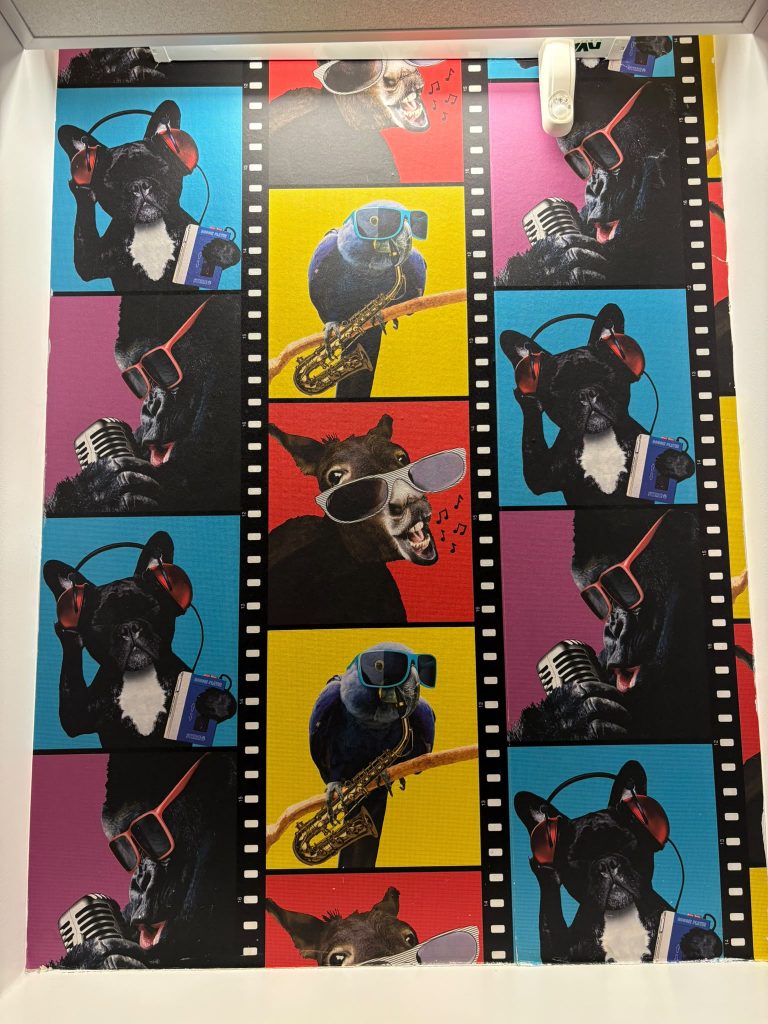
This one definitely caught my attention. At the Ibis Budget Edinburgh Park, even the toilet door appears to have its own nightlife. A donkey in sunglasses, a dog with headphones, another apparently auditioning as a singer, and a bird playing the saxophone.
I have stayed in plenty of hotel rooms where the bathroom door was best ignored. This may be the first one where I stopped to photograph it.
Somebody, somewhere, clearly decided that going to the toilet did not have to be a completely serious business.
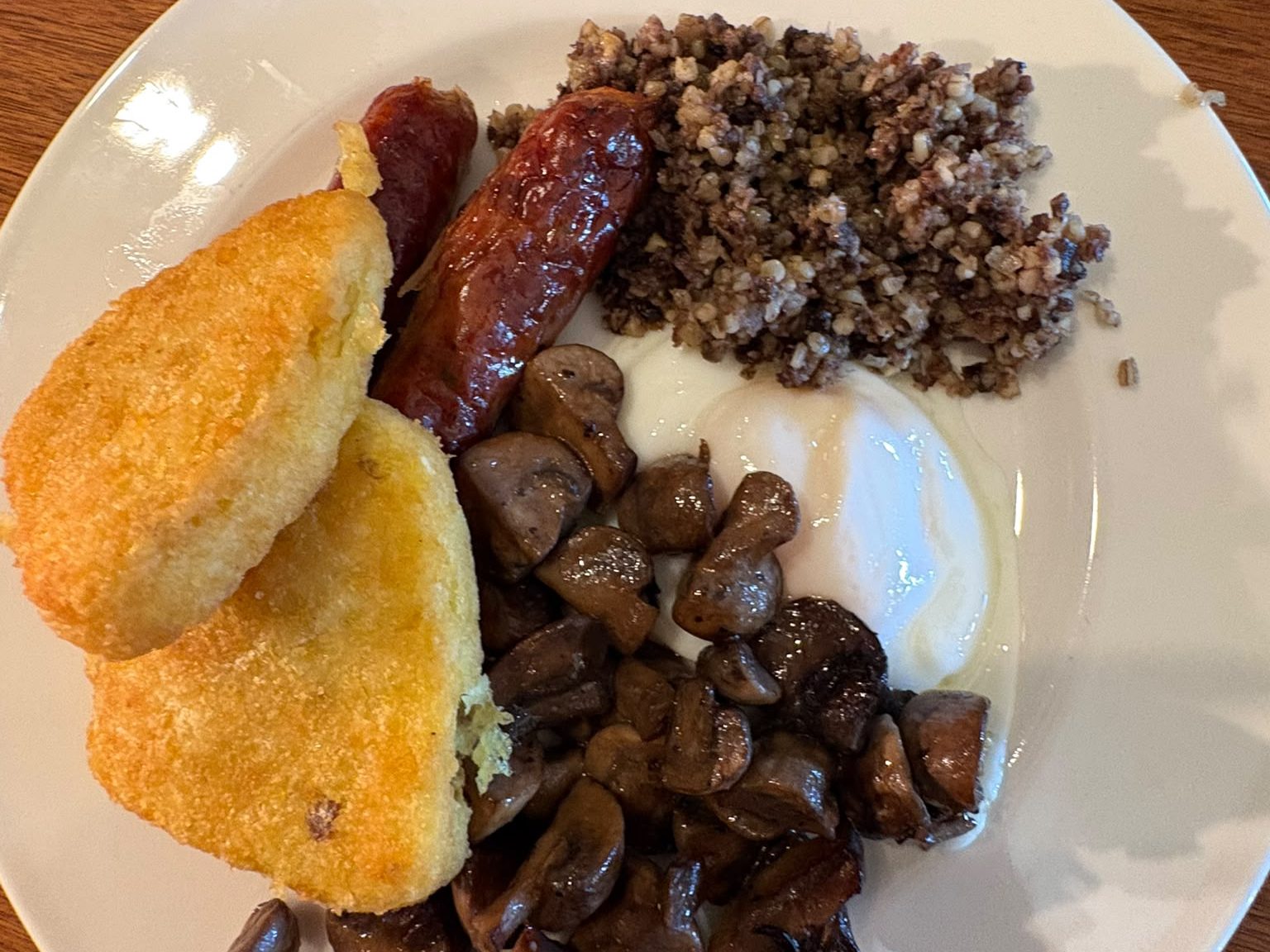
I had always thought of haggis as something you sat down to eat with a certain amount of ceremony. Apparently not. In Scotland, it can simply appear beside the sausages, mushrooms and eggs at breakfast.
There it was on my plate first thing in the morning: warm, peppery, slightly mysterious, and far better than its reputation suggests.
I even had a haggis pizza a few years ago at the cafe in Thornhill.
Nothing quite says good morning from Scotland like eating haggis before you have properly woken up.
The Mayor gave me one very specific job while I was in Scotland: find a unicorn for Fruitloop.
This should not have been difficult. After all, the unicorn is actually Scotland’s national animal. It has appeared in Scottish heraldry for centuries, so I assumed every gift shop would be overflowing with them.
I was wrong.
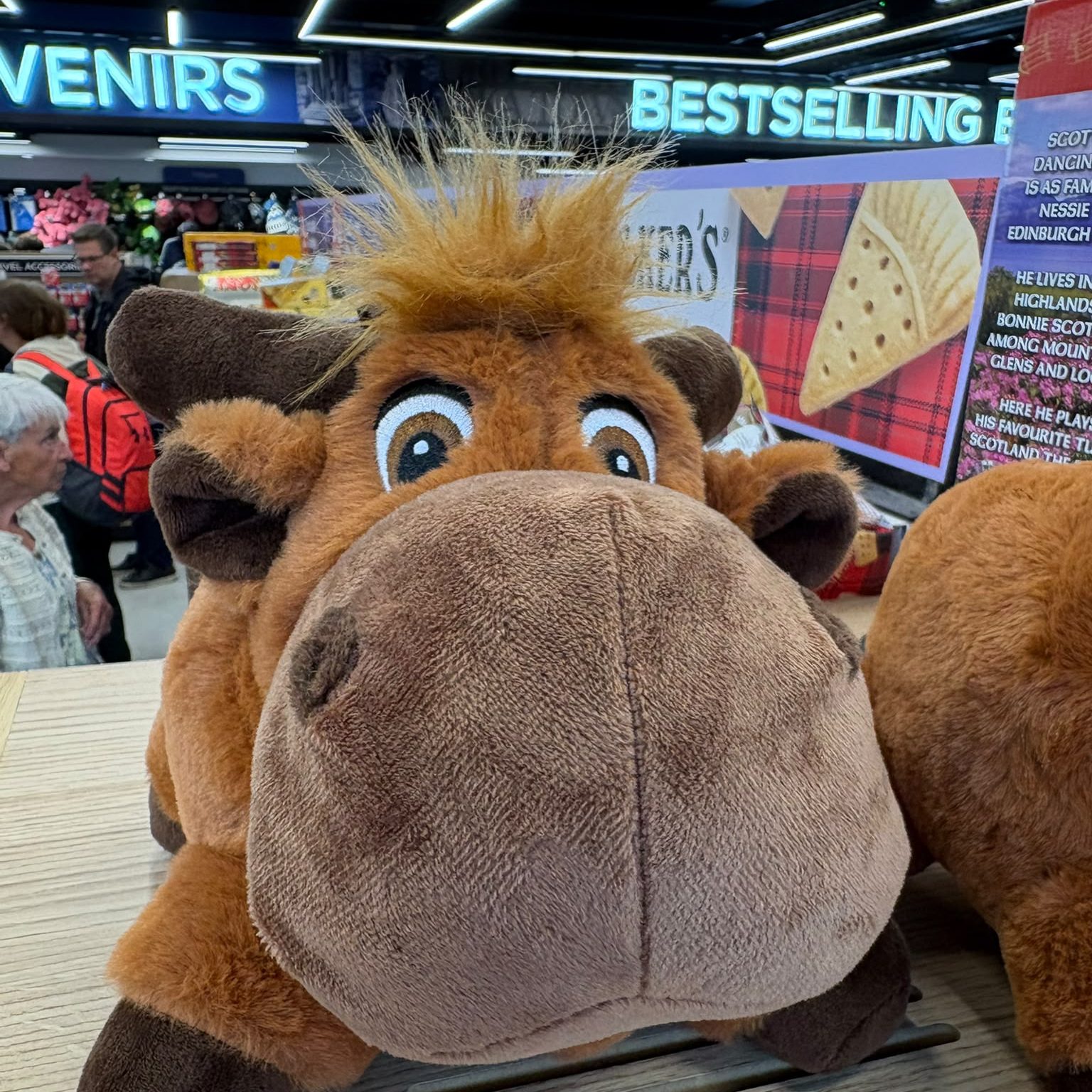
I searched. I looked on shelves. I inspected suspicious-looking fluffy things. But everywhere I went, the unicorns had apparently been driven out by Highland cows.
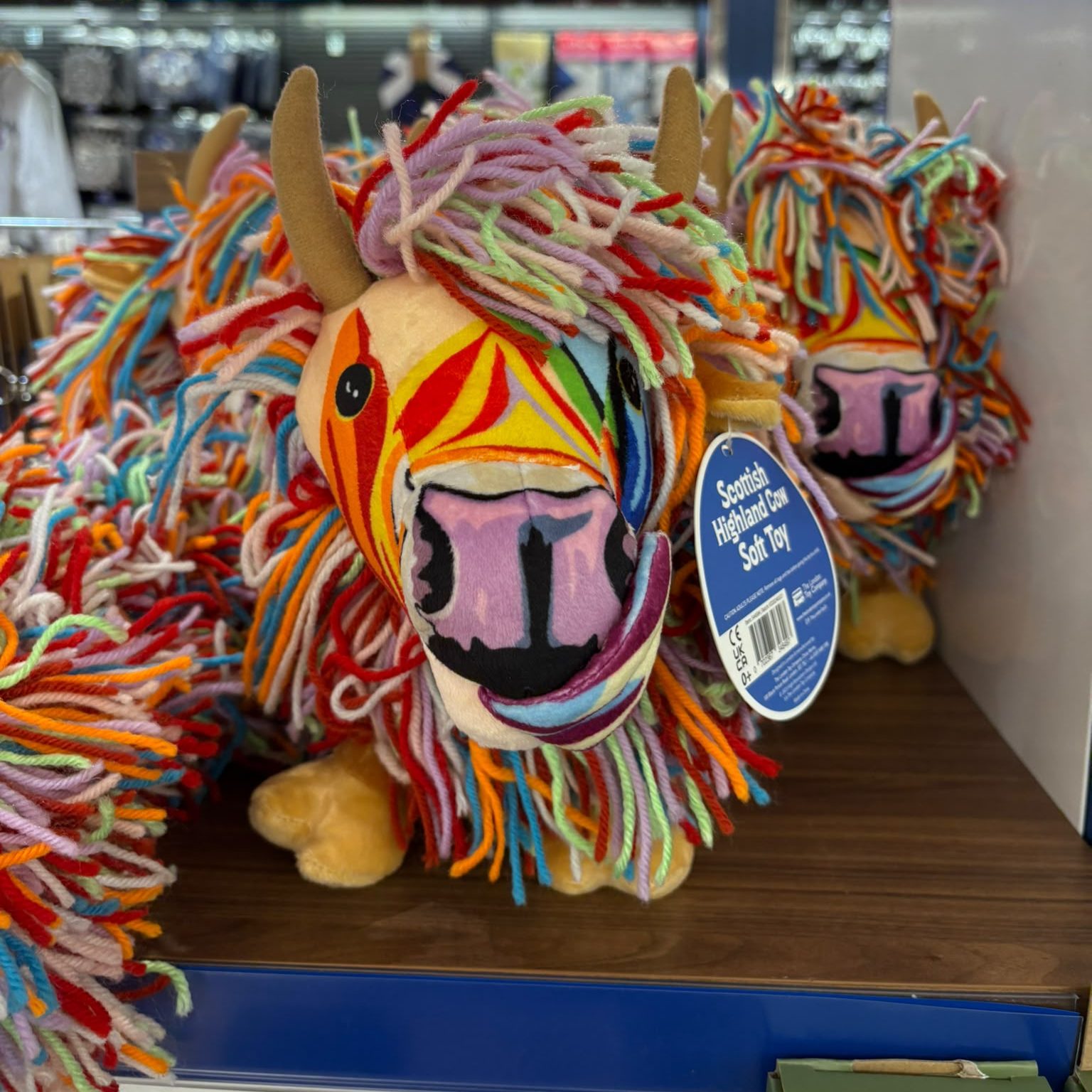
Highland cows of every imaginable description. Big cows. Small cows. Very fluffy cows. Slightly deranged-looking cows. Cows with enormous noses. Cows with brightly coloured woolly hair. If Fruitloop had asked me to bring back a Highland cow, I could probably have supplied an entire herd.
Perhaps there is a perfectly sensible commercial explanation. Highland cows are real, ridiculously photogenic, immediately recognisable as Scottish and translate extremely well into soft toys. Unicorns, despite holding the official title, seem to have lost control of the souvenir industry.
So, Fruitloop, I am sorry. I tried.
The Mayor sent me to Scotland looking for the national animal, and all I could find were cows.
Stockholm
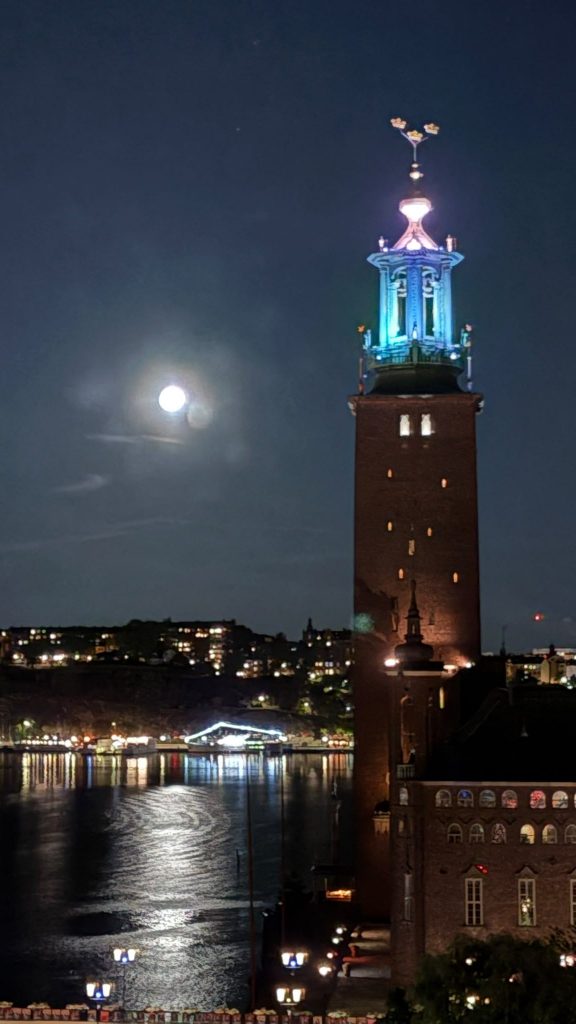
Stockholm City Hall looks particularly impressive at night, with its tower rising above the water and the Three Crowns glowing at the top.
It was completed in 1923, and one of my favourite details is that the architect, Ragnar Östberg, was apparently rather particular about how people should experience the building. Even the gradients of the passages inside the tower were carefully considered.
And then there is the wonderfully Swedish little contradiction inside: the famous Blue Hall is not actually blue. It was supposed to be, but Östberg liked the exposed red brick so much that he changed his mind. By then, however, everyone was already calling it the Blue Hall, so the name stayed.
I rather like that. Build something grand, change your mind halfway through, and simply keep the original name anyway.
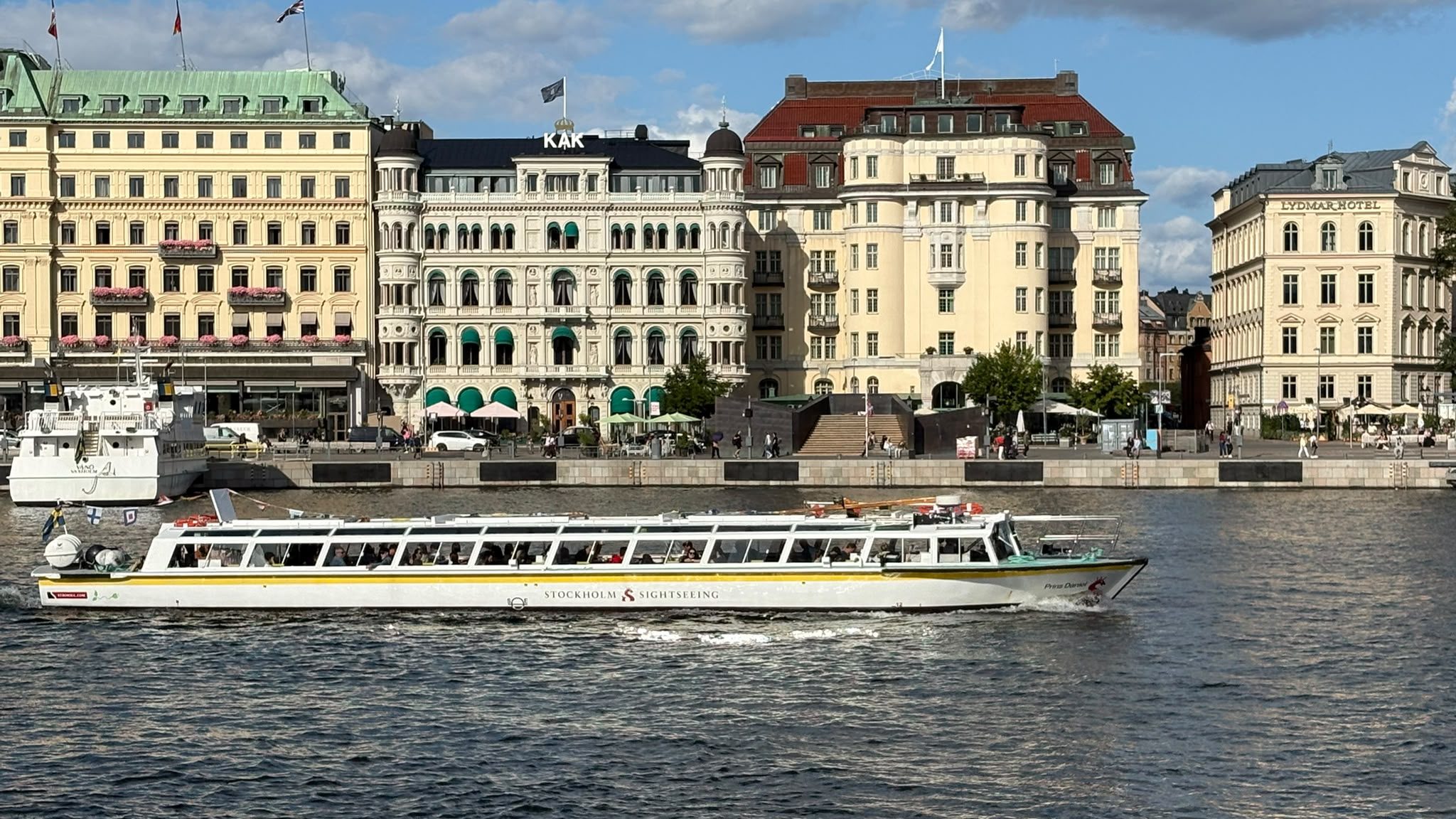
Stockholm makes much more sense from the water. The city is spread across 14 islands, so the boats are not just part of the scenery; they are part of how the city fits together.
Looking across at Blasieholmen, I could see the Grand Hôtel Stockholm on the left, followed by the wonderfully ornate Bolinderska Palatset, with the large KAK letters on the roof. KAK stands for Kungliga Automobil Klubben, the Royal Automobile Club, which once had its headquarters there. Beside it stands the former Swedish Employers’ Association building, and further along the waterfront is the Lydmar Hotel.
Gliding past all of them was one of Stockholm’s sightseeing boats, full of people doing exactly what I was doing: looking back at the city and trying to work out which island was which.
It felt like the right way to see Stockholm. Stand still for a moment, watch the boats pass, and let the city arrange itself around the water.
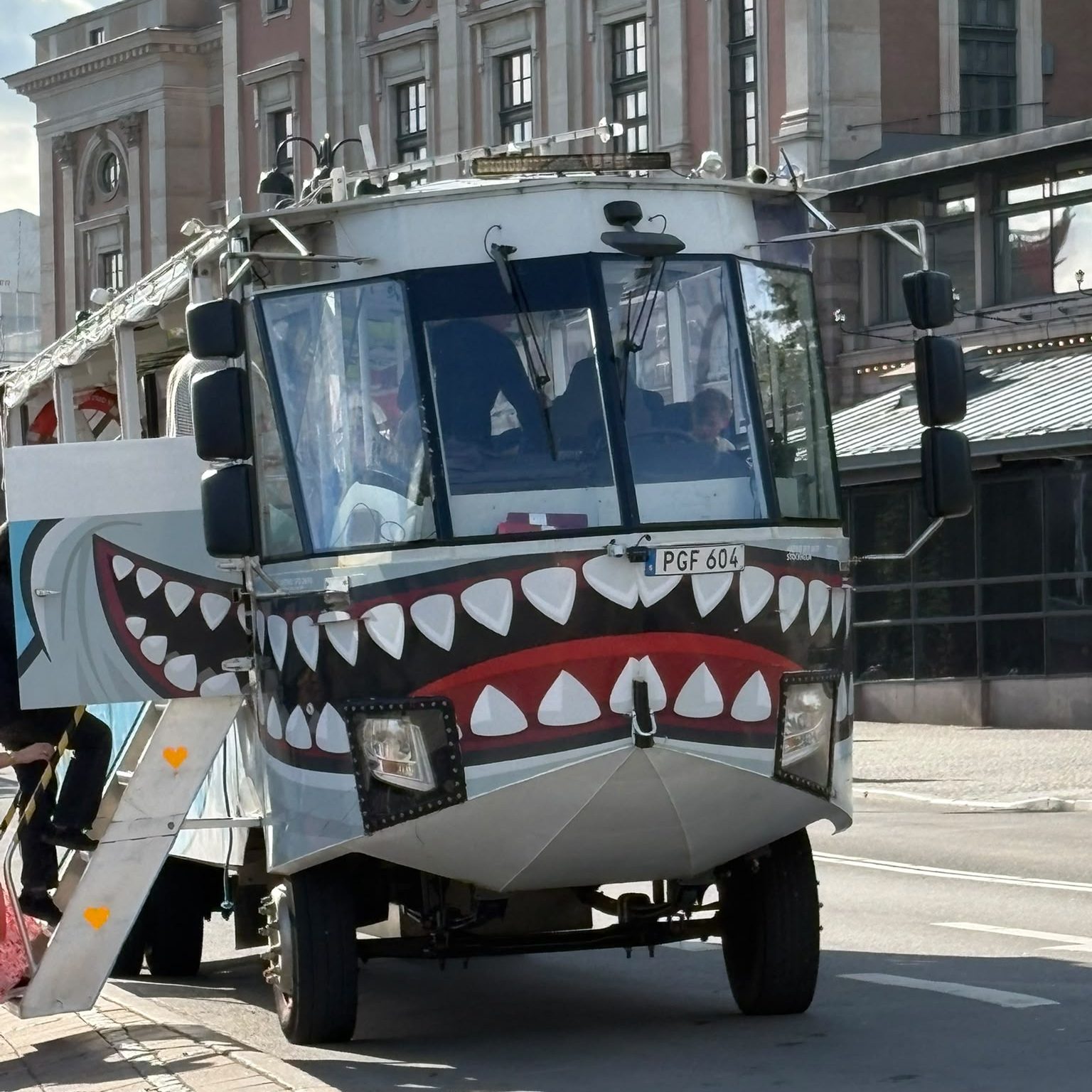
I saw this coming towards me in Stockholm and, for a moment, genuinely had no idea what I was looking at.
It has wheels. It has a windscreen. It is unmistakably shaped like a bus. It also has enormous teeth painted across the front, which does not exactly inspire confidence.
And then comes the strange part.
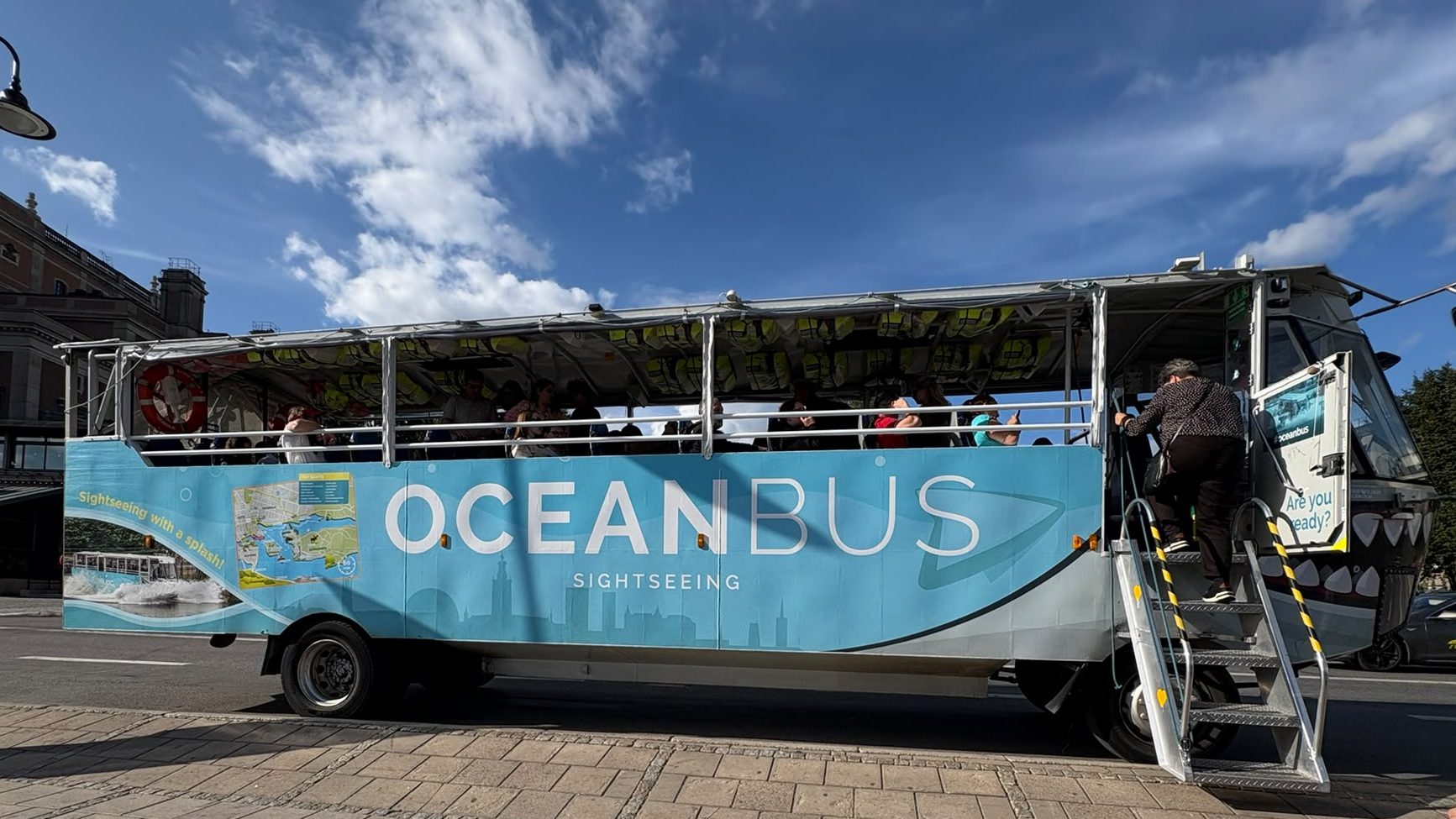
This is the Ocean Bus, an amphibious sightseeing vehicle. It drives through the streets of Stockholm like a perfectly ordinary bus and then, instead of stopping at the water, simply drives straight into it and becomes a boat. The whole tour takes about an hour, part on land and part on the water. (Ocean Bus)
Stockholm has many elegant ways of showing off a city built across islands.
Apparently one of them is to climb into a bus with shark teeth and hope the driver remembers when to start floating.
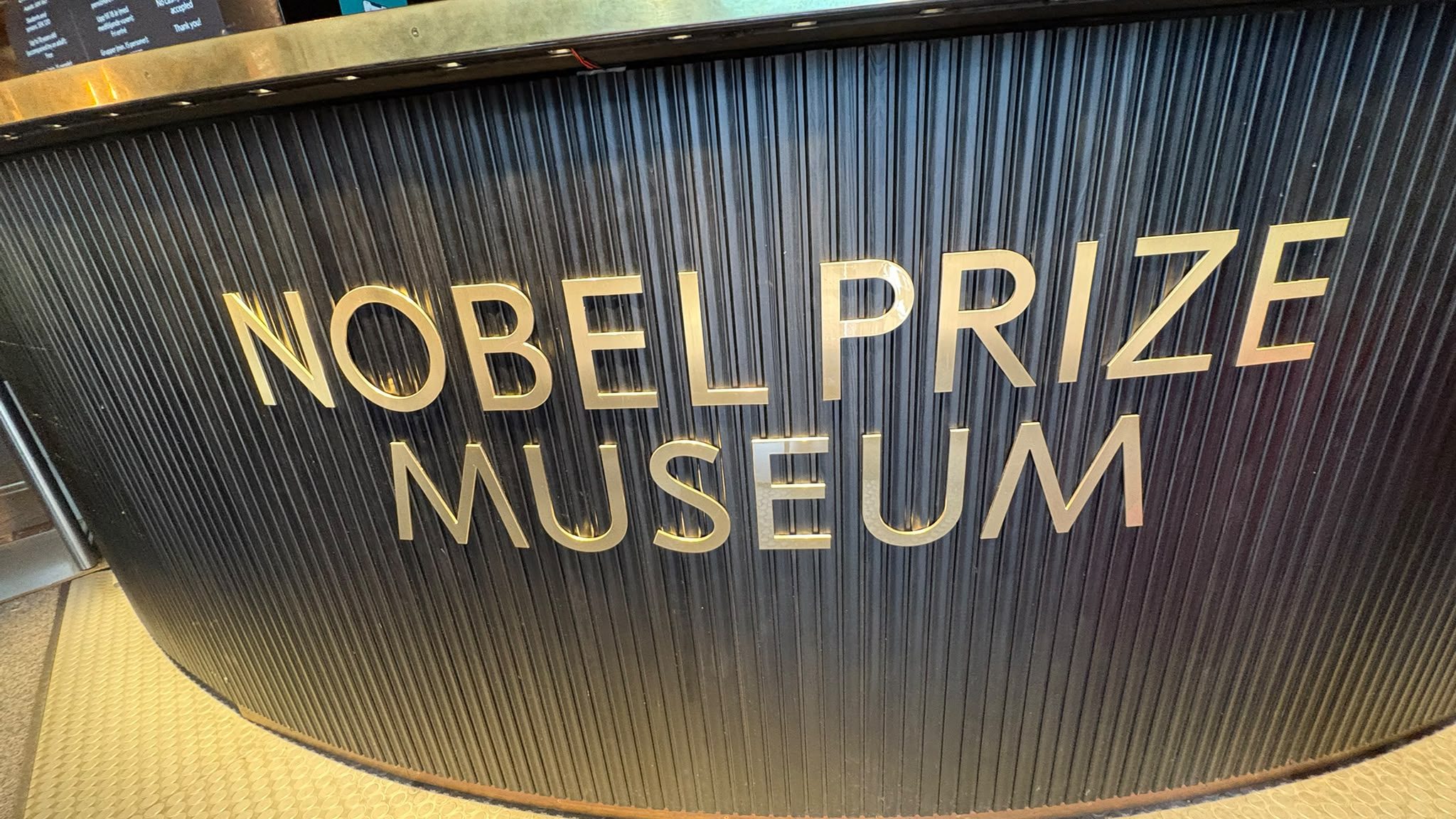
One of the more serious stops in Stockholm was the Nobel Prize Museum in Gamla Stan.
It tells the story of Alfred Nobel, the prizes that bear his name, and the people whose work has changed science, literature, peace and the way we understand the world.
What stayed with me most was the reminder that achievement rarely arrives looking polished. Behind the famous names are usually years of uncertainty, failed attempts, stubbornness, curiosity and work that nobody noticed at the time.
It is an impressive place, but also a very human one.
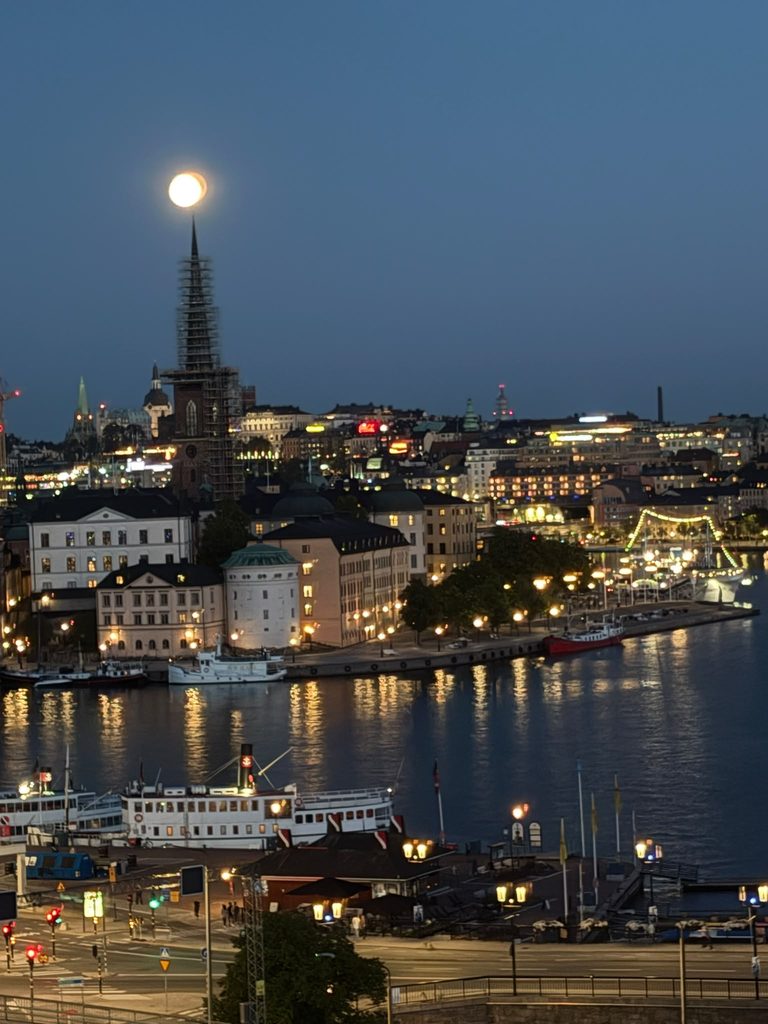
I looked out the window at exactly the right time!
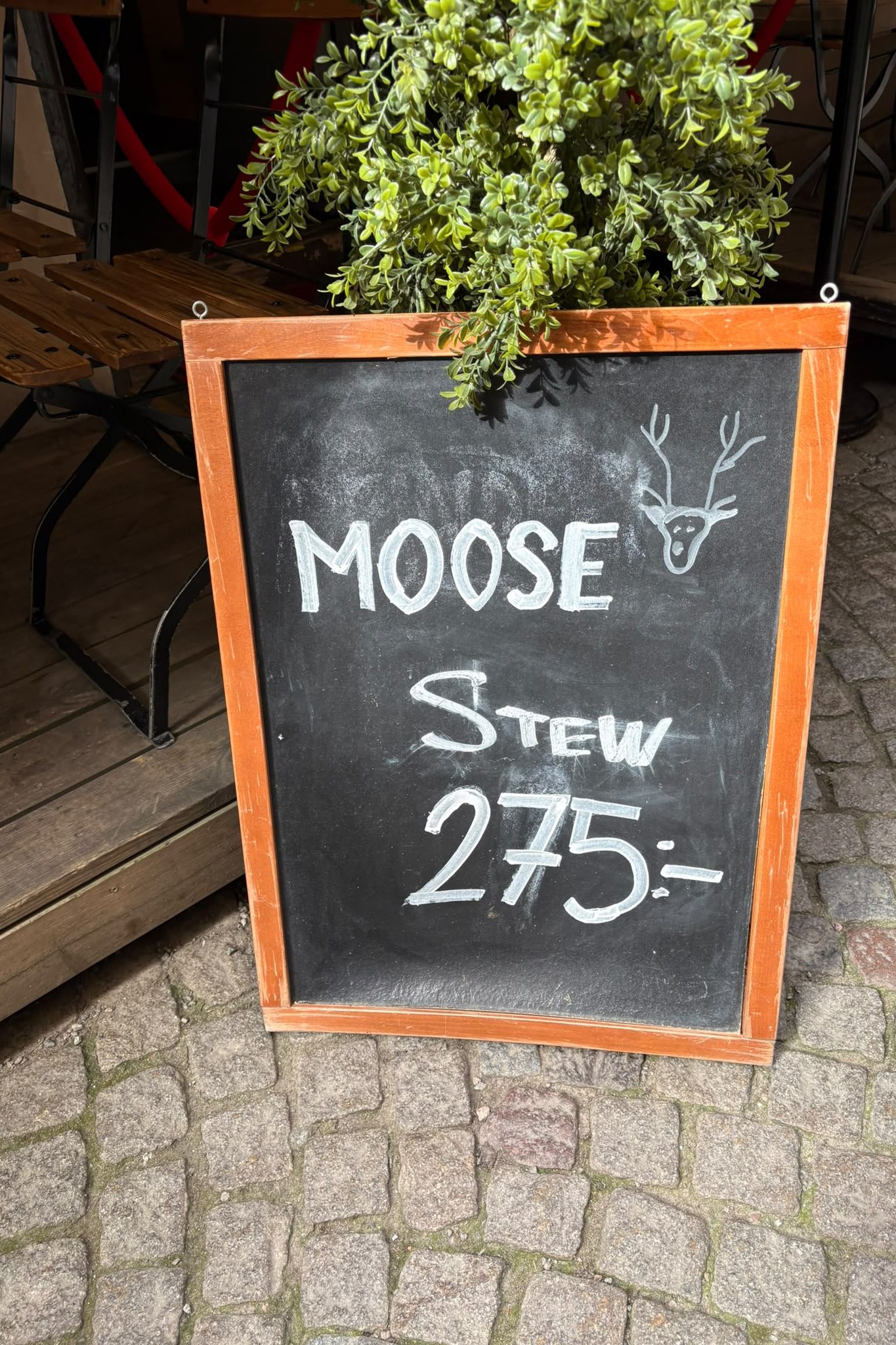
Moose stew. 275 kronor.
There are moments when travelling when you can spend far too long asking whether something is sensible, traditional, touristy, expensive, authentic or simply a very bad idea.
And then there are moments when the answer is much easier.
I was in Sweden. There was moose stew on the menu.
Why not?