
Money, Mistakes, and the Long Interest-Free Loan
Money is a strange thing.
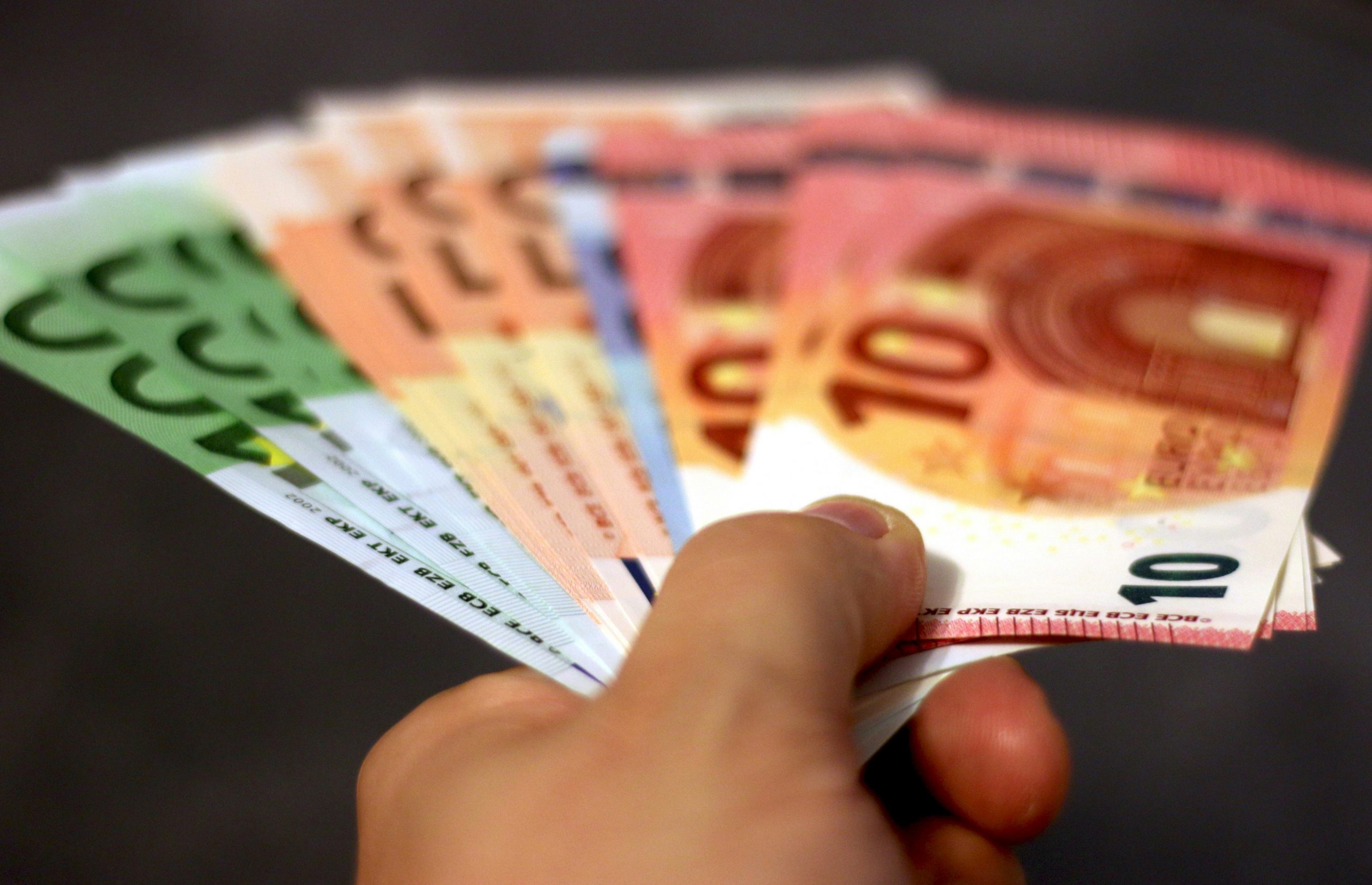
I like money. I can say this very directly. I like money because when you have money, life feels more relaxed. You can buy things. You can do things. You do not always have to think, “Is this possible?” or “Can we afford this?” Money is not everything, of course. I know this. But when you do not have to worry about it all the time, your life is more comfortable.
But I also know something else.
You can have a good childhood even when money is always a topic in the house.
When I was a child, I did not have one big moment where I suddenly understood that adults worry about money. It was not like in a film, where one sentence changes everything. For me, it was normal. My mother often said, “We have no money. We have to save. We have to save our money.” I heard this many times. It was part of life.
But when I look back now, I understand it better. We were not poor. We lived in a big house. It was my mother’s own house. She had her own car. We had food. I had enough to play. I had a good childhood. Under the line, I can say that. I was happy.
The point was not that there was nothing. The point was that my mother had to look carefully at the money. She had to decide what we could buy this month and what we could not buy. The cash flow was sometimes critical. Maybe that is the right word. We had things, but we could not spend without thinking.
As a child, you do not always understand this in words. You understand it in small pictures.
For me, one of these pictures was a bike.
Most of my friends had bikes from brands like Cube or Ghost. Nice bikes. Good bikes. Cool bikes. I had a bike from a supermarket. My friends did not laugh at me. I do not think they cared so much. Maybe they did not even notice. But I noticed. I liked riding bikes, and I liked nice bikes. I saw the difference.
I remember when some of my friends had bikes with the first suspension systems where you could make the springs hard or soft. For me, this was a very cool thing. I looked at that and thought, yes, this is different. This is something we cannot just buy.
But I was not unhappy because of it. I did not have a bad childhood because I had a supermarket bike. Today I even think it was good that I saw this when I was a small boy. It helped me understand what is important for a child, and also what is not important.
Now I have a child myself, and I think differently about these things. I know a child sees details. Maybe he does not say it, but he sees. I also know that not every wish must be fulfilled. This is also important. But when I think about my son, I remember the feeling of standing there with my normal bike and seeing the other bikes. It stays somewhere inside.
My mother taught me a lot about money, but not the whole story.
She taught me to save. She taught me that money does not grow on trees. She taught me that you have to be careful. But after my apprenticeship, I did the opposite for a while. All the money that came in went straight out again.
I bought a car. It was new for me, but not a new car. It was used, and after that I was almost every week in the garage because something needed repair. So a lot of money went into the car. The rest went into drinks, food, bars, discos, and going out. At the end of the month, I was broke.
I did this for around three years.
At that time, I did not really budget. I knew what my mother had told me, but knowing something and living it are not the same. I think the second half of my money education came later from my girlfriend at that time. She often said, “You have to save your money.” And when I wanted to buy something, she asked me, “Do you really need this?”
This question is simple, but it is very strong.
Do you really need this?
I did not always like the question, but I needed it.
The Mayor asked me about small family habits around money. Do we compare prices? Do we talk about bills? Do we shop in a special way? At first, I thought, no, we have no special habits. We shop every Monday, but we do not go into the supermarket with a strict limit for the week. We buy what we need.
But then I thought more.
When I was a child and my mother said I could buy one package of Haribo, I bought one package. I do not remember asking for two or three. Maybe I was just that kind of child. Maybe I did not have the highest demands. Maybe I already understood that when my mother said one, she meant one.
There is another thing I remember.
When I got money for Christmas or birthdays from my grandma, my grandpa, my uncle, or other family members, I did not spend everything. It was normal for me to give most of it to my mother. If I got 500 euros, maybe I gave 400 to my mother and kept 100 for myself. With the 100, I could buy something. The rest was saved.
I do not know exactly why I did this. It was tradition. It was normal. I did not think, “I am very disciplined.” I just did it.
Later, this money became important. My mother had saved it for me from the beginning of my life. When I was around twenty, there was a considerable sum of money. It was a kind of nest egg. At that age, I used it for a car.
Today, I would not do it in the same way.
I bought a very new BMW. Not a brand new car, but a very new one. It was a premium car, and when I look back now, I think I needed a better car, yes, but not that kind of car. I did not need that brand. I did not need that level. Today I would buy a lower car, something practical, something good, but not premium.
When I look at this now, I see two things.
First, my mother was very good with money. Even when she said money was tight, she protected the money that belonged to me. She did not use it for herself. I respect that. I understand that more today than I did then.
Second, I made a young man’s decision. I wanted a nice car. I wanted something that felt good. Maybe I wanted to show myself that I could have it. I do not punish myself for this now, but I would not repeat it.
That is how money teaches you. Not only through advice. Through mistakes.
There was another mistake, smaller but still clear in my memory. When I was younger, I wanted a new mobile phone. My friends had newer phones, and they could play music on them. I wanted that too. I went to a shop and looked for the cheapest phone that could play music. It cost around 100 or 150 euros, and my mother bought it for my birthday.
Then I discovered that the phone could not play music in the way I wanted.
I was very sad, but I could not say it to my mother. I did not want her to be disappointed. She had bought it for me. So I lived with this phone for three years, even though I did not like it.
That was my mistake. I had looked at the wrong details.
Today, I think differently about phones. I have an old iPhone. It is seven years old now. It is slow, and it does not have the newest functions, but it still runs. And when something still runs, I find it difficult to buy a new one. I am an Apple fan, yes. I like how everything works together — phone, watch, tablet, cloud. It is easy. But I do not need to replace something only because a newer version exists.
For my mother, it is different. She has an older Samsung. It is slow. Sometimes an app needs ten seconds to open. For me, ten seconds feels long. For her, it is okay. She knows the system, and that is important. If I bought her a new iPhone, everything would be new and she would have to learn again. So sometimes the best product is not the best product. It is the product that fits the person.
Money is also about people.
After my apprenticeship, when I was broke at the end of the month, I sometimes needed money from my brother when we went to a bar or disco. He gave it to me. I did not always give it back at the beginning of the next month. Maybe I should have, but I did not.
Today, he is renovating an old house, and now sometimes money is tighter for him. When we go out, I pay. In this way, I give back what he gave me when I was younger. It was a very long interest-free loan.
This is how family often works. Not with contracts. Not with exact numbers. More with memory.
Now, in my own family, I am the financial planner. I look at the budget.
Maybe this sounds strict. I do not mean it in a hard way. I just think money has to have a place. You need rules, but you also need heart. You need to know when to say no, and when to say yes without making a big discussion.
The Mayor also asked me if I play the lottery.
No.
For me, it is too unrealistic to win one million or more. I do not like to build plans on something that almost never happens. But of course, then came the classic question. What would I do if I won the lottery?
If it was five million euros, I think I would continue working. Five million is a lot of money, but it is not enough for the big lifestyle people imagine. But if it was 70 million, that is different. Then maybe next week we would meet on my new ship in Mallorca.
Of course, The Mayor immediately wanted to be invited. And then we had to include his family and Janita with her family too. That is okay. With 70 million, this is no problem.
But this is a joke, and also not only a joke.
Because when I think about money, I see that the number is never the whole story. A supermarket bike can teach you something. A wrong mobile phone can teach you something. A BMW can teach you something. A brother paying for you at the end of the month can teach you something. A mother saving money for years, even while saying “we have no money,” can teach you something very deep.
Money makes life easier when you have enough of it. I still believe this. But money also shows character. It shows how careful you are. It shows what you value. It shows whether you think only about today or also about later. It shows whether you can enjoy something without losing control.
I am still learning this.
Maybe I learned it first from my mother, then from mistakes, then from relationships, and now from being a father. Today I want to give my son a good life. I want him to have what he needs. Sometimes also what he wants. But I also want him to understand that not everything comes immediately.
Because life is not only about having the best bike.
Sometimes it is also about remembering the supermarket bike, and understanding what it gave you.