

Ladies First, Age Before Beauty, or Rock-Paper-Scissors?
There are many ways to begin a conversation about good manners. You could discuss who should hold the door open, whether older people deserve special treatment, or why some people believe ladies should always go first.
By Rosii in Sao Paulo, Monica in Adelaide, Janita in South Africa and The Mayor in the luggage hold of a spaceship bound for Mars.
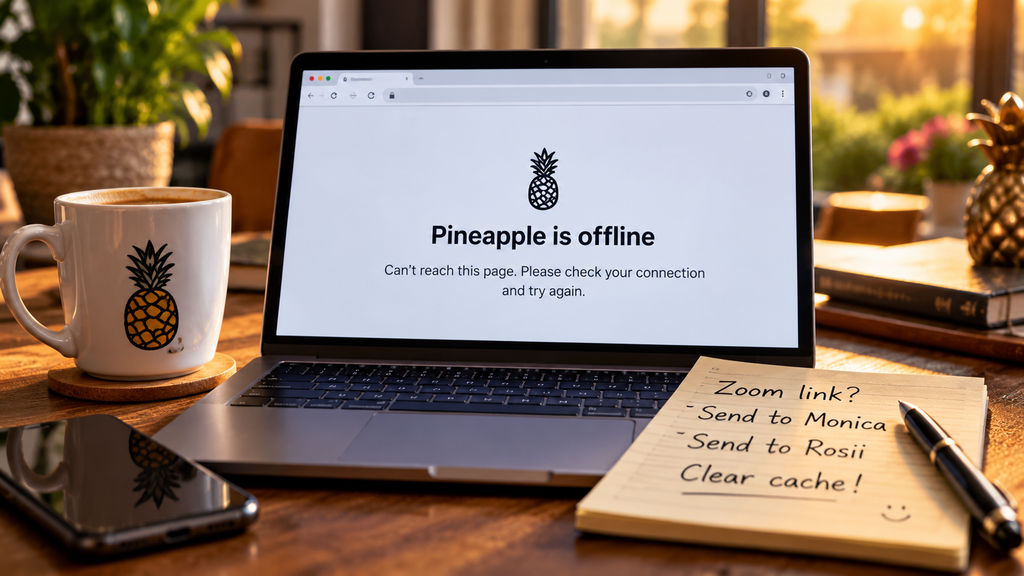
Or you could spend half an hour trying to get everyone into a Zoom meeting.
That was how Lunch began this week.
Fruitloop was already there, but the website was refusing to cooperate. Monica couldn’t get in. Rosii couldn’t get in. The Mayor, rather mysteriously, could get into everything. Messages were pinging without appearing, browsers were being changed, and links were travelling around the world without taking anybody where they were supposed to go.
At one point, the Mayor considered creating an entirely new meeting called Emergency Lunch. Eventually, Fruitloop found the proper Zoom link and sent it to everyone. The Mayor discovered that he had been distributing the wrong one.
He admitted his mistake, declared Fruitloop the more intelligent of the two, and welcomed everyone to a rather late Lunch.
Monica thanked Fruitloop for rescuing the meeting. Fruitloop observed that technology doesn’t always work with them. The Mayor seemed inclined to agree, although he was still trying to understand why the website liked him and nobody else.
For a conversation called Who Goes First?, it was a promising beginning. Nobody had managed to arrive in the proper order because nobody could find the door.
The trouble with being too polite.
Before anyone reached an imaginary doorway, Monica had a story about two very real dogs.
She had taken Lily and Tobias to the groomer. Normally, their appointments cost about $130 each. This time, the groomer sent a message saying the arrangement would be approximately 530.
Monica nearly fell off her chair. Had dog grooming suddenly become an extraordinarily expensive profession?
When she collected the beautifully groomed dogs, she discovered that 530 had nothing to do with money. The groomer meant approximately 5:30 in the afternoon.
A few missing characters had turned a perfectly ordinary collection time into a financial emergency.
It was a lovely little example of how easily we misunderstand one another, especially when we cannot hear someone’s voice or see their expression. The words might be correct, but the meaning can still go wandering off in another direction.
Then Rosii mentioned her approaching birthday. Her niece had reminded her that in three years she would be sixty, which had prompted some reflection about everything she had experienced.
There had been good things and not-so-good things, she said, but it was her life, and she was happy with it. She had her health, her family, her work and plenty still to do.
In Brazil, she explained, there is an expression about becoming better with age, like wine.
The Mayor and Monica were delighted. Both were already on the other side of sixty, and neither seemed particularly interested in returning. Monica suggested sixty was the new fifty. The Mayor thought that was unnecessarily modest. Why not the better forties?
Fruitloop contributed the story of her grandmother, who had simply stopped counting at fifty-five. She was now somewhere in her seventies, but if anyone asked her age, the answer remained fifty-five.
This was when the Mayor took the topic of going first in a rather darker direction. As the oldest person at the table, he reasoned, he would probably be the first to depart this world.
Rosii immediately wanted to know where, exactly, they were supposed to be going.
It was a reasonable question.
Fruitloop decided it was time to introduce the first ridiculous problem before the Mayor organised his own farewell ceremony.
Imagine two extremely polite people arriving at a doorway at precisely the same moment. Both insist that the other should go first. Neither will surrender. Three hours later, they are still standing outside.
How do they settle it?
Monica’s answer was rock, paper, scissors. Rosii knew a Brazilian variation using fingers and numbers. Fruitloop proposed a race away from the door and back again, with the winner earning the right to enter.
The Mayor immediately complicated matters by introducing an imaginary 95-year-old person with a walking frame. Would Fruitloop still insist on a running competition?
Of course not, she said. She would let the older person go first.
But that raised another problem. Was she being kind, or was she making assumptions about somebody’s abilities?
The Mayor had his own solution. He would tell such an extraordinarily boring story, in such a monotonous voice, that the other person would eventually give up and walk through the door simply to escape.
Fruitloop was unimpressed.
Monica suggested tossing a coin, which sounded wonderfully sensible until somebody remembered how rarely people carry cash anymore.
Fruitloop checked her handbag and triumphantly produced a two-rand coin. The Mayor inspected it and wanted to know whether she had manufactured it herself.
The coin had been minted in 2023. Fruitloop had not personally made it.
From there, the conversation travelled from Australian banking charges to cash discounts, and then to a surprisingly modern development in asking strangers for money.
Rosii described stopping at a traffic light in Brazil, where a man asked her for money. When she said she had no cash, he suggested she could send him money electronically using Pix.
Fruitloop had encountered something similar in South Africa. Someone asking her for money had informed her that electronic transfers were also accepted.
Even the old excuse of having no cash was apparently becoming obsolete.
All this because two imaginary people couldn’t decide who should walk through a door.

A queen, an older gentleman and an inflatable duck.
Fruitloop’s next question offered everyone considerably more power.
Suppose you woke up tomorrow as the Queen of All Queens, or the King of All Kings, and could introduce one completely ridiculous law about standing in a queue. What would it be?
Fruitloop had recently seen a video of a woman who was tired of people standing too close behind her. The woman had brought an inflatable duck-shaped swimming ring into the queue and pumped it up around herself.
Nobody could get near her.
Fruitloop rather liked the principle. Her law would be simple: leave people some space. There was no need to stand practically on top of the person in front of you.
Rosii had another priority. If she was queen, particularly on her birthday, she wanted her turn respected. Nobody should push ahead of her.
This became complicated when the Mayor pointed out that he was older than Rosii. Surely age deserved some consideration?
Rosii agreed that older people should be respected. Her mother had taught her that. On an ordinary day, she might happily let him go first.
But on her birthday, as Queen of All Queens?
Sorry, Mr. Mayor. Today was her turn.
The Mayor protested that he was older. Rosii reminded him that he was also a man, and ladies traditionally went first.
Suddenly, a simple queue had acquired several competing systems of authority. There was age, gender, royal status, birthday privilege and the ordinary business of waiting your turn.
Which rule was supposed to win?
The Mayor was beginning to suspect that every possible answer placed him at the back of the queue.
The conversation then took an unexpected detour through the animal kingdom.
He told everyone about Uno, one of his cats, who had disappeared while the Mayor was away in Strasbourg. After discovering that Uno was still missing the following morning, he went looking and eventually heard a very loud meow coming from a neighbour’s barn.
Uno was rescued, brought home and presented with food, which he attacked with great enthusiasm. Afterwards, he cuddled up to the Mayor, apparently grateful for his release.
Monica supplied a familiar observation: dogs have masters, but cats have staff.
The Mayor realised that his position had become even worse. Monica, with her dogs, was a master. He, with his cats, was a member of staff. Rosii was a queen. Fruitloop was issuing the questions.
He was older, male and now apparently employed by three cats.
There seemed very little chance of him going first anywhere.
Three seats to Mars.
For the final Fruitloop question, the four Lunch companions were preparing to board a spaceship to Mars.
Unfortunately, the spaceship had only three proper seats. The fourth traveller would have to spend the journey in the luggage compartment.
Who should go there, and how would they decide?
The Mayor immediately volunteered himself. He was, after all, already at the bottom of the social hierarchy. Why prolong the discussion?
But Monica had a more practical approach. Surely the smallest person would fit into the luggage compartment most comfortably.
This required everyone to reveal their height.
Monica was 163 centimetres tall. Rosii was 174. The Mayor was 184.
Fruitloop was 159.
There was a short silence in which Fruitloop discovered that being the youngest and shortest person at the table had suddenly become a serious disadvantage.
Monica added that Fruitloop was probably the most flexible too.
Fruitloop was beginning to regret inventing this question.
She agreed that perhaps she could manage the luggage compartment, provided she had food, some room to move and a suitable spacesuit. After all, nobody was going to remain strapped into a seat for the entire journey.
The Mayor refused to allow his wing woman to spend months or years in a cold, dark compartment. He insisted that his upbringing required him to behave like a gentleman.
Then Rosii volunteered.
She practised yoga, she explained, and was flexible enough to manage.
The Mayor refused that offer too.
Monica briefly considered sacrificing herself, reasoning that the others might enjoy a peaceful journey without her constant chatter. But she was worried about the darkness. Would there be a torch that lasted for two years?
By now, everybody had found a reason either to volunteer or to prevent somebody else from volunteering.
Nobody wanted to be selfish, but nobody could agree on what being fair actually meant.
Fruitloop finally proposed a solution.
They would divide the journey into four parts. Everyone would take a turn in the luggage compartment, and rock, paper, scissors would determine the order.
It was wonderfully democratic.
There was just one problem. The Mayor remembered that he and Fruitloop had once used rock, paper, scissors to make decisions, but they kept choosing exactly the same thing. They could play for hours without reaching a result.
At this rate, the spaceship might arrive on Mars before anyone decided who belonged in the luggage compartment.
And then the Mayor raised a question nobody had considered.
Who was actually going to fly the spaceship?
Fruitloop assumed they would have a trained astronaut.
It seemed a sensible precaution.
The rules we carry with us.
What made this Lunch conversation so entertaining was that everyone had a slightly different idea of what good behaviour required.
For Monica, holding a door open remained a lovely gesture. She liked the courtesy of it, although she wondered whether some men now hesitated because they were afraid the gesture might be misunderstood.
For Rosii, respect for older people was something she had learned from her mother. Yet she could also imagine a birthday when she wanted to claim her own place at the front.
Fruitloop cared about personal space and finding a solution that allowed everyone a fair turn.
And the Mayor, despite his considerable enjoyment of complaining about being the oldest man in the room, kept returning to the idea that a gentleman should put others first.
None of these rules was particularly strange on its own. The trouble began when they met one another.
Does the oldest person go first, or the birthday girl? Does the gentleman hold the door, or does the woman prefer to open it herself? Should the smallest traveller squeeze into the luggage compartment, or should everyone share the inconvenience?
Sometimes the kindest thing is to step aside. Sometimes it is to accept an invitation. And sometimes, after three hours of excessive politeness, somebody simply needs to walk through the door.
By the end of Lunch, Rosii really did have to leave first. It was nearly eight in the morning in Brazil, and she had somewhere to be. In Australia, Monica was already well into her evening. Fruitloop and the Mayor were somewhere between the two.
Even the clocks had their own ideas about who was first.
Rosii had earlier described getting older as becoming like a good wine. Perhaps good manners improve in much the same way. We learn the rules when we are young, but understanding when to use them, when to bend them and when to laugh at them takes a little longer.
And if all else fails, there is always rock, paper, scissors.
Just make sure everyone agrees on the rules before the spaceship takes off.