
A Little More Space.
I have been thinking about politeness, and how easily it disappears when we are in a hurry. Sometimes all it takes to make life easier for somebody else is a little patience, a little understanding, or simply enough room to make a mistake.
By Geneviève, France.
One of the first places I notice this is on the road. Someone is driving a little slowly, perhaps because they are uncertain about where to go, and the driver behind immediately wants to get past. Sometimes they follow much too closely
I don’t like that, especially when the person in front is learning to drive.
When I see a learner driver, I try to leave a little more space between our cars. The learner might make a mistake, and the mother, father or instructor sitting beside them needs time to react. There is no reason for me to make the situation more difficult.
Of course, I know what it feels like when somebody is driving slowly in front of you. You have somewhere to go. You want to arrive. But the person learning to drive has to start somewhere, just as we all did.
A little more distance doesn’t cost very much.
Driving in Paris.
I remember driving in Paris when I was younger. We came to one of those enormous roundabouts and suddenly the driving habits we were used to didn’t seem to work very well.
Normally, you have some idea where to position your car, when to move towards the outside and where to leave the roundabout. In Paris, with cars everywhere and everybody moving around you, it was different. Someone told us to stay towards the middle, so we did. Then, of course, we had to work out how to get across all that traffic to the exit we actually wanted.
It was quite an experience.
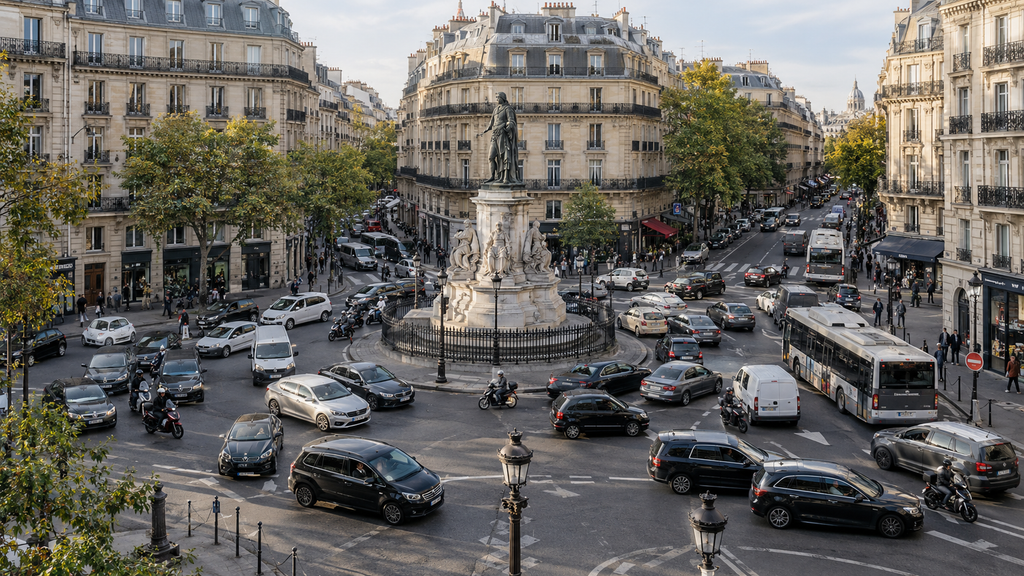
Today we have navigation systems telling us where to go. At that time, you prepared your route beforehand and then tried to remember it while dealing with the traffic around you.
I sometimes wonder whether the people driving in Paris are really less polite than people elsewhere, or whether they simply live under more pressure. Meet someone from Paris in a café and you may have a perfectly pleasant conversation. Put the same person behind the wheel, surrounded by cars, and suddenly everybody wants to move, everybody seems to know where they are going and everybody wants to get there first.
Perhaps it is partly the lifestyle.
Where I live, things have generally felt more relaxed. People seem to have a little more time. But I think this is changing too. People are in a hurry more often, even when there is no particular reason.
And sometimes we create the pressure ourselves. We leave at the last moment without allowing time for anything unexpected. Then another person slows us down and we become impatient.
We could have left ten minutes earlier.
That is easy to say, of course, when you are not the one sitting in the traffic.
Meeting halfway.
Living near the border between France and Germany raises a different question about politeness.
People cross the border to shop, work or visit, and some decide to live permanently on the other side. That means you often meet people who do not speak the same language.
For me, there is a difference between visiting a country and choosing to live there. If you decide to live in France, for example, I think you should make some effort to learn French. You do not have to speak perfectly. You do not need beautiful grammar or a huge vocabulary. But you should be able to understand what is happening around you, manage ordinary situations and ask for help when something goes wrong.
It is also in your own interest.
I understand why someone might live in France and continue working in Germany. Perhaps the house was cheaper, perhaps they found somewhere they liked, or perhaps the arrangement simply made sense for their family. But living across the border does not mean the country around you stops existing.
At the same time, I think people on the French side can make an effort too. In a tourist town, for example, many customers may come from Germany. If somebody working in a shop understands a little German, that can make things much easier.
Again, nobody has to be perfect.
If you understand what someone wants and can explain what they need to know, that may already be enough. The important thing is that the effort does not always come from the same side.
Perhaps politeness is partly that: meeting somebody halfway.
Friendly, but not friends.
I remember very different managers during my working life. Some were good at speaking with the people who worked for them. They treated people with respect, took an interest in what was happening and made it easy to approach them.
Others seemed to find it difficult to talk to people below them in the company.
I never understood why having a higher position should mean behaving as though somebody else is less important. But there is another side to it. A manager can also become too friendly, and then the relationship between manager and employee becomes less clear.
There is a difference between being friendly and being friends.
You can ask somebody how they are, listen to what they have to say and take an interest in their work without pretending you have a close personal relationship. In fact, being approachable often helps a manager understand what is really happening in a company because people speak more openly when they feel comfortable.
Of course, that raises another question. Is the friendliness genuine, or is it simply a way of finding things out?
I think that depends on the person.
For me, what matters is that people can still talk to one another. If there is a disagreement, it is usually better to discuss it than to stop communicating. That does not mean everybody has to agree. In any group, there will nearly always be somebody who looks at the situation differently.
That is human nature.
Letting somebody finish.
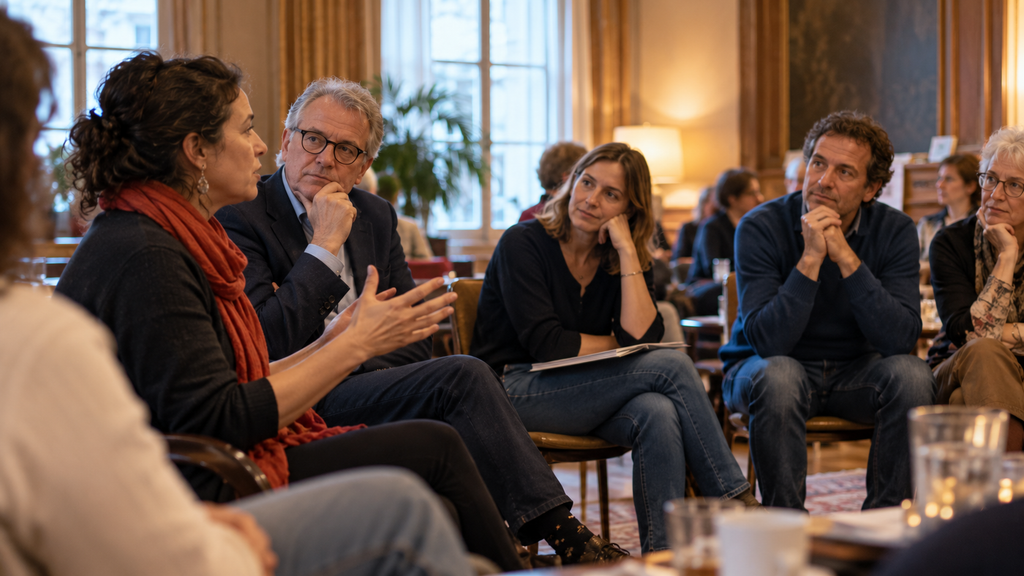
The same thing happens in public discussions. I sometimes watch programmes where people come together to talk about what is happening in society. Recently, I saw one where the participants had very different opinions, but each person was given some time to speak.
I noticed it because it has become unusual.
So many discussions now consist of people interrupting one another. Somebody begins explaining something and, before they have finished, another person starts talking. Then a third person joins in. Eventually everybody is speaking and nobody is listening.
I find that tiring.
A discussion does not have to work like that. One person can finish what they are saying. The others can listen. Then somebody else can disagree.
Democracy depends on different opinions being possible, and sometimes those opinions will be very far apart. Somebody may think an idea is completely wrong and say so strongly.
They have the right to disagree.
But the other person also has the right to finish the sentence.
The small things.
The more I think about these situations, the more similar they seem.
On the road, someone wants to go faster than the person in front. Across a border, someone expects the other person to speak their language. At work, a position can make somebody feel more important than the people around them. In a discussion, one person wants to answer before the other has finished.
None of these problems will disappear simply because everybody decides to be polite. People have different characters, experiences and opinions. There will still be disagreements, misunderstandings and days when we are not as patient as we would like to be.
But ordinary life might become a little easier if we gave one another slightly more room.
Sometimes that means leaving home ten minutes earlier. Sometimes it means trying a few words in another language. Sometimes it means speaking respectfully to somebody whose position is very different from your own.
And sometimes it simply means listening until the other person has finished.
I keep coming back to the learner driver.
When I see that sign on the car in front of me, I know that somebody is doing something I once had to learn myself. They may hesitate. They may take longer than I would. They may make a mistake.
So I leave a little more space.
It seems a reasonable thing to do.
Not only on the road.