
Curiosity Killed the Mayor
After years of asking what Brida is, who it is for and whether anybody might eventually pay for it, the Mayor has finally received a definitive answer.
An obituary for a man who asked one question too many.
The Mayor died today after a long and largely unsuccessful struggle with curiosity.
The immediate cause of death was exhaustion, aggravated by repeated attempts to discover what Brida is, who it is for, what it might become and whether anybody will ever pay for it.
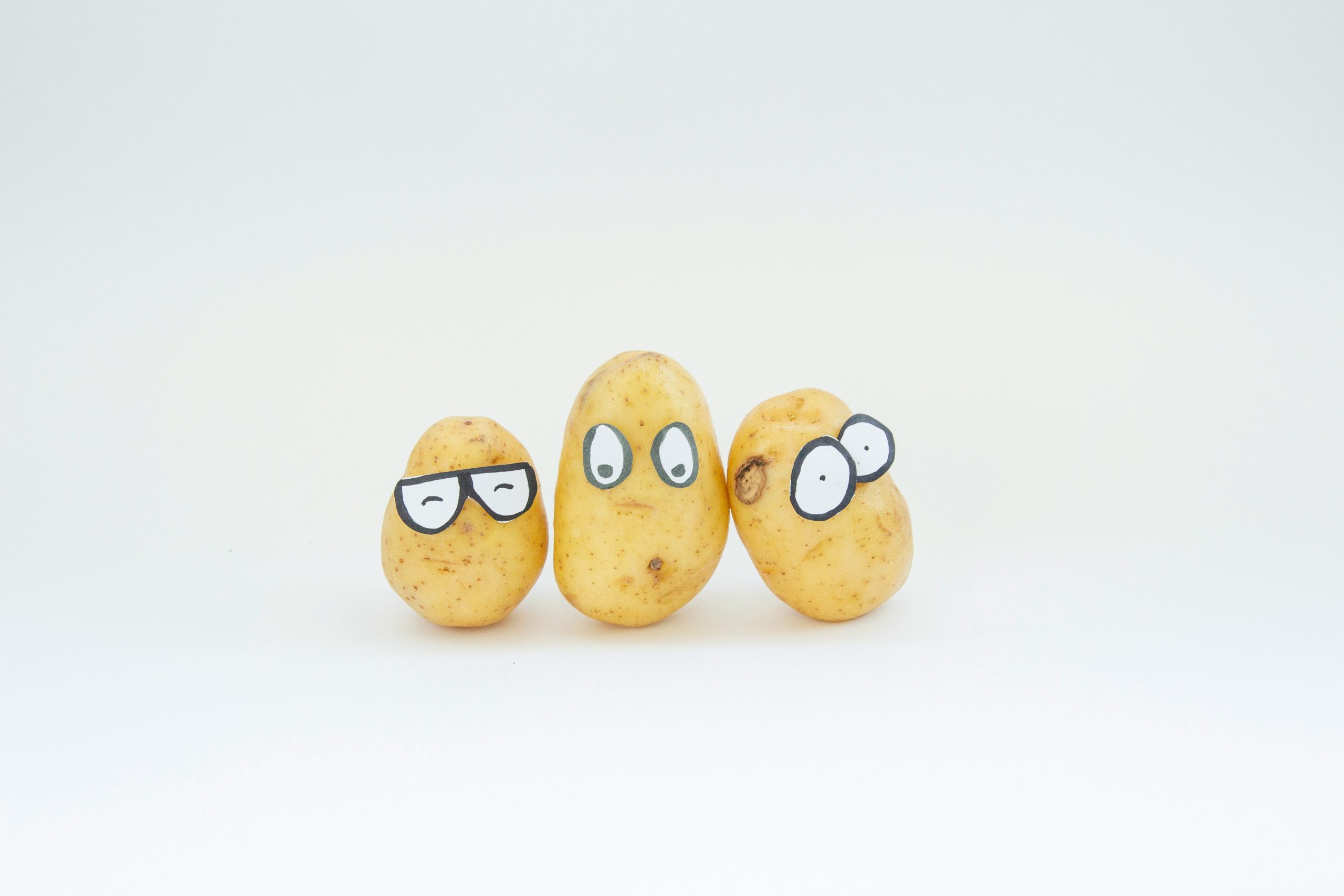
He is survived by his wife, by Fruitloop, by several pineapples, by a growing number of potatoes, by innumerable unfinished ideas and by a community that still cannot be explained in fewer than 800 words.
Everybody was interested. They said so.
“That sounds interesting.”
“What an interesting idea.”
“I would be interested to hear more.”
The Mayor eventually discovered that interested is one of the safest words in the English language. It requires no action, no commitment and, most importantly, no further question.
Curiosity is different. Curiosity leans forward. It asks what you mean and stays when the explanation becomes complicated. It follows the thought around the corner, even when nobody knows what will be waiting there.
Interest nods politely and goes home.
Curiosity misses the bus.
The Mayor had been missing buses for years.
A difficult case
Those close to him had expressed concern.
“Where is the business?” Fruitloop repeatedly asked. “Where is the money?”
His wife took a broader view.
“Why does Brida dominate you so much?”
The first two questions concerned Brida’s future. The third concerned the life already being built around it.
The Mayor found this distinction uncomfortable and therefore decided to investigate it further.
Neither woman appeared openly opposed to his eventual demise. Both have denied involvement.
The Mayor’s decline was accelerated by the fact that Brida is notoriously difficult to market and almost impossible to sell.
Most businesses know what they are. They make a chair, repair a roof, insure a car or teach somebody how to use a spreadsheet. Brida, by contrast, has spent years standing on the street corner asking:
“What—or who—would you like me to be today?”
Would you like an English course, an international community, a magazine, a conversation group, a professional network, a consultancy or perhaps a pineapple?
Commercially, this gave Brida the appearance of a shop that changed its sign every morning and then wondered why nobody knew what it sold.
Brida tried on each outfit, looked in the mirror and wondered whether this might finally be the one people would pay for.
Usually, they were interested.
A late-stage theory
Shortly before his death, the Mayor became obsessed with something called curiosity-based marketing.
Ordinary marketing begins with a product and searches for people who might want it. Curiosity-based marketing begins with people.
Who are they? What are they noticing? What are they trying to understand? Who might be meaningfully related to them, even though they are not already connected? What conversation could exist if somebody took the trouble to bring those perspectives together?
This approach has one obvious commercial weakness: you do not know what you are selling until you have become curious enough to discover it.
Fruitloop was understandably alarmed.
The Mayor, however, believed he had found something.
Perhaps Brida’s value did not lie in producing another fixed programme and persuading everybody to join it. Perhaps its value lay in noticing connections that other people had missed, then creating a table around a question in which everyone could recognise something of themselves.
Not:
“Tell us what hurts and we will sell you the cure.”
But:
“Tell us what you are seeing. Let us find out what it might be related to.”
Curiosity would notice.
Curation would connect.
The table would test whether the connection was real.
The Pineapple would carry whatever proved worth keeping.
It was either an emerging business model or the final stage of the Mayor’s illness.
At the time of publication, medical opinion remains divided.
The enemies of curiosity
The Mayor’s curiosity had many enemies. Money was one. Goals were another. Pressure, rules, targets and constraints were questioned by police but later released without charge.
None of them was found to be inherently guilty.
Money matters. Without it, curiosity becomes a hobby financed by somebody else. Goals help us move. Rules stop the Mayor from setting fire to things merely because he wishes to investigate what happens next.
The trouble begins when they demand that curiosity justify itself before it has had time to discover anything.
A question cannot always provide a projected return. A conversation does not arrive with a business plan. An unexpected connection cannot be entered into a spreadsheet before it exists.
The coroner noted that curiosity requires patience, attention, uncertainty and enough empty space for an uninvited thought to enter.
The deceased had recently devoted an entire month to discussing rest.
He should perhaps have paid more attention.
A tired mind does not wander. It looks for the shortest route home. A pressured mind does not ask what might be possible. It asks what must be finished by five o’clock. A frightened business does not explore. It grabs the nearest acceptable answer and tries to invoice it.
The Mayor filled nearly all the available space with Brida.
This proved fatal.
The beauty of not knowing
Curiosity is exhausting because it refuses to leave things where it found them.
It pulls at loose threads. It notices that people can be related without being connected. It looks at a person, an organisation or an ordinary conversation and suspects there may be something else there.
It asks whether The Pineapple is merely a publication or the public destination of a much larger human process.
Sometimes there is nothing.
That must be admitted.
Not every question opens a door. Not every introduction becomes a relationship. Not every table produces insight. Not every fascinating person becomes a member. Not every opportunity contains money.
Sometimes curiosity returns home wet, hungry and carrying a broken umbrella.
But sometimes it finds the thing we could not have searched for because we did not know it existed: a different perspective, an unlikely relationship, a question shared by people from completely different worlds, a table that ought to exist or a story worth carrying into The Pineapple.
Possibly even a business.
That is the beauty of curiosity.
It does not promise that the unknown will be valuable.
It makes the unknown available.
Final arrangements
The funeral of the Mayor will be held on Friday at 2pm Paris time.
Everybody is welcome, particularly those who had been meaning to become involved in Brida but were waiting for a more convenient moment.
There will be no formal programme. A programme was prepared, but the actual funeral outranks any planned funeral.
English will be present, although it has been asked not to drive. The Pineapple will sit in the back seat, leaning forward between the drivers and making editorial suggestions.
Instead of flowers, streamers, party hats or fireworks, mourners are asked to donate generously to the Wife & Fruitloop Foundation.
The Foundation has been established to provide long-term support to those left behind by the Mayor’s curiosity, particularly the two women who spent years listening to explanations of Brida and are still waiting for a satisfactory conclusion.
Its first task will be to answer their two remaining questions:
Where is the business?
And where is the money?
Applications for funding will be considered as soon as either can be located.
The Mayor leaves no satisfactory answer.
Only the question that finally killed him:
What happens if we ask one more?
Unfortunately, that may be how all this started.