
A Map Is Not the Same as Knowing a Place.
Janita can search Strasbourg before she ever leaves South Africa. What she cannot search so easily is which bakery to stop at, what will work with a seven-year-old, or how a local turns a list of sights into a week that actually works.
By Fabrice, France
Janita already knows some of the things she wants to see when she eventually comes to Alsace with her family. Cleebourg is on the list. Strasbourg is on the list. She has seen photographs, searched online and started building an idea of the place from South Africa.
That is the easy part.
The harder part begins when you imagine the real family arriving.
They have been on a plane for around ten hours. They land early in the morning. There is luggage, a husband and a seven-year-old child. Somebody wants coffee. Somebody is hungry. Somebody would quite reasonably like a shower before being marched around one of the prettiest cities in Europe.
Suddenly, “What should we see in Alsace?” becomes a very different question.
How do you actually make the visit work?
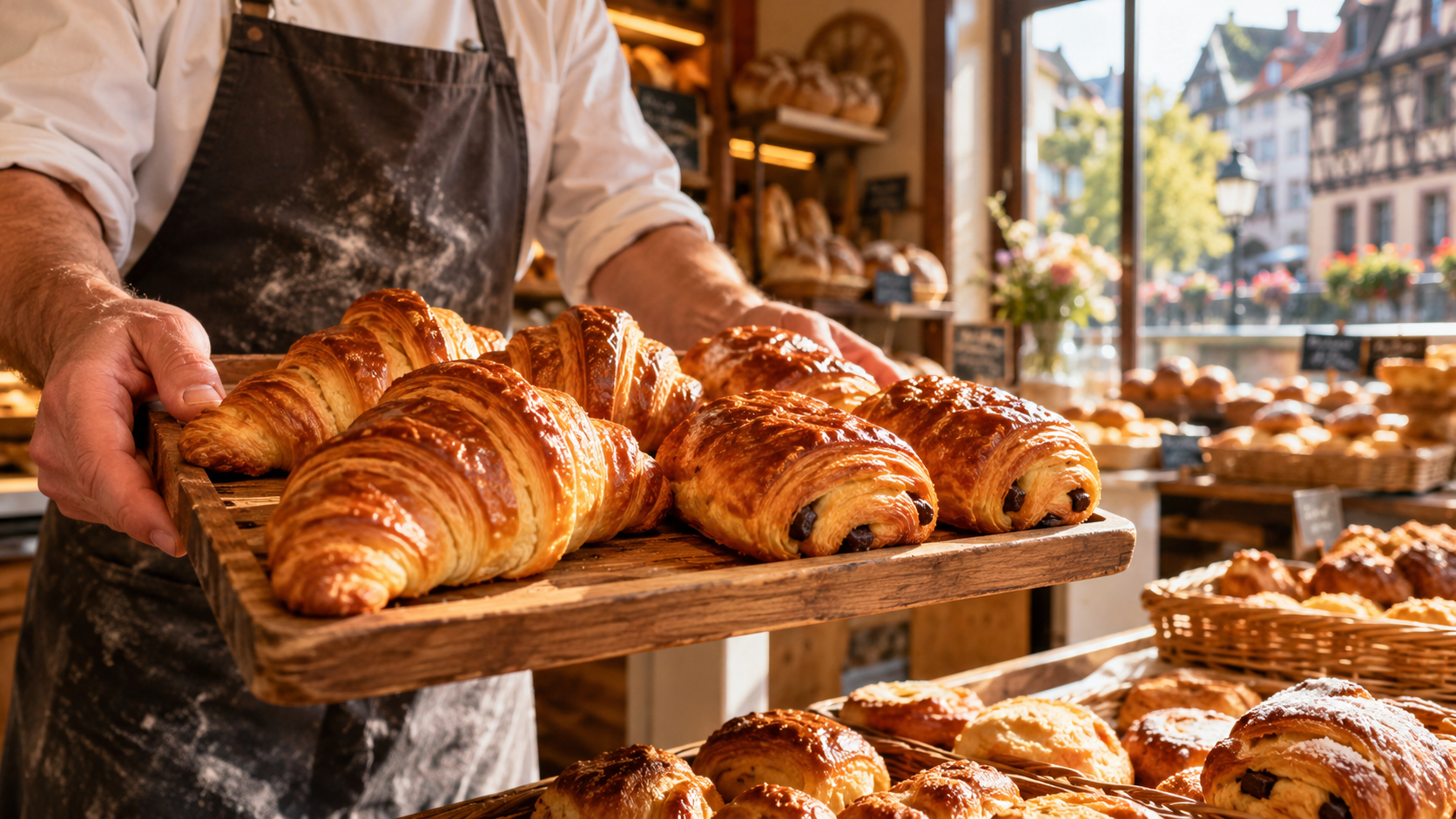
First, find a bakery.
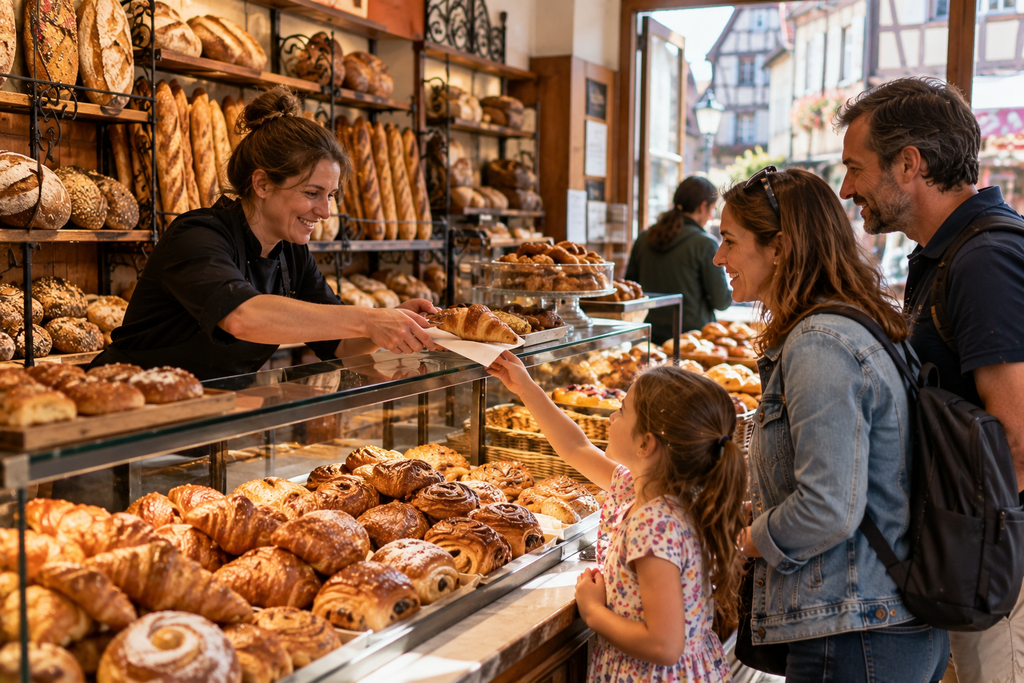
We played the whole thing as if Janita and her family had really arrived.
Eight o’clock in the morning. Strasbourg airport. Everyone through the doors, luggage collected, family still functioning.
My first instinct was to start showing them things. Janita stopped that idea almost immediately. After an overnight flight, she said, she would want to go to wherever they were staying, take a shower, freshen up and then think about breakfast.
Fair enough.
Then came the practical problem. Her son is hungry. Janita wants coffee. Her husband probably wants coffee too.
That one is easy.
Find a bakery.
The adults can have coffee. The child can have milk or cocoa, perhaps a croissant or a pain au chocolat. Nobody needs a cultural programme before breakfast.
That small detail changed the whole imaginary trip. We were no longer arranging attractions. We were arranging a week around actual people, and a seven-year-old does not care how culturally significant the morning is if he is hungry.
Food, in fact, became one of the running problems.
Janita’s son will eat chicken, burgers, rice, chicken wings, pizza and, naturally, McDonald’s. Vegetables are less reliable. Potatoes are apparently not helping us much either.
So what happens when we put Alsatian food in front of him?
Janita was clear. He has to taste it.
If he tries something and says, “I don’t like it,” that is fine. Another plan can be made. A cheese sandwich will do. Bread and peanut butter will do. Nobody needs to prepare a second five-course meal for a seven-year-old.
But he cannot simply look at the plate and announce that he will not eat it.
Then, according to Janita, there will be a problem.
That is useful information for the person organising the visit. Google can tell me which restaurants have good reviews. It cannot tell me that the child at the table may need one bite before negotiations begin.
Nor can it tell me that a restaurant I consider perfectly normal might look rather grand to visitors, or that an expensive-looking evening could produce an immediate question about who exactly is paying.
At one point Janita decided that this imaginary holiday was becoming very expensive.
The obvious solution was that I would take out a bank loan.
Problem solved.
A holiday is not a timetable.
By Sunday morning, another difference appeared.
Perhaps, I thought, the visitors should be left in peace. They are on holiday. Do not disturb them.
That sounds considerate.
Except Janita might be sitting in the hotel wondering what is happening.
For me, that should never arise. The arrangement is made the evening before. What time shall I collect you tomorrow? Eight? Nine? What are we doing?
Simple.
Janita accepted eight o’clock, although she warned that her husband and son would not necessarily be friendly at that hour. They would, however, be awake, dressed and ready.
They could sleep in the car.
That is the difference between planning places and planning for people. A good week is not built by filling every empty space with an attraction. Sometimes you organise things carefully. Sometimes you get out of the way.
Monday, for example, could belong to the family.
Strasbourg gives them plenty to explore on foot: the cathedral, the old centre, Petite France, the river, museums and the river. Janita immediately became interested in the water.
How far is the river from the hotel? Can we walk there? Can I walk there with a seven-year-old? Is there a restaurant on a boat? Can we take a river tour?
Most importantly, does the boat have a motor, or does she have to paddle?
After the amount of food already planned for the weekend, she admitted that perhaps some exercise would not be a bad thing.
My job on a day like that would not be to dictate the programme. I could say what is nearby, what is easy to walk, what her son might enjoy and where I would go.
Then they choose.

What Google does not quite know.
The difference became even clearer once we started talking about places outside Strasbourg.
A castle. The forest. A day across the border in Germany. Waterfalls. Local food. Places where you stop because you know they are worth stopping at, rather than because they appear near the top of a search page.
Janita can find most of them herself.
That is not really the point.
Towards the end of the conversation, The Mayor asked what impression she had gained from the whole imaginary week.
Her answer caught it exactly.
If she Googles what to see and where to go, she will get plenty of results. But what Google gives her and what somebody who knows the area can show her are “completely different.”
“You know all the good places,” she said.
The cathedral is not hidden. Neither are the canals or the Black Forest. The difference is knowing how things fit together.
A local knows whether somewhere that looks far away on a map is actually an easy walk. He knows whether a restaurant that appears fancy is simply a normal place people around here would happily use. He knows what can fit comfortably into one day and what would turn the holiday into a military operation.
He also knows what sits next to the famous thing.
Sometimes that is the part worth stopping for.
And then there are the people.
Local knowledge is not only about geography.
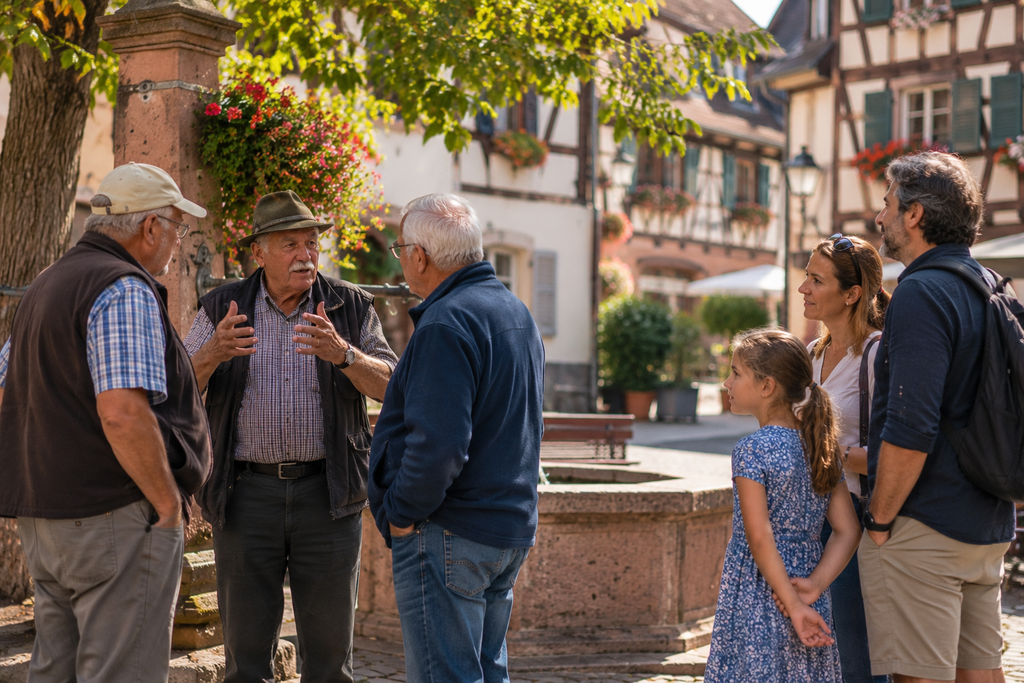
At one point in our imaginary Sunday, a neighbour appears.
Suddenly Janita has a problem she had not found on Google.
What language is he speaking?
If the conversation continues in French, German or Alsatian, she said, she might understand a word here and there, but she would still feel uncomfortable.
That is something a host has to notice.
I might know my neighbour perfectly well. I know why he has stopped and that this is an entirely ordinary conversation. My guest knows none of that.
For me, it is two minutes talking to the neighbour.
For her, it may be two minutes standing beside a conversation she cannot enter.
Nobody is being rude. We are simply experiencing the same moment differently.
Perhaps that is one of the most useful things a local person can do. Not show somebody another monument, but help translate the ordinary life happening around it.
Enough knowledge to let go.
By the end, Janita had begun worrying about something else.
Fabrice is going to spend the whole holiday driving us around.
She said she felt sorry for me and generously offered me a day off.
She was quite confident that the family could find its own way from the hotel to the station and eventually back towards the airport.
I was less convinced about the airport.
I would take them.
Some things are apparently not negotiable.
But the rest probably should be.
If somebody comes all the way from South Africa to Alsace, I would want them to see the places I know are worth seeing. I would want them to taste things, walk through the villages and forests, see Strasbourg properly and discover places they might never have chosen from a search page.
Then I would have to leave them alone.
They need their own holiday too. They need to get slightly lost, choose the restaurant on the boat because they like the look of it, decide that the castle can wait and discover something I would never have suggested.
Google can give Janita the map.
A local can give her the bakery, the shortcut, the warning, the good table and the small details that make the map useful.
And then, at some point, the local has to get out of the way.
Even if he still insists on driving her to the airport.