
Respect Is Not a Rank.
Good manners are easy to talk about. The harder question is what remains when politeness, authority and real respect stop being the same thing.
By Fabrice, France.
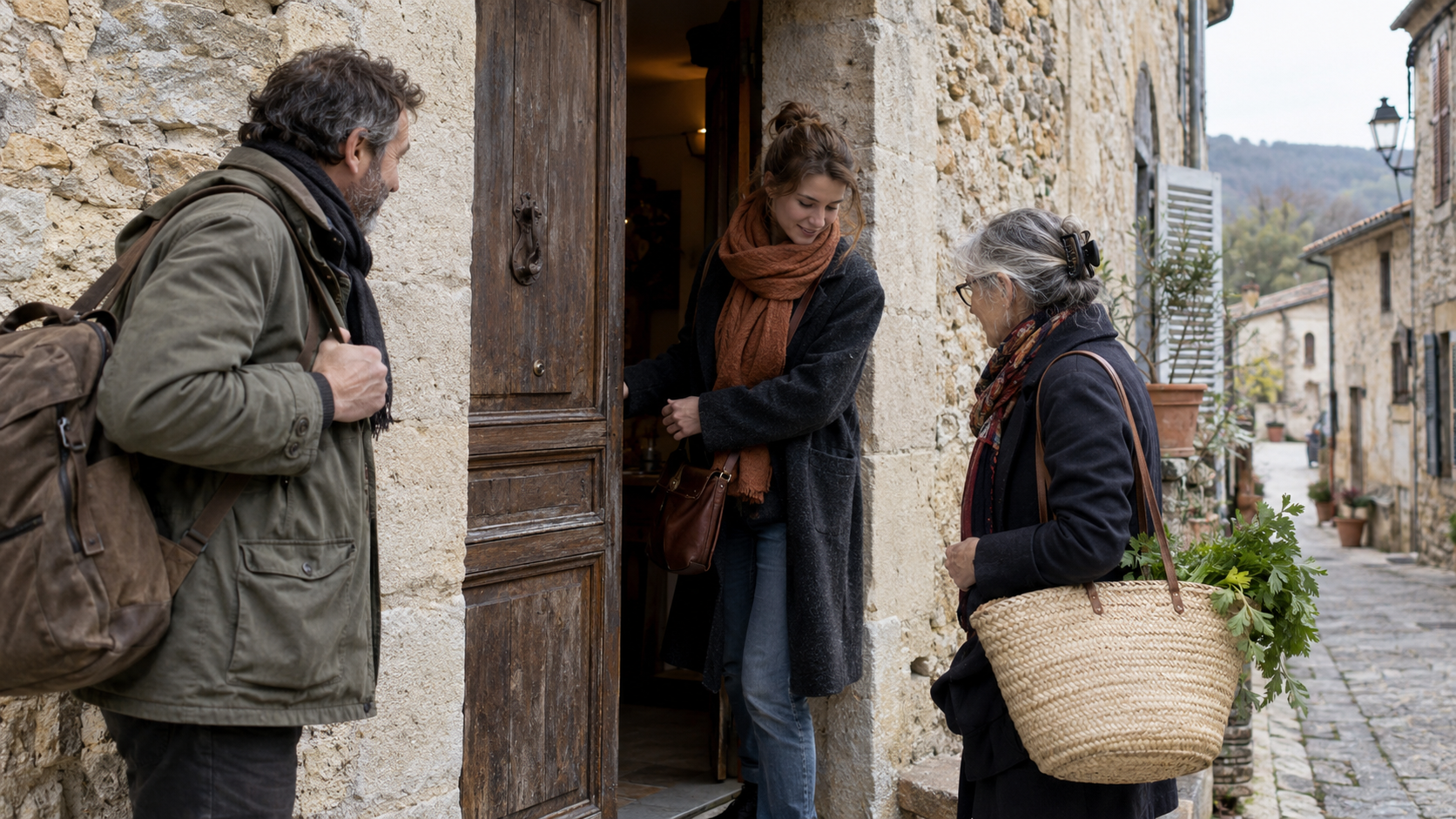
Janita asked me a simple question: three people arrive at a door at exactly the same time. Who goes first?
Apparently this requires a committee meeting.
The obvious answer depends on who the three people are. If somebody is older, perhaps you let that person go ahead. If there is a woman, you may hold the door. If somebody says, “You go first,” then you can go first. What I do not like is the person who simply decides, without looking at anybody else, I am first.
Maybe that is where manners begin. Not with a complicated rule, but with noticing that another person is there.
Janita then made the mistake of asking whether I myself have good manners. This became dangerous territory. She was diplomatic at first. When she met me, she said, I was very well behaved. Then, as she got to know me better, she discovered that I was “a bit rough around the edges.”
The Mayor understood immediately.
“And then it went downhill from there.”
Janita had an even better description: the angel falling from the tree.
So there we are. This is my reputation now.
You say hello.
When I was growing up, many of these things were never explained as rules. You simply learned them because everybody around you behaved that way. You greeted people. You helped older people. If you met somebody in the village, you did not walk past as though they were invisible.
You said hello.
Of course, saying hello could be dangerous. The person might start talking and not stop, and then you suddenly remembered that you had something extremely urgent to do somewhere else. But you still greeted them.
When Janita described where she lives in South Africa, the picture was a little different. She greets the neighbours she knows, but many people come and go. Some she knows well enough to stop and talk to, others get a wave, and many simply mind their own business.
Perhaps that is more common now. When I was young, family, neighbours and friends were simply part of ordinary life. You did not always have to organise something in order to see people.
They were already there.
Leave your brain outside.
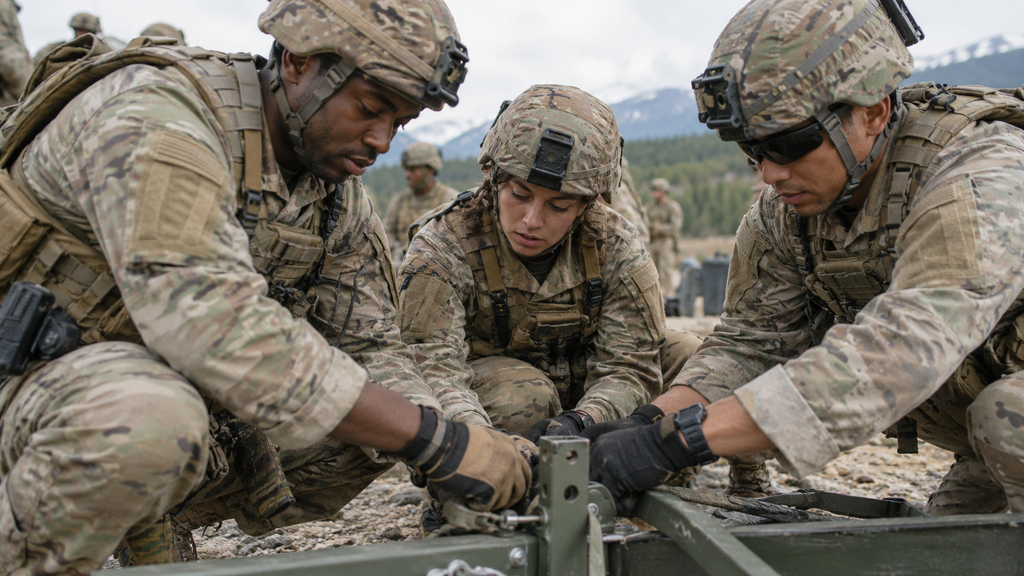
The conversation eventually reached the army, where the rules change very quickly.
My memory of the beginning is almost: Leave your brain outside. We will give it back to you later.
You arrive as a young man and, for the first months, you accept the system because you are there. You are not going home simply because somebody has told you to do something you do not like. The beginning was hard. After a while, it became normal.
Something else happens during that time too. Everybody starts in roughly the same situation. One man may be better at one thing, somebody else at another, but you are in the same group and facing the same problems. Later, when you find yourself far away from home, the reason for helping somebody becomes very different from village life.
In a village, you may help because the person is a neighbour, a friend or somebody you have known for years. In the military, you can find yourself depending on somebody you would never otherwise have met.
If there is trouble, you help each other.
You have to.
That is no longer really about politeness. It is about knowing that another person may depend on you — and that one day you may depend on him.
The rank and the person.
Then Janita asked whether rank automatically deserves respect.
The answer is yes and no.
You respect the rank because that is part of the system. But respecting the rank is not necessarily the same thing as respecting the person.
During military life I saw officers who were competent and officers who were not. The same was true lower down the hierarchy. A title on somebody’s uniform tells you their position. It does not automatically tell you whether they are good at what they do, how they treat people or what kind of person they are.
Those are different things.
This naturally became an excellent excuse for the conversation to collapse into a discussion about who holds the highest rank inside a marriage. The theory offered at the table was simple: a soldier’s wife is always one rank higher than the soldier.
Janita admitted that she probably has the higher rank in her household, although she also complained that she gets overruled quite often.
Tell me why.
For me, there is another kind of respect that matters just as much: explanation.
If somebody tells me to wait, I can wait. But I will probably ask why.
If there is a sensible reason, then fine. Perhaps something has happened. Perhaps there is a problem on a site. Perhaps somebody cannot continue until something else is finished. Once I understand the situation, I can usually accept it.
What bothers me is when somebody behaves as though your time has no value at all. You arrive, nobody speaks to you, nobody explains anything and you simply stand there.
It is not really the waiting that annoys me. It is the attitude behind it.
A reason changes the situation because it recognises that another person exists. It says, in effect: I know you are waiting. I know this affects you. This is what has happened.
Sometimes that is enough.
The same is true when somebody makes a mistake. I have made plenty. The important thing is to learn from it and, ideally, not make exactly the same mistake again. Somebody can explain a rule to you ten times, but sometimes you understand it properly only after you have done it wrong yourself.
Rules tell you what you are supposed to do.
Experience tells you why.
What I would bring back.
At the end, Janita asked what old habit I would bring back if I could choose one. Not a law, and not something people should be forced to do. Just something we once did more naturally.
For me, it would be spending time together.
Years ago, families, friends and neighbours would meet in the evening. The adults sat around a table, talked, ate, drank or played cards while the children played together. It was not a special occasion. Nobody needed to create a WhatsApp group, compare five calendars and book Saturday evening three months in advance.
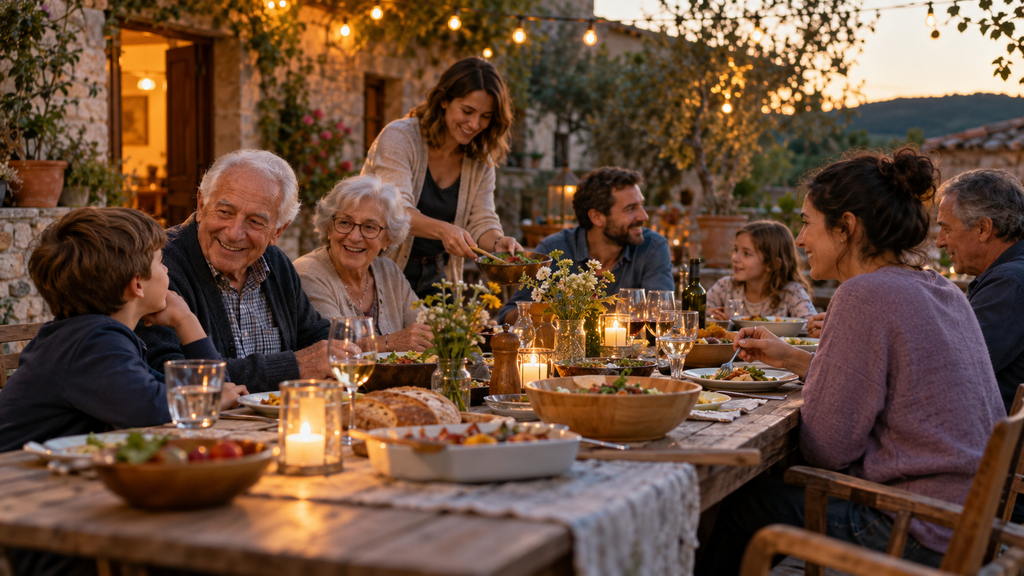
People simply came together.
Today we have televisions, mobile phones and plenty of other ways to keep ourselves busy inside our own little worlds. You can have several people sitting in the same room while each of them is somewhere else.
That does not mean everything was better in the past. It was not. And I am certainly not going to pretend that I have spent my entire life behaving like an angel. According to Janita, that angel fell out of the tree some time ago.
But perhaps respect was never really about knowing exactly who should walk through the door first.
It was about noticing that somebody else had reached the door too.
And perhaps that is still enough.
Hold it open.