
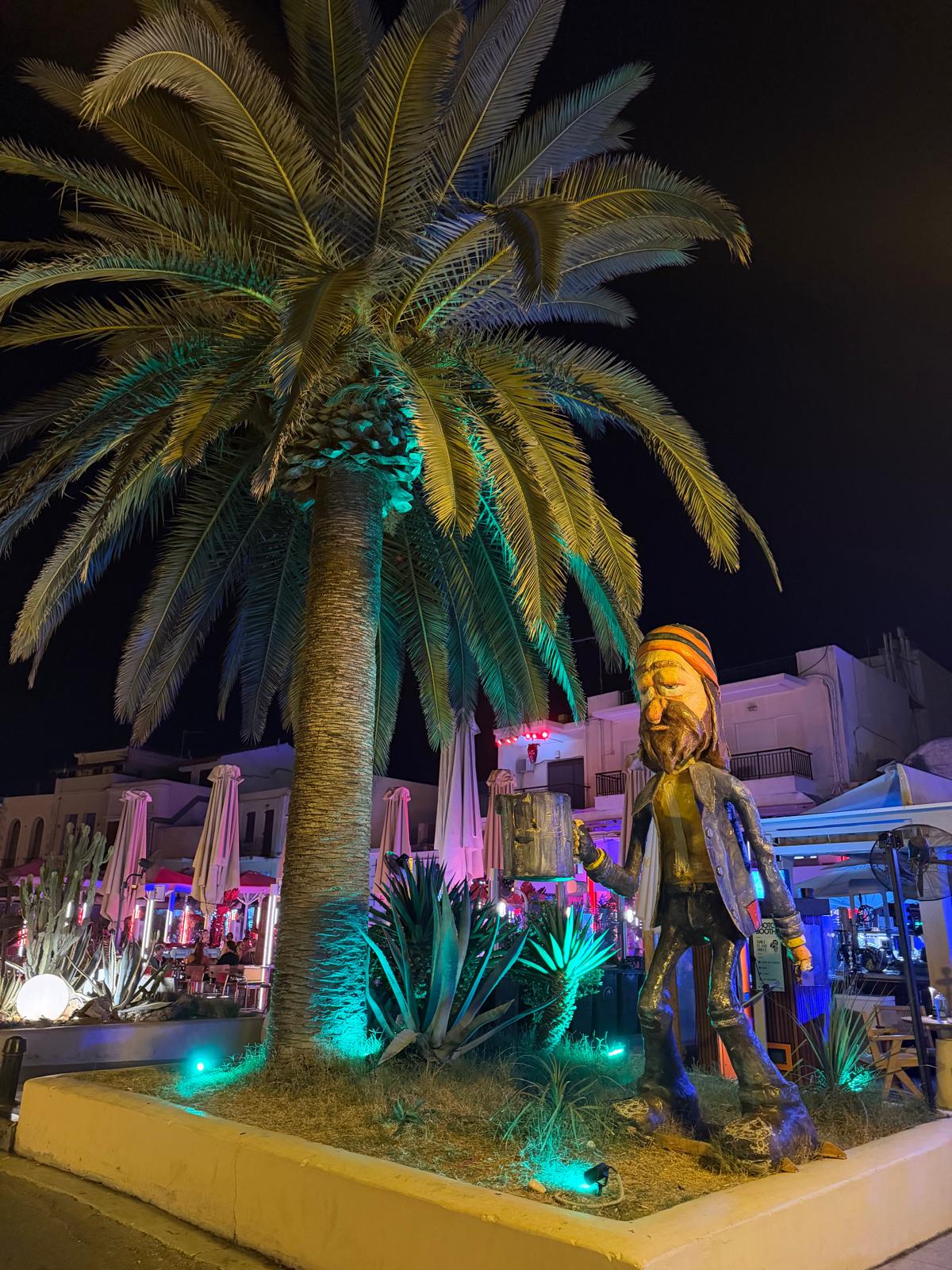
Crete on a Plate: Fish, Garlic, Raki and a Little Danger.
By Ralf the Grillmeister, Germany.
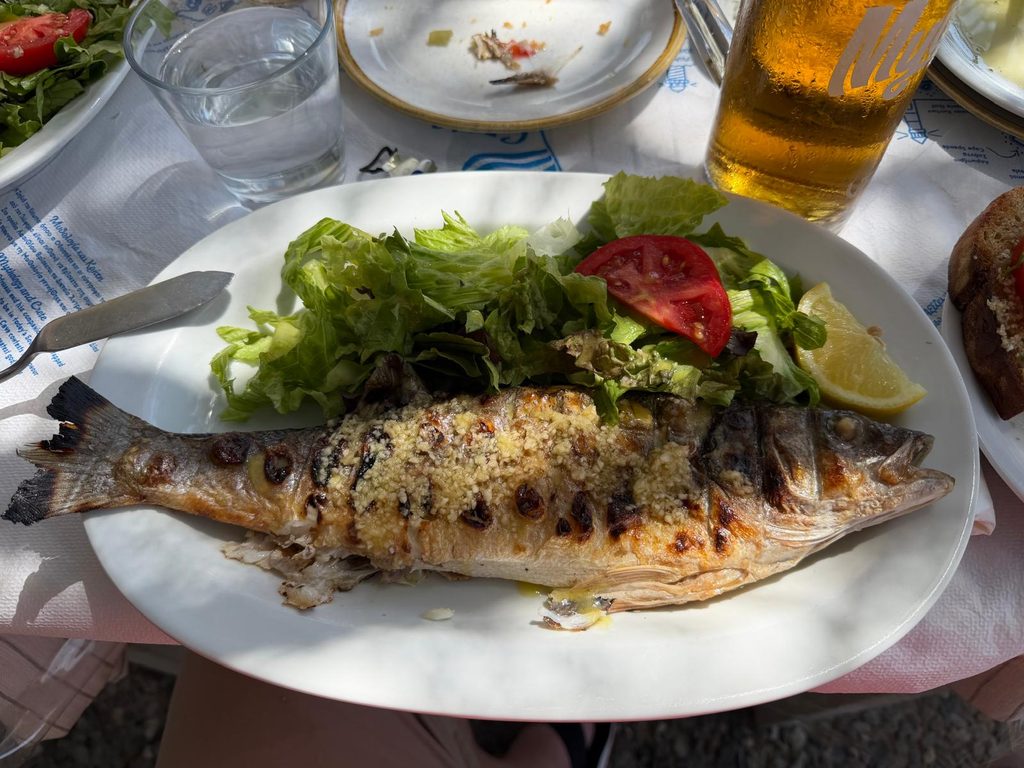
This is how I like fish. You can see what it is. Nothing is hidden. The complete fish comes from the grill, with the head, the tail, the skin, everything. It looks like sea bass, grilled whole, with garlic and probably olive oil over the top. There are also some green salad, tomato and lemon, but for me the important thing is the fish.
You see the black marks from the grill, and this is good. The skin becomes a little crispy, but inside the fish stays soft and juicy. Then you need only lemon, olive oil, garlic, maybe some salt. Finished.
This is something I like about eating in Greece. They don’t need to make twenty things with a good product. When the fish is fresh, you don’t need to make a technical project from it. This is difficult for me, of course, because normally I like technical projects.
And naturally there is a cold beer standing beside it. We are on holiday. We must respect the local culture.
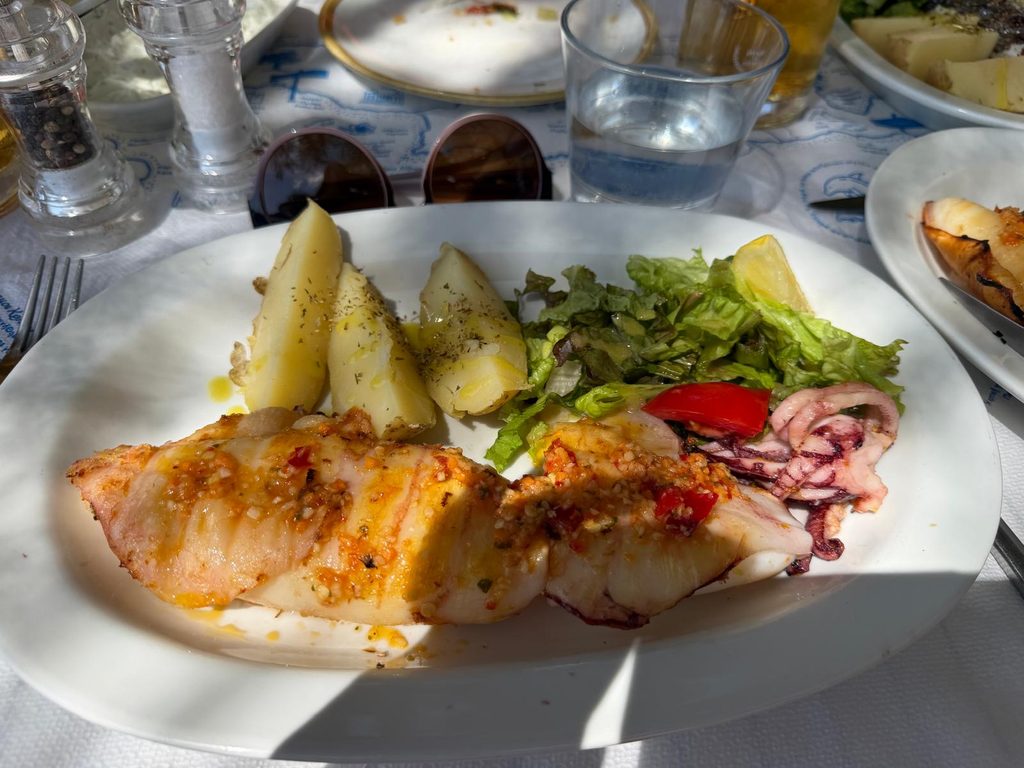
Then we have the squid. This looks like grilled squid — probably a large squid or calamari body cut into thick pieces — with the tentacles still there on the side. There is garlic, chilli or red pepper, olive oil and herbs over it, with potatoes, salad and lemon.
This is a plate where you can immediately see whether the kitchen knows what it is doing. Squid is very easy to destroy. Too long and you can repair your shoes with it. But when it is grilled correctly, it is tender, a little smoky and very good.
I also like these potatoes. Nothing spectacular. Big pieces, olive oil, herbs. In Germany perhaps somebody would start thinking about a sauce. Here they say: potato, olive oil, herbs — why make life complicated?
Maybe this is one small lesson from Crete. Sometimes the machine does not need another button.
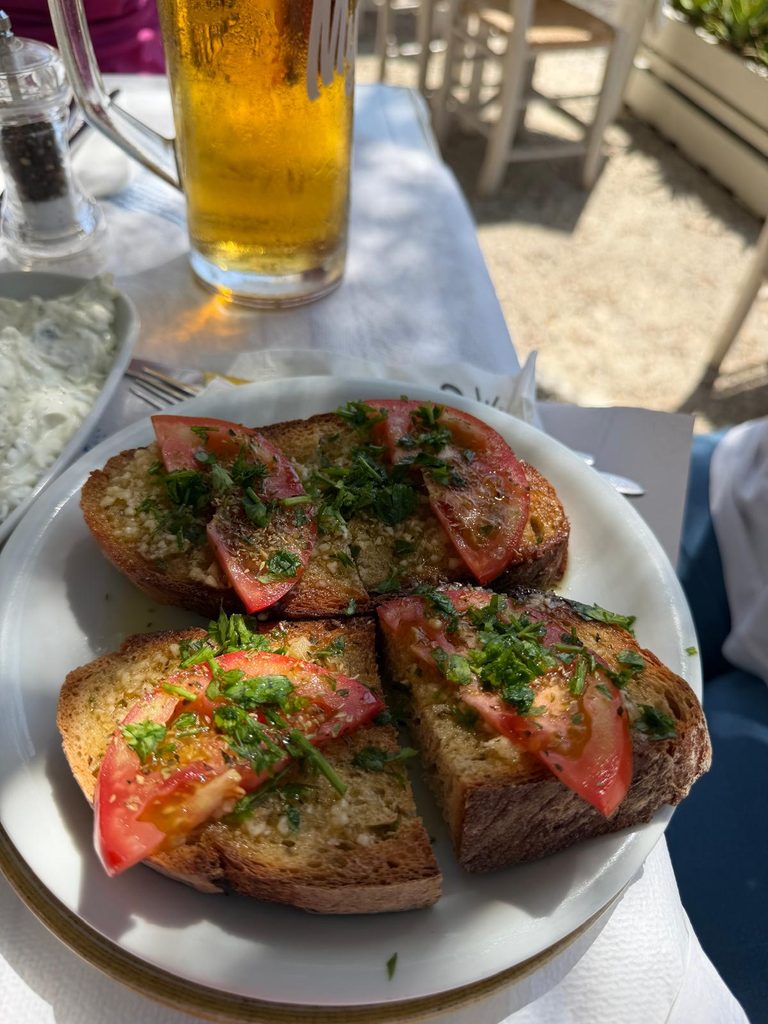
Now this looks very simple, but simple food can be dangerous because suddenly you eat the complete plate.
It appears to be toasted rustic bread with plenty of garlic and olive oil, topped with fresh tomato and chopped parsley or other herbs. It reminds me of the Cretan idea of dakos, although traditional dakos normally uses a hard barley rusk with grated tomato and often local cheese, so I would call this more a Cretan-style tomato and garlic toast than a textbook dakos.
And look at the garlic. This is correct. Somebody in this kitchen understands me.
The bread has soaked up the olive oil and the juice from the tomato, but you still have the toasted edges. Garlic, tomato, herbs, good olive oil. Four or five things and you have something fantastic.
You do not always need a recipe with seventeen ingredients. Sometimes you need bread, tomato, olive oil and enough garlic that everybody at the next table knows what you ordered.
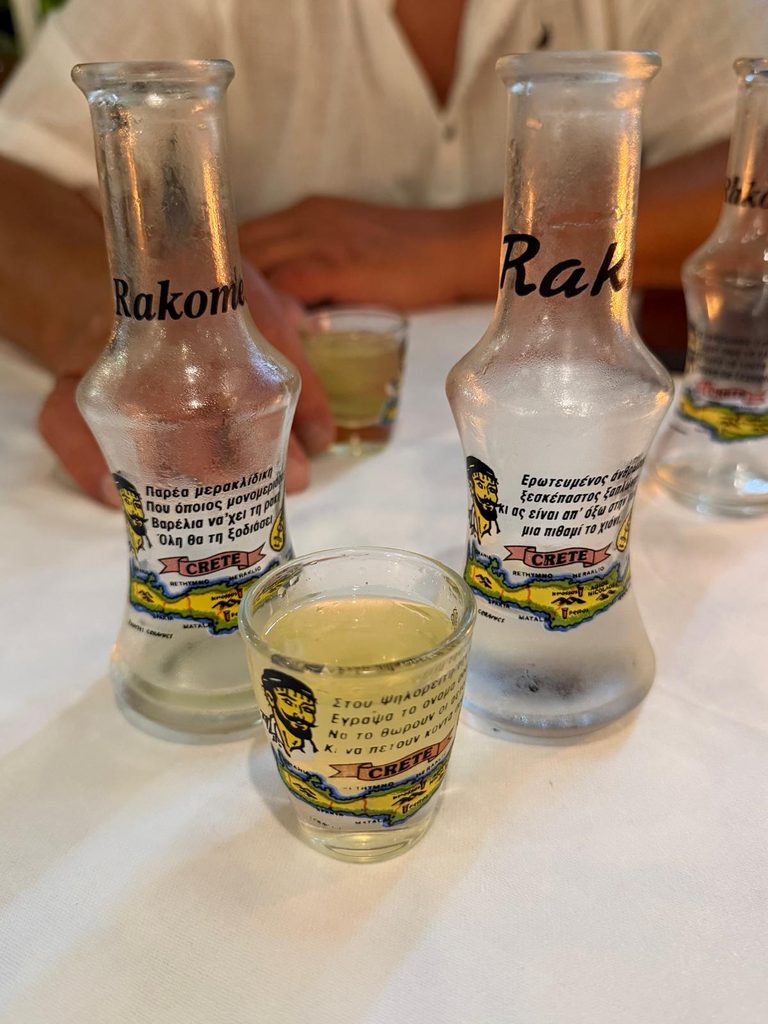
Ah. Now we come to the dangerous equipment.
This is Cretan raki, also called tsikoudia. It is the traditional clear grape spirit of Crete, made from the remains of grapes after winemaking. It is normally served in these little bottles and small glasses, often after the meal.
And you must be careful because it looks completely innocent. Water also looks like this.
Then somebody says, “Raki?”
You say, “Okay, one.”
This is already the first mistake.
The nice thing is not only the alcohol. It is part of hospitality. You sit together, the food is finished, nobody is in a hurry, and another little glass appears. In Germany perhaps we say the evening is finished. In Crete somebody brings raki and apparently the evening has received an extension.
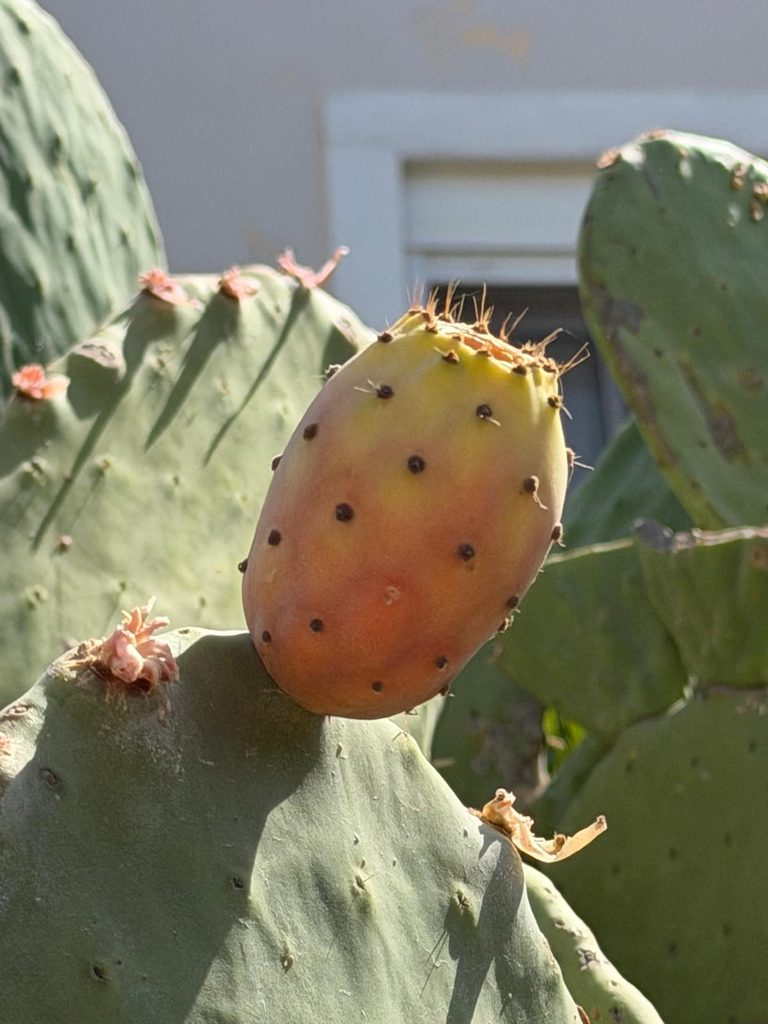
Something I probably walked past before somebody told me you can eat it.
This is the fruit of the prickly pear cactus, Opuntia. The fruit changes from green through yellow and orange towards red as it ripens. This one looks beautifully orange and almost ready to eat.
But there is one important technical instruction: do not simply grab it.
The cactus has the obvious large spines, but the fruit can also carry very small, fine irritating spines called glochids. They are excellent at reminding tourists that nature has its own security system.
Inside, the fruit is juicy and sweet, with many hard seeds. It is one of those things that belongs perfectly to the Mediterranean landscape: growing in brutal sunshine, apparently needing nothing, and then producing this colourful fruit.
That is maybe my little Crete collection: fish from the sea, squid from the grill, bread with garlic, sunset, raki and a cactus that attacks you before giving you dessert.
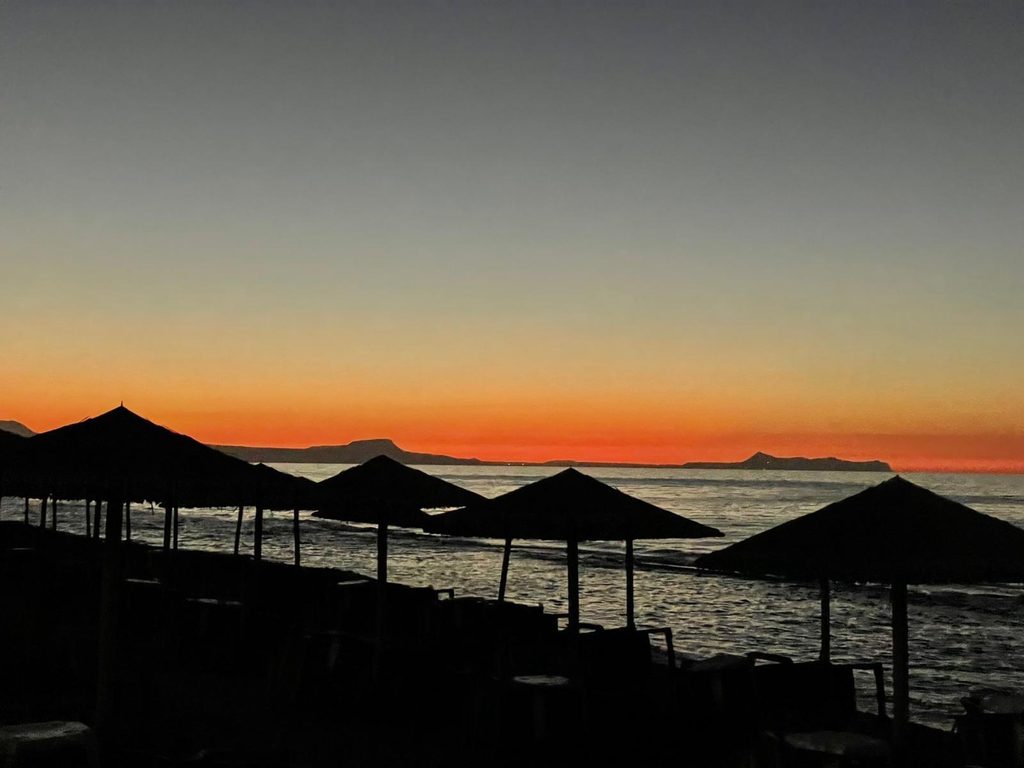
After all the food, this is the other side of Crete.
The beach umbrellas are already black silhouettes. The sea is still moving, but everything becomes quiet. On the horizon you can see the dark shapes of land or small islands, and behind them the sky goes from orange and red into blue-grey.
I like this moment because during the day everything is strong in Crete: sun, heat, food, people, colours. Then suddenly the sun goes down and somebody turns the volume lower.
You sit there after dinner, perhaps still tasting garlic, looking across the water, and you don’t have to do anything.
For somebody like me, this is perhaps the most difficult holiday activity of all: nothing.
But I can learn.