
The Vehicle Wasn’t the Problem.
I had a conversation with someone recently about a problem with a vehicle.
That sentence already makes the story sound more exciting than it was. Nothing caught fire. Nobody was stranded on a mountain. There was no dramatic rescue involving flashing lights or somebody crawling underneath an engine with a spanner between their teeth.
Something simply didn’t work.
One part of a system was supposed to communicate with another part of a system, and it didn’t. Machines do this occasionally. It is one of the ways they remind us that, despite all the diagrams, specifications and reassuring green lights, they remain machines.
The difficulty began when the humans became involved.
When the Humans Arrived.
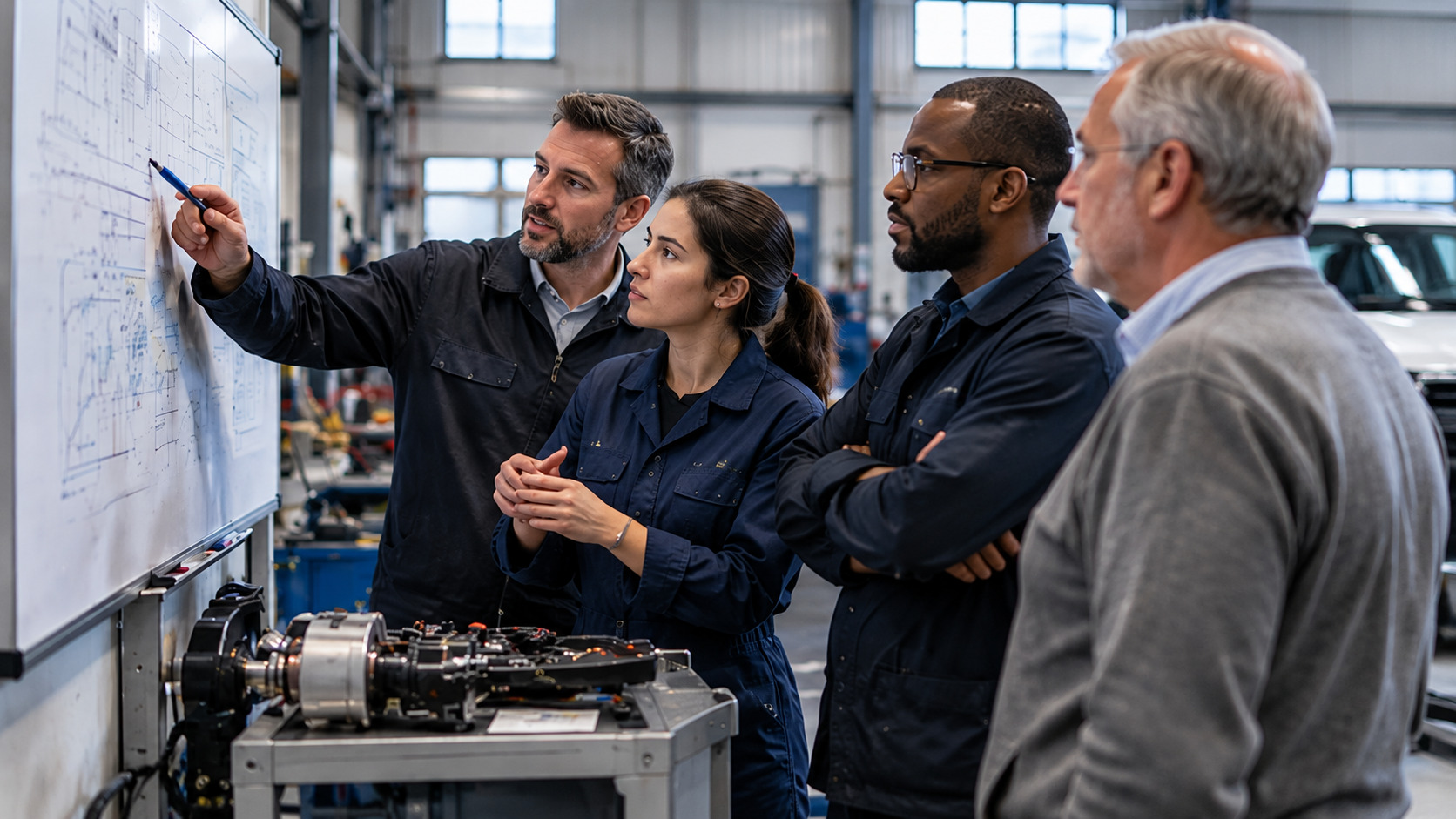
The vehicle belonged to a much larger project, with different parts being handled by different teams. Some were inside the same organisation, others came from outside. Everybody had responsibilities. Everybody had processes. Everybody probably had a PowerPoint presentation somewhere explaining exactly where those responsibilities began and ended.
Somewhere among all this organisation was a customer who presumably just wanted the vehicle to work.
An official test took place.
It didn’t.
And so the telephone calls began.
One arrived at six in the evening. The person I was speaking to looked at the telephone and made what may have been the most sensible decision anybody made during the entire affair.
He didn’t answer it.
The world survived.
By the following morning, however, the technical problem was still there and had acquired considerably more management. There were calls, questions and increasing pressure to establish what had gone wrong, why it had gone wrong and, perhaps most importantly, whose particular part of the thing might contain the thing that had gone wrong.

The team under suspicion offered to investigate. This seemed promising. There were vehicles relatively close by. Somebody could get into a car, drive to one and start testing.
Except those vehicles were not available.
There were, apparently, other vehicles somewhere else, so people were sent to one of those instead.
They couldn’t get into it.
This is the point at which an ordinary technical fault develops the unmistakable aroma of organisational life. There was a faulty system. There were people capable of testing it. There was a vehicle containing it. There were people standing near the vehicle.
But they could not access the vehicle.
Progress.
Eventually somebody found the organisational equivalent of the correct key. Access was arranged, measurements were taken and information began travelling back through the various teams.
Then something interesting happened.
The problem wasn’t where everybody thought it was.
The system originally under suspicion appeared to be doing what it was supposed to do. The fault was connected to another component supplied from somewhere else. Nobody had deliberately sabotaged anything. There was no villain sitting in a swivel chair stroking a white cat.
Something had simply failed.
Which, in engineering, is not particularly remarkable.
What happened around the failure was.
The Trust Machine.
By then, the technical problem had become almost secondary. Underneath it sat another problem: trust.
One group had assumed another group had tested something. Another had assumed that equipment supplied to them would work. Somewhere along the line, somebody had probably assumed that somebody else had checked something before an important official test.
These are not ridiculous assumptions. Organisations depend on them. Nobody can personally inspect every bolt, line of software, document or component that passes through their hands. At some point you have to believe that somebody else has done what they were supposed to do.
Until something fails.
Then another machine starts running.
People search through emails. Calls multiply. Questions become more precise. Evidence appears. Everybody wants to solve the problem, but everybody also wants to demonstrate that their particular part of the system was working perfectly well.
That does not necessarily mean they do not care about the problem.
Often it means precisely the opposite.
They care very much.
They would simply prefer not to become the problem themselves.
The conversation moved from there to a new manager who had recently joined the organisation. He was experienced, but he had come from a different industrial background and was still discovering how this particular world fitted together.
Or didn’t.
His predecessor had years of specialist knowledge. He knew the products, the customers, the history, the people and probably which spreadsheet contained the mysterious number that nobody had questioned since 2019.
The new man did not have any of that yet.
Instead, within his first weeks, he was watching several parts of a large organisation struggle to cooperate over a fairly ordinary technical fault.
Imagine starting a new job and gradually discovering that your most important qualification may not be understanding how the product works.
It may be understanding how everybody else works.
Who trusts whom. Who phones whom. Who doesn’t answer. Which department thinks another department is impossible. Which process works beautifully until it encounters reality. And why an apparently simple request occasionally requires three meetings, two managers and somebody who knows how to open the vehicle.
None of that appears on the organisation chart.
There Is Always a Spreadsheet.
There was another part to the new manager’s education.
His job included preparing commercial offers, and his predecessor had done this for years. Naturally, there was a spreadsheet.
There is always a spreadsheet.
For ordinary projects, the system was relatively straightforward. Put the correct numbers into the correct places, add the various factors and the spreadsheet did what spreadsheets do so beautifully.
It produced certainty to two decimal places.
The difficulty is that customers occasionally have ideas.
Products change. Requirements change. Projects become unusual. Reality develops an irritating reluctance to fit neatly into the cells provided for it.
One particularly complicated offer had apparently consumed months of work and was eventually rejected. An outside supplier got the business instead.
For the departing expert, that was understandably frustrating. For the new manager, it was something else entirely.
An education.
He had inherited a job title, but he had also inherited an ecosystem. Years of knowledge, assumptions, relationships, habits, shortcuts, suspicions and unwritten rules sat behind the formal processes. Some lived in files. Some lived in spreadsheets.
Most lived inside people.
Which raised the uncomfortable question at the centre of our conversation.
What exactly was this new manager supposed to manage?
He could not instantly know everything his experienced colleagues knew. He could not control every department involved in delivering the final product. He could not command people in other parts of the organisation, and he certainly could not control outside suppliers.
Yet somehow he was expected to help all of them move towards the same result.
A working product.
A satisfied customer.
Perhaps that is management.
Not knowing everything. Not controlling everything. But creating enough trust between people who know different things for them to solve something together.
The Student.
Which brings us to the most junior person in the story.
A student.
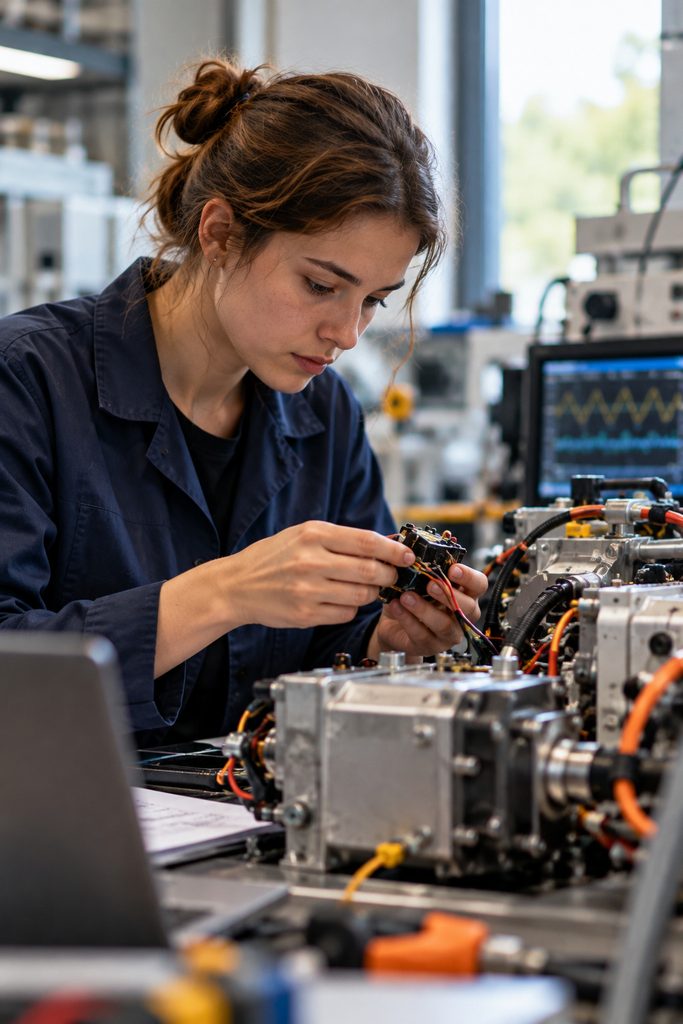
While senior people were discussing the problem, the student was in a laboratory. He was not involved in the politics. He was not restructuring anything. As far as I know, nobody had invited him to align stakeholders.
He spoke to one of the engineers.
He looked at the equipment.
He thought about what might be happening.
Then he devised some tests.
They ran them.
The results helped the people working on the vehicle understand where they should look next. Information moved from one person doing the work to another person doing the work, and the problem moved forward with it.
There is something both reassuring and slightly sad about that.
The organisation had managers, structures, departments, reporting lines, responsibilities and enough communication to keep several mobile-phone networks profitable.
The student had a problem in front of him.
So he looked at it.
At some point, the people closest to the issue apparently joked that perhaps artificial intelligence should replace the management team.
It is a wonderfully 2026 thought.
For the past few years, we have worried endlessly about AI replacing workers. Perhaps we have been looking at the wrong floor of the building.
I don’t actually think AI should replace the managers. That would miss the point. An artificial intelligence could probably schedule the meetings, summarise the emails and produce a particularly impressive diagram explaining why nobody had been able to access the vehicle.
It might even colour the boxes.
But this was never a shortage of intelligence. There were plenty of intelligent people involved.
The problem was the distance between the work and everything surrounding the work.
At the centre was a machine doing something it shouldn’t. Around it were people trying to understand why. Around those people were processes. Around the processes were departments. Around the departments were managers.
And somewhere in the middle of all this, somebody still had to fix the bloody thing.
The student could not reorganise the company. He could not alter its reporting structure, repair years of accumulated distrust, simplify contracts or redefine responsibilities.
He could do something much smaller.
He could pay attention.
The System Works.
Perhaps that is why this fairly ordinary conversation stayed with me.
Most organisations do work.
The vehicles leave. The doors open. The lights come on. Customers get where they need to go. From the outside, everything appears remarkably normal.
Perhaps that is what allows such a surprising amount of nonsense to survive inside.
Because somewhere, usually a long way from the grand conversations about transformation, efficiency and organisational structure, somebody is still doing the work.
Somebody looks.
Somebody tests.
Somebody notices something.
Somebody phones the right person.
Somebody finds the key.
And the vehicle keeps moving.
So everybody can continue believing the system works.
It does.
The interesting question is how much human effort it sometimes takes to keep it looking that way.