
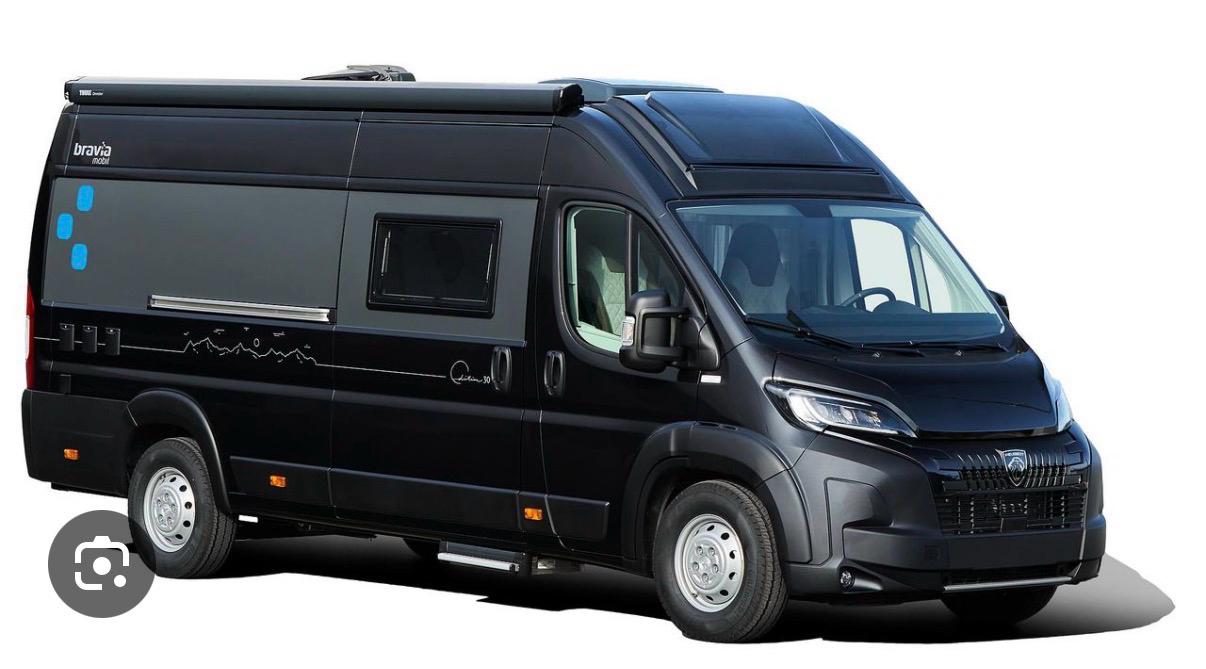
My Mobile Home Is My Castle
Ralf has bought the mobile home, Manfred has twenty years of camping behind him, and Martin is beginning to wonder whether he should start playing the lottery.
Ralf and his wife have bought a mobile home. Not because they want to park it somewhere and create a smaller version of the life they already have, but because they want to move.
The maiden journey will be in October: the Baltic coast, Kühlungsborn, Wismar and Schwerin. Later, especially after retirement, the map becomes much bigger.
The Baltic Sea already has one advantage. Ralf is a North Sea person, and he knows what happens when the tide goes out.
“The water is far away.”
The Baltic, he says, is much more swimmer-friendly. After fifty metres, at least, there is still enough water to drown in.
This is roughly where the Swimming Club begins its investigation into discovering other worlds.
Ralf has the new mobile home and the plans. Manfred has been travelling with a caravan for twenty years. Martin, meanwhile, is listening to both of them and slowly wondering whether this life might suit him too.
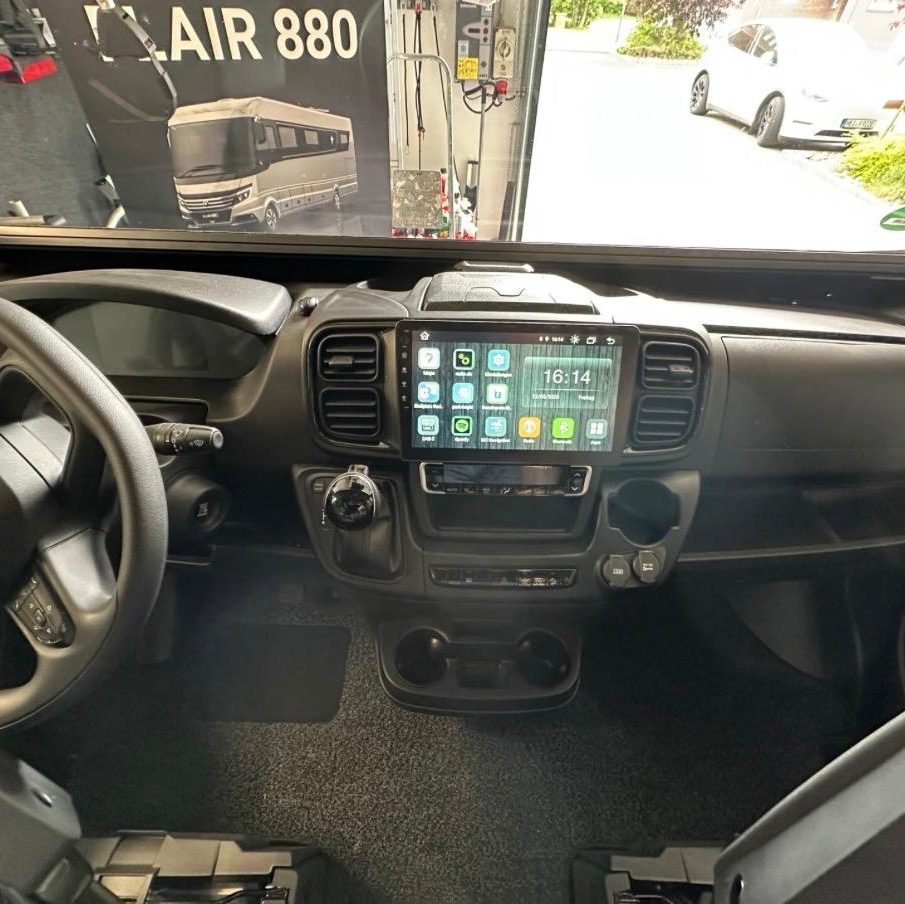
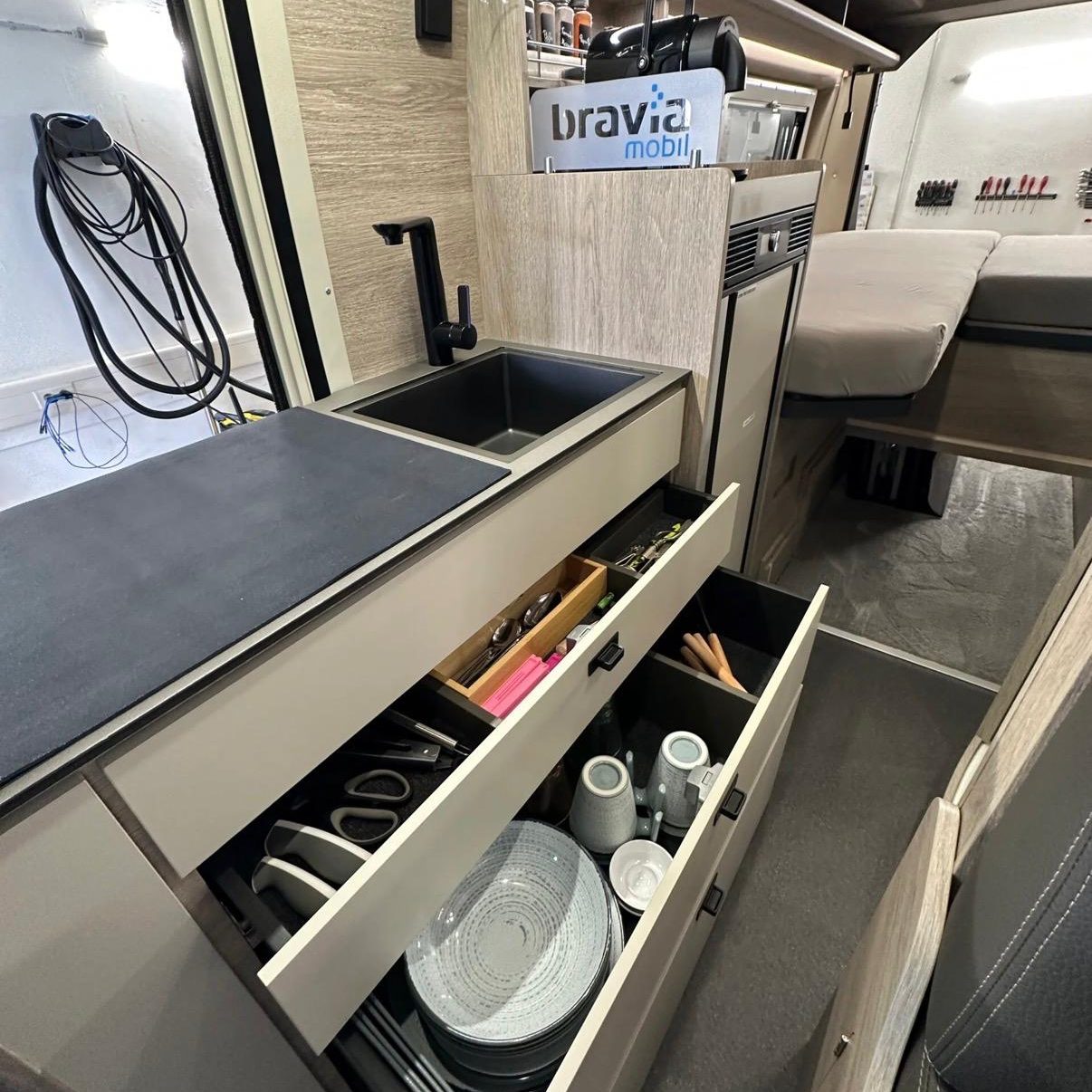
It started with Venice.
Ralf was not always convinced.
For years, holidays meant Spain and Greece. Then a friend bought a mobile home and suggested that Ralf try one. Ralf was sceptical, so instead of buying anything, he and his wife rented one and travelled with their friends to Venice.
That changed things.
“It was fantastic. It was so much fun.”
The idea stayed with him. When he retired, he thought, perhaps this would be the way they could travel.
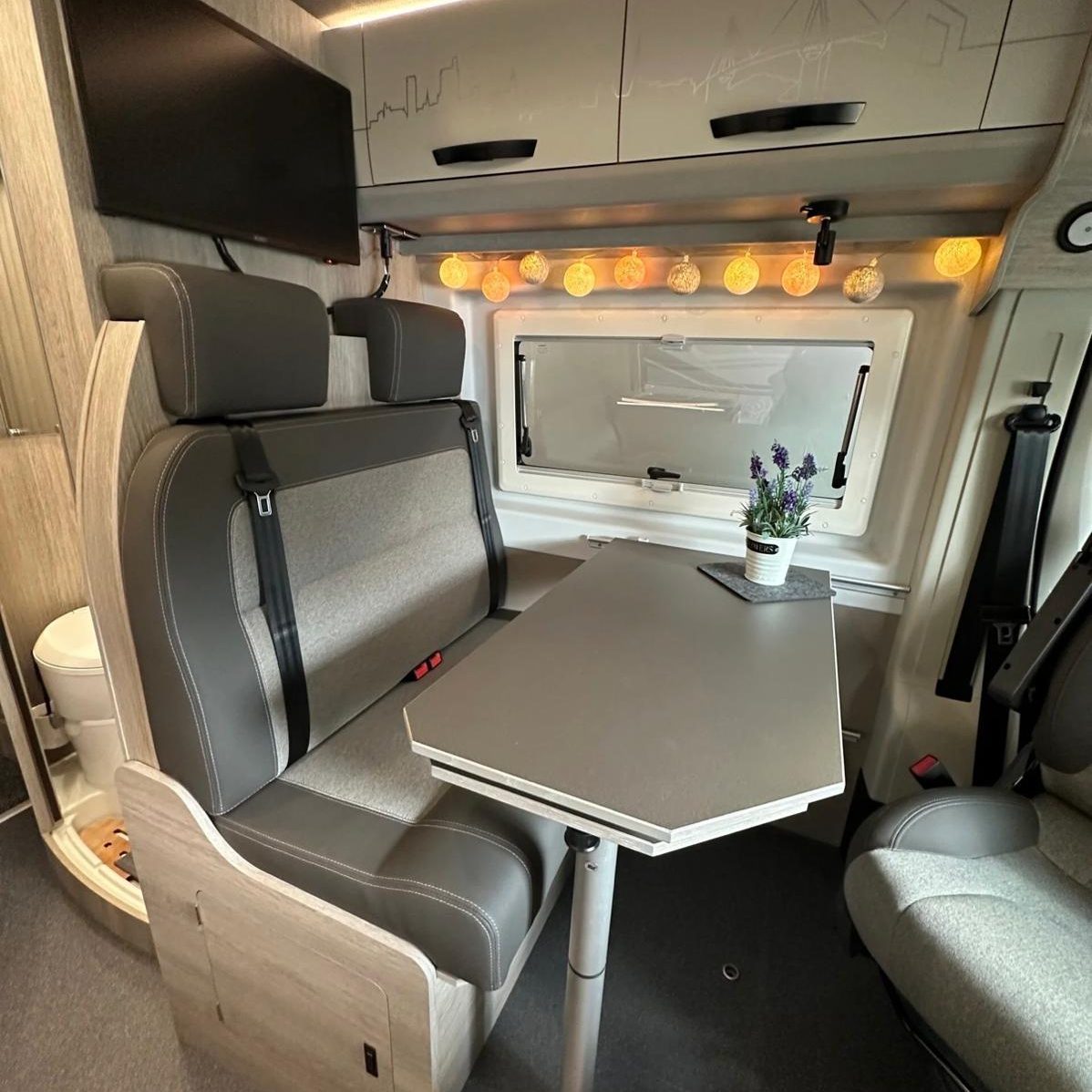
But he did not rush out the next morning and buy one. A year of research followed. They knew they wanted a partly integrated mobile home rather than a fully integrated one. They looked at different vehicles, talked to people and eventually found the type that suited them.
Even the colour became a small education.
Ralf wanted black. The dealer recommended metallic grey because a black vehicle would become hotter inside. Then a neighbour returned from Croatia and confirmed exactly that: his black vehicle had become uncomfortably warm.
Grey metallic won.
The first big destination is already decided. They want to return to Marina di Venezia, the large campsite near Venice where they made their trial run.
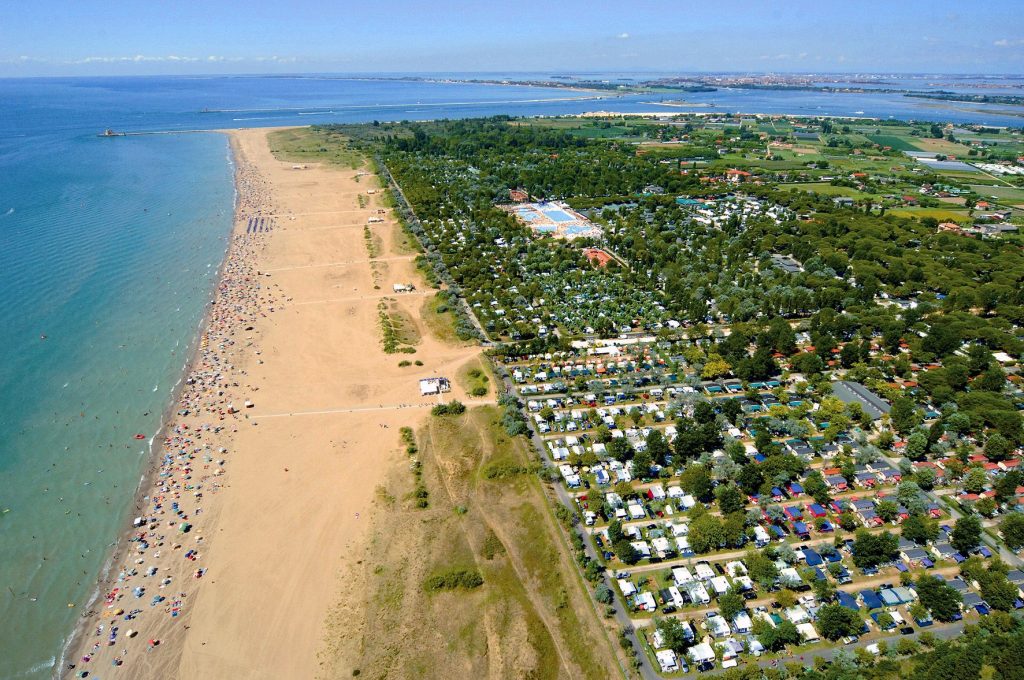
They plan to go in May, at the beginning of the season, before it becomes too crowded.
Venice is not simply another destination for Ralf and his wife. They began their honeymoon there and returned for their tenth anniversary.
“It is the best city in the world,” Ralf says. “It is so fantastic.”
He reads Donna Leon’s Commissario Brunetti novels, set in Venice. His wife can use the campsite’s Olympic-size swimming pool for training. Their idea now is to begin or finish each travelling season there.
Some people buy a mobile home to escape the places they know.
Ralf has already found one place he wants to keep returning to.
Twenty years ahead
So what does Manfred, after twenty years with a caravan, think when he hears Ralf’s plans?
“Everything.”
In other words: yes.
For Manfred, camping begins with accepting that something unexpected will happen.
“Camping means accepting new and unknown things. If you can do this, then all will come out in the wash.”
That may be the most important difference between this kind of holiday and staying in a hotel. You cannot completely control what happens next.
Manfred also sees an important difference between his caravan and Ralf’s mobile home.
A caravan naturally encourages a more stationary holiday. You arrive, set yourself up and use the car for exploring. Put the bicycles on as well and you have another radius around the campsite.
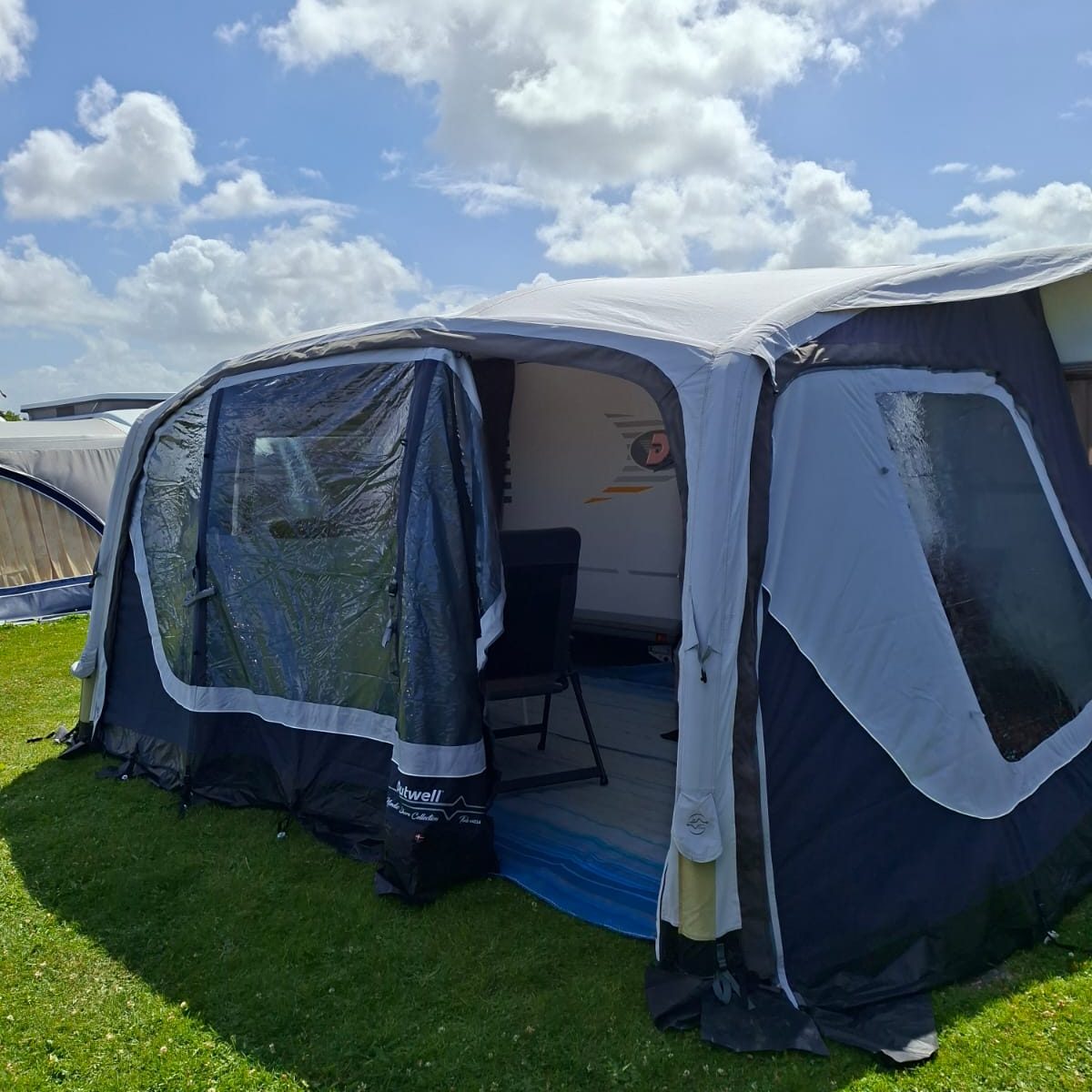
A mobile home encourages movement. You can travel from destination to destination much more easily, but once you have established yourself somewhere, you do not necessarily have a separate car waiting to take you fifty kilometres away.
Neither is better. They create different holidays.
“But you have to like it,” Manfred says.
He thinks Ralf will.
There is something else Manfred does not seem worried about: Ralf himself.
When asked what makes the experienced camper inside him nervous about Ralf’s plans, his answer is simple.
“Nothing.”
Ralf, he says, seems to know what he is getting into. He is calm. Unexpected situations are unlikely to throw him completely.
Manfred knows about unexpected situations.
Once, his battery died in the south of France. He needed to find a replacement without speaking French. On another trip, they were burgled and had to decide whether to abandon the holiday and go home.
They carried on to Spain.
Those experiences have given him rules of his own. He does not spend the night on motorway lay-bys in France. For him, a campsite with proper infrastructure and more security is worth finding. He no longer puts the same trust in large service areas that he once did.
Ralf has independently arrived at much the same conclusion. He and his wife plan to use proper motorhome stops and campsites rather than spend nights on motorway parking areas.
They want to try things for themselves, but they do not feel obliged to learn every lesson the hardest possible way.
“We are curious,” Ralf says.
The rules nobody writes down.
Experience has changed some of Manfred’s ideas about camping.
One old belief has disappeared completely: camping is cheap.
Those days, he says, are over. Travelling during the main holiday season can now be expensive. He gives Lake Garda as an example: an overnight stay that might cost around €40 outside the main season can rise to around €80 in peak periods.
Something else has changed too.
Camping once felt more communal to him. People who did not know one another would help each other. There were unwritten rules, and experienced campers seemed to understand them without anybody having to produce a handbook.
The camping boom around the Covid years brought many new people onto campsites, Manfred believes, but not necessarily the old camping mentality.
His example is wonderfully ordinary: washing the dishes.
Once, the principle was simple. Wash your dishes, finish quickly and make room for the next person.
Now somebody may stand there having a conversation while lovingly drying every knife individually.
The queue can wait.
“These unwritten rules,” Manfred says, “nobody either knows or cares about.”
But discovering another world often means discovering exactly this: the rules nobody told you existed.
Manfred remembers a small campsite in the Netherlands with only about thirty pitches. It worked differently from the more private spaces he was used to elsewhere. Everyone was together on one large field. Personal territory meant something different.
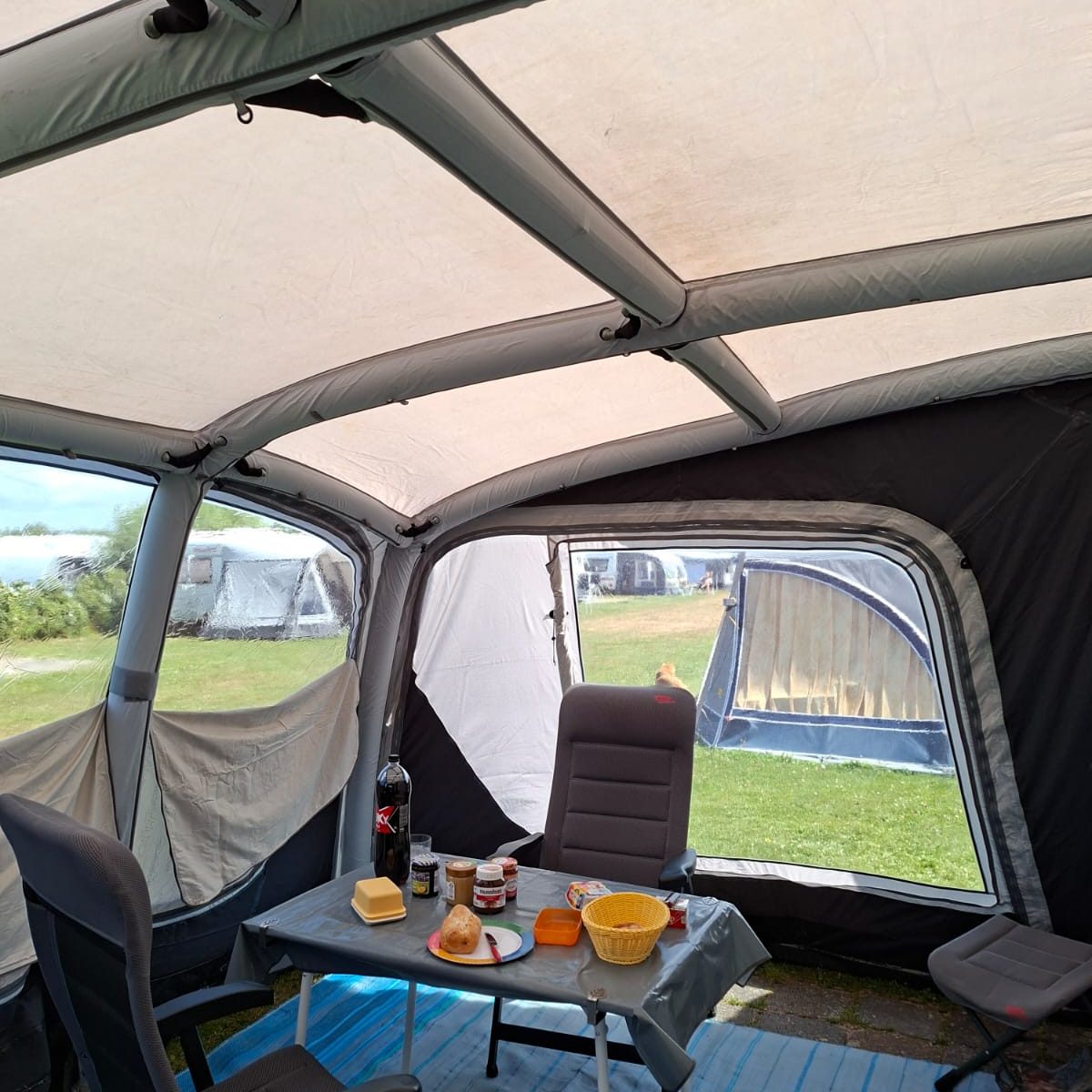
His neighbours enjoyed long, meaningful and rather loud conversations into the early hours.
Manfred discovered the local culture while trying to sleep through it.
Language can create the same feeling of entering a different world, although sometimes the barrier turns out to be smaller than expected. Dutch, he found, allowed him to understand more than he thought because of its similarities to German.
And for everything else, there is Google Translate.
Can you take your own world with you?
There is an obvious objection to all this.
If you travel inside a mobile home, taking your bed, your kitchen, your coffee and your familiar possessions with you, perhaps you are not discovering another world at all. Perhaps you are simply carrying your own little world around Europe.
Ralf does not buy that argument.
“When I bought the mobile home, I wanted to see more of the world.”
For him, movement itself creates discovery. You drive somewhere new and have to deal with what you find.
Manfred agrees. Even when you intend to stay on the beaten track, the road has other plans. There is a diversion. A motorway closes. Something forces you onto another route.
Suddenly, the unfamiliar world finds you.
But both men also know that curiosity works differently for different people.
Manfred likes arriving somewhere he has not explored before. Returning to a familiar place can be pleasant, but the particular magic of the unknown is gone. Narbonne is different from Hoorn. One new place creates a different kind of excitement from another.
His wife is more attracted to the familiar.
Their solution is not to turn this into a philosophical dispute. They plan.
Manfred plans months ahead. Sometimes he explores the destination street by street on Google Street View and shows it to his wife.
By the time they arrive, the new world is already slightly less new.
It is perhaps the perfect camping compromise: one person gets to discover somewhere unfamiliar, while the other has already virtually walked around it.
Three more worlds.
Asked where they would spend a month in an unfamiliar world, the table immediately starts travelling.
Ralf chooses Corsica. He knows it may remind him of Sardinia, but that is part of the attraction. A ferry can take the mobile home there. He imagines good food, beautiful landscapes and an island that has already caught his attention through a television documentary.
Manfred chooses Greece precisely because he has never been there.
It is undiscovered territory for him. He has read about people spending the winter months there in their mobile homes or caravans, and the idea has stayed with him.
Martin looks in another direction: the United Kingdom, Northern Ireland and the Republic of Ireland. Establish a base, explore the surrounding area, move on and repeat.
Or, as he puts it, use a mobile home and simply “crawl forward” in stages.
Martin has been the observer in much of this conversation, but by now something has happened.
He is curious.
Listening to Ralf and Manfred talk about security, caravans, mobile homes and the things that go wrong on the road has taught him more than he expected.
“The stories are fascinating,” he says.
And this kind of travelling suddenly sounds much more attractive to him than a package holiday.
There is, admittedly, a financial obstacle.
“Maybe one day, when I win the lottery.”
There is then a short pause in the plan.
“I have to start playing.”
The first coffee.
For Ralf, the adventure is no longer theoretical. The mobile home exists. The trips are being planned. Venice is waiting.
And when asked what he is most curious about when he finally closes the door and sets off, he does not produce a grand speech about freedom, Europe or discovering himself.
He pictures the beginning.
His wife beside him. Good music. The ferry crossing. Bockwurst and coffee.
Then, once they are inside their new mobile home, they will make their first coffee there.
Not coffee prepared at home and carried along in the car.
Fresh coffee, made in the mobile home.
“Good coffee is important.”
After twenty years, Manfred knows that the road will eventually provide the dead battery, the strange campsite, the unexpected diversion and the rules that nobody explained.
Martin has already become curious enough to contemplate a lottery ticket.
Ralf is ready to go.
The new world can wait until after coffee.