
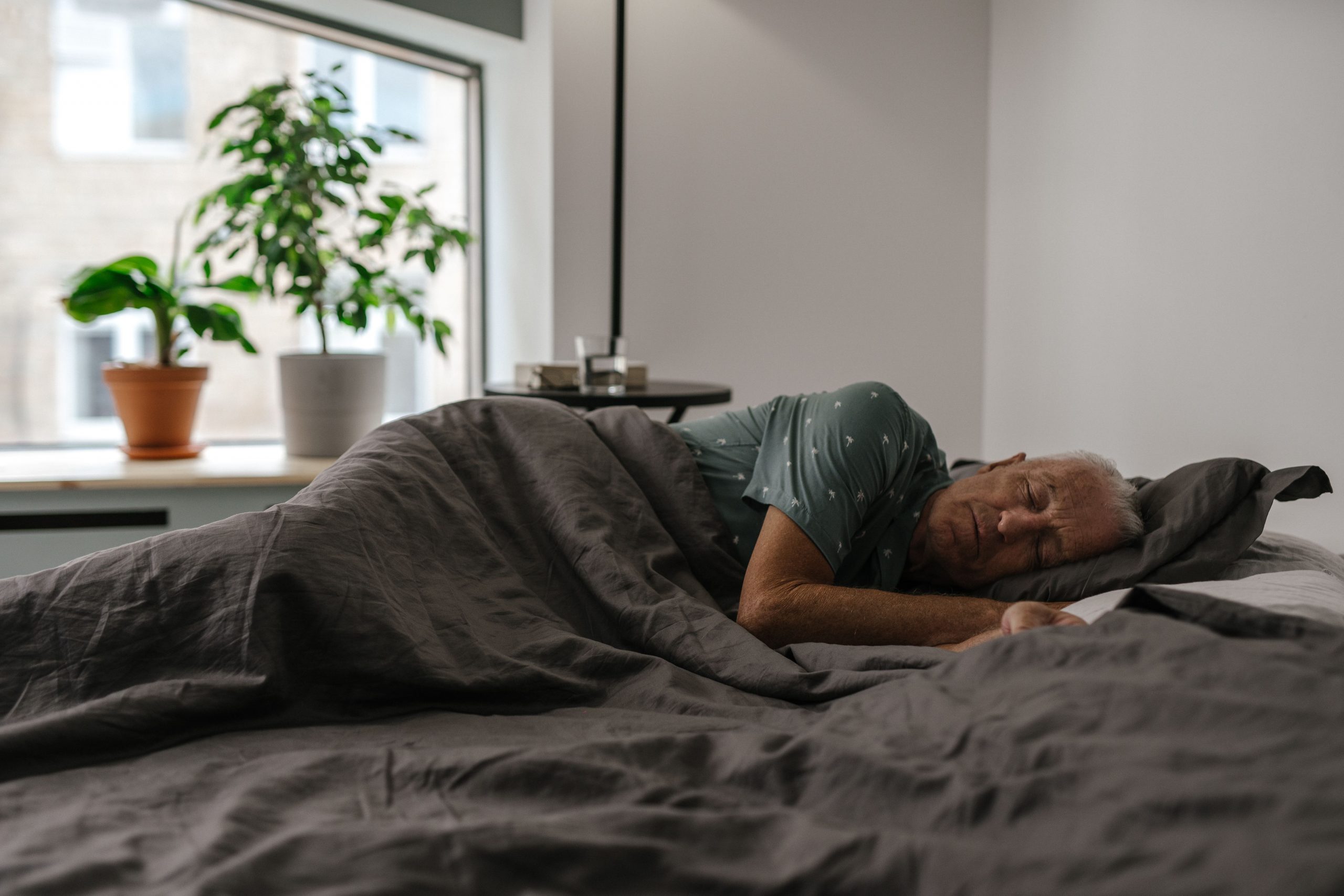
The Office Nap Is Good
In the Swimming Club, sleep began as a practical question. Then it became a conversation about driving, pillows, mosquitos, holidays, smartphones, YouTube, and the strange pressure of having to be fit tomorrow.
Sleep that restores sounds peaceful.
It sounds like soft pillows, calm breathing, and a person waking up with a clear head, ready for the day.
At the Swimming Club, it did not stay quite that clean.
For Martin and Manfred, sleep was not a perfect lifestyle concept. It was coffee that does not always work. It was a power nap before a long drive. It was a smartwatch giving an official judgement in the morning. It was the sun coming up too early. It was mosquitos. It was YouTube. It was the uncomfortable office chair that finally says, “Enough now. Go to bed.”
And somewhere inside all this ordinary material, a more serious truth appeared.
How we live our days determines how we sleep.
When Sleep Becomes Practical
When The Mayor asked about “sleep that restores”, Martin did not first think about a peaceful bedroom.
He thought about driving home after Garbage concerts, or after longer drives in general. Sometimes coffee alone does not work. Then he needs a power nap.
Manfred’s mind went in two directions.
The office nap is good.
A “minute nap” while driving is bad.
The second one happened to him once. Nothing happened, but the feeling stays. You do not forget it. It is not a funny sleep story. It is one of those small experiences that teaches the body a lesson before the mind has finished making the argument.
So the conversation started with restoration, but it quickly became clear that sleep is not only about comfort. Sometimes it is about safety. Sometimes it is about knowing when the day has taken too much.
The Next Morning Test
Martin has a simple test for restored sleep.
If he can find the office without coffee, then he must have slept well.
On weekends, he gets up when he is restored enough. Sometimes, he said, that may not happen until Monday morning. But he has also given up on the idea of waking with a completely clear head. That status never seems to arrive.
Manfred has a different morning system.
His sleep is restricted because he has to go to the loo. And if the sun is up and shining, then the night is done. During holidays, he gets up early while his wife can happily sleep for several more hours.
Then there is the smartwatch.
This morning, it told him that he slept six hours and six minutes. Deep sleep was one hour and twenty-two minutes. Apparently, this is good. The phone and the watch communicate. The watch records while he is sleeping. There is a sensor.
The machine gives the verdict.
The body still has its own opinion.
Planning Sleep, Or Hoping For It
The Mayor asked whether good sleep can be planned, or whether it can only be hoped for.
Martin knew the sensible advice exists.
If he were so sensible, he would know all the good advice. But alas. Even if he knew it, he would not necessarily follow it.
When it comes to sleep, hope stays awake longer.
Especially when he still manages to get through the day.
Manfred does not exactly plan sleep, but he tries to keep certain rules. He should be in bed around eleven o’clock. No matter what. No stress before bed. No horror stories, arguments, or problems.
And then comes his personal method.
Once he is in bed, he finds something to think about. Nobody else needs to understand it.
For example, he imagines that he has a huge property and he builds a house on it. He thinks about the size, the rooms, the layout. This helps him clear the brain.
Some people count sheep.
Manfred builds houses.
Strange Places Where Sleep Works
Martin once slept surprisingly well in his car in Edinburgh.
This was before driving back to Newcastle to catch the ferry to Rotterdam. His car seat is almost fully reclinable. He takes off his shoes. It is not the Ritz Hotel, but for one night it is okay.
He can also fall asleep if a chair is comfortable enough.
Manfred had a different childhood memory. As a kid, sleeping in the car was horrible. This is why he now takes his bed with him.
On holiday, in the caravan, sleep works.
The temperature, the noise level on a camping site, the feeling of being there — all of it helps. The only real issue is when it is too warm.
Martin agreed that warmth can destroy a night.
Wasps can also help ruin it.
Manfred needed only one word.
Mosquitos.
One word says it all. They drive him crazy. Although he has noticed that there seem to be fewer mosquitos around now.
This was not studied scientifically at the table. It was simply accepted as one of the ordinary mysteries of modern life.
The Small Rules After a Bad Night
Some sleep rules are only learned after a bad night.
For Martin, one of them is simple: going to bed too late is different when you are older.
For Manfred, the body needs rest. The older we get, the more it needs. But the head also has to be clear.
Full moon and weather can be problems. There is nothing much one can do about those.
Sleep advice often sounds simple from the outside. Go to bed earlier. Rest more. Switch off.
But when the person is actually lying there, it is not always simple.
Both Martin and Manfred recognised the common advice. Go to bed earlier. But that may not be the solution. If someone has sleep problems, going to bed earlier might help. Or it might not. Sometimes sleep therapy helps.
The easy sentence is not always the real answer.
When the Day Refuses to End
Martin knows he should stop the day when he starts falling asleep on the couch.
That means one could continue this experience in one’s bed.
Could.
Manfred has his self-imposed time frame. He also has a domestic TV arrangement. Because he and his wife watch different programmes, he often watches TV in his office.
The seat there is uncomfortable.
This becomes useful.
The chair eventually triggers the decision to call it a day.
But people resist going to bed even when they are tired. Martin said it happens when they are watching, reading, or listening to something interesting and captivating.
Manfred recognised the same pattern. People get caught in something bigger than the recognition that sleep is more important.
YouTube is dangerous territory for him.
Great for procrastination before sleep.
Or, more accurately, the algorithm is at work.
Personal Sleep, Personal Rules
The Mayor asked where the balance is between a good sleep routine and becoming ridiculous about it.
Manfred suggested that maybe separate bedrooms are a solution. But sleep is personal, and therefore his sleep routine is personal too. If it works for him, then so be it.
Martin was even more direct.
He does not care if anybody else finds it ridiculous. If it helps him, then that is the most important thing.
This may be one of the clearest lessons from the conversation.
Sleep is full of advice, but the actual night belongs to the person who has to sleep it.
How Do Germans Sleep?
Then the Swimming Club briefly entered international pillow science.
If someone from another country asked, “How do Germans sleep?”, the question would not be as weird as it sounds.
There are pillow sizes.
Germany has 80 by 80. France has 60 by 60. England has rectangles.
Manfred needs a proper pillow that supports his neck and head. Then there are people who sleep on their backs, sides, or stomachs. Maybe there are country studies on this.
Then come bed sizes.
180 by 200.
160 by 200.
140 by 200.
One mattress or two mattresses?
It gets complicated.
Maybe a hammock is a good solution.
Who knows.
The Swimming Club Manual For Not Sleeping
If the Swimming Club had to write a manual on how not to prepare for sleep, it would include some simple warnings.
Do not watch or do anything that triggers negative thoughts, or can enter into your dreams. Everyone has a personal catalogue.
Do not go to bed unless you are tired. Unless you have sleeping aids, like routines.
If you cannot sleep, get up and do something. It helps you become tired again. Even if it only means clearing your head.
And then came the ultimate solution.
Do not get up.
This is not official medical advice.
It is Swimming Club logic.
There is a difference.
The Real Definition Of Good Sleep
By the end, the most realistic definition of good sleep had changed.
For both Martin and Manfred, the feeling of sleeping well happens most clearly during holidays.
At work, there is a subconscious pressure: I hope I sleep well so that I can be fit tomorrow.
On holiday, that pressure is not there in the same way.
Having to perform affects the quality of sleep. This may be why people want to sleep longer during the weekend. It is not only the body catching up. It is the mind trying to sleep without being measured by tomorrow.
So the conversation did not end with a perfect routine.
It ended with something more ordinary and more useful.
Good sleep is not only what happens at night.
It is also what the day has done to us.