
Critical, But Tolerant
A conversation about digital balance, paper bills, trust, safety, and the contradictions of ordinary life
When The Mayor began the conversation, the topic was digital balance.
But digital balance is not only about phones, computers, social media, or how many hours we spend looking at a screen.
Sometimes it is about control.
Sometimes it is about safety.
Sometimes it is about trust.
Sometimes it is about irritation, patience, other people, and the small contradictions we carry into modern life.
This was not a conversation against technology.
It was a conversation about what happens when technology enters real life, where people are not perfect, trust is not simple, and balance is not one rule that works for everyone.
I have to say that when I hear the word balance, I do not immediately think only about a cell phone, a computer, the internet, or social media.
I think first about emotional balance.
Maybe this is because I am not exactly a calm person, even if sometimes I may seem calm.
So, for me, digital balance is not separated from the rest of life.
It is also about how we deal with irritation, trust, risk, other people, and our own contradictions.
Paper feels safer
The Mayor asked about the ordinary things: phone, laptop, messages, bills, news, and all these things that now arrive through a screen.
But I began thinking about paper.
I am not a very organised person, but I try to put important documents in a specific place. Most of the time, I can find them again.
The problem happens when I receive a paper and I think:
“Later I will put this in the correct place.”
If I do not do this, later I may have a problem when I need it.
The Mayor spoke about income tax and bills in France, where many things are now digital.
In Brazil, I think we are in a transition phase.
Some bills arrive by email or even WhatsApp. My cell phone bill does not come on paper anymore, but my electricity bill still does.
I prefer paper.
It is not because I hate technology.
It is because, with paper, I feel more control.
If a bill appears inside a banking app and it is the wrong bill, and I pay it by mistake, then to get the money back can become bureaucracy.
With paper, I can see it.
I can hold it.
I can check it in a more physical way.
The Mayor told me that when he pays for shopping with cash, he feels the money disappearing from the budget. He can see the notes and coins going away.
When he pays by card, it does not feel the same.
For me, it is a little different.
I usually know more or less how much money I have in my bank account, and I do not usually carry much cash in my wallet.
So even with money, balance is not one simple rule.
For The Mayor, cash makes spending visible.
For me, paper bills give more control.
Another person may prefer everything in the app.
Maybe the important question is not only whether something is digital or not.
Maybe the question is whether we feel able to understand what is happening.
When digital makes people disappear
Then we spoke about older people.
My mother has two bank accounts, and I manage them for her.
When she needs to withdraw money, I go with her because she does not know how to do it alone. She prefers physical money.
The Mayor said some friends of his mother still do not use online banking and prefer to go to the bank, but now this can be more expensive and also more difficult because there are fewer branches.
I know this problem.
A branch of my bank near me closed a few months ago.
I did not need to go there very often, but sometimes I did. When it closed, I was surprised.
This is one of the strange things about digital life.
Sometimes it is supposed to make things easier, but it makes the human being disappear.
The Mayor remembered going into a bank in England to open an account.
There were five people working there and he was the only customer, but they told him he had to phone a number.
So he walked out.
There are five people behind a counter, but you still have to call someone else.
At the same time, I can understand the other side.
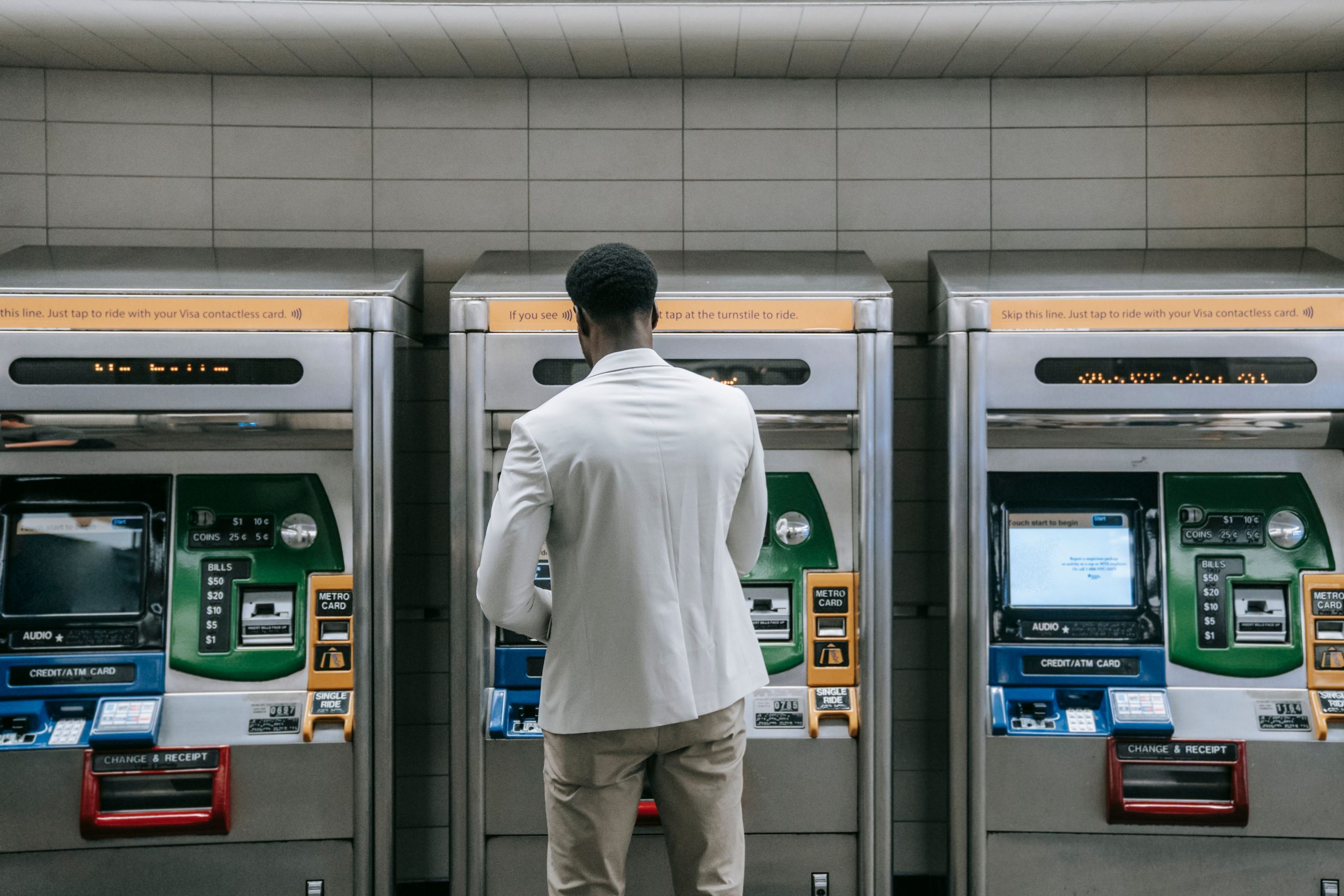
Some banks in Brazil no longer have cashiers. If you need money, you use an ATM.
This may be inconvenient for some people, especially older people, but I also remember a time when bank robberies were common.
Less cash inside a bank can mean less danger.
So, again, it is not simple.
It was almost like looking at a small museum of payment methods: cash, paper bills, bank apps, ATMs, passwords, and messages asking whether it was really you.
Convenience depends on where you live
After that, I told The Mayor about something new for me.
I have bought many things online, but until last week I had never bought clothes or shoes on the internet.
Now I have ordered running shoes, and they are supposed to arrive at the end of the week.
I find this a little weird because I have not tried them on.
Even if I have a standard size, the same size can be different from one brand to another.
Maybe this is one of the great unsolved problems of civilisation.
Then The Mayor described online second-hand platforms where private buyers and sellers can use a trusted marketplace.
The buyer and seller do not need to meet directly. The system creates a kind of safety between them.
When he explained this, I thought immediately about trust and safety.
In Brazil, I do not trust selling things through a place like Facebook if the person has to come to my home.
Suppose I publish that I have a fridge to sell.
A person comes to my apartment to inspect it.
How do I know what will happen?
Maybe he wants the fridge.
Maybe he has another intention.
I once had a gas bottle to sell.
I could probably have sold it privately for the full price, but I preferred to sell it back to the company for half the price.
I lost money, but I felt safer.
I did not want a stranger coming to my apartment.
This is important because digital systems do not exist in the air.
They exist inside countries, cities, risks, habits, and fears.
A platform that feels convenient in one country may feel dangerous in another.
A marketplace is not only a marketplace.
It is also the question:
Who knows where I live?
The phone on the table
Then The Mayor asked me where my phone lives during the day.
Normally, it is on the table, a few metres away from me.
If I go out by car, I take it with me.
If I go walking, I often leave it at home because I do not like using my phone in the street.
This means I am not always available.
The Mayor said this is almost old-fashioned.
But, to be honest, not many people contact me.
My mother contacts me. Maybe one person in Curitiba contacts me.
I have some WhatsApp groups, but not many urgent things to solve.
I am not a businessman.
I would say that 90% of what people publish in these groups does not interest me.
Many people send pictures saying good morning, good afternoon, or good night.
The Mayor said maybe these messages are supposed to make people happy, to make them smile.
Maybe.
But I am not convinced.
I almost never send these things.
I think it is better to write directly:
“Hello, Frank, how are you today? I wish you a good day.”
This is more personal than sending the same picture to one hundred or two hundred people.
Maybe the younger generation would say I am miserable.
But my complaint is not against greetings.
I like a real greeting.
My complaint is against a copied greeting that pretends to be personal.
Noise, rights, and other people
Then The Mayor asked whether digital life has made people more polite, less polite, or just polite in a different way.
I think it depends on the person, but in general people are less polite.
For example, in a doctor’s office, if people are reading or quietly texting while they wait, I do not see a problem.
But some people watch movies or listen to music without earphones.
On buses, people speak loudly on the phone.
I find this impolite.
The Mayor asked why people do not respect the space of others nearby.
I said I do not consider myself an example of politeness, but when I do something, I try to think whether I am disturbing someone around me.
I suspect many people do not think this way.
They think:
“It is my right to communicate.”
“It is my right to say what I want.”
“It is my right to do what I want.”
This also happens near my mother’s home.
Some families throw parties every couple of months, and the parties can finish around midnight.
Do they have the right to throw a party?
Yes.
But do I have the right to sleep when I want?
Also yes.
There is the problem.
The Mayor asked whether this behaviour existed before social media.
I think yes.
I do not think social media created it.
The person who uses a phone loudly in a doctor’s office and the person who throws a loud party late into the night may be showing the same behaviour in different forms.
The technology changes the stage, but maybe not the character.
This also appears in the way we send messages.
We want the freedom to send what matters to us.
We also want protection from what irritates us.
We want other people to tolerate our messages.
We do not always want to tolerate theirs.
We complain about noise, and maybe tomorrow we become the noise.
Partial trust
Later, The Mayor spoke about digital security.
Banking apps, financial apps, medical apps, passwords, confirmation messages, warnings that you have logged in, warnings that you changed something, warnings asking if it was really you.
He was not against safety, but he said it can feel as if the system treats the user as guilty until proven innocent.
This made me think about trust.
I asked him whether we have more than six people we trust.
Then I clarified that I meant trust without restriction.
For example, if someone asked me for a signed blank check, who would receive it?
When my mother was in full mental condition, she was the only person I would have trusted that way.
Today, I would not give a blank check to anyone.
This is an extreme example, but it helps to show the point.
Complete trust is rare.
Partial trust is how life works.
When we go to a doctor, perhaps for the first time, we have to trust him partially.
If we trust no one, why go?
But complete trustworthiness does not exist, or at least almost does not exist.
So we live in a paradox.
We cannot trust completely.
But we also cannot live without trusting partially.
Maybe this is also part of digital balance.
The good side of access
The Mayor then imagined a firewall around digital life.
What if I shut down the phone, laptop, internet, and most media?
What if I used only a few radio stations, a few TV channels, and one paper newspaper?
Would that improve my balance, or would it make life more inconvenient?
I said that now it is almost impossible to stay completely outside the digital world.
Paper newspapers are almost gone.
Many services expect you to use an app, a password, or a code.
Without digital access, you would lose contact with what is happening in Brazil and around the world.
Still, I do not want to say I hate digital life.
The Mayor said it is a double-edged sword.
We cannot live without it, but we dislike parts of it.
I think this is true.
He also said that without digital life, he could not speak with me.
This is also true.
There is another side too.
Twenty years ago, maybe I wanted a library with thousands of books.
At some point, I realised this was not practical.
If I moved to another city, it would become a problem.
Today, anyone with a phone or laptop has a library.
This is the good side of the digital world.
Not the bling bling bling of notifications.
Not anonymous abuse.
Not endless passwords.
Not messages that never finish properly.
But access.
Books.
Newspapers.
Language.
Contact with someone thousands of kilometres away.
Of course, we were speaking across continents because technology made the table possible.
Critical, but tolerant
So what is the conclusion?
In Brazil, people talk a lot about critical thinking.
But maybe we have to be critical in almost whatever we do.
At the same time, we have to be tolerant.
If I fought every neighbour who threw a party near me, maybe I would be dead by now.
It is necessary to be critical but tolerant, in a way where you gain more and lose less.
The Mayor called it good manners, balance, respect, and tolerance.
But I also have to remember one more thing.
I can criticise someone whose party finishes too late, and tomorrow it is not impossible that I throw a party and my own party finishes at one in the morning.
Human beings have this contrast between words and behaviours.
We are not perfect.
That is where the digital balance conversation landed for me.
Not with a rule about how many hours to use the phone.
Not with a detox challenge.
Not with a clean conclusion that old things are good and new things are bad.
It landed with my phone somewhere on the table, notifications suppressed because I do not like the bling bling bling.
It landed with paper bills, bank branches, WhatsApp greetings, online marketplaces, blank checks, noisy neighbours, passwords, and the possibility that a person who behaves badly online may behave perfectly well offline.
Digital life did not invent human contradiction.
It simply gave contradiction faster tools.
Maybe our task is not to escape these tools completely.
Maybe it is to handle them with more attention, more suspicion where suspicion is useful, more trust where trust is necessary, and enough humour to admit that the thing I criticise today may be the thing I do tomorrow.
Critical, but tolerant.
Maybe this is balance enough for one Monday.