Coffee, Cats, and the Trees We Lean On
Before we knew it, the conversation had already begun.
We arrived at the table carrying more than coffee cups and calendars. Rosii arrived carrying a spinning room.
She described those strange moments when standing up from bed felt like stepping onto a merry-go-round she never agreed to ride. Even lying down could make the room tilt and swirl. Her mobile phone had rung from the far side of the room that morning, forcing her into a rapid rescue mission before she was fully awake, and her head had responded with a firm objection. It wasn’t happening every day, but often enough to become worrying.
Nathalie listened carefully, as she always does. Perhaps it was sugar. Perhaps it was an ear problem. Perhaps it was something entirely different. None of us were doctors, she reminded us, which felt like a wise disclaimer before the unofficial international medical panel could get too enthusiastic. Rosii admitted that her stretching teacher had already delivered a similar verdict. He had become quite concerned when she struggled during exercises that involved lying down and standing up. Driving while dizzy, he pointed out, was not a hobby worth developing.
As the conversation unfolded, another possibility emerged. Perhaps the body sometimes keeps score of things the mind is too busy to notice.
Nathalie reflected on her own experience of headaches that appeared during weekends rather than workdays. During the week she could power through almost anything. Then the weekend arrived, life slowed down, and suddenly her body had opinions. Rosii nodded. In two weeks she would be on holiday. Maybe her body had already seen the calendar and was trying to negotiate an early surrender.
Because beneath the dizziness sat something else: exhaustion.
Alongside her normal work, Rosii is currently completing mandatory training courses. Every Friday brings online classes, endless reading, long videos, and assignments that require recording videos between four and eight minutes long. Not only must she appear in the videos, but another person must appear too. For someone who would happily choose “just doing the job” over “studying how to do the job,” this has become a significant challenge.
Fortunately, she is not carrying it alone. Two colleagues, technology experts and seemingly part-time superheroes, have been helping everyone navigate the technical side of the assignments. Even so, the workload feels relentless. Work. Study. Reading. Videos. Homework. Repeat. As Rosii put it, twenty-four hours no longer feels like enough.
Then, right on cue, the Mayor arrived.
Frank joined the conversation midway through Rosii’s description of her increasingly crowded life, immediately becoming both participant and target audience. Fruitloop cheerfully informed him that today’s topic was relationship balance and that some of his own questions would soon be used against him.
Balance, as it turned out, was already sitting quietly inside the conversation.
When asked which relationships felt most present in our minds, Nathalie spoke about living through her final month in Seoul. After four years in one apartment, she now finds herself in a completely different part of the city, preparing for a major transition. She and Cléa have temporarily moved into a small apartment in a neighbourhood where they are among very few foreigners. The familiar French expatriate community is suddenly distant. The move has left her feeling slightly disconnected, even while she remains in contact through WhatsApp with family and friends scattered across the world.
June has become a month of birthdays, giving her many reasons to reconnect. Soon she will leave for Tokyo with Cléa before travelling to Geneva to reunite with her sister.
Rosii’s thoughts went somewhere different. She spoke about a friend she had worked with decades ago. Their friendship now stretches back thirty years. They do not see one another often, but the connection remains strong. The previous day her friend had sent an old photograph and reminded her how special their friendship remains. There was something comforting in that story. Some friendships require constant maintenance. Others seem to survive quietly in the background like old trees with very deep roots.
Meanwhile, the Mayor reflected on the three women who currently dominate his life. According to him, they all possess remarkably similar goals and an equally impressive ability to ensure he follows the correct path. His role, apparently, is to absorb the pressure while pretending he has choices.
Balance takes many forms.
When we discussed the small daily signs that tell us a relationship is healthy, Nathalie spoke about something surprisingly simple. After several weeks in her new neighbourhood, local shopkeepers had begun recognising her. Smiles appeared. Greetings were exchanged. Tiny conversations emerged despite language barriers. These moments were not friendships, exactly, but they were connections. Sometimes balance arrives disguised as a smile from somebody who barely shares your language.
Rosii agreed from a different angle. For her, balance often arrives through WhatsApp. A message from a friend. A question from family. Somebody checking in simply because they care. She spoke warmly about her pregnant sister, who is expecting a baby girl named Stella. Even when they cannot see each other often, the messages keep the relationship alive.
The conversation then wandered into a particularly interesting corner: energy.
Who helps us feel most like ourselves?
To our collective surprise, the strongest answer was not a person at all.
It was solitude.
Nathalie spoke about spending an evening alone in Seoul and thoroughly enjoying it. Alone, she could walk where she wanted, see what she wanted, and simply be present without constant discussion. Rosii immediately agreed. Being with ourselves can be surprisingly restorative.
The Mayor agreed too, though with an important footnote.
After speaking with countless people during the week, he enjoys silence. Until he doesn’t. By Saturday afternoon, the quiet can become so complete that he starts wondering whether humanity has quietly disappeared. His cats provide company, although their conversational skills remain limited. They are excellent listeners, however, particularly when food is involved.
The discussion naturally moved toward imperfect relationships.
Had we ever experienced relationships that weren’t perfect but still worked?
Nathalie confessed that she generally distances herself from friendships that become unhealthy. She remembered one friend whose constant negativity eventually became too much to carry. Rosii recalled a similar colleague who seemed capable of finding a problem in every situation. Family, work, marriage—nothing escaped complaint. Sometimes, Rosii observed, we have no choice but to share space with negative people. In those cases, strategy becomes an important survival skill.
The Mayor then took a slightly different approach by identifying perhaps his longest-running imperfect relationship: the one with himself.
As an only child, he is comfortable in his own company. Yet occasionally he finds himself having difficult conversations with the person in the mirror. He and his alter ego do not always agree. Like any long-term relationship, it requires management.
Then came the Fruitloopy question.
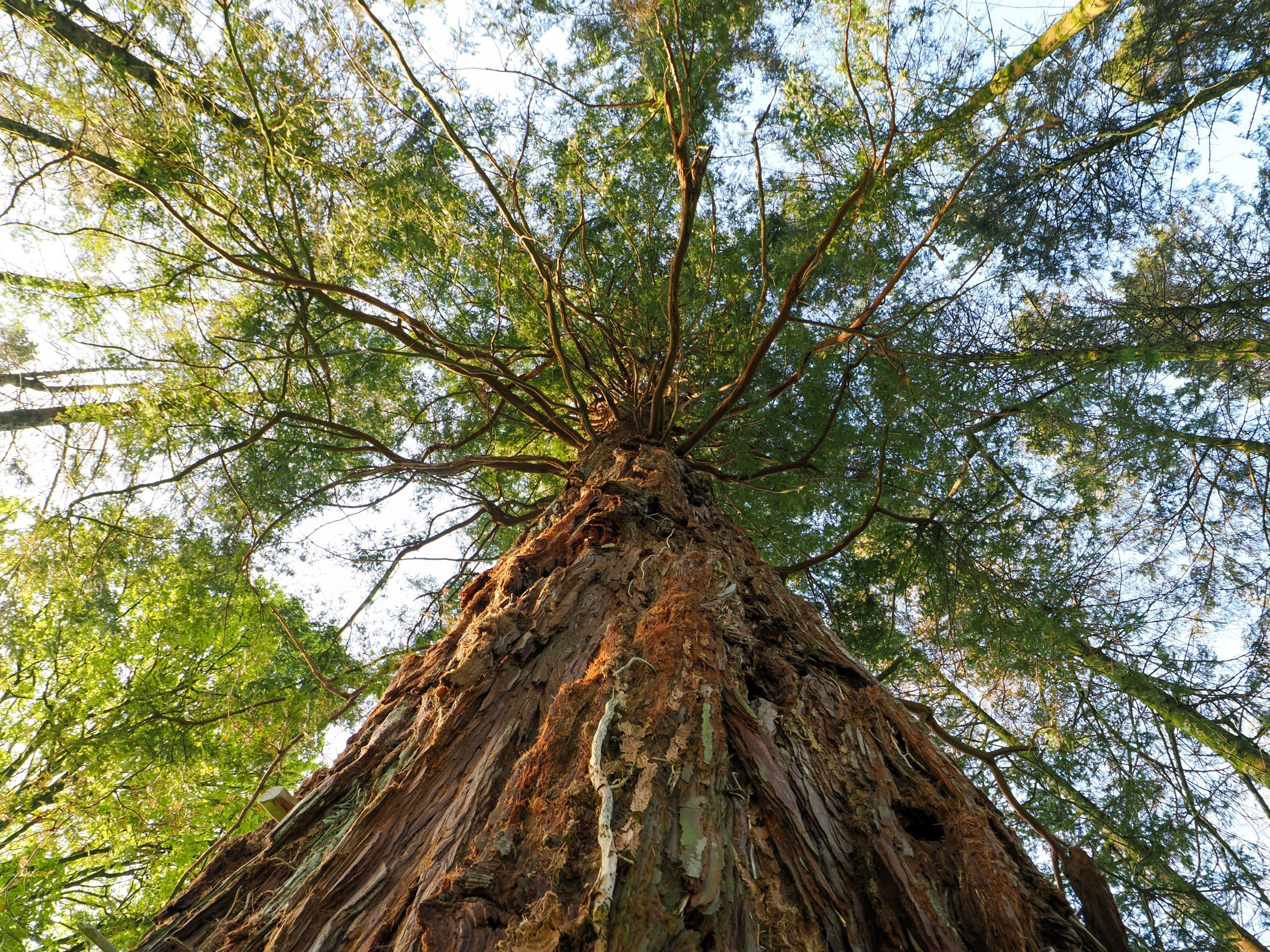
What would happen if somebody close to us turned into a giant tree for a week?
Reasonable people might have ignored the question.
We embraced it.
Rosii would water the tree, care for it, and talk to it. Nathalie liked the idea too, particularly because the tree would finally be forced to listen without interrupting. The Mayor, meanwhile, discovered a metaphor hidden inside the absurdity.
A tree, after all, is something we lean against.
And perhaps that is what balance in relationships really means.
Not perfection.
Not agreement.
Not constant happiness.
Simply knowing that when we are weak, somebody else can be strong. Knowing that there is somebody—or perhaps several somebodies—we can lean against without fear of falling. The kind of connection that allows us to rest for a moment until we are ready to stand again.
By the end of the meeting, the spinning rooms, Korean neighbourhoods, old friendships, lonely weekends, negative colleagues, cats, AI management teams, and giant trees somehow all belonged to the same conversation.
Which feels very much like life itself.
Because balance rarely looks balanced while we are living it. It looks more like a collection of people carrying different weights at different times, occasionally leaning on one another when the load becomes too heavy.
And perhaps that is enough. Perhaps the strongest relationships are not the ones where nobody stumbles.
Perhaps they are simply the ones where somebody is there when we do.