
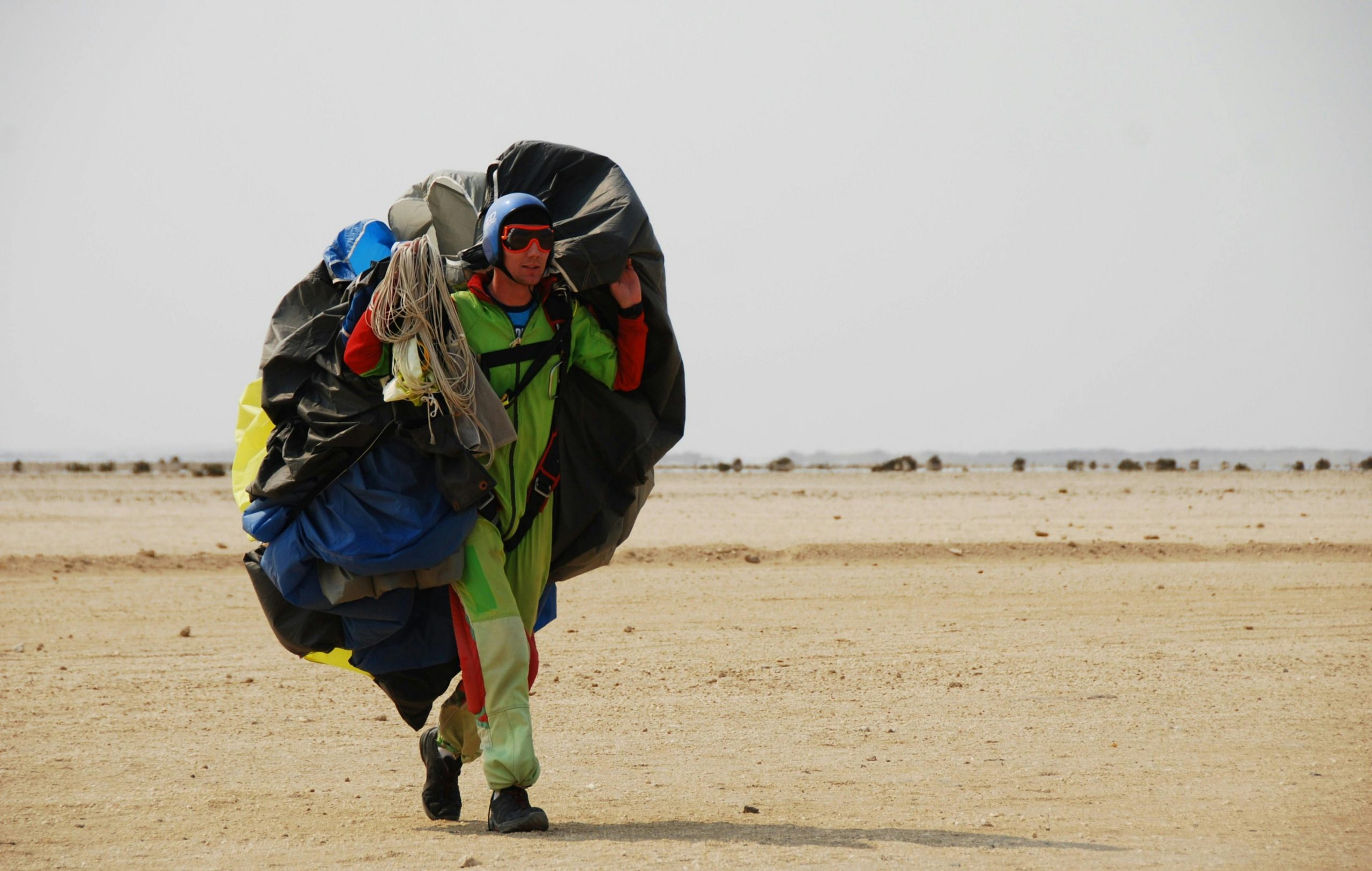
The Paratrooper’s Roadmap: Exploring the World
I grew up in Cleebourg, a small village in Alsace. Maybe there were 700 people. For some people, this is very small. For me, it was home.
But when I was already five, six, seven years old, I had something in my head. I wanted to see the world.
At school, my favourite subjects were history and geography. I liked to learn about old times, about villages, about the Renaissance, about industry, about the 1800s, the 1900s, and the twentieth century. In geography, we learned about France, Europe, and the different continents. I had a very good teacher. A good teacher can motivate you. I think this is important.
I still think I have my old history book from school.
When I was young, I already had this dream: go to the army and explore the world.
The Mayor asked me when I first wanted to leave Cleebourg. I said it was very early. I liked my village, but I wanted adventure. I wanted to see other countries. I wanted to be outside. I wanted to do something with a team, in many different situations.
I left school at seventeen. For one year, I worked near Wissembourg, in a factory that made exhaust pipes for cars and trucks. It was on the road going to Lauterbourg, before the forest. In those years, maybe 150 or 200 people worked there. There were three teams.
I worked on a machine.
It was not bad work, but it was not for me. I had regular hours and money, but I felt like I was in a prison. I did not like being inside a building all day. I wanted to be outside. I wanted movement. I wanted freedom.
So when I was seventeen, I went to the mayor’s office. I said I wanted to go to the army at eighteen. Normally, military service was later, at twenty, but I wanted to ask to go earlier.
The secretary gave me papers. I filled them in.
There was one problem. Because I was not eighteen yet, I needed permission from my parents. My mother was not a problem. But my father did not want to sign. He did not sign.
So I waited.
When I became eighteen, it was my decision.
I went for my three days of selection. They asked me if I wanted to go to the army. I said yes. They looked at me and asked if I was sporty. I was not. Before the army, the only sport I did was in public school. But they said okay.
Later, I received a letter. I was on holiday with my friends in the Vosges. I called home, and my mother said, “Your letter from the army is here. You go next month.”
I came home, and the letter was on the table in the living room. I opened it. I had to go to Pamiers, near the Pyrenees. I left by train on 5 August 1985. On 6 August, I arrived at the barracks.
The Mayor smiled when I told him this date, because he also started a new life in August 1985. He went from Germany to London to work in a hotel. I went from Cleebourg to the army. Same month, different roads.
My father was not very enthusiastic, especially because I wanted to go to a parachute regiment. My mother was okay. My sister was about fifteen. For me, it was my choice. In the village, it was normal that many young men went to the army. Some of my friends went before me because they were older. Others went later.
At the beginning, the money was not much. I think it was about 405 francs. Later, after my parachute jumps, it was more. Maybe 1,500 francs. But we had food, clothes, and a bed, so it was pocket money.
Pamiers was very different from Alsace. Here in Alsace, we have hills and villages. There, you have the Pyrenees, big mountains, and you are not so far from the Atlantic or from Andorra. For an eighteen-year-old, it felt like freedom.
But the first two months were very hard.
I arrived in August. It was very hot. The first sport test was on Friday morning. We had to run for twelve minutes. I was not ready. After twelve minutes, I was exhausted. I felt dizzy. Someone spoke to me and asked if I was okay. I was not good.
But I told myself: now, I can only do better.
The next two months were drill, sport, marching, and training in the mountains. It was hard, but I do not regret it. For me, it was a very good school for life.
The Mayor asked me what made me continue. I think it was perseverance. Maybe stubbornness too. In the army, you must use your arms, but also your brain.
I also had a problem with height. When I was a child, I had vertigo. My grandfather smiled every day when I went up a ladder, because I was afraid. And later, I wanted to become a paratrooper. The Mayor asked me if I was crazy.
Maybe a little.
But I wanted to do it.
In my group, only a few people left. Some were not allowed to jump. Some had injuries. Some could not continue mentally. It was a selection. The sergeants were hard, sometimes brutal, but there was also a method. The first two months were not only training. They were also selection.
But there was also camaraderie.
When one guy had a problem, the others helped him. If he could not carry his bag, someone carried it. If he fell, the others picked him up. Everybody could have a problem one day. So everybody helped.
After two months of instruction, I went into a command company. I wanted to go into a fighting company, but first I spent eight months in a service company. Then, in June 1986, I went into the first company, a fighting company.
Around that time, the regiment said it was going to Lebanon and they needed volunteers. I volunteered. I signed to stay longer than the normal one year.
From June to December 1986, I was in Lebanon.
Lebanon was not peaceful. I was part of the United Nations force in South Lebanon. We had the blue helmet. We were not there to attack. We could defend ourselves, but we were neutral.
A normal day was work, patrols, going to other companies, going to headquarters, checking points, controlling vehicles, and looking for weapons, ammunition, or explosives. Sometimes we controlled people and vehicles with big loads.
I was in Naqoura, near the headquarters. One evening, I saw two Israeli ships. Some minutes later, I saw combat helicopters. Then, after a little time, I saw fire coming from the sky and an attack. That was real combat.
The Mayor said most people see this on television while eating their dinner. For them, it is abstract. But when you are there, it is different.
For me, at that age, it was exciting. I was young. I saw the world differently from today. In the army, we trained for combat from morning to evening, so when something happened, it was almost normal. But most of the time in the army, you are waiting. You train, you prepare, you wait for days, weeks, months. Then one special moment comes.
This is army life. You wait, but you must stay mentally ready and physically ready.
In Lebanon, I also learned that the military reality, the political reality, and the media reality are not the same. We were in South Lebanon, but many orders did not come from Paris. They came from New York. That is very far from the ground.
I came home from Lebanon on 18 December 1986.
Before I left, an officer from another regiment came and said he was looking for people for a new section. I listened to his speech. I thought, okay, why not? I went back to my old regiment on 31 January 1987, and in March I moved to the new regiment, near Toulouse.
In 1987 and 1988, I also went to Berlin for training. This was before the Wall came down. We crossed Checkpoint Charlie in uniform and went to the Russian side, to East Berlin. We went to Alexanderplatz.
I had a lot of East German marks, maybe 800 Ostmark. I went with my friends. We wanted to buy things, maybe vodka, maybe other things. But restaurants were not easy. I remember we found red wine.
We were twenty years old, and sometimes people came to speak with us. One man came with his wife and said he had a daughter of twenty years old. Our officers warned us: be careful. If you have a friendship with a woman there, it can become a diplomatic problem.
I spoke German, so I understood very well what they meant.
Those were interesting times.
In October 1989, I went to French Guiana. This was different again. French Guiana is France, but it is also South America. It is French territory, but you are next to Brazil and Suriname. You have French infrastructure, French shops, French newspapers, and also the jungle, heat, humidity, insects, and the Maroni River.
At that time, there was a problem in Suriname, a civil war. We were near the border, around Saint-Laurent, Apatou, and the Maroni area. We checked the border. We brought chiefs to discussions with the government of Suriname. We helped with refugee camps.
This was another side of the military. It was not like Lebanon. It was more peacekeeping and control, but not with the United Nations. It was the French army.
A normal day could be patrols, checking the river area, cleaning the camp, helping around the refugee camp, and bringing people to the city so they could do shopping or take care of practical things.
Sometimes we went into the forest. We hunted. We caught butterflies. We lived outside.
It sounds maybe like a holiday, but it was hot and humid. There were many insects. Small wounds could become infected very fast. You had to be careful.
After Guiana, I later went to Kuwait during Desert Storm.
In Kuwait, we arrived during the war period. First, we slept in the French embassy. After that, we slept in the English tower. Kuwait was divided into different sectors: American, French, British, and others.
Our job was demining. We cleared mines on the beach and in other areas. For some people, when they hear “mine clearing,” they think only danger. Of course, it was dangerous. But when you are trained, you do the job. It was not routine exactly, but it was very interesting work.
I was there from February to May.
I remember the oil terminals and the petrol fires. The oil was burning. When you went into the cloud, it became dark. At three o’clock in the afternoon, it could look like night. The smell was strong. The sky was black.
But I have good memories of Kuwait because it was an interesting job. It was real work, and we knew why we were there.
There was also Djibouti and Ethiopia.
One time, we were on a ship. After three days, in the evening, we had an assembly. The captain told us we were not going back to France. We had to go to Djibouti because there was a problem in Ethiopia.
We arrived in Djibouti. The first evening, we slept in a hangar. The next morning, we waited. We thought maybe we could go to town, find a bar, drink a beer, and relax. After a few hours, they told us we were going to the airport.
We took a small plane and landed in the desert, in the north. Then we took buses.
In Ethiopia, there was a civil war, and the army had left many weapons and ammunition behind. Our job was to collect everything, from small pistols to tanks. There was ammunition everywhere. We took it for destruction.
You cannot keep this ammunition. It is too dangerous. It can be old. It can be Russian, Chinese, Jordanian, or from somewhere else. You cannot trust it. So you destroy it.
At one point, we had maybe 120 tons of ammunition together, ready for destruction.
Later, in 2007, I also went to Ivory Coast as a reservist. That was another experience. When you are older, you see things differently from when you are eighteen or twenty. You still do the work, but your eyes are different.
In Africa, I learned a lot about people.
People adapt to circumstances. Sometimes, this is good. Sometimes, it is terrible.
I saw boys of maybe twelve years old with weapons. For them, it was normal. But for me, it is not normal. A child should be a child, not a soldier.
I also learned that when you are European in Africa, people think you have money. Sometimes there are two prices: one price for local people and one price for white people. This is part of reality too.
The Mayor asked me what I learned from all these countries and all these experiences.
I think I learned that people are different, but also the same. Everywhere, people want to live. They want food, safety, family, friendship. But circumstances change people. War changes people. Poverty changes people. Fear changes people.
I saw Lebanon, French Guiana, Kuwait, Djibouti, Ethiopia, Ivory Coast. I met soldiers, civilians, refugees, children, officers, local people, and people in very difficult situations. These experiences stay in you.
But Cleebourg stayed in me too.
When I came back home, it was not difficult to come back, because this is my home. I like home. But I also like going out. This has not changed. Even today, I like to go away for work or for missions. Last month, I was one month in Bavaria. I was comfortable there. Maybe one day I go to Ukraine. Maybe South America. I do not know. I am open.
The Mayor asked me about war today, especially Ukraine, drones, missiles, and technology. Today, war has changed. There are drones, missiles, 3D printing, small mines, and new systems every day. Drones are low cost. Technology is very important.
But I think one thing does not change. The last combat is always infantry. In the end, soldiers are still there on the ground.
I follow the war in Ukraine. I see pictures of what Ukraine uses and what Russia uses. I see the trend. But I do not see a good side.
Since 1989, many countries in Europe believed Russia was finished as a problem. Germany, France, and others reduced their armies. We closed units. We reduced soldiers. Today, we have a problem. We do not have the same forces as before. There are fewer volunteers. It is the same in France.
Since 1945, we hoped the big war was finished. But today, maybe that time is finished.
I do not say this with pleasure. I say it because I saw some things. I saw how peace and war can live near each other. I saw how people wait, prepare, and then suddenly everything changes.
I came from a small village of 700 people. I began with history and geography books in school. I wanted to see the world. The army gave me that road.
It was not always easy. It was not always beautiful. But it shaped me.
I learned discipline. I learned perseverance. I learned camaraderie. I learned that sometimes you are afraid, but you continue. I learned that freedom is important. I learned that home is important too.
I left Cleebourg to see the world.
But Cleebourg was always the place I came back to.