
Whose Rules Are These Anyway?
Have you ever stopped in front of a noticeboard or a sign and thought to yourself, Who on earth made this rule?
There is a large noticeboard outside my son’s school that lists the basic prohibitions: no weapons, no sharp objects, no alcohol. Now, that all makes total sense because, obviously, there are children inside. But why do they need to erect a giant sign for everyone to see in the first place? Isn’t this just basic, universal knowledge?
I’m certainly not going to send my son to school with a pocketknife or a cold beer in his lunchbox. Meanwhile, some adults carry licensed pistols or small folding knives in their day-to-day lives, but nobody stands at the school gate enforcing the board. And thankfully, I’ve never seen anyone sipping a glass of wine or cracking open a beer at a school function. So every time I pass that sign, I just smile to myself because, in a way, it feels so entirely unnecessary.
Then there are the signs nobody seems to care about at all. Take the “No Smoking” sign in the supermarket parking lot. Every single time I go, there are people standing right beneath the sign smoking while waiting for the bus, or taking one final drag before walking through the automatic doors. Right under the sign!
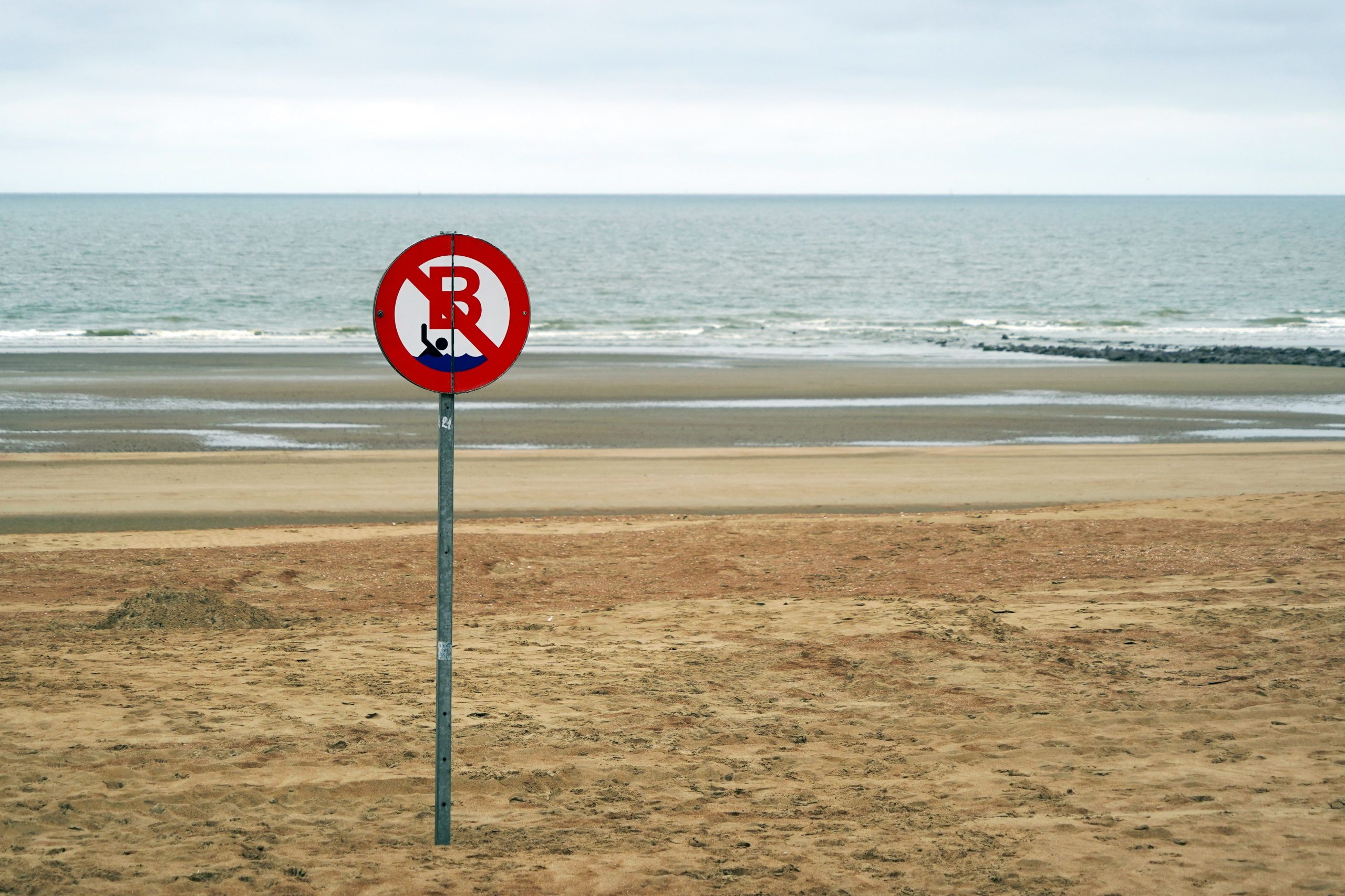
It always gets me thinking: Who put this up? Who approved it? And why is it still there if absolutely nobody follows it? Then again, I look at the way people drive and how casually traffic laws are ignored every day, and I realize—maybe people just don’t care. The internet is equally full of these gems, like pictures of a beautiful ocean beach with a giant “No Swimming” sign stuck in the sand. Who made that call? Are these rules put there to be broken, or were they written decades ago and now simply exist to be laughed at?
Where life gets really interesting, though, is reading the back of a cleaning product label.
Do not inhale. Do not get in eyes. Do not drink. Keep out of reach of children. If swallowed, seek immediate medical attention.
The warning about children makes complete sense. But the rest? Isn’t it just fundamental human logic that you shouldn’t drink household chemicals, pour them into your eyes, or use them as body wash?
Yet, I would love to meet the specific person who forced companies to put those warnings on the bottle. Who was the pioneer who drank the cleaning fluid? What was their thought process? Did they think, “Hmm, this bright blue liquid looks refreshing”? You might go blind, burn your skin, or completely ruin your lungs—and yet, every single absurd label exists because someone actually tried it. Someone was crazy enough to do it, failed miserably, and now the rest of us have to live with the warning label.
Where I live, we have a few strict, important rules:
- No cats allowed.
- Don’t put flower pots or plants on top of the walls.
- No noise after 10:00 PM.
- Speed limit: 10 km/h once you enter the gate.
- Don’t leave waste or black bags in the parking areas.
These are perfectly acceptable, logical rules. No cats because they roam and mark their territory everywhere. No heavy pots on walls because they could fall and hit someone. No noise late at night because people are sleeping. No speeding because children play outside. And no rubbish in the parking lot because keeping our living space clean and tidy benefits everyone.
Yet, I still find myself wondering about all the other rules out there. Who made them? Why was it necessary? Who follows them, and who breaks them? And why do we even need to write down things that should simply be basic human logic?
Because life is full of surprises, and people will always manage to surprise you. Whenever you see a truly ridiculous rule, just remember: someone, somewhere, thought it was a great idea to try it first—and now we get to read the noticeboard.
Welcome to Pineapple 35, where some rules are completely absurd, and others we follow simply because we don’t want to make the same mistake twice.