
The Unwritten Rules of Being a Guest.
From shoes at the front door to four kisses on the cheek, Sylvie discovers how complicated being polite can become.
By Sylvie, France
Every home has its own habits. Some are so normal to us that we hardly notice them, until somebody visits and does things differently. Then suddenly we realise that what is polite in one house might be quite strange in another.
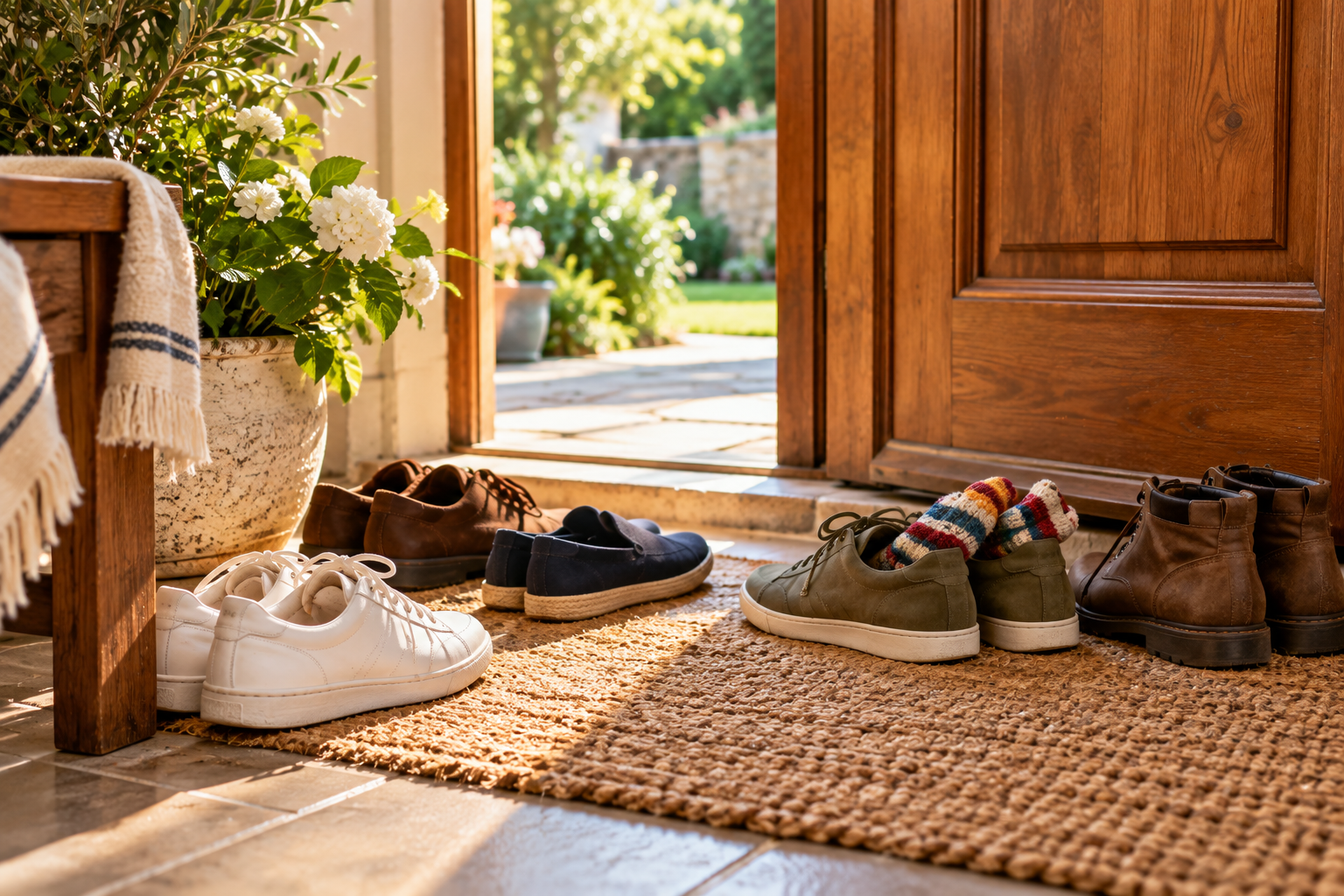
For me, one of these rules begins at the front door. When friends or family visit my home, they know they should take off their shoes. It is something I expect, and most of them do the same in their own homes. When I visit them, I automatically remove my shoes too.
But I do not expect this from everybody. If someone comes to install something or do a job in the house, I would not ask them to remove their shoes. It depends on the situation and the person.
Interestingly, this was not a rule I grew up with. My family lived on a farm, where wearing shoes inside or outside was not such an important question. It is a habit I developed later.
When Janita told me that many people in South Africa keep their shoes on when visiting somebody, I immediately thought of one small problem.
You must make sure there are no holes in your socks!
A Toilet with Its Own Rules.
There is another unusual arrangement at our house, and this one has caused some discussion in the family.
My husband built a separate toilet outside, near our swimming pool. It is practical because people using the pool do not have to walk through the house while they are wet.
But the question of how people use the toilet is another matter.
After some family celebrations, particularly when we have many visitors at Christmas, I have sometimes been disappointed by the condition of the bathroom the following morning. I do not like finding a mess around the toilet or on the floor.
For me, this is a question of consideration. If somebody uses the bathroom, they should leave it clean for the next person.
We have spoken about this with friends, and some of them have similar rules in their homes. It seems that even something as ordinary as using the toilet can become a subject of different opinions.
And sometimes, the people who disagree most strongly are all members of the same family!
Four Kisses? Two Are Enough!
Greetings are another area where politeness can become complicated.
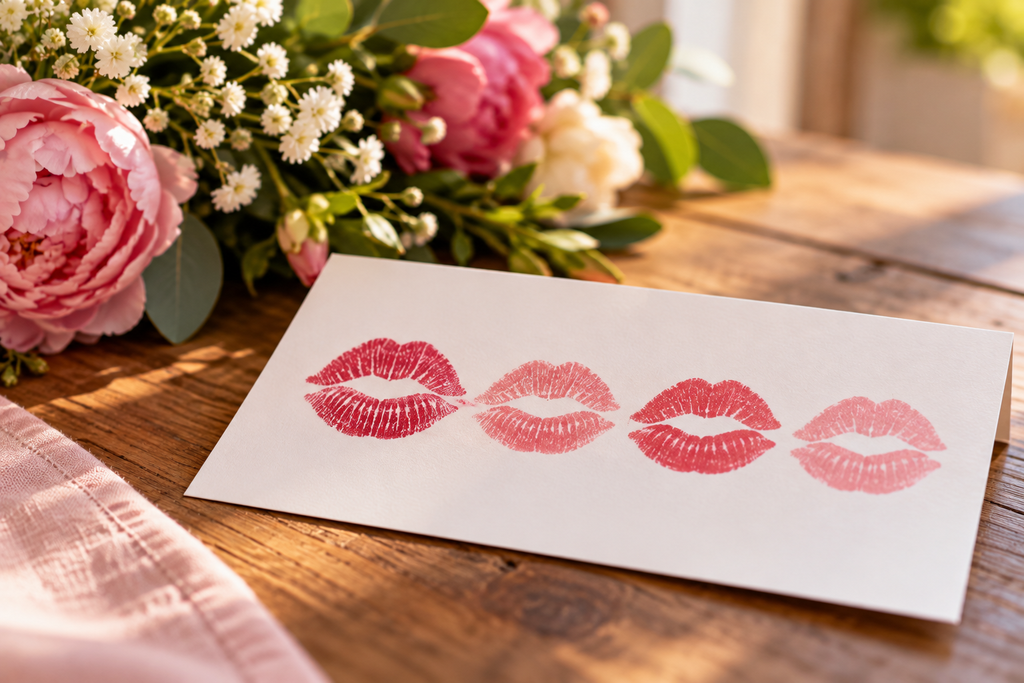
In France, where I live, it is common to greet friends and family with kisses on the cheeks. But the number is not always the same. Some people give two kisses, others three, and some insist on four.
My brother-in-law, who is married to my sister, is one of the four-kiss people. We have a very good relationship, and I know exactly what to expect when we meet.
But for me, two kisses are enough.
Four takes quite a long time!
There is also the problem of coordination. When you greet someone, you have to know which way to turn your head. If two people move differently, an ordinary greeting can suddenly become an unexpected kiss on the mouth.
This has happened to me before. Sometimes it was simply awkward, although on other occasions I suspected the man had intended it.
Janita told me that in her South African family, some close relatives greet each other with a kiss on the mouth. That surprised me. I could not imagine greeting my adult daughter that way.
It was interesting to discover how differently two families can understand an affectionate greeting.
When I was a child, my parents expected me to say hello to people, but they never forced me to kiss anyone. I think there is an important difference between greeting someone politely and being expected to show affection in a particular way.
When an Invitation Comes with a Sales Pitch.
Sometimes the rules are not about what happens in somebody’s home, but why you have been invited there.
In Germany, we have gatherings where somebody invites friends to see products being demonstrated and sold. It might be jewellery, underwear or an expensive kitchen machine.
The difficult part is that you may not really want to buy anything.
Sometimes you go because a friend has invited you and you want to support her. She may need a certain number of guests for the event to take place. So you attend, even though you have no intention of spending money.
Of course, if the seller gives a convincing demonstration, you might change your mind.
I have been to a jewellery gathering where I bought something because I liked the quality and thought the price was fair. That was a good experience.
And there is another advantage to these parties. At the end, you usually have coffee and cake, or perhaps an aperitif, and you meet other people.
That part is always pleasant.
I also know the demonstrations for a popular German cooking machine. The guests prepare food together and then enjoy eating it. But the machine is extremely expensive. I own an older model, and although I know the product, I would not buy a new one at today’s prices.
The food might be delicious, but at the end somebody still wants to sell you the machine!
The Guests Who Help and the Guests Who Sit.
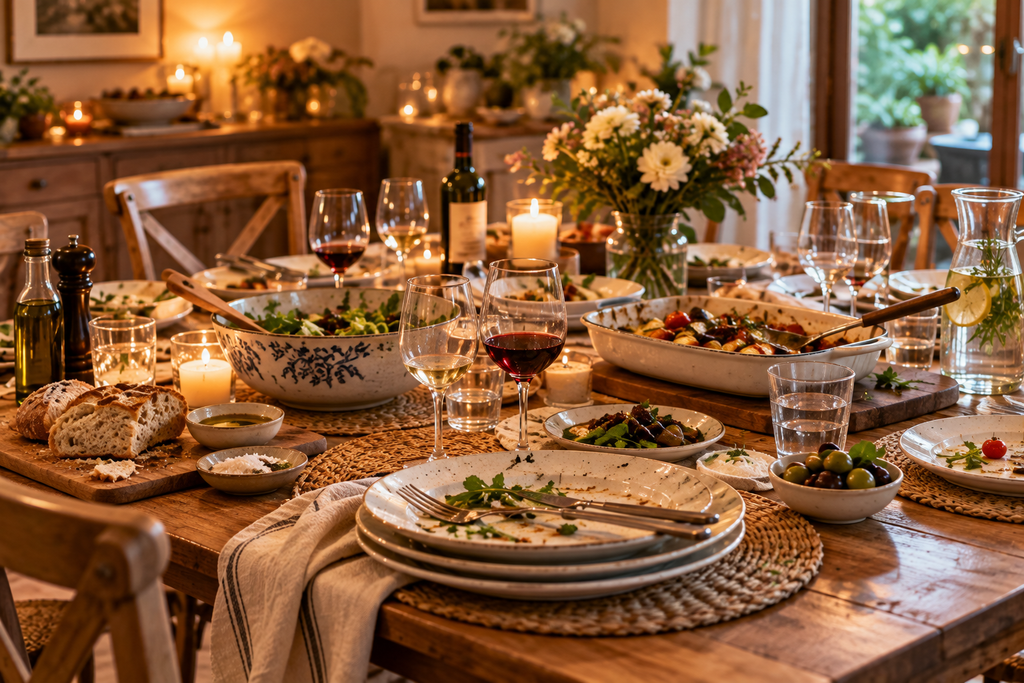
When I invite friends for dinner, they usually ask what they can bring. It might be something for the aperitif, a cake or a dessert. Everybody contributes something, and I appreciate that.
During the evening, my friends also help. When it is time to clear the table or wash the dishes, the women often get up and join me.
The men? Well, they usually remain sitting with their wine!
It is something I have noticed many times.
When I am invited to somebody else’s home, I also offer to help. I would not feel comfortable simply sitting while the host does everything.
But not everybody thinks this way.
I know several people who do not offer to help at all. When I visit somebody who behaves like that in my home, I sometimes allow myself to sit a little more too.
I do not make a big argument about it. We all have different habits, and some people simply expect the host to take care of everything.
Still, it is interesting how much we notice these small things, even when nobody says anything.
A Surprise in Egypt.
Different habits become even more noticeable when travelling.
I have visited Egypt twice, and on both occasions something surprised me about the hotels where I stayed.
I saw only men working there.
The people cleaning the rooms were men. The people working in the kitchen were men. At reception, I also saw men. During those visits, I did not notice any women working in the hotels.
This was very different from my experience in Fuerteventura, where I had often seen women cleaning hotel rooms.
I began wondering why there was such a difference. Were the women working somewhere else? Was it connected to family traditions or expectations?
I did not know the answer, and I was not sure whether the situation was good for women.
It was simply something I noticed during my travels, and it stayed in my mind because it was so different from what I was used to seeing.
Travelling can make us curious about things that we might never question at home.
Who Decides What Is Polite?
The more we spoke about these little rules, the clearer it became that politeness is not always something everybody agrees on.
In one home, taking off your shoes is expected. In another, nobody thinks about it. Some people greet you with four kisses, while others prefer a handshake or a simple hello.
Some guests believe that being polite means helping the host. Others believe a good guest should relax and allow the host to look after everything.
And sometimes we follow a rule without remembering exactly when or why it started.
I know what I prefer in my own home. I like people to remove their shoes, I appreciate guests who offer to help, and I think everybody should leave the bathroom clean.
But I also know that other families have their own ways of doing things.
Perhaps the most interesting part of visiting somebody is discovering those differences. We do not always have to agree with them, and we do not have to adopt every new habit we encounter.
We just have to remember that the person opening the door may have a completely different idea of what is normal.
And, in my case, I would still recommend checking your socks before you visit.