
The Pleasure of Doing Nothing.
After more than forty years of working life, Geneviève has discovered a different kind of satisfaction. It sometimes involves a cup of coffee, a cat, and absolutely nothing that needs doing.
As told by Geneviève L.
There is a particular pleasure in seeing a job done properly. Everything is in the right place, the work has been checked, and nobody is complaining. For much of my working life, that was what gave me satisfaction.
These days, I have discovered another pleasure. I can sit on my sofa, look out of the window and do absolutely nothing.
It took me a little while to learn how to enjoy that.
More than forty years in one company.
I started working in 1977, shortly after leaving school. At the time, I certainly didn’t imagine that I would spend more than forty years with the same company.
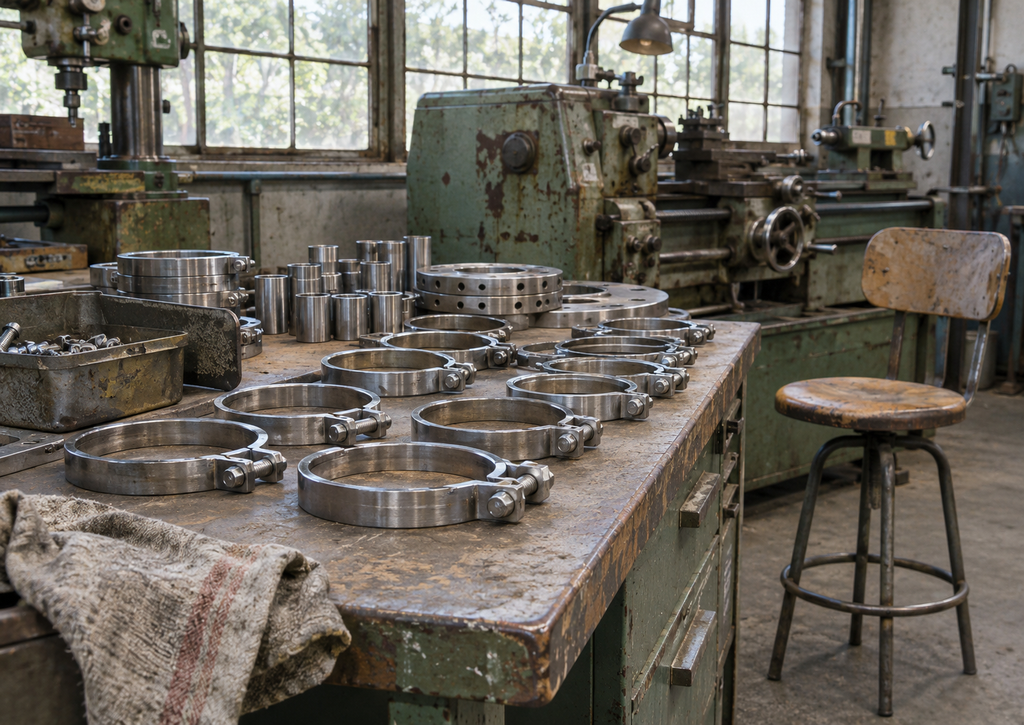
We made metal components, particularly fastening rings used on industrial barrels. They were not the sort of products you would normally notice in everyday life, but they were important for containers used in the food industry and elsewhere.
My work changed over the years. In the beginning, I was involved in assembling pieces. Later, much of my responsibility concerned checking production and packaging. I had to make sure that the correct components had been produced, counted, packed and prepared for the customer. There were different products, different requirements and sometimes particular tests to make sure that a component could withstand the forces placed upon it.
When something wasn’t right, we had to find out why. Perhaps we needed another test, a correction or a conversation with the supervisor. There was always something to check, and getting it right mattered.
During our conversation, I was asked about the best five minutes of my working day. Perhaps there had been a favourite coffee break, a conversation with colleagues or a moment when I could finally stop for a while.
But I couldn’t really identify such a moment.
What I enjoyed was knowing that the work had been done properly. When the machines were running well, the pieces were correct and there were no complaints, I could feel satisfied. It wasn’t necessarily an exciting job, but there was something good about finishing the day knowing that everything was as it should be.
That was enough for me.
A company changing with the years.
Over more than four decades, I saw the company change considerably. When I started, many of the older employees had already spent years there. Some had begun working when they were very young, and staying with one employer for most of your working life was not unusual.
The machines changed too. In the early years, much depended on the people operating them and their knowledge of how everything worked. Later, computers and automated systems took over many of the tasks that had previously been done by hand.
Of course, automation didn’t mean that problems disappeared. Machines could still go wrong, and somebody had to understand what was happening. Experienced workers often knew things that weren’t written down anywhere, so passing that knowledge to younger colleagues became important as people approached retirement. Some of the new technology also made the physically demanding parts of the job easier.
There were changes in the atmosphere as well.
In the earlier years, the owner knew the people working for him. He would speak to us, and managers would come around and say hello. There was a personal connection that became less common as time went on.
I always thought that the relationships between colleagues were important. When you work alongside the same people day after day, sometimes for many years, it makes a difference whether you get along. We also had small celebrations. Birthdays and important family occasions were recognised, sometimes with a box of chocolates from the company.
Nothing particularly grand, but these things were part of our working lives.
People sometimes wonder why somebody stays with the same employer for so long. I didn’t stay because I believed I had the most wonderful job in the world. There were practical reasons too. The company was reasonably close to home, and I had no desire to spend hours travelling to and from work every day.
It suited my life, and so the years passed.
The Sunday evening without an alarm.
When retirement approached, I began preparing myself for the change. After so many years, working becomes a habit that reaches into almost every part of your day. You know when to get up, when to leave home and what you will be doing when you arrive.
Then, suddenly, all that comes to an end.
I remember one Sunday evening particularly well. I realised that I didn’t need to set my alarm for Monday morning.
There would be no early start, no journey to work and no production waiting to be checked. I could go to bed knowing that the following morning belonged entirely to me.
What a wonderful feeling!
I had already started adjusting to the idea of retirement before my final working day, but there is a difference between knowing that something is going to happen and actually experiencing it. For the first time in more than forty years, I no longer had to organise my ordinary days around the requirements of an employer.
And that was when I discovered the pleasure of doing nothing.
Watching the birds on a wire.
When I say that I enjoy doing nothing, people sometimes find it difficult to understand. Surely I must be reading, watching television, listening to music or thinking about something?
Not necessarily.
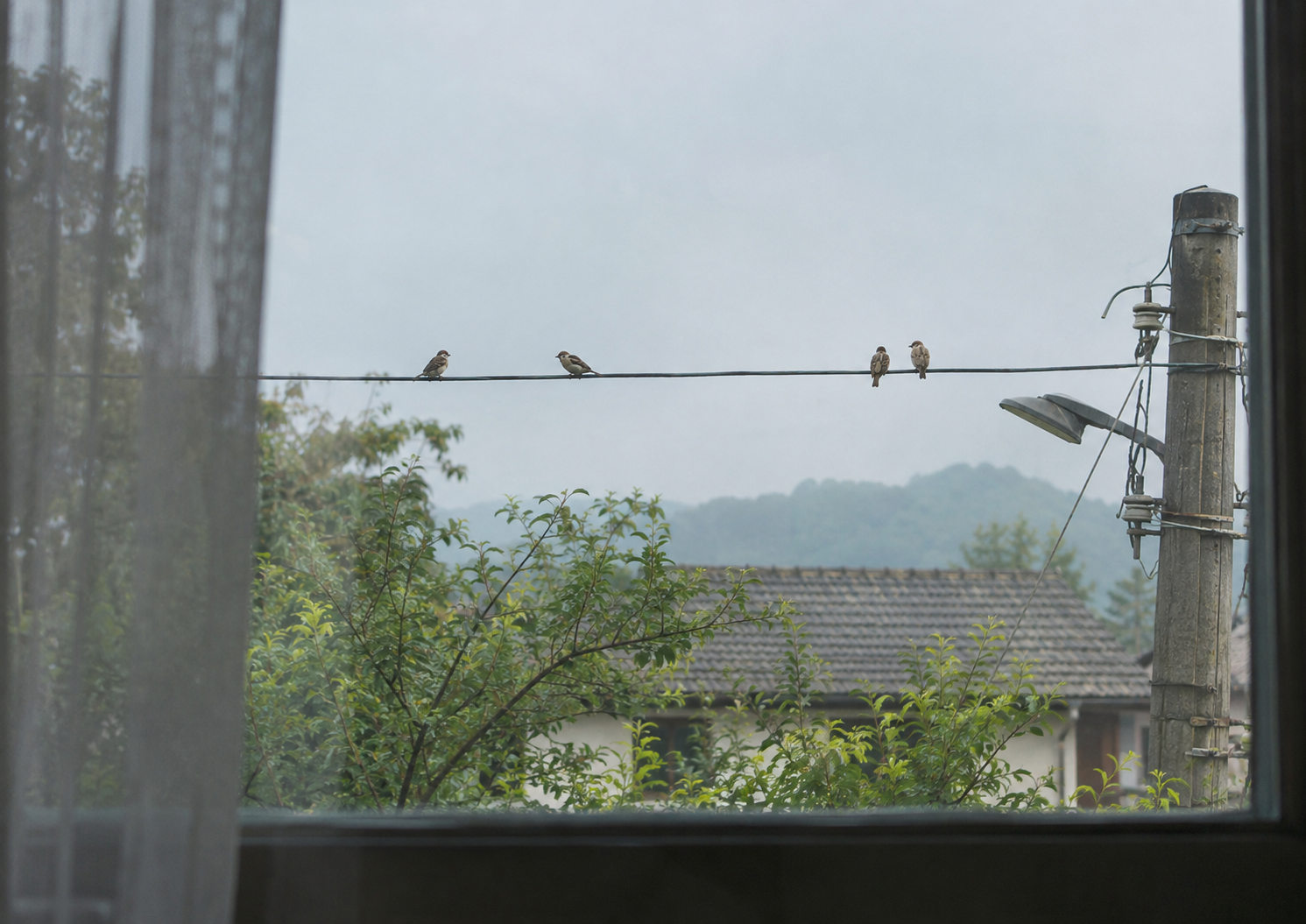
Sometimes I simply sit on the sofa and look out of the window. There is an electrical line running near the house, and birds often land on it. It isn’t a particularly beautiful view, but I enjoy watching them.
One bird arrives, perhaps another joins it, and sometimes they move towards each other along the wire. I can sit there for quite a while, just observing what they do.
I don’t need a spectacular landscape or something interesting to happen. The birds are there, I am comfortable, and I have no particular reason to get up.
At other times, I might sit in the garden and listen to the birds around me. If the weather is cold or rainy, I enjoy being indoors in the warmth, knowing that I don’t have to go anywhere.
During our conversation, we explored what this meant. Was I meditating? Was I following some special relaxation technique?
No. I wasn’t trying to achieve anything.
I was simply enjoying myself.
Coffee, a cat and half an hour.
On the morning of our conversation, I had already enjoyed one of these little moments. I made myself a coffee, sat down comfortably and put my cup on the table.
Then my cat arrived.
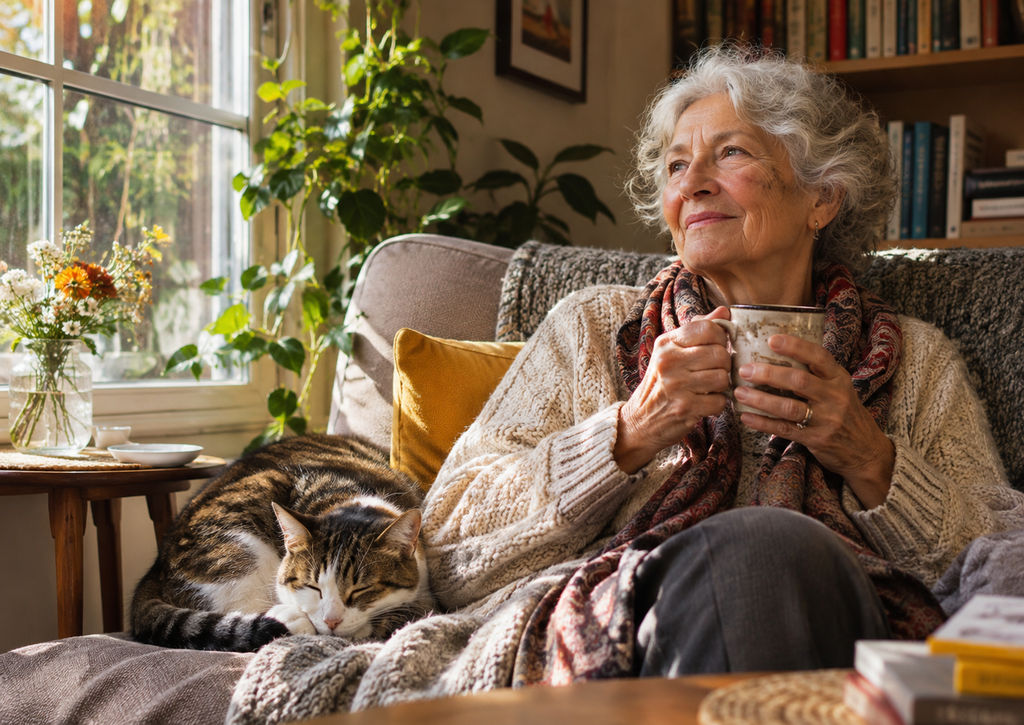
There we were, my cat and I, with a cup of coffee and nothing in particular to do. I wasn’t waiting for a telephone call or preparing for an appointment. I could simply sit, drink my coffee and enjoy the quiet.
We had started our conversation by looking for the best five minutes of the working day, but I realised that my favourite moments now could last considerably longer.
Sometimes I sit like that for half an hour.
And what have I accomplished during those thirty minutes?
Absolutely nothing.
I don’t plan these moments. There is no appointment in my diary telling me that I must sit on the sofa between half past ten and eleven o’clock. Sometimes it happens in the morning, sometimes later in the day, whenever I feel like it.
There are even days when I decide that I simply won’t do very much at all.
A different kind of freedom.
Of course, retirement doesn’t mean that all the work disappears. There is still cooking, washing, gardening and everything else that comes with looking after a home. I enjoy some of these activities, particularly when I can see a good result.
But it feels different from the work I did at the company.
There, customers expected certain standards, production had to run correctly and there were responsibilities that couldn’t simply be put aside. At home, if I want to spend some time in the garden, I can. If I would rather leave it until tomorrow, that is usually possible too.
I decide what needs doing and when.
It wasn’t immediately natural for me to have this freedom. After so many years of following a working routine, I had to become accustomed to days without the same obligations. Gradually, I discovered that I could enjoy a quiet moment without feeling that I should be doing something more useful.
That doesn’t mean every day is peaceful. I still get annoyed sometimes, and there are moments when something irritates me and I need a little time to feel better. Nor do I want to spend the rest of my life sitting on the sofa. I have people to see, places to go and things I enjoy doing.
I also still use an alarm clock when I have an appointment that I mustn’t miss.
But there is a lovely difference between setting an alarm because I have chosen to do something and setting one because I must get up for work every morning.
For more than forty years, I found satisfaction in doing my job properly. I liked seeing the finished work, knowing the pieces were correct and that everything had gone as planned.
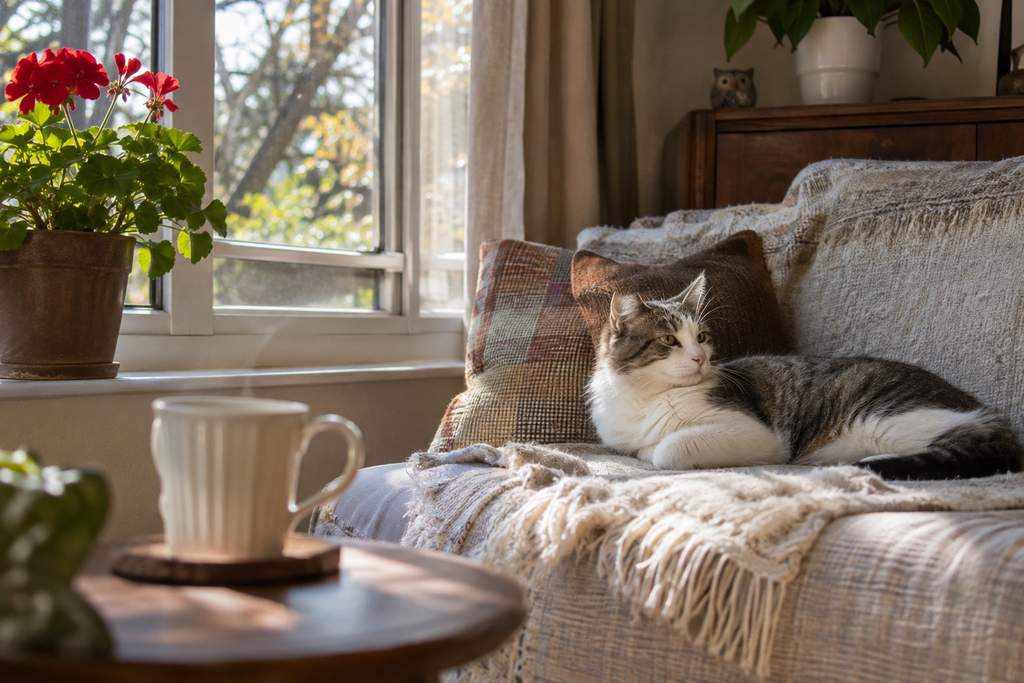
Now, sometimes, I make myself a coffee, settle down on the sofa and watch a few birds sitting on a wire. My cat might come and join me. The weather might be beautiful, or perhaps it is raining outside.
Nothing needs to happen.
And if I spend half an hour doing absolutely nothing, I don’t feel that I have wasted half an hour.
I have enjoyed it.