The Last Page of “Life”: On Man Flu, Micro-Legacies, and the Art of Planning a Kinder Tomorrow
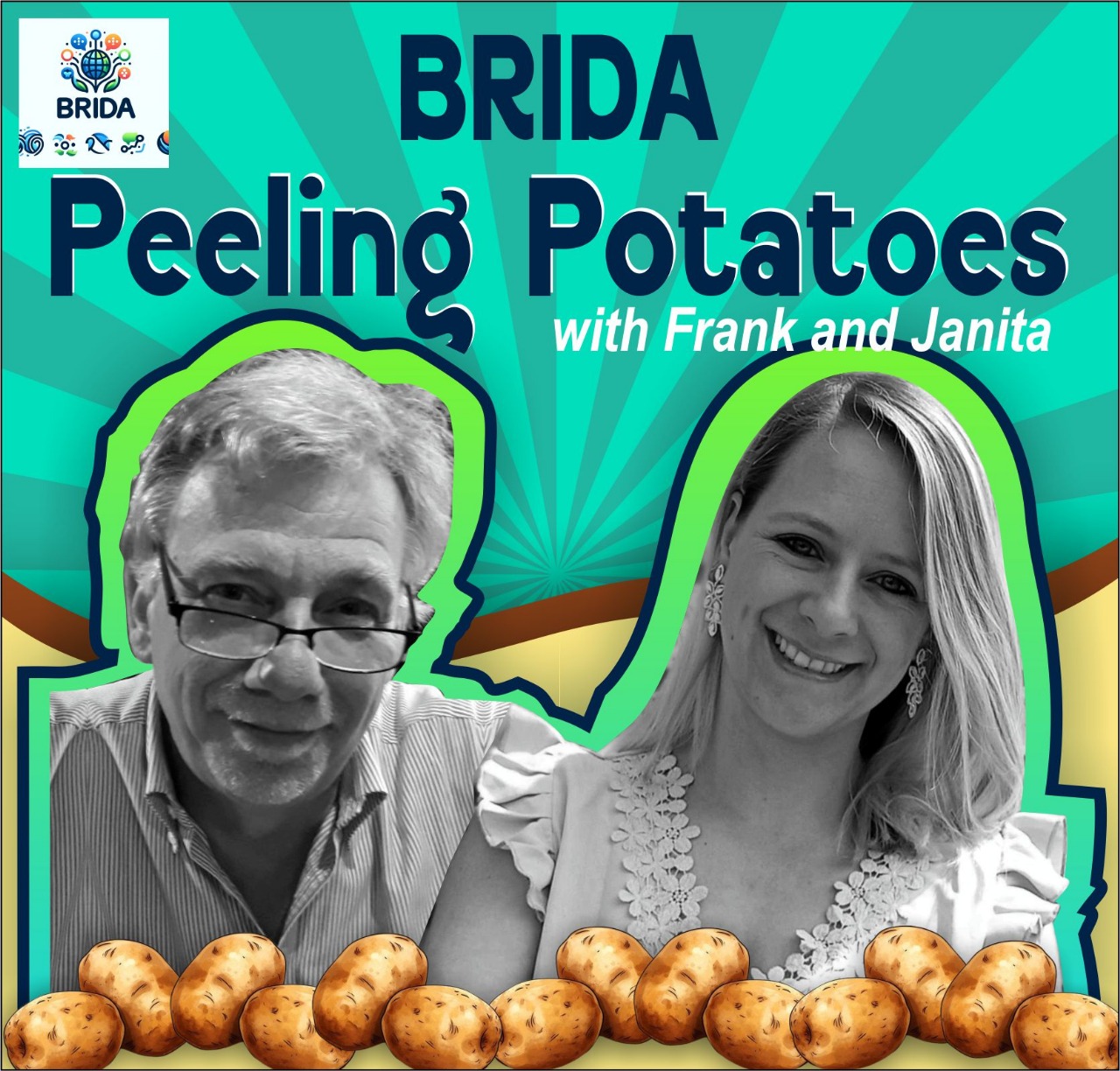
There’s a particular electricity to conversations that begin with a laugh and end with a long, reflective sigh—the kind you’d overhear at a sunlit table where coffee cools and the world briefly makes sense. This week’s Peeling Potatoes lands exactly there: a final episode in a month-long exploration of “life,” recorded across continents by Frank (in France) and Janita—“Fruitloop”—in South Africa. He opens with theatrical despair about an apocalyptic bout of “man flu.” She counters with calm science and a smile you can hear. From that playful hook, the duo wanders toward legacy and reflection: what we hope to leave behind, what people will actually remember, and the stubborn ordinariness of doing one small good thing on a vast, indifferent planet.
The Hook That Became a Question
“Technically it’s only a cold,” Frank warns, “but I’m suffering from the worst case of man flu known to humankind.” The timing is comic and perfect: the last day of their “life” theme, the first day of his melodrama, and the moment their conversation pivots from symptoms to systems—specifically, what biology has to say about why men sometimes report more intense flu symptoms than women. Fruitloop, soft-spoken and forensic, promises to dig up a study about estrogen and testosterone’s roles in pain tolerance and immune response. Frank confesses he “was never good in biology,” and the bit lands like a wink between old friends.
The scene is a familiar Pineapple tableau: two lives in motion, a table set with banter and sincerity. Someone coughs; someone cares; both keep talking. It’s so ordinary you can see yourself there—chuckling, nodding, adding a story of your own.
What can I take from this? Humor makes room for truth. Start with a smile; end with something that matters.
The Legacy We Want vs. The Legacy We Leave
And then, the real question: If people remembered you for one thing, what would you want it to be—and what do you suspect it will be?
Fruitloop answers first, choosing kindness, care, and laughter. Yet she laughs at herself too—perhaps people will remember her for planning. For liking things done a certain way. For broccoli and beans, not brownies. “I’m not bossy,” she teases, “I just have better ideas.” Frank reads the look on her face—even over audio you can feel the eyebrow raise—and parries back with affection. They’ve worked together long enough to appreciate the type: the planner who’s also a diplomat, flexible when the plan inevitably changes.
Frank admits to his own “delta”—the gap between the legacy he wants and the one people might assign him. He’d like to be remembered by a line from his mother-in-law: I did my best; more I cannot do. Yet he suspects others might recall arrogance or a certain condescending edge. He tells a story from Dublin, where his then father-in-law distilled a complicated unraveling into one perfectly Irish line: “Frank, I’ve got to tell you this. You are a bastard. Now, can I get you another drink?” It’s both the sting and the salve—accountability wrapped in hospitality.
What can I take from this? Legacy is often a negotiation between our intentions and other people’s experiences. The gap is where humility lives.
The Collective We: When Private Hopes Meet Public Good
From personal legacies, they step into the collective: Why individual effort matters, and how it scales when people act together. Fruitloop brings the proof—a local Johannesburg radio station’s “Teddy Thon,” a day-long fundraiser that asked businesses, kids, and communities to give money, services, or goods. The goal was 20 million rand; they raised 31 million. That’s loaves of bread by the hundreds of thousands, surgeries funded, houses rebuilt, pets sterilized, feeding schemes replenished—every line item a story of dignity saved and winter softened.
Frank translates the sum into euros and dollars to grasp its scale—roughly €1.5 million or $1.8 million—and marvels at generosity in an economy under strain. Kids donate pocket money. Parents challenge each other. Companies offer materials and labor. One firm offers fertilizer so subsistence plots can yield tomatoes months from now. A nation’s macroeconomics feel less abstract when you hear about hands and trucks and invoices transformed into warmth.
What can I take from this? Your contribution is a sentence in a paragraph, but paragraphs make chapters. Chapters make change.
The Schoolyard Ledger: Budgets, Sandwiches, and Reputations for Kindness
Education threads through their talk like a seam. Funding cuts have pressed public schools to depend more on fees and parent-led drives. Fruitloop catalogs the small heroics: bake sales; carnival days where you can drop a courageous teacher into a water tank; raffles; and classroom drives for holiday food parcels. She and her mother once made 40, then 60 sandwiches—bread, spread, wrapping, boxes, a night lost to crumbs and purpose—to meet the need. No one wrote their names in a ledger. No plaque. But a child ate.
There’s a bittersweet realism in her voice when she says “it’s hard work,” followed by that unflappable organizer’s optimism: stock will arrive; the stationery aisle will refill; parents will pace their purchases; December will be a little chaotic, but manageable. Planning is her love language—and her legacy follows from it, whether or not people notice when her Plan B quietly turns a power outage into just another ordinary evening.
What can I take from this? A legacy of care is often unspectacular. Sometimes it’s just sandwiches done well, on time, for someone who needed one.
The Kruger Blueprint: If Your Legacy Were a Building
Asked to imagine a structure that embodies her legacy, Fruitloop chooses the bush homes of Marloth Park near Kruger National Park—beautiful, practical, resilient. Solar panels hum. Gas keeps the stove and geyser honest. When the transformer overheats in holiday season, the fridge still whispers. The lights stay on. No one notices the crisis, because someone anticipated it.
Frank grins at the metaphor. It is her: a thoughtful façade, a well-structured interior, backups layered beneath grace. He jokes that in her world the broom and dustpan hide a mountain of dust in the corner—Plan D compensating for life’s Plan Chaos. It’s a teasing way of saying: legacies are built in the foundations long before anyone steps inside.
What can I take from this? Build a life that stays kind when the grid goes down.
The Cosmic Speck—and the Civic Yes
They move outward again, to the size of things. What does a legacy matter when we are, as Frank recalls from a recent lunch, “eight billion nano-micro dust particles on a tiny speck in an unimaginably big universe”? Fruitloop answers with a cyclist’s logic: meaning is local, and participation is joy. She recalls the exhilaration of the 94.7 cycle race through Johannesburg—Nelson Mandela Bridge, Park Station, a temporarily silent freeway filled with breath and spokes. Strangers hand out water, and sometimes shots. Hoses arc; heat becomes celebration. “You’re just a tiny speck in 10,000 riders,” she says, “but you do your bit.” Awareness is raised, funds are collected, and someone else’s day gets measurably better.
Frank extends the lens to voting: the once-every-few-years act that can feel inconsequential—until we remember that a collective is merely a heap of individuals choosing to show up. He hopes that those in power will listen, that respect across disagreement will remain the substructure for a society that moves forward. The two of them return, again and again, to a human-scale truth: it’s not whether you change the world; it’s whether you shoulder your corner of it with steadiness and grace.
What can I take from this? The universe is vast; significance is intimate. Show up where your feet are.
The Hilarious Tenderness of Being Mortal
We return—because life always does—to bodies and their unruly timing. The man flu. The semantics of “cold” versus “flu.” The annual nudge for a flu jab that Frank receives; the O-negative blood type that makes Fruitloop a frequent flyer in donation queues (“they want your blood,” she deadpans). It’s all a reminder that our legacies are carried around in very ordinary vessels: noses that run; arms that bruise after a needle; mothers and mothers-in-law who gift us phrases that outlive them.
In that ordinariness sits the episode’s deeper invitation: stop outsourcing your legacy to some future grand gesture. None of us knows which sentence or sandwich will outlast us. If there’s a consolation in being cosmic dust, it’s that dust is everywhere. It settles on what matters.
What can I take from this? Living well beats being remembered perfectly. A good day multiplies more reliably than a perfect reputation.
You Can Choose the Tone of Your Story
What do we actually want after listening to them? Not a five-step plan for immortality; not a spreadsheet (though Fruitloop probably has one). What we want is permission to design small, durable rituals that accrue into something we’re proud of: steady kindness, a practiced flexibility, the habit of giving a little more than we kept. We want to become the sort of neighbor who quietly offers fertilizer when a garden goes fallow, who leaves the lights on when others are in the dark.
We also want to be braver about the stories we tell ourselves—fewer self-protective jokes, more honest sentences. I did my best; more I cannot do. It’s a phrase that can be used to justify stagnation, yes. But in Frank’s telling it’s an examination: did I? Can I do a little better tomorrow? If not, could I at least do no harm? If so, whose name belongs on my calendar next?
What can I take from this? Your last page is written one day at a time. Don’t try to skip to the ending; make today rereadable.
Create Your Own Summer
The episode ends with a shuffle of plans for next month’s theme—“skills”—and a promise to be back next Friday, man flu permitting. It’s wonderfully unglamorous: the practiced cadence of two people who’ve learned that life rarely goes to plan and is generally better when you plan anyway.
So here’s the quiet assignment they’ve smuggled into your afternoon: Identify your current season of life—and choose the weather you’ll bring to it. If it’s winter, who needs your extra blanket? If it’s spring, which seed will you plant? If it’s summer, which table needs another chair? And if it’s autumn, what will you harvest—and share?
Frank likes to sign off with a reminder to “create our own summer”—to generate inner warmth and share it, even when the external forecast is fickle. Do the thing that makes someone else’s day easier. Show up, be funny, give blood, plan the fundraiser, buy the stationery before the shelves empty, and yes—make the sandwiches. You’re not conquering the universe. You’re holding a corner of it. That’s enough.
What can I take from this? Don’t wait for better weather. Be it.
Your turn: What season of life are you in—and what one small act will you choose today to make its weather kinder?