The Holiday Before the Holiday.
By Manfred, Germany.
For Manfred, travelling starts long before the caravan moves. Planning is part of the pleasure—but what keeps pulling him back is the possibility that somewhere new will still surprise him.
The first seeds of my next holiday are usually sown while I am still on the current one.
I begin asking myself questions. Do I like it here? Would I come back? Have I already seen everything I wanted to see? What worked, and what would I do differently next time?
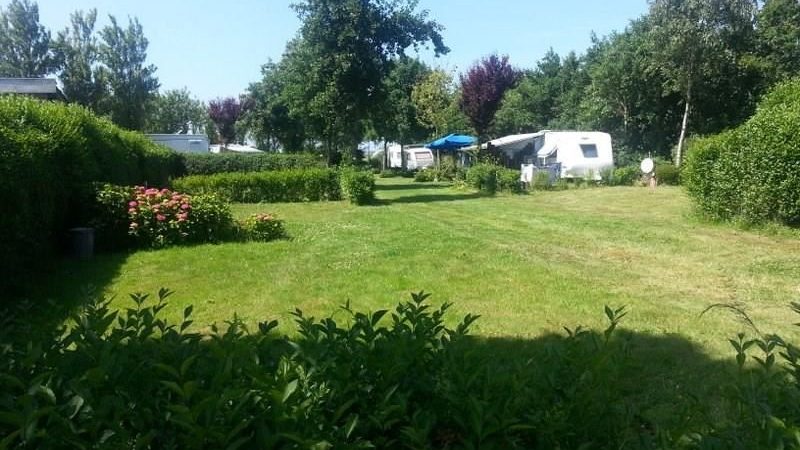
During our stay in the northern Netherlands, for example, I liked the area very much. The campsite was good, directly next to the dyke and only about 600 metres from the beach. My wife liked it too. The weather was changeable, but most of our three weeks were actually glorious.
And already, somewhere in my head, the next holiday had begun.
Pleasure in advance.
The first step in planning is always a kind of summary of the last trip. That becomes the basis for the next one.
Then I start looking.
I might open Google Maps and search for other mini campsites in Holland. The coast attracts me. I am not a keen swimmer, but I like walking on the beach, enjoying the peace and quiet. Then I want to know what else is nearby. Are there historical sites? Interesting towns? Places we could explore by bicycle or on foot?
For me, planning is pleasure in advance. It prepares you. It puts you into a positive mindset and makes the holiday itself even better.
And I have my tools.
I think Google Street View is one of the best things since sliced bread. I combine it with Google Maps and start embedding myself in the potential area before we have even left home. With Google Earth, you can sometimes go back in time and see how a place has developed. Croatia is a good example because there is still so much building going on.
Of course, there is a danger in knowing too much before you arrive. But I have not found that planning removes the surprises.
There are still plenty of those.
Looking for new impressions.
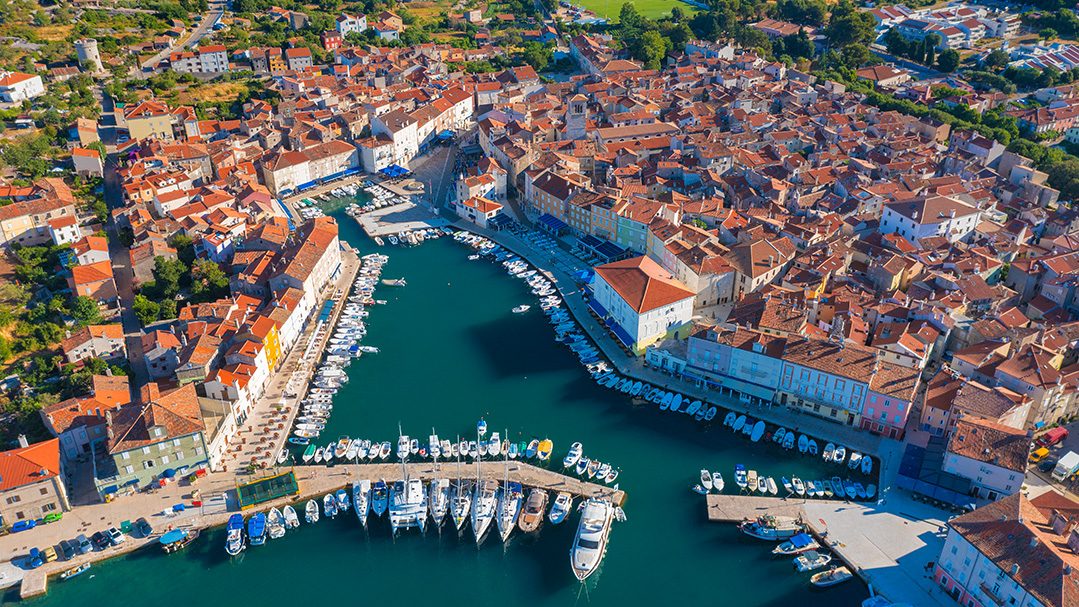
One place that surprised me positively was Cres, on the island of Cres in Croatia.
What I liked was that it had remained relatively unspoiled. It had not been transformed completely into a tourist hotspot. There was the harbour and the local taverns, but much of the tourist rubbish had been avoided.
That matters to me.
There are places where development has gone too far for my taste. Parts of the Spanish coast are the opposite of what I am looking for: high-rise buildings directly by the beach, rows of shops selling the same tourist things. The Costa del Sol and Costa Brava are places I would rather avoid. Parts of the south of France feel borderline to me too.
I am much more attracted to somewhere that still feels down to earth.
Perhaps that also explains why I keep looking for somewhere new. My wife is more attracted to the familiar. I am the one looking for new impressions. If I already suspect that I am simply going to see something I know, my curiosity starts to disappear.
There are still so many places in Europe we have not explored. For many years our focus was on the south. The east and the north still leave plenty open.
I do not need a place to be spectacular. My expectations are quite realistic. The framework should be right: a good campsite, reasonable value for money, somewhere that feels comfortable.
Once that works, I am open to what comes next.
Then we can cycle through the area, walk around, discover something and simply have the feeling: this is nice here.
Planning everything—and planning nothing.
Sometimes I plan too much.
For a cycling trip to Texel, I planned practically every kilometre. That was definitely overplanning.
On another trip, our visit to the IJsselmeer and Hoorn was hardly prepared at all. We simply drove there, and it was nice.
We had also planned to visit Amsterdam, but the weather and the time we had available eventually removed it from the list. That was not tragic. Amsterdam will still be there another day.
That mixture suits me. Planning gives me something to look forward to, but a holiday does not collapse because something changes.
And no matter how carefully I prepare, the journey still produces things I could never have planned.
My holiday really starts the moment I get into the car and begin driving.
On one journey, we stopped overnight at a lay-by. We were the first caravan there. Then, during the evening, another caravan arrived. Then another. And another.
Soon there was a little community.
People started talking.
That is one of the surprises of camping. You arrive at a campsite and you do not know who your neighbours will be. We enjoy talking to other people. It does not mean that everybody has to become friends. It is much simpler than that.
It is just people being human together.
Earlier this year in Croatia, we met some people in a pizzeria and discovered that they were staying near us on the campsite. Camping has this strange ability to bring together people from completely different professions and backgrounds.
The common denominator is very practical.
Everybody has to get fresh water. Everybody has to get rid of the waste water.
And everybody has dirty dishes.
The washing-up area is one of the important social places on a campsite. In a way, it replaces going to the pub. You wash your plates, somebody starts talking, and before long you are exchanging tips about where to go and what to see.
Clean dishes, new information.
The freedom to do very little.
People often talk about the freedom of travelling with a caravan or mobile home. For me, that freedom is actually very simple.
You get up. You make your coffee. You sit outside and stare at the scenery.
You can sit there in your pyjamas or a T-shirt. You decide what you want to do, when you want to do it and how you want to do it. Naturally there are rules on a campsite, but most of them are simply common sense.
The weather can interfere with this. Caravan life is still very much an outdoor activity. We experienced that once in Austria when rain kept us inside the caravan. After a while, the mood begins to change. There is only so much indoor caravan life you want.
But even after many years of travelling this way, the surprises have not disappeared.
A new campsite still has that first moment: Is it nice here? Do I feel comfortable?
The ground might be grass, as it was in Holland. In Croatia it might be gravel or even concrete. You look at your pitch, the people around you, the immediate surroundings, and slowly a place becomes your place for a few days or weeks.
That is probably part of what keeps pulling me back.
I can prepare. I can study the maps. I can inspect roads on Street View and look at satellite images. I can plan every kilometre of a cycling route.
But I still do not know who will pull into the pitch next door.
I do not know who I will meet while washing the dishes.
And there are still many places on the map where I have never been.
That is enough reason to start looking again.