The First Coffee: How a 5:20 Ritual Makes a Life Feel Easy
On a sunny weekday morning between Alsace and northern Germany, two rectangles of light open on the screen. Frank smiles the way broadcasters do when they know a good story is coming; Ralf—cheerful, precise, already caffeinated—waves hello. The topic is everyday life skills, the sort we learn not from textbooks but from kitchens: how to make mornings gentle, budgets honest, houses liveable, workdays humane. And, as it turns out, how a single cup of coffee at 5:20 a.m. can quiet the noise of a complicated world.
The Ritual That Holds the Day
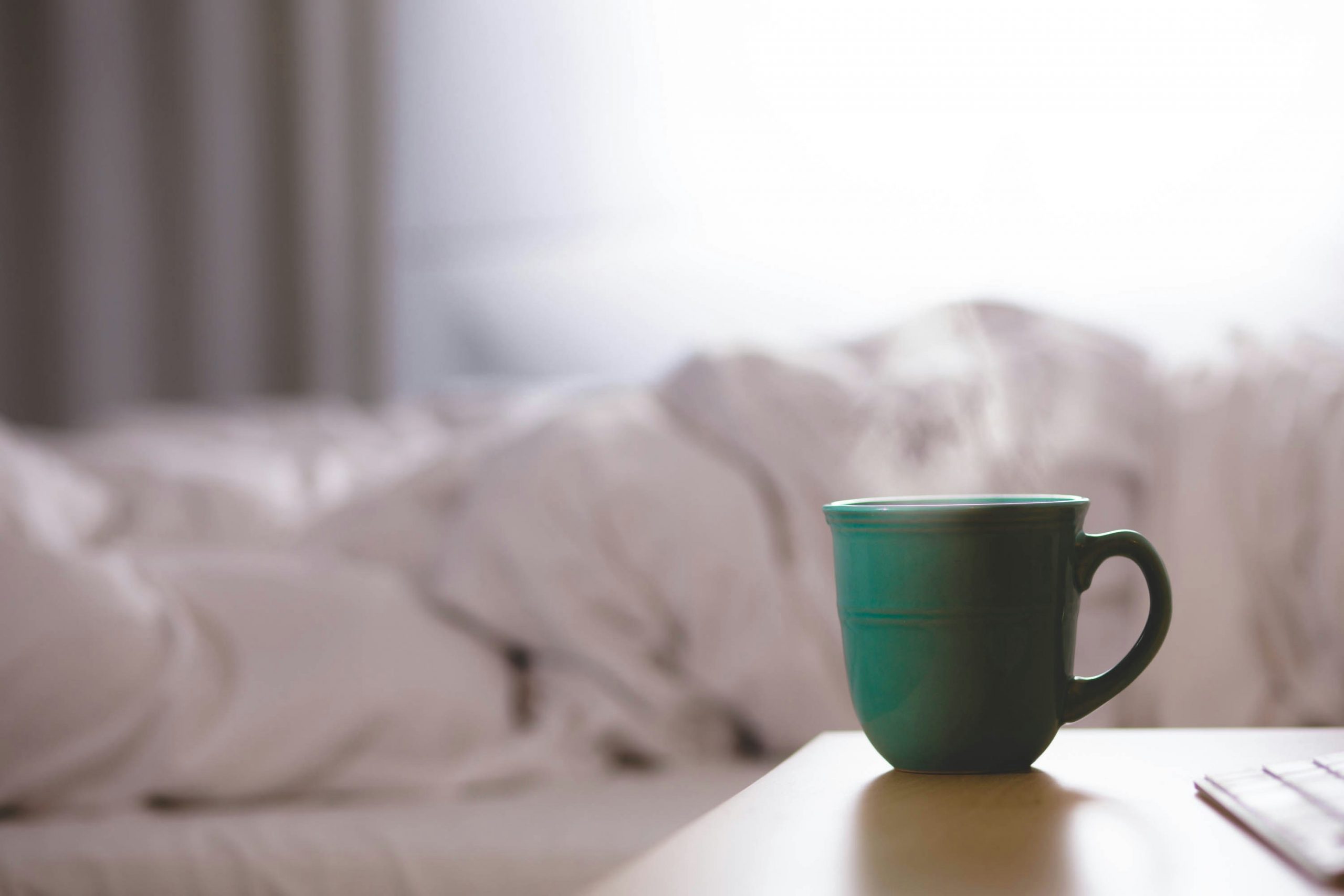
“It’s the morning mug,” Ralf says without hesitation. He wakes at 5:20, pads across the tiles, and makes coffee for his wife. They drink it together before she leaves, a small ceremony with outsized gravity. On weekends, the scene relocates to the warmth of their bed; the only question is who makes it first. No breakfast trays, no crumbs—“Only the coffee.”
There’s something of a philosopher in the way he describes it: the first act of the day is a gift, given without fanfare. It’s domestic choreography—boiler warming, beans ground, cups set—yet it reads like devotion. The body wakes. So does the marriage.
Takeaway: What is the smallest act that reliably resets your morning—brew, breath, or brief touch—and why isn’t it protected like a meeting?
The Man Who Organizes Joy
Ralf is the kind of person who has a plan for joy. He laughs easily, often, almost musically, but what animates him is structure. He’s a “sunny boy” by nature—“The sun is shining,” he says, most days—and it’s hard to imagine him sullen. He sings in the kitchen (Fleetwood Mac’s “Tusk,” drums played on the work surface), sometimes dances, socks sliding if the floor allows. He tells a story about his first marriage, a comic scene of a man in only socks gliding past a wary spouse; now the tiles are rougher, and he wears clothes, but the mood remains: start the day with delight.
Yet joy here isn’t chaos. His kitchen is a kingdom of order: knives aligned on double magnet strips, handles down for safety and feel; every tool with its place; the dishwasher a tiny geometry problem he refuses to lose. “I’m the best packer,” he says, half-mocking, fully serious. He’s particular, yes—but what he’s really building is frictionless creative space. Because the less he has to hunt for a knife or a spice, the more attention he has for the art of dinner.
Takeaway: Organization isn’t about control—it’s about conserving attention for what you actually love.
Coffee, Cooking, and the Courage to Improvise
If the morning coffee is liturgy, the coffee machine is lore. Ralf keeps an old Zicco percolator (from before the brand joined Philips), serviced by a friend near Munich. He has one in action, one on standby, one in the attic. Spare parts are dwindling, so he and his wife have been comparison-shopping for months, watching YouTube videos, inspecting showroom models. “We don’t find the machine for us,” he says—not yet. It’s charming, but it’s also method: they’re not buying a device; they’re protecting a habit that frames their marriage.
The beans are a house blend—one kilo crema, one kilo dark Arabian espresso, mixed and sealed in aluminum for freshness, ground just before brewing. When he comes home in late afternoon, they share another cup—if he’s not on the road.
Cooking is similarly exacting and free. Ralf loves routines at work, but not in the kitchen. A recipe is a sketch, not a contract. Last night’s soup: Muscat pumpkin in olive oil, a thumb of ginger, half an apple, lemon zest. “Very, very fantastic,” his wife texted later, happy to reheat it while he was away on business. Frank responds with his own sauce: shallots, red wine, stock, roasted garlic—the roasted garlic—and herbs; he ate it from a ramekin like soup. The two cooks grin at each other like conspirators. They know the trick: mastery of fundamentals permits improvisation.
Takeaway: Learn the few key moves—heat management, seasoning, acid—and you earn the right to play. The skill is the freedom.
The Workday — Efficiency as a Kindness to Future You
Ask where order is hardest, and Ralf doesn’t hesitate: work time. He balances weeks on the road with days at home, half and half on average, calling distributors who might want him on Teams rather than in person, re-routing when schedules shift. He maps a tour in his head, calls, adjusts, tries again. The kitchen obeys; logistics negotiate.
And yet he’s not bitter about any of it. Routine helps. He travels by regions, knowing there will always be human variety inside a fixed frame: new conversations, old roads. Efficiency isn’t about squeezing humanity into a spreadsheet; it’s about making space for the part that matters—people.
Takeaway: Routine is the skeleton; relationship is the flesh. Build the first to protect the second.
Home Economics — The Politics of the Dishwasher (and Other Divisions of Labour)
Marriages are made or unmade in the dishwasher. Ralf laughs about it, but he doesn’t bend: “This is my kitchen.” His wife can do many things beautifully—laundry foremost; she is meticulous with colours and fabrics—yet neither of them is shy about their limits. He won’t clean toilets (“the army ruined that for me”) or garden (“Pour concrete; paint it green!” he jokes). She can’t be bothered to pack the dishwasher the way he likes. She hangs laundry with deliberation; he tosses socks to the wind. It works because the boundaries are clear, the gratitude evident, the humour alive.
Takeaway: Domestic peace is a competence ecosystem. Name your strengths, admit your aversions, then trade generously.
Education, Dreams, and the Things You Learn Too Late
Frank asks what life skill every child should learn. Ralf, older than many in their community, answers across decades: Get the best education you can. Not for prestige but for options. He loved aircraft, served 12 years in the army keeping planes alive, and in another timeline he imagines the Abitur, college, flying. He doesn’t wallow—his life is good, his wife beloved, his work meaningful—but for the next generation he is clear: study, then dream bravely, and consider a social or service year for discipline and teamwork. Not everyone needs uniform; everyone needs structure, purpose, and team.
Takeaway: Education is not about the job you’ll hold; it’s about the doors you’ll recognize when you see them.
The Philosophy of Balance
Near the end, Frank reflects the obvious back to him: “You live in balance.” Ralf nods. He organizes what can be organized—kitchen, gear, routes—and accepts what must be negotiated—traffic, schedules, the stubborn laws of time. He designs his mornings for warmth. He leaves space at night for invention. He resists the trap of believing that control equals happiness. Instead he cultivates the conditions in which happiness tends to appear: a tidy counter, a sharp knife, the right song, the right cup, the right person across the table.
And the result? He says it simply: “I’m happy.”
Takeaway: Balance isn’t the absence of chaos; it’s the presence of rituals that outvote it.
Your Turn to Brew the Day
If cooking were a sport, Ralf jokes, he’d call the championship “High-End Barbecue.” He says it with the smile of a man who owns eleven grills and still fantasizes about an outdoor kitchen that looks like a spaceship. He loves gear, but he knows what gear is for: to make room for the moments you don’t want to miss—morning coffee with your person, a midday call that turns into a laugh, a late-night soup you can’t quite recreate.
So here’s the quiet challenge his life offers:
- Choose a single small ritual and give it the dignity of a meeting.
- Invest in just enough order that creativity feels safe.
- Decide what you won’t do, and trade fairly with someone who loves doing it.
- Learn one new skill (culinary or otherwise) well enough to improvise.
The point isn’t to engineer a perfect life. It’s to brew your own morning sun—on weekdays at 5:20, on weekends under the duvet—and let that warmth radiate outward. Frank signs off with a grin; Ralf waves, probably humming. Another day begins, and the first cup is already on its way.