The Calm Button: Survival Lessons from the Swimming Club
There’s a moment, somewhere between a caravan breaking down on a country road and the electricity disappearing in the middle of cooking dinner, when your heart wants to sprint and your brain wants to shut down. That exact moment is where our “swimming club” found itself—not in a forest, not in the ocean, but in a video call between South Africa and Germany, coffee cups in hand, talking about how not to lose your head when life tilts sideways.
On screen:
Janita, also known as Fruitloop, beaming in from South Africa.
Martin, thoughtful and wry, somewhere in Germany.
Manfred, warm, self-deprecating, and honest, also in Germany.
They usually meet as part of a swimming club, but on this particular day, no one was counting laps. Instead, they were quietly circling a deeper pool: what does it really mean to survive—out there and in here?
From Lions and Snakes to Load Shedding
The conversation begins playfully.
“What is survival skills?” Janita asks.
Manfred’s first answer is delightfully simple: “For example, run away… from a snake or a lion.”
Pure instinct. Legs before logic.
That familiar, almost childlike picture of survival—wild animals, dark forests, fire started with stones—is where we all begin. Martin knows how to start a fire in theory, he admits, but not in practice. Manfred has never tried rubbing stones together; it lives in his imagination, filed next to adventure movies and half-remembered scout stories.
But Janita has brought them together for something more subtle:
“Survival skills are not just about running away, but also to be able to stay calm.”
The words land softly but decisively. In the wilderness you need shelter, clean water, warmth, protection. In modern life, you still need all of that—only now it looks like electricity, safe roads, functioning internet, emergency contacts, and enough emotional bandwidth not to scream at the Wi-Fi router.
Modern Survival – Power Cuts, Traffic and Addiction
As the call unfolds, survival quietly moves from wild forests into ordinary living rooms.
Janita talks about South Africa’s power cuts—electricity flicking off mid-dinner, ovens dying halfway through a meal, and the need to improvise in the dark. No campfire, just a cold stove and hungry family.
“So I had to think fast,” she says. “How am I going to get dinner ready now?”
Martin nods with his own example: a day at work when the internet went down.
He didn’t panic. Instead, he reshuffled his tasks and focused on everything that didn’t require the internet that day. It sounds small, but that’s the point: modern survival is a thousand tiny adjustments, not one dramatic leap over a ravine.
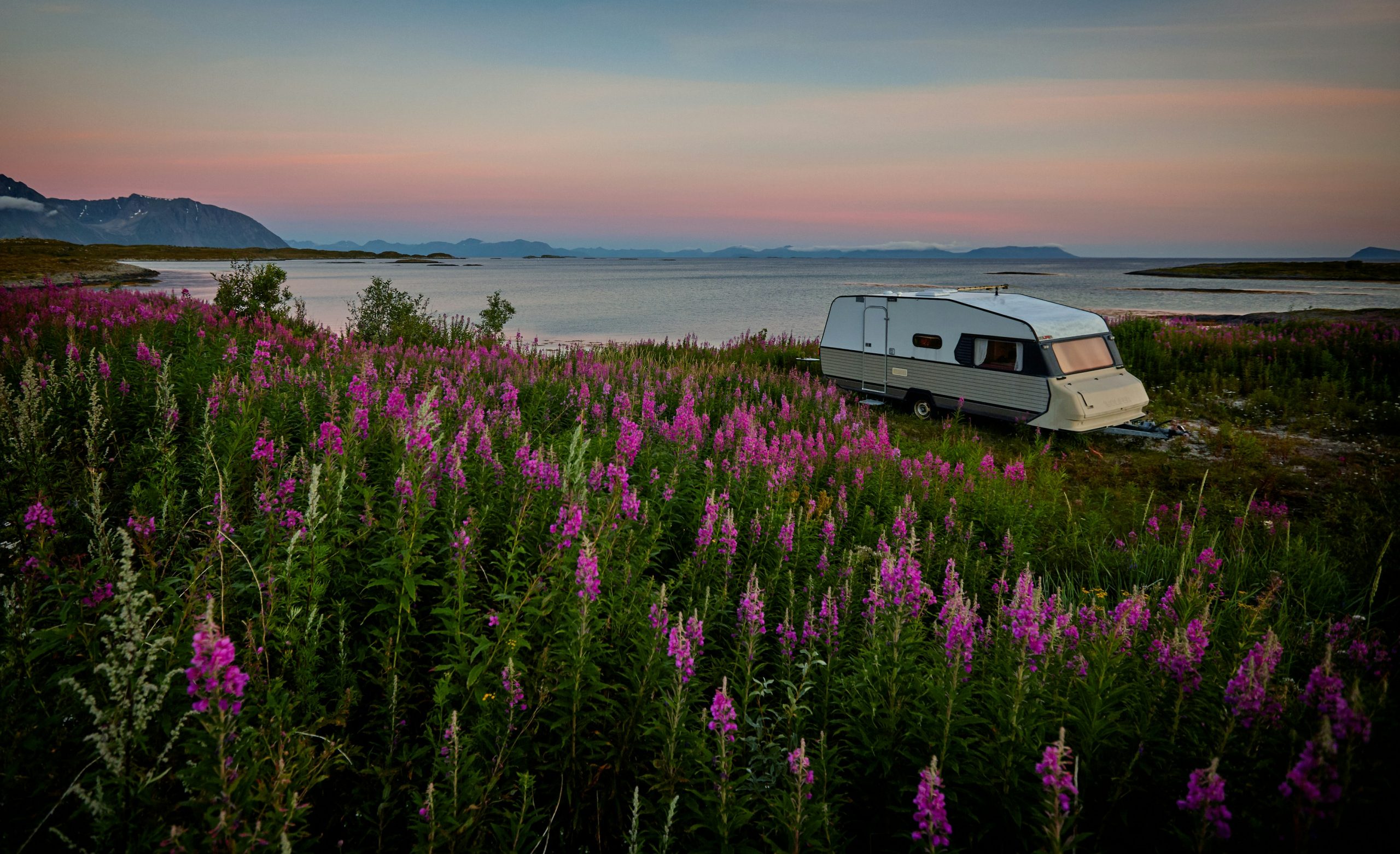
Manfred’s story is more dramatic. Driving with a caravan, the alternator fails. They’re in the middle of nowhere. No quick fix, no magical mechanic, just a tow truck, a rental car, and the slow, stubborn work of getting home in one piece. At first, it’s all panic, racing thoughts, and “What can I do? What is the next step?” The familiar mental spiral.
Later, he sees it differently:
“It was a big adventure… but panic is not good. Panic does not control the mind.”
Janita gently widens the lens. Survival, she reminds them, is not just about danger; it’s about habits. Smoking. Sugar. Social media. Gambling. All the modern “lions” we invite into our own lives.
Manfred acknowledges his addiction openly—20 to 25 cigarettes a day, on average. He knows it’s a problem. Her grandfather, Janita shares, smoked 30 cigarettes a day and now lives with the consequences in his heart and lungs.
These aren’t moral lectures; they’re human confessions. Survival isn’t just about not dying in a forest. It’s about not slowly burning yourself out in your own daily rituals.
Calmness as the Ultimate Survival Skill
The deeper they go, the clearer the theme becomes: calm thinking is the true survival superpower.
Martin puts it simply:
“It’s the most difficult, but the most important skill in this situation… every step to solve the problem depends on that.”
You can almost feel the three of them nodding in different countries.
When the car breaks, when the power cuts out, when the Wi-Fi dies during your six-year-old’s cartoon time—panic makes you noisy, but not effective. Calm gives you options.
Janita describes staying composed on the roadside, calling the tow truck, finding temporary accommodation, recalculating routes. Not heroic, just steady. Not fearless, but functional.
She frames survival as a mental discipline:
- Calm helps you plan.
- Calm helps you choose the safest action.
- Calm keeps you from wasting your energy on anxiety instead of solutions.
And then they step into something even more tender: bravery and fear.
Are people born brave, or do they learn it?
Martin believes some people are naturally braver, but much is learned through experience. He talks about his sister, who went through a long illness and many surgeries. Over time, her fear of doctors and hospitals transformed into a kind of quiet courage. What once felt unbearable became manageable—not because the situation became easier, but because she changed.
Manfred sees bravery as partly inherited from parents, partly shaped by life.
Janita adds her own story: she isn’t afraid of dentists because she grew up with braces, constant appointments, and discomfort that became normal. Her sister, who had a terrible infection after a tooth extraction, is terrified of dentists.
Even her son’s fear of the dark, she thinks, was learned from the stories and cartoons he consumes—proof of how our minds can be trained to fear, and just as powerfully, to calm down.
Everyday Training: Micro-Survivals and Tiny Choices
“Every situation where we get in stress,” Martin says, “is a good way to train it… to stay calm and focus.”
And suddenly you realise: your life is already a survival course. Just not the dramatic, Instagram version.
Manfred shares a moment from the previous day: driving home, he passes a car that has crashed because of high speed. In that instant, he quietly re-commits to driving more slowly—another subtle act of survival thinking.
Janita connects the dots further:
- Eating and drinking are survival acts.
- Deciding not to run in the rain to avoid getting sick is survival thinking.
- Stepping away from someone coughing is survival thinking.
- Checking the road before crossing? Survival thinking.
We like to frame “survival skills” as exotic, something you learn on a weekend bushcraft course. But they argue that survival is woven into the way you make breakfast, answer emails, charge your phone, and go to bed on time (or not).
And then they touch something quietly profound: the lone calm person as leader.
If the three of them were in a broken-down car together, they laugh, both Martin and Manfred would panic and light cigarettes, while Janita would be the one calmly sipping coffee, calling the tow service, and handing out snacks from the caravan.
Her calm would make her the de facto leader—not because she is louder or stronger, but because she is steady.
“If there’s one calm person in a group,” she says, “it can help to keep everyone calm.”
Calm is contagious. Anxiety is too. In a storm, we all silently scan the room for the person whose hands aren’t shaking.
The Fruit-Loopy Side of Survival
This is still the swimming club, after all. At some point, the conversation has to go delightfully off the rails. Enter: the “fruitloopy” questions.
You are stuck in a jungle and a llama offers you advice. What does it say?
Martin imagines a llama with very German practicality:
“If you don’t want to be stuck in the jungle, don’t go to the jungle.”
Later, Manfred adds: don’t come with your caravan either—the road is terrible and miles away. That’s one way to survive: edit your itinerary.
If staying calm were a snack, Martin decides it would be Lindt Lindor chocolates—those silky Swiss chocolate balls that practically insist you slow down and savour them. You don’t eat a Lindor in a hurry. It melts. It lingers. It whispers, breathe.
A silly question becomes a subtle neurological trick: anchor calmness to a sensory experience. Taste. Texture. The feeling of letting something dissolve instead of biting down. An edible metaphor for patience.
If a silly object could magically help you survive, Martin wants a magic fruit that calms him instantly—medicine wrapped in sweetness. Manfred wants a Harry Potter wand, something that can do everything: fix the car, solve problems, maybe even keep him from needing so many cigarettes.
Janita imagines talking running shoes with GPS, a pair that yells, “Run now! Turn left! Avoid the lion! Avoid the bad decision!” Survival, with step-by-step navigation.
When the raccoon appears—a little black-and-white scavenger—it becomes their guide to finding food. In German, they’re nicknamed “washer” because they wash their food; in life, they are specialists in sniffing out leftovers. Who wouldn’t want a raccoon on their side when the camp pantry is empty?
And then comes the final, shimmering image:
A calm button, shaped like a cupcake, hidden somewhere in the wilderness.
What happens if you press it?
For Martin, it’s a voice baked into icing that gently reminds you to breathe and hands you a box full of Lindor chocolates. For Manfred, it’s cigarettes and coffee in a big box (no alcohol, he insists—he doesn’t drink), a little survival party that makes him smile and relax. For Janita, it’s music—the song “The Trick Is to Keep Breathing” by Garbage, playing softly in the background, the title alone a survival mantra.
Press the button: chocolate, coffee, music, laughter, a pause. Calm isn’t abstract anymore; it’s sensory, tangible, almost… clickable.
Finding Your Own Calm Season
By the end of their meeting, no one has built a shelter. No one has rubbed stones together until they sparked. No one has fought a lion, unless you count nicotine or fear of dentists.
What they have done is far more universal: they’ve mapped the inner terrain of survival—panic, humour, habit, bravery, and the radical act of staying calm when everything urges you to run.
The swimming club, gathered on screen instead of in a pool, has done what so many of us forget to do: practice calm in conversation before life demands it in crisis.
They remind us that:
- Every power cut is a chance to improvise instead of implode.
- Every traffic scare is a reminder to slow down and live.
- Every doctor’s appointment, every fearful child, every breakdown—mechanical or emotional—is training.
- Every joke, every silly question, every llama, raccoon, and cupcake-button is a way to soften fear so we can look at it without flinching.
A dear friend of the Pineapple, Frank, often says we can’t always choose the weather of our lives, but we can learn to “create our own summer”—that inner warmth that stays even when the sky turns grey.
Today, Martin, Manfred, and Janita didn’t just talk about survival. They rehearsed their own summers: in chocolate and coffee, in honesty about addiction, in memories of lost sisters and nervous sons, in the quiet courage to say, “I panic. I want to learn to be calm.”
So here’s your gentle invitation:
When your next “survival moment” comes—whether it’s a broken car, a failed Wi-Fi connection, a hard phone call, or just a day that feels heavier than it should—ask yourself:
- Where is my calm button?
- Who is my calm person?
- What season am I living in right now—and what would it look like to create a little summer inside this storm?
You might not be able to control the lions, the load shedding, or the raccoons.
But you can choose how you breathe.
And sometimes, that’s the most powerful survival skill of all.