

Sunday, the Sideboard, and the Aladdin’s Cave
Sunday had not begun well.
Guinea Pig had slept badly. The reasons were not entirely clear, though several candidates were circulating in the background: work, the persistent voice of Doodle Horse somewhere in the back of his head, and the growing suspicion that his internal batteries had been operating on reserve for longer than was advisable.
Still, fatigue has its uses. It slows the day down. And when the day slows down, one begins to notice things.
Lying there in that peculiar region between sleep and consciousness, he remembered the brief exchange between Mother and Doodle Horse through him, concerning Sunday rest and Sunday tasks. It had been one of those intereactions in which a simple domestic question expands until it begins to resemble a philosophical problem.
Should Sunday be protected?
Or was Sunday merely the day on which the rest of the week presented its bill?
The cats, he reflected, had long ago solved the matter.
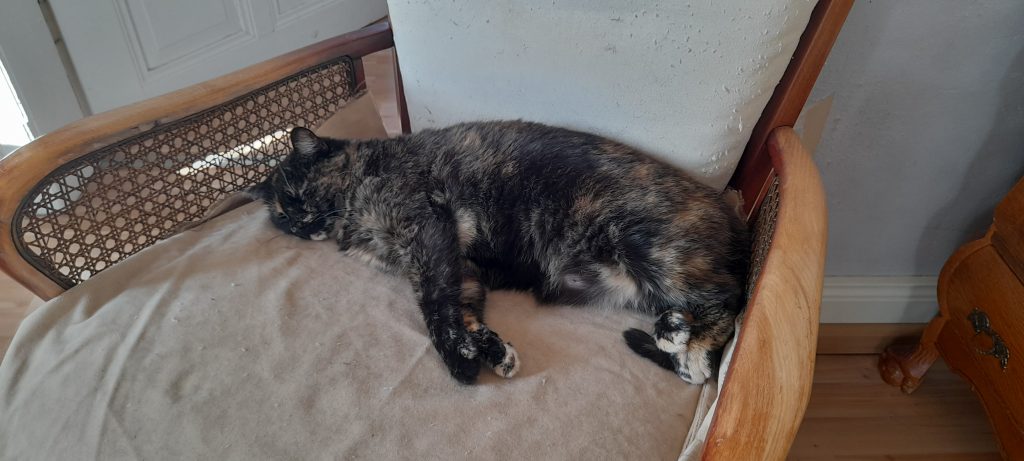
For them every day was Sunday.
They slept, stretched, observed the world from comfortable vantage points, and intervened in household affairs only when food was involved. One can learn a great deal from cats, provided one pays attention. They do not optimise their time.
They inhabit it.
Unfortunately, humans have invented schedules.
Once out of the shower, he tackled the ironing.
There were five shirts, two pairs of jeans, three napkins, and a small colony of tea towels. Thirty minutes later everything was done. The shirts were hanging in the wardrobe, and the napkins and tea towels were returned to the wooden sideboard in the kitchen.
Ironing usually belonged to his wife. She had devised her own system, and whatever mysteries it contained, it worked. He always had a steady supply of ironed clothes.
Gratitude, he reflected, might perhaps be expressed more often in such matters. Then again, he also knew that ironing gave her pleasure, and one should be careful not to interfere with the rituals by which other people maintain their sense of order.
When the shapelessness of the morning became unbearable, he wrote his status report for Doodle Horse.
It took two hours.
There was a great deal to process. Work, systems, thoughts, unfinished plans. When he finished, he collapsed onto the couch and fell asleep again, though not in any convincing way. The sleep was broken and restless. Occasionally he woke, reread what he had written, and searched for the ignition that might start the day properly.
It remained elusive.
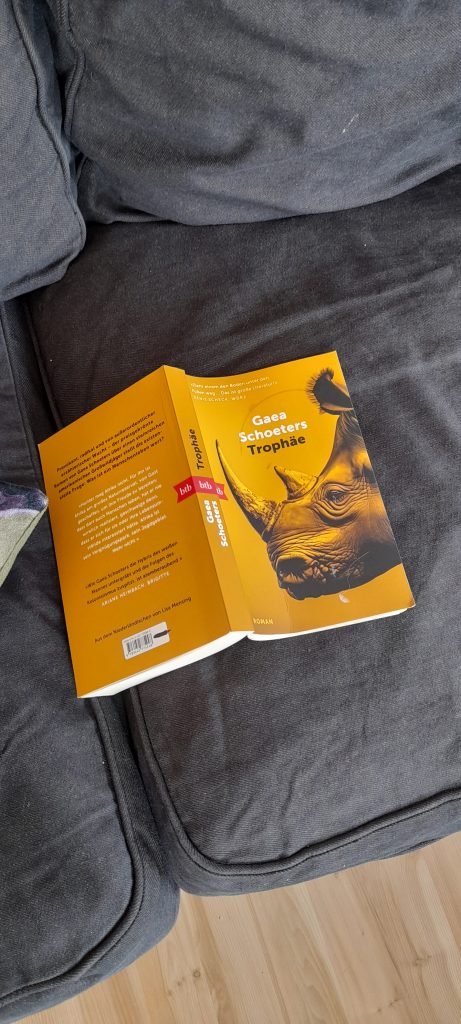
Still, there are moments when a man proceeds not because he feels ready, but because standing still becomes more uncomfortable than moving.
Today was kitchen day.
The kitchen is the heart of the house, though some prefer the more mechanical phrase “engine room.” Either way, it had to be dealt with. The plan did not say when one should start. It merely suggested that one probably should.
He began with lunch.
Potatoes, kohlrabi, carrots, and gochujang chilli paste went into the oven for thirty minutes. When they emerged, he placed two poached eggs on top.
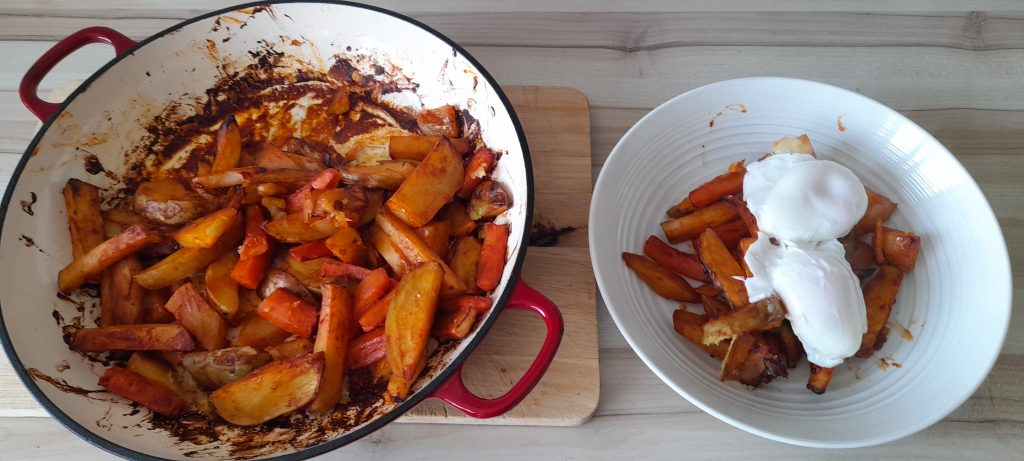
It was not a meal designed to impress anyone. But it had a purpose. The second portion had already been allocated by the meal plan to Friday lunch. Such is the quiet discipline of planning: the present meal occasionally exists in service of a future one.
The Dustbuster sheets hung on the wall nearby.
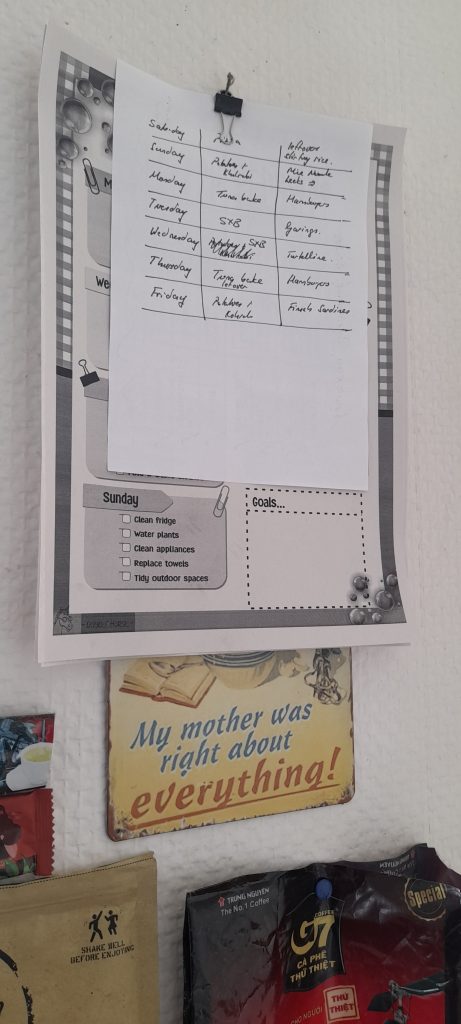
Printed paper has a curious authority. Thoughts on screens remain negotiable. Printed instructions feel committed.
They seemed to suggest that if one wished to stay afloat, one should probably launch.
Lunch helped. By two o’clock he had gathered enough energy to begin.
This was not going to be a deep clean. It would be a thorough clean, which is not the same thing but often sufficient.
He began with the windows.
They had been irritating him for weeks.
Two microfibre cloths, one wet, one dry. Ten minutes later the job was done. It is frequently the case that the tasks which complain most loudly are the ones that require the least effort once faced.
The glass was clear.
Mentally, he remained somewhat cloudy, but visible clarity has a way of encouraging the invisible kind.
As he continued around the kitchen he discovered the graveyard of abandoned projects.
Two cheese-making kits.
One gin-making kit.
A salt tasting kit.
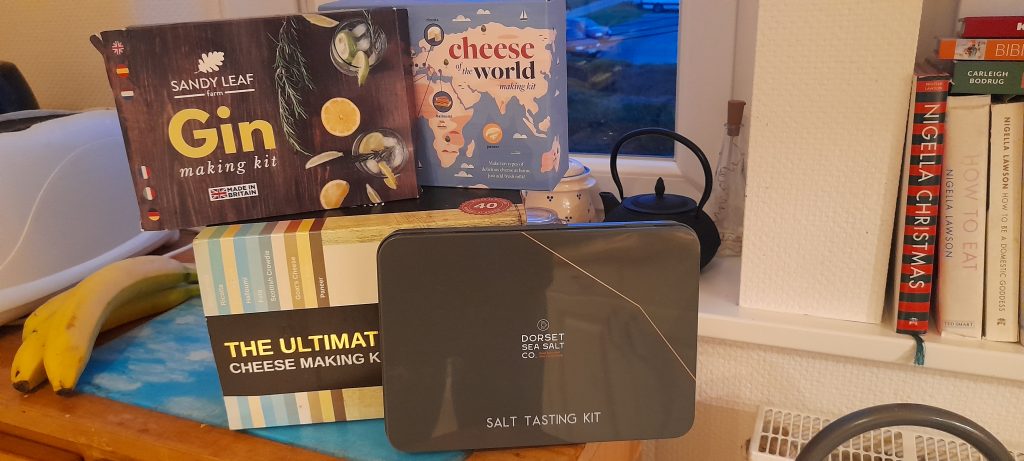
At first glance they looked like failures. Small monuments to enthusiasm that had somehow never quite materialised. They had become invisible in the way neglected objects often do. Sit in the same place long enough, and the mind simply edits them out.
But Doodle Horse has a curious side effect.
It forces one to look again.
And when he looked again, the boxes no longer resembled unfinished tasks.
They looked more like unopened doors.
All of them had been presents. Which made the situation strangely touching. People do not only give gifts; they give imagined versions of you.
And perhaps those imagined selves were not entirely wrong. Perhaps the time for cheese or gin or salt tasting simply had not yet arrived.
It occurred to him that people spend an astonishing amount of time envying the apparent excitement of other people’s lives, while sitting inside houses quietly full of possibilities.
We dream of distant adventures.
We scroll through other people’s highlights.
Meanwhile our own homes may resemble Aladdin’s caves filled with unopened treasure.
What did you do over the weekend?
Nothing.
Yet how misleading that answer can be.
One might equally say:
I experimented with cheese.
I explored vinegar.
I discovered salt.
I dug around in the overlooked corners of my own life.
A life, badly narrated, always sounds duller than it really is.
His eyes moved to the wooden sideboard.
He had bought it together with a table from the secretary of a language school where he had worked thirty years earlier. It had cost him one hundred and fifty Deutschmarks.
The woman had been American. Her husband German. The story was that they had acquired the furniture in Guatemala, though whether this was before or after their time in Ethiopia had long since become unclear.
Time preserves the romance of stories but rearranges the details.
As he cleaned around the sideboard he wondered about the man who had built it. Somewhere a carpenter had cut and joined the wood, probably imagining it would live its life quietly in a Guatemalan home.
Could he possibly imagine that thirty years later it would stand in a kitchen in France while someone wiped around it on a Sunday afternoon?
Objects travel through lives in curious ways.
Perhaps the sideboard had witnessed conversations, arguments, celebrations, departures. Perhaps it had crossed oceans in containers or trucks.
One could almost make a game of it.
Give someone a single line.
A sideboard from Guatemala.
And let them invent the rest.
A whole story might grow from that one object.
And suddenly the kitchen no longer felt quite so ordinary.
Evening approached.
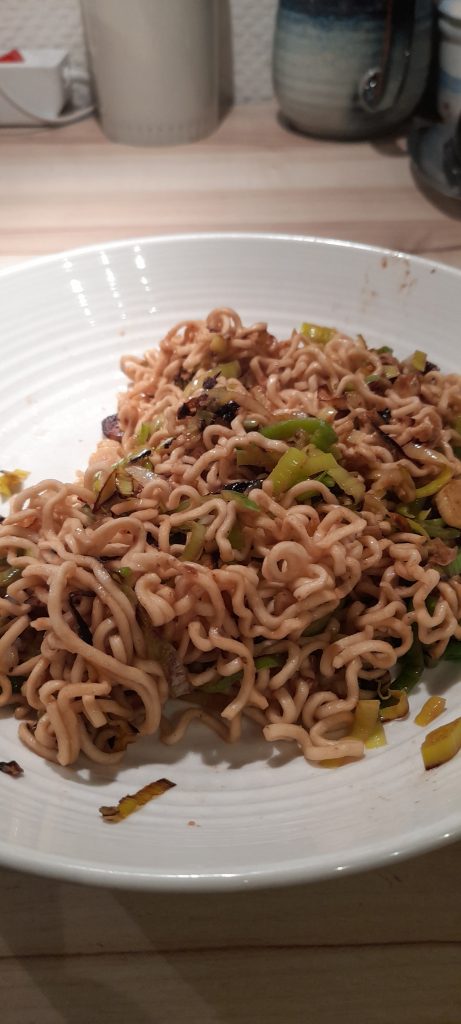
The meal plan for dinner contained three words.
Mie noodles.
Leeks.
That was it.
Guinea Pig could not help noticing the irony. In a house containing roughly two hundred cookbooks, inspiration would now arrive via his phone.
Raphael was consulted.
Whether Raphael felt professionally challenged by the modest ingredients was impossible to say, but he produced a recipe nonetheless.
Which, Guinea Pig realised, was rather the point.
Civilisation may simply be the determination to turn ingredients into a meal.
Leeks and noodles become dinner.
Dusty kits become experiments.
A sideboard becomes a story.
And a day that had threatened to be miserable begins to look suspiciously like a collection of small opportunities.
During the afternoon he rediscovered his new place for contemplation.
The dining table.
The sun had found it as well. Papers lay spread out before him, and with them the problem.
Monday.
The day of rest had been imposed upon him rather than chosen. Which meant that Monday would arrive exactly as planned, whether he was prepared or not.
His constitution had let him down slightly. The day had slipped away. The DYD — Doodle Horse Your Day — was about to receive its first real test.
He took the three Dustbuster sheets and began listing Monday’s tasks.
The sheets turned out to be independent republics. Each lived its own life. Each had its own expectations. Together they produced a total of thirteen tasks.
At first this appeared alarming.
But then another thought occurred.
The sheets were not tyrants.
They were invitations.
Doodle Horse had posted something earlier.
Protect your sparkle like a Unicorn protects its horn. It’s your power, not your decoration.
Guinea Pig smiled.
Perhaps that was the trick.
Not to obey the system.
But to let the system help one notice things again.
The forgotten projects.
The small victories.
The curious stories hiding in ordinary furniture.
Inspiration, he felt, would be in the offering. It was there somewhere, waiting patiently beneath the tasks and the slogans, beneath all the practical machinery of the day.
Order was not merely another list.
It was an invitation to pause, to choose, to begin again.
And maybe that was where it would be found — in the quiet space between exhaustion and effort, between resistance and curiosity, between the system itself and the person gradually learning how to live with it.
For the moment there was the table.
The sun.
The papers.
And Monday coming on.
Which, when he thought about it, was not a bad place to begin.
Meals
Simple Garlic Leek Mie Noodles (10-minute dish)
A clean, comforting noodle bowl.
Ingredients
- Mie noodles
- 1–2 leeks, sliced thin
- 2 cloves garlic
- Soy sauce
- Sesame oil or neutral oil
- Optional: egg, chili flakes
Method
- Cook mie noodles according to package.
- In a pan, sauté garlic in oil.
- Add sliced leeks and cook until soft and slightly sweet.
- Toss in the noodles.
- Add soy sauce + a few drops sesame oil.
- Optional: top with a fried egg and chili flakes.
Flavor profile: mild, sweet leek, savory soy.
Aladdin’s Cave
A salt tasting kit is a fantastic tool for understanding one of the most important ingredients in cooking. Salt isn’t just “salty” — different salts vary in minerality, crystal structure, moisture, and intensity, which all affect flavor and texture. You can turn the kit into a tasting, cooking experiment, and learning session. 🧂
Here are several ways to use it.
1. Do a Proper Salt Tasting
Start by tasting the salts on their own to understand their character.
Setup
- Small plates or spoons
- Bread or plain crackers
- Butter
- Sliced cucumber or tomato
- Boiled potatoes
- A notebook
Method
- Label each salt.
- Taste a few grains alone first.
- Then try each salt on:
- Buttered bread
- Tomato slice
- Boiled potato
- Olive oil
Pay attention to
- Intensity (mild vs strong)
- Texture (fine, crunchy, flaky)
- Minerality (clean, bitter, metallic, oceanic)
- Speed of salting (immediate vs slow)
Example observations:
- Fleur de sel → delicate, dissolves slowly
- Maldon → crunchy flakes, bright saltiness
- Himalayan → mild, mineral
- Smoked salt → savory, BBQ-like
Write tasting notes like a wine tasting.
2. The Same Dish with Different Salts
This is the best learning experiment.
Cook something neutral, then finish portions with different salts.
Good test foods:
- 🥔 Boiled potatoes
- 🍳 Fried eggs
- 🥑 Avocado slices
- 🍅 Tomatoes
- 🥩 Steak
- 🍫 Dark chocolate
Example experiment:
Boiled potatoes
- Potato + Fleur de sel
- Potato + Maldon
- Potato + smoked salt
- Potato + fine sea salt
You’ll quickly see how salt changes flavor perception.
3. Learn the 3 Types of Salt Usage
Understanding this is key to cooking.
1. Cooking salt
Used during cooking.
Examples:
- Kosher salt
- Fine sea salt
Purpose:
- Dissolves easily
- Seasons evenly
2. Finishing salt
Added right before serving.
Examples:
- Maldon
- Fleur de sel
- Smoked salt
Purpose:
- Texture
- Flavor bursts
- Visual appeal
3. Specialty salt
Used for specific effects.
Examples:
- Black lava salt
- Smoked salt
- Truffle salt
Purpose:
- Aroma
- Presentation
- Specialty flavor
4. Salt Dissolution Experiment
This teaches crystal structure.
Take:
- warm water
- different salts
Drop equal amounts in.
Observe:
- Which dissolves fastest?
- Which leaves minerals?
This explains why some salts work better in cooking vs finishing.
5. Make a Salt Flavor Map
Create categories like:
| Salt | Texture | Intensity | Best Use |
|---|---|---|---|
| Maldon | crunchy flakes | medium | steak, eggs |
| Fleur de sel | delicate | soft | tomatoes, fish |
| Himalayan | firm crystals | mild | general finishing |
| Smoked | powder or flakes | strong | meat, butter |
This becomes your personal salt guide.
6. Make Flavored Salts
Use a neutral salt as a base.
Examples:
Lemon salt
Salt + lemon zest
Herb salt
Salt + rosemary + thyme
Chili salt
Salt + dried chili
Garlic salt
Salt + dried garlic
Use mortar and pestle.
7. Brida Community Tasting Idea
You could turn this into a “Salt Workshop”.
Menu example:
- Bread + butter + salts
- Tomato slices + salts
- Potatoes + salts
- Chocolate + salts
- Steak + finishing salts
People learn that salt is an ingredient, not just seasoning.
8. The Most Important Salt Skill
Professional chefs use layered salting.
Example with soup:
- Salt onions when sweating
- Salt broth lightly
- Adjust near the end
- Finish with a different salt
Each layer builds flavor.
✅ Fun fact:
Salt doesn’t just make food salty — it suppresses bitterness and amplifies sweetness and umami.