
“Still Optimists”: A Salesman, a Father, and the Future We’re Already Building
Monday, late morning. Alexander dials in from Bavaria in Germany; the Mayor sits in a small Alsatian village, Cleebourg, with the November light trying its best through cloud. The question arrives as simply as coffee poured into a familiar mug: Are you an optimist or a pessimist about the future?
“I’m an optimist,” Alexander says. He doesn’t hesitate. He rarely does.
What follows is less an interview and more a long, reflective coffee break between two people who like ideas and like each other. We move from the nightly news to two-year-olds, from sales calls to speculative robots with adjustable personalities. We linger where it matters: work that stays human, skills that stay useful, and the art of listening—especially between the lines.
From the first minute, this feels like Pineapple at its best: a warm, intelligent conversation that wears its practicality lightly. The theme is skills and the future. The subtext is hope.
The Sound of Choosing Hope
The scene opens on a rule. Alexander has one: he filters the world for the sake of his spirit. “When I hear negative news, I don’t listen to it,” he says. He’s watched the habit age someone he loves—his mother—and he’s chosen differently. This is not naïveté; it’s a boundary. He votes with his attention and finds himself more available for the people and problems he can actually influence: his customers, his career, his son.
We nod because we recognise the cost of doomscrolling. And we notice how his optimism isn’t rhetoric. It’s logistics. It’s a workflow.
Takeaway: What do you gain when you stop feeding the outrage machine? What could your focus buy back this week—time, presence, or simply room to think?
The Job That Stays Human
When the talk turns to artificial intelligence, Alexander does not flinch. “AI can’t go to my customer and sell,” he says. His work is “very personal,” a contact sport not of elbows but of empathy. He’s candid enough to concede that a “good AI” might hold more product data than he ever will. But facts aren’t the full freight of sales; trust is. The expertise that matters is knowing people, catching what they don’t say, hearing “between the lines.”
He proves he’s no purist, though. His LinkedIn posts? Built with AI. A new project? He’s prototyping a workflow that ingests a short video of a distributor’s showroom, identifies what’s on display, compares it with a recommended “best list,” and drafts a targeted email to close gaps. The task once consumed 60–120 minutes of manual notetaking; with AI, he’s aiming for 15–30. The point is not the tool. The point is freeing time and attention for the conversations that convert.
Where did the idea come from? A podcast. A sentence or two from a sales leader. He took it, asked an AI to help, iterated, and started testing in the wild. No committee. No memo. Just curiosity, a problem, and a willingness to play.
Takeaway: Let machines carry the weight of inventory; let humans carry the weight of meaning. Which part of your week could you hand to a system—so you can show up more fully for the part only you can do?
A Father’s Future-Proofing
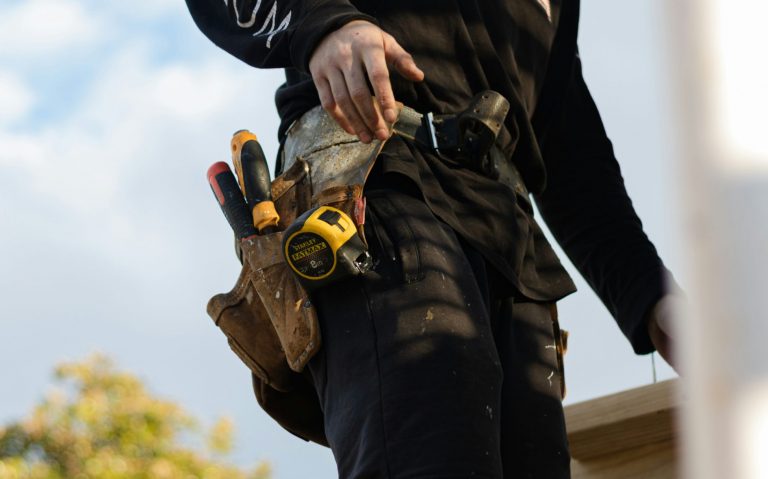
The Mayor shifts the lens to 2045. Alexander’s son—now almost two—will be twenty-two. What work will still be needed? Alexander answers without fashion-forward posturing: skilled trades. Electricians. Heating installers. The small majesties of things that must work in the real world. For all our dashboards, someone still has to wire the kitchen, fit the boiler, and keep homes warm through long winters. Hands will still matter.
He threads in a second strand: flexibility over expertise. In a world where models grow larger and knowledge increasingly commoditises, being “the one who knows” will matter less than being “the one who learns.” Adaptable beats encyclopedic. Fixed mindsets fossilise; playful ones evolve.
There is tenderness in how he draws the line for his child. “In school, he needs his own thinking, not AI,” he says. The Mayor agrees. We can already imagine a classroom—whether physical or by headset—where tools are permitted but discernment is the real test. The question won’t be “Can you query a model?” but “Can you form a judgement?”
Takeaway: When knowledge is cheap, curiosity grows expensive—and invaluable. Are you teaching your future self (or your children) to retrieve answers, or to shape better questions?
Networks Before Algorithms
Alexander names another future-proof skill: a big, living network. Not the vanity metric of followers; the quiet, compound interest of relationships. Last week at a trade fair in Wels, Austria, he chatted with a WD-40 salesperson and learned something specific and actionable about a customer called Gruber. That one conversation reframed his next move. This is how deals actually happen: along the grain of trust, with details you can’t Google.
The Mayor prods him with a fair challenge: if there’s a web shop and next-day delivery, why do we still need salespeople? Because someone still has to spark demand, Alexander argues—to expand the portfolio, not just fulfil it. Marketing might tilt the playing field. But new customers often come from a person who listened well enough to suggest a next step that felt like a good idea to you.
And listening, he adds, is work. “People like talking about themselves,” he says with a smile, “and when I listen, I get very deep information.” He knows how to parse tone, silence, and the space between sentences. A bot can fetch a spec sheet. A human can notice the hesitation that tells you where the real friction is—and the story that tells you how to remove it.
Takeaway: When was the last time you asked one more question and then shut up long enough to hear the real answer?
The Robot with Five Personalities
Because it’s 2025, we flirt with the idea of robots that can be tuned—today’s prompt-engineered “vibes,” tomorrow’s switchable personas. The Mayor imagines a near future where a virtual colleague presents identical data to two salespeople in two very different voices, calibrated to make each feel seen. Alexander’s sceptical, then curious. Could that work? Maybe. Would it replace the cycle of idea → conversation → iteration that he and the Mayor just modelled in real time? He doubts it. At least, not yet.
He draws a protective circle around novelty. “A robot hasn’t new ideas,” he says. “He only says things that already exist.” The Mayor pushes back gently: if you don’t know something and a system reveals it, that can feel like a new idea—especially when a human takes the suggestion, plays with it, and turns it into something that didn’t exist before. In practice, the dance is already here: human spark, machine acceleration, human judgement, machine drafting, human delivery.
The agreement they arrive at is practical: co-creation. Use the tool to widen the option set. Keep people in the loop to decide which options are worth pursuing—and how.
Takeaway: Tooling multiplies what you bring to it. If you add impatience, you’ll get fast junk. If you add curiosity, you’ll discover hidden doors.
The Craft of Trust
So why do customers buy from Alexander? He answers without buzzwords. He is interested in the person. He doesn’t mean the performative “How’s your quarter?” He means asking about the thing they care about today, then listening until a feasible next step appears. He means remembering the names of children and the way a plant manager takes his coffee. He means the old-fashioned craft of making it easy for someone to say yes.
He tells a story that reveals his philosophy. He’ll follow up with the WD-40 contact because the conversation was good. Not “leveraged,” not “optimized”—good. We forget how valuable good conversations are in a calendar packed with cold ones. A good exchange changes our map of the world just enough to make the next decision less risky. Trust is cumulative and local. It grows in the human scale of moments.
Takeaway: You can’t outsource rapport. You can only build it—patiently, consistently, with attention.
Make Your Own Weather
By the end, we are back where we began: optimism. Not the thin optimism of slogans, but the sturdier kind made from choices. Alexander will keep using AI to speed the mechanical parts of his job and reserve his energy for the human parts. He will keep growing a network that tells him what no dashboard can. He will keep raising a boy not merely to be skilled, but to be flexible, discerning, and kind.
The Mayor closes the loop with a small confession. Today’s conversation—its structure, its alignment with Alexander’s work—was itself a human–AI collaboration. A colleague sketched a format; an AI offered variations; the Mayor adjusted in-flight as the dialogue unfolded. This is the new craft: to combine the texture of people with the leverage of systems, in real time, for better thinking together.
And so the call to action is quiet, almost domestic. Make your own weather. Choose inputs that make you braver. Put machines where they belong: under the workbench, carrying weight. Put humans where we belong: at the table, breaking bread, building trust, arguing well, and asking better questions. That’s how you create your own summer, even in November.
Takeaway: Before you open another app, open a conversation. Ask a better question. Listen for what’s not said. Then decide what the machine should do next.