Smoke, Salt, and Sweet-Sour North: Ralf’s Week in Food
On a mild North German evening, eight chairs were pulled close to the fire drum, wine glasses caught the light, and every ten minutes the yard bloomed with a new aroma. Ralf—patient, exacting, happiest when left alone at the grill—ran the sequence like an orchestra: seafood to open, then mushrooms, then a roulade of flank steak; skewers, ribs, and finally a fennel-bright coil of sausage. This wasn’t just dinner. It was a live lesson in memory, method, and the quiet confidence that comes from doing a few things very, very well.
You can almost hear the sizzle
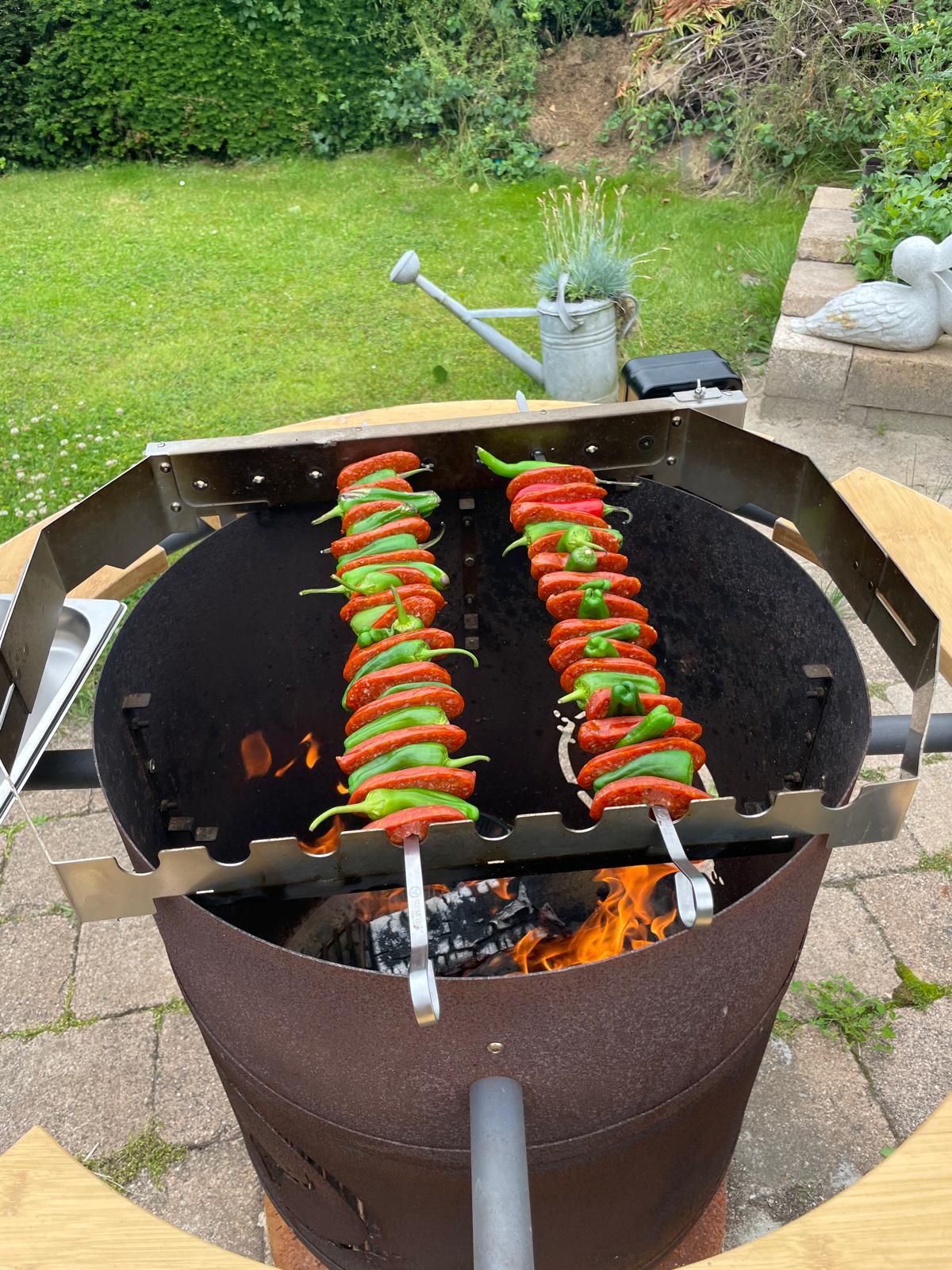
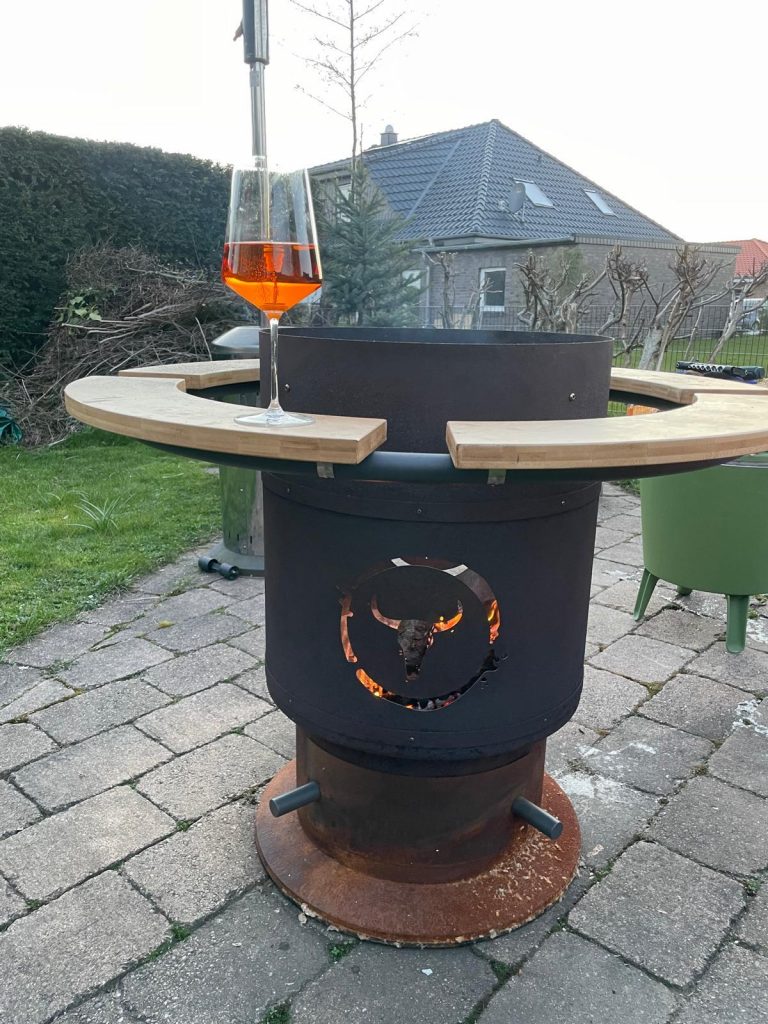
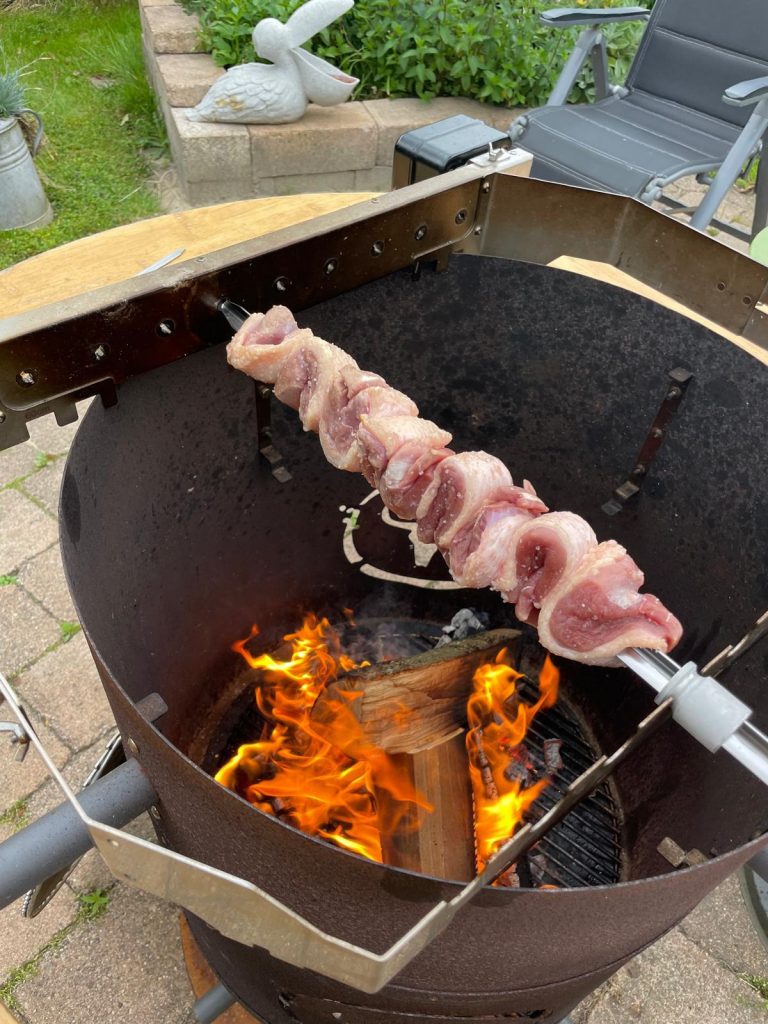
Picture the layout: a Feuertonne (fire drum) from Moesta BBQ standing like a black lighthouse; on top, the Tornado rotisserie gently turning skewers above the flames. To the side, a heavy cast-iron griddle with a deep, glossy patina. Ralf’s hands move in unhurried loops—season, place, listen, turn. He doesn’t talk much while he cooks. He watches.
The guest list is simple: three men, five women, all cousins by blood or by affection. They eat slowly, and they talk for hours. By midnight, someone books a nearby hotel rather than drive home. By morning, a vacuum sealer hums in the kitchen—small parcels of last night’s triumphs are sent on to relatives as edible souvenirs.
Are you there yet tasting the smoke, the crisp edges, the clean salt? That’s the point. Cooking is sensory communication. The first message of the evening was clear: arrive hungry, stay curious.
The sequence (and why it works)
Ralf cooks in deliberate order, not just to pace the night but to train the palate.
1) A briny opening: prawns two ways
He begins on the cast-iron griddle with two kinds of prawns. First, Argentinian red prawns—the sweet ones that caramelise at the edges—and then easy-peel king prawns. The griddle’s seasoned surface means nothing sticks; each turn is clean, quick, confident. The crowd’s attention slides from conversation to the plate in the centre of the table. A takeaway: start a long meal with something that cooks fast and tastes of the ocean. It sharpens appetite without stealing the show.
2) Mushrooms in the pan
Next comes a wide pan of champignons, simply done. Mushrooms are an anchor in a long meal: earthy, friendly to smoke, grateful for butter or olive oil. A takeaway: a “quiet” side dish between courses gives the grill a moment to settle—and your guests, too.
3) Flank steak roulade (the centrepiece you didn’t know you needed)
Ralf butterflies a 600 g flank steak—opened like a book—then layers pesto, slices of serrano ham, and mozzarella. He rolls it tight into a roulade, ties it carefully, seasons inside and out with salt, pepper, and a Thai-chili spice blend bright with lemongrass and Thai basil. Two hours’ rest in the fridge firms it up; on the fire drum, the slices sear, the cheese sighs, the ham crisps.
Why it works: flank steak is honest and flavourful; rolling it stretches a modest cut into many bites. A takeaway: roulades are crowd-friendly—one elegant motion of the knife makes enough for everyone.
4) Skewers of pork shashlik (marinade as memory)
Earlier—24 hours earlier—Ralf cubed 2 kg of pork neck (or shoulder). He massaged in a marinade of tomato juice, vinegar essence, lots of salt and pepper, fresh thyme, bay leaves, water, and an equal weight of onions. (Yes, 2 kg meat to roughly 2 kg onions.) After 12 hours, he turned the mixture, so every cube caught flavour evenly.
Threaded onto thick skewers, some versions spiced with chorizo, the pork turns above open flame on the Tornado rotisserie—edges crisping, juices sealing. A takeaway: double the onions. They sweeten, tenderise, and perfume the meat from the inside out.
5) Ribs, the long way: the 3-2-1 method
At 12 noon, two styles of pork ribs—baby backs and St. Louis cut—go onto the barbecue for 3 hours of low, indirect heat (about 95–105°C). Then 2 hours wrapped in butcher paper with a splash of apple juice (cola or mango also work) at about 160°C. Finally, 1 hour unwrapped to glaze with barbecue sauce and set the bark.
The only danger? Overdoing it until the bones slide free (“bones-out” bragging rights are fun to hear about, less fun to eat). His guests call them the best ribs they’ve ever had. A takeaway: time and temperature are ingredients. Treat them with the same respect as salt.
6) Salsiccia, coiled like a snail
Two cousins ask, “Just sausage, please.” Ralf answers with salsiccia—fresh Italian pork sausage scented with fennel—bought by the meter, coiled in a ring. It’s the “late-night” plate: salty, perfumed, friendly to one more glass. A takeaway: always include a simple, familiar favorite. It’s hospitality, not compromise.
7) The showstopper: beef rib fingers, dry-aged
If there’s a crescendo, it’s this: beef rib fingers (the rich strips between the ribs), 20 cm long, dry-aged and simply salted. High heat kisses the fat; flames lick; the cast-iron grate tattoos the surface. “Explosion,” Ralf says, searching for the English word. He means it. A takeaway: the best pieces need less—often just salt and a fearless fire.
Between courses, baked Drillinge—those small waxy potatoes—arrive from the kitchen, halved and pressed cut-side-down into a baking-tray mixture of olive oil, parmesan, panko, garlic, Italian herbs, and a whisper of cayenne. Later, a sweet-sour North German salad—tomato, cucumber, mango for brightness, mixed leaves, and thin-sliced radishes—refreshes the table. (If you grew up with sugar-and-lemon dressings, you understand the tug of this tradition.)
What can I take from this?
Schedule your meal like a playlist: quick opener, earthy interlude, a star track, a slow build, a sing-along classic, and a final encore that feels like firelight.
Where the taste comes from
Ralf cooks like someone who learned by looking over the shoulder of people he loves. His mother: “a very good cook.” His father: weekends devoted to game—rabbit and wild boar—his domain. At 14, Ralf asked for a spice rack for Christmas, then proceeded to over-season a roast pork into oblivion. He laughs about it now; the lesson stuck.
Later came a birthday course in Hamburg with TV chef Steffen Henssler. Ten people in a professional kitchen, salmon wrapped in newspaper with lemon and a splash of wine, baked until the paper darkened and the fish turned buttery and perfumed. There’s an easy grace in the way he tells it: technique as a souvenir you carry for life.
He also collects knowledge in quieter ways—standing in supermarket queues, thumbing through recipe magazines, pilfering only the useful parts. “I mix and match,” he says. That’s a cook’s superpower: combine two good ideas into one beautiful plate.
He respects the solitude of the craft. “Please,” he tells beloved, curious cousins, “let me cook. After we eat, we can talk about everything.” He’s not grand about it. He’s guarding the flow state—the calm attention that makes great food inevitable.
What can I take from this?
Curate your influences. Watch cooks you admire. Borrow one technique at a time. Practice in peace. Share with joy.
A city of provisions
Ralf’s work week took him south of Hamburg to a distributor. On the way back he stopped at Andronaco, the Italian emporium with a loud, cheerful canteen and dizzying shelves: wines, spirits, cheeses, hams rolled in spices, fresh pastas, house-label olive oils. Lunch was an octopus salad—tentacles first kissed by the grill, then dressed with vinegar, good oil, parsley, and “many herbs,” served over greens. He ordered a small lasagna to take home, plus a fresh pasta dish set up for evening: you choose the cut, the sauce, the side (salad or noodles), and the kitchen packs it neatly for later. Sometimes dinner is not an event but a relief.
What can I take from this?
Have a favourite grocer-canteen where you can eat now and shop for later. It keeps the week humane.
If you’re just starting
Ralf’s advice is friendly and unpretentious:
- Learn by watching. Begin with your parents or someone you trust, then widen your circle.
- Use YouTube well. He points to creators like 030 BBQ (Bobby, Berlin), Klaus grillt, Udenheim BBQ, and Mickey & Marco—channels that show every step and ingredient so you can follow and repeat.
- Buy a couple of honest cookbooks. Then, like Ralf in the checkout line, read widely and “steal” only the useful pieces.
- Take a course if you can. Not to collect certificates, but to collect moves: how to butterfly a steak, how to roll and tie a roulade, how to listen for sizzle instead of watching a clock.
- And pace your meal. Don’t drop everything on the table at once. Sequence builds appetite, attention, and gratitude.
Finally, a note about leftovers: vacuum-seal them and send guests away with “thank-you parcels.” Hospitality doesn’t end when the grill cools.
What can I take from this?
Start today. Cook one thing well this week. Next week, cook it again—better.
The feeling that lingers
Ask Ralf why he isn’t a professional chef, and he’ll tell you the truth: he likes to cook alone. He bristles when too many hands crowd the pan. He’d rather carry the stress himself, and then—when the plates are empty—sit down and explain exactly how it was done, step by step, like a magician revealing the mechanism because he knows the real magic is practice.
By the end of the night, the cousins are full, the hotel room is booked, and praise flows easily. “Best ribs ever,” someone declares. Ralf smiles but doesn’t bask. There’s always another meal to plan, another calm evening by the fire drum. Tomorrow, perhaps, a salad with mango for brightness. Next month, another family night. And somewhere in Germany, in a queue by a cash register, he will find a small, useful idea—one he’ll turn, patiently, into dinner.
What’s your version of the fire drum? A skillet you trust. A corner of the kitchen where you can be left alone? Claim it. Then invite people you love to taste what attention can do. Before you close the page: identify your own small ritual of making and sharing—your pan, your patina, your pace. Then plan your sequence, light your fire, and let the evening unfold.