
Peeling Potatoes, Episode 32: Multitasking, Plates, and the Myth of “Saving Half a Second”
Episode 32 opens the way Peeling Potatoes often does: with a wink, a wobble, and a confession.
The Mayor announces it’s “your show,” Fruitloop pushes back (“It’s our show”), and within thirty seconds we’re already knee-deep—no, deeper than knee-deep—in life. Too many tabs open. Too many plates spinning. And, naturally, three listeners who may or may not be learning English by accident.
This week’s topic is multitasking—and it turns out that behind the jokes about Coca-Cola and spinning plates, there’s a very real question hiding in the steam of the kettle:
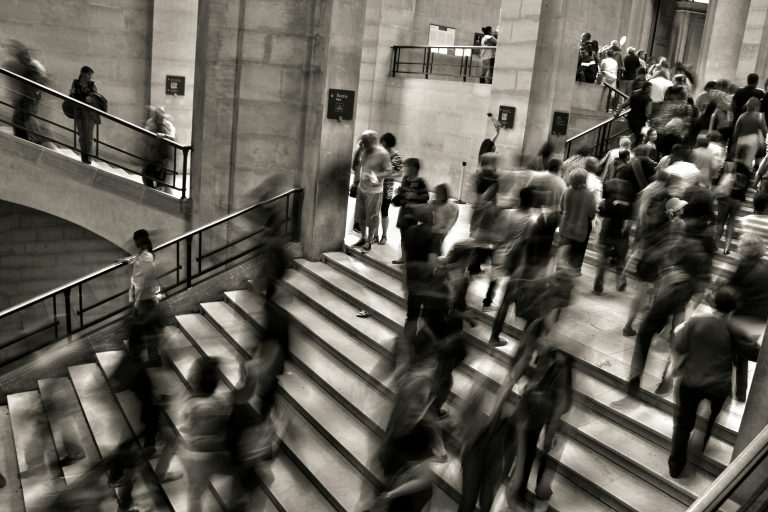
Are we actually doing multiple things at once… or are we just sprinting around like headless chickens with Wi-Fi?
The Mayor’s definition: twelve plates, one cup of tea
The Mayor’s image of multitasking is gloriously theatrical: a Chinese acrobat with twelve rods and twelve spinning plates, casually sipping a drink while everything stays perfectly balanced.
Fruitloop’s reaction is basically: Oh wow. Because her definition is less circus and more… Tuesday.
She brings in the “study” version: multitasking feels productive, but it’s often ineffective. You don’t finish anything. You just keep switching, switching, switching—until you’ve touched seven tasks and completed none.
The Mayor agrees in principle (“fundamentally that study is correct”) and then immediately demonstrates why human beings are complicated: in real life, there’s laundry upstairs, lunch in your head, and two unfinished blocks of website work “hanging in the air.”
And that’s where their conversation becomes the real Peeling Potatoes magic: they start disagreeing, then slowly discover they’re not actually arguing about the same thing.
Maybe it’s not multitasking. Maybe it’s project management.
One of the most useful distinctions in the episode is the Mayor’s accidental revelation:
Sometimes people call it multitasking when it’s actually project management.
Because yes, you can have two “uncompleted blocks” sitting there—like open browser tabs—and still be fully present for the one thing you’re doing now (like recording a podcast and drinking tea).
Fruitloop’s answer is grounded and practical: it depends on how much time you spend hopping between things, and whether you’re forgetting what you started.
Which leads directly to the laundry classic:
- You switch the washing machine on.
- You don’t need to stand there watching it.
- You start something else.
- You forget the washing exists until midnight.
- You discover the laundry has been fermenting upstairs like a tiny domestic science experiment.
“Story of my life,” says the Mayor, and honestly, the three listeners probably nodded.
Fruitloop’s “extreme multitasking”: the school run circus
Fruitloop introduces categories (which the Mayor didn’t know existed):
- Extreme multitasking
- Slow / low multitasking
Her extreme example is the morning routine with her son:
- Wake the child.
- Feed the child.
- Make sure he gets dressed.
- Teeth. Hair. Shoes (the right way around).
- Pack lunch (in the morning, because life enjoys danger).
- Get herself ready too.
- Keep shouting “GET DRESSED” every two minutes because the TV is hypnotising him into sitting in his underwear like it’s a lifestyle.
The Mayor, in peak Mayor mode, suggests the “perfect cure”:
Take him to school exactly as he is and let embarrassment do the parenting.
Fruitloop replies like a professional negotiator:
“I don’t have to actually do it. I just have to say I’m going to.”
This is parenting as motivational theatre.
The Mayor’s morning: cats first, coffee later, dishwasher always
Then the Mayor offers his own routine—a domestic ballet with feline pressure:
- Cats milling around demanding food.
- Coffee to be made.
- Kettle boiling.
- Dishwasher must be emptied.
- Mother’s tray must be set up.
- And the growing obsession with doing it “properly” (without piling things on counters).
He tries to multitask it all, realises the kettle boils too fast, and ends up switching it on three or four times. Then comes the coffee temperature strategy (cool it to around 95°C so you don’t burn the coffee), plus the fancy kettle that lets you watch the temperature drop like you’re monitoring a patient.
Fruitloop’s verdict is simple and almost soothing:
Feed the cats.
Empty the dishwasher.
Then drink coffee calmly.
In other words: finish the chores, then enjoy the reward.
The Mayor pushes back: but couldn’t you save time by emptying the dishwasher while the coffee steeps?
Fruitloop says the quiet truth of this episode:
It feels like you’re saving time… but you probably aren’t. You’re just stressing in stereo.
The frozen Fruitloop moment: multitasking as live improvisation
Mid-episode, Fruitloop freezes on screen—classic internet drama.
The Mayor fills dead air by giving the three listeners a live commentary on Fruitloop’s frozen facial expression (first “gobsmacked,” then later a “wow, I’ve met somebody really good-looking” face).
This becomes an unplanned demonstration of multitasking in action:
- Hosting a show,
- narrating a frozen face,
- keeping the momentum,
- and still somehow staying affectionate.
Peeling Potatoes, in one glitch.
Structure vs chaos: the real reason we multitask
Fruitloop admits something important: when she has structure, she doesn’t need to multitask nearly as much.
Her best days look like:
- Drop son at school
- Go for a run
- Plan the day (meetings, times, topics)
- Allocate time blocks
- Do tasks one by one
Her worst days are “all over the place”:
- Programs open everywhere
- WhatsApps, emails, articles, pictures
- Fighting with “Jaffle Puff” (AI) because it won’t do what she wants
- Forgetting tasks, then panicking later
The Mayor connects the dots:
When tasks belong to the same frame—like “get everyone out the door” or “run the household morning routine”—multitasking can work.
But when you introduce unrelated tasks (his example: cooking a 15-course birthday banquet while trying to get out the door), it becomes chaos pretending to be productivity.
Positive multitasking: sandcastles and ice cream
A beautiful twist in the episode is their discovery that multitasking isn’t always grim.
They talk about holidays and long weekends and how life gets expensive fast—flights might be cheap, but hotels and food are not. Yet the Mayor points out something quietly brilliant:
If you’re away for a week, you relax more.
And then comes their accidental invention:
Positive multitasking.
The kind where you build a sandcastle, plan dinner, enjoy sunshine, and eat ice cream—multiple “tasks,” but none of them feel like punishment.
They even joke about patenting the idea before someone else steals it.
Spontaneous multitasking: the cleaning spiral
Fruitloop’s “spontaneous multitasking” is the cleaning version of falling through a trapdoor:
- Start in son’s room.
- Find a plate that shouldn’t be there.
- Take it to kitchen.
- Notice the counter is dirty.
- Wipe counter.
- See something else out of place.
- Carry it elsewhere.
- Arrive in another room, find another thing.
- End up back where you started, wondering what you were doing in the first place.
It’s not anger that drives her—it’s distraction.
The mess becomes a chain reaction that hijacks her attention.
And then they swap roles.
The Mayor describes his kitchen problem: someone lays out all ingredients and cookbooks on the counter hours before cooking, until every surface is occupied. He can’t do anything because there’s nowhere to put anything.
Fruitloop’s solution is so simple it almost hurts:
Take things out as you need them. Use it. Put it back.
Which is basically her whole philosophy in one sentence.
Technology multitasking: apps that steal your life
By the end, multitasking has expanded into a bigger villain: systems that overcomplicate everything.
The Mayor tells the train-ticket saga:
- Downloads the German rail app
- Books outbound and return
- Realises he booked the return on the wrong day
- Finds a tiny cancellation window
- Cancels, rebooks, double-checks every line
- Feels personally attacked by the concept of “user experience”
Fruitloop matches it with her own experience: a freelance-job app that drags you from laptop to phone, makes you enter everything, and then demands payment at the end—so she deletes it in protest.
Then she drops the ultimate paperwork horror story: getting her son into school required copies, certifications, police station stamps, online forms, handwritten forms… and then being asked to fill in the same form again.
As the Mayor puts it: the kid just has to go to school.
And suddenly the episode’s real conclusion lands:
Life is so complicated now that we multitask just to stay on top of it.
Not because we’re brilliant acrobats—because the world keeps handing us more plates.
The “red card” solution: discipline for life’s nonsense
They end with a perfect Fruitloop invention: red cards for multitasking / domestic chaos, like rugby penalties.
Examples:
- Toys on the kitchen counter: red card, suspended for the rest of the year.
- Food in bedrooms: red card, two-week ban.
- Anything that derails the household: penalty time.
The Mayor wisely refuses to introduce this system at home, because he suspects it might be used against him.
And that’s Peeling Potatoes in a nutshell: a warm, chaotic friendship trying to find meaning inside ordinary frustration—without taking itself too seriously.
They leave it hanging (of course they do).
Because multitasking, like laundry upstairs, is never fully finished.