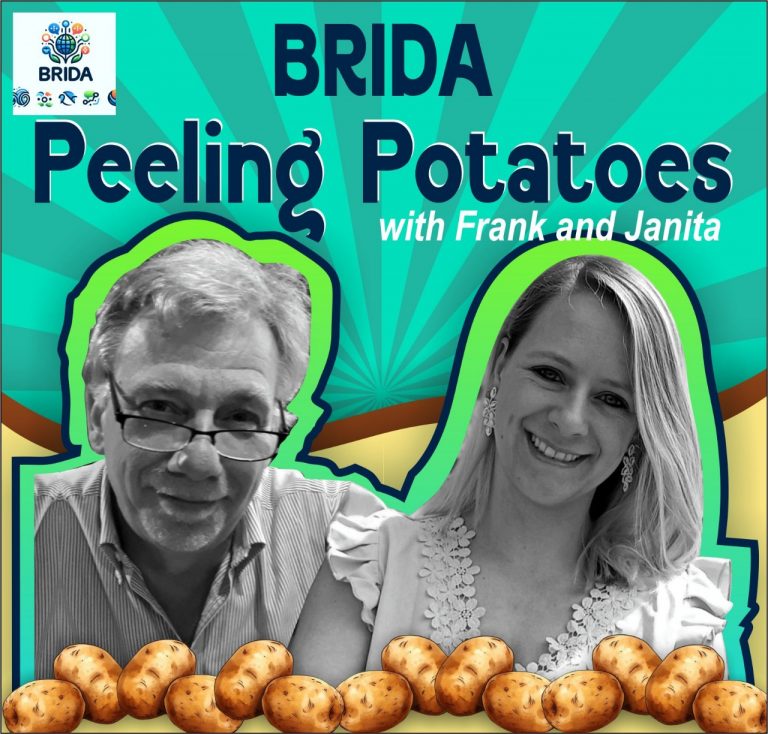
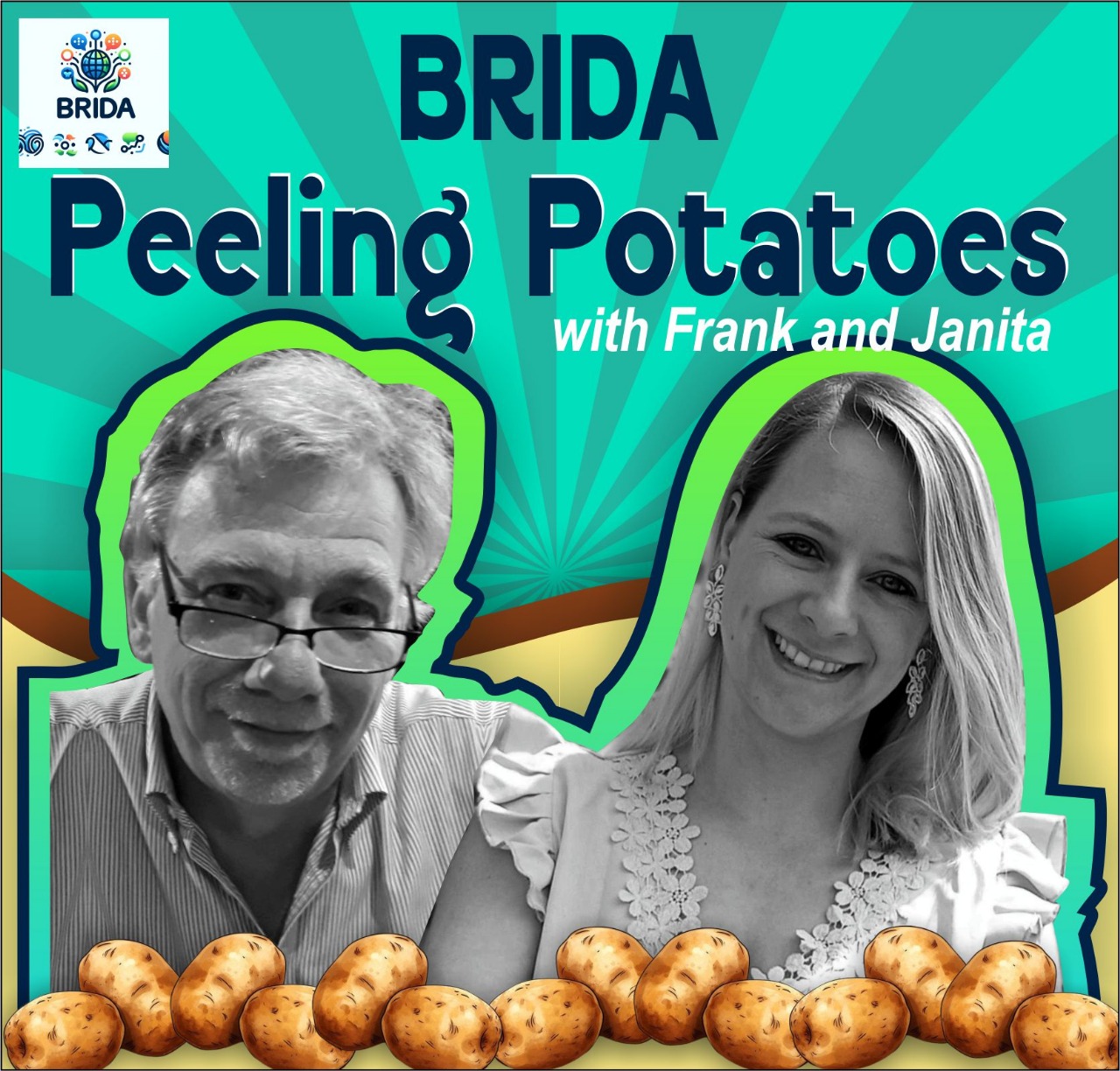
PEELING POTATOES 27 | People, Priorities & the Beautiful Minefield of Being Human
A soft morning, two time zones, one conversation about… people.
“We are live… and alive.”
With those words, Peeling Potatoes Episode 27 opens—not with drama, nor with cleverness, but with a quiet joy. Frank is finally back home after a whirlwind photographic odyssey in South Korea. Janita is still glowing from the familiar hum of her South African morning. Two voices, miles apart, settle into a shared hour when the world briefly pauses — long enough for two humans to explore what makes all humans so wonderfully complicated.
December’s theme is People.
A gentle word. A dangerous word. A warm word. A minefield of a word.
And as they begin, you can feel it: this is not going to be a lighthearted Fruitloop episode. This is the kind of conversation you want to lean into — the kind that feels like the first sip of hot coffee on a cool morning.
Almost too real.
Almost too honest.
Exactly what Pineapple readers come for.
What do people misunderstand most about one another?
Janita starts with a question that could destabilize any pre-10:00 AM brain:
“What is one thing most people misunderstand about each other?”
Frank, still throttling his sleep, tries to make sense of it. Friendship, he says, is born from shared interests — chemistry, emotions, implicit expectations. Yet misunderstandings arise precisely from the things we don’t share. Our blind spots. Our unspoken assumptions.
Janita’s answer cuts cleaner:
Priorities.
“What is important to you,” she says, “is not necessarily important to someone else.”
And suddenly the world makes sense again.
She describes her husband who prioritises their son above everything; her sister’s partner who prioritises business; her own instinct to create comfort and care at home. The contrast is not conflict — it is simply life.
Frank responds with domestic honesty.
His wife sees his work—creative, all-consuming, joyous—as work. He experiences it as freedom. She experiences weekends as chore-time. He experiences weekends as creative eruptions.
People, he whispers between the lines, are difficult.
A takeaway forms quietly here:
Reflection Point: Whose priorities are you misjudging right now — and whose might be misjudging yours?
“I’m fine.” The two most dangerous words in every language.
When asked to recall a moment someone said “I’m fine” but wasn’t, Janita smiles knowingly.
Her husband, son, sister, mother, father — all of them have their “I’m fine” moments, and each requires a different response.
For some, she says, “I leave them alone.”
For others, “I wait for them to start talking.”
And for her mother — she laughs — “She says she’s fine and then she talks in circles for half an hour.”
Frank gently turns the question onto her.
When she says “I’m fine,” what happens?
“I withdraw,” she admits.
She cooks, reads, washes dishes, hides until she recovers. Her temper lasts five minutes. Her forgiveness lasts forever.
Frank reflects on tone, facial expression, body language — and the difficulty this presents to non-native speakers trying to decode the subtleties of English politeness.
People are a minefield.
The Warning Label Question
“If people came with warning labels,” Janita asks, “what would yours say?”
Frank sighs.
“Difficult. Complicated. Overthinking.”
He blames being an only child — the egotism, the struggle with large family dynamics, the Big Fat Greek Wedding chaos of it all.
Janita’s own label?
Hangry.
A predictable 3:00 PM shift from human to dragon.
Their laughter suddenly warms the conversation again. This is what makes the episode feel so alive: philosophy interrupted by humour, honesty softened with silliness.
Takeaway: What would your warning label say — and who already knows it by heart?
Kindness in Small Gestures
When asked about the smallest act of kindness that stayed with her, Janita tells the story of her first design job. Three colleagues. One tiny office. And a ritual of generosity:
A cool drink here, a pastry there, a shared chocolate, a surprise lunch.
Tiny gestures, repeated often enough, create belonging.
Frank recalls a training in Basel in the 80s, where a facilitator opened every session with a five-minute meditation and Japanese fusion music. He remembers that moment decades later — not the training content.
Because sometimes the smallest things become anchors in our memory.
Reflection Point: What tiny gesture changed your week… or someone else’s?
Dance First, Think Later
“If you could press a button to make everyone dance for ten seconds,” Janita asks,
“when would you press it?”
Frank does not hesitate.
“Immediately.”
He tells two stories:
- Learning Scottish country dancing
Twenty adults kissing cheeks, greeting warmly, frustrating the German instructor who wanted efficiency. Humans will be human. - Starting training sessions in Basel with music and meditation
A ritual that reset the mood, equalised everyone, and left a lifelong imprint.
Dancing, he says, is liberation.
Energy.
Fun.
“No one cares how silly you look — because they look silly too.”
He remembers dancing Gangnam Style beneath the giant bronze hands in Seoul, feeling pure joy as strangers applauded him simply for being free.
Takeaway: When did you last let yourself look ridiculous — and feel alive doing it?
Unexpected Inspiration
Has anyone inspired you without meaning to?
Janita admits: she often inspires herself.
She decided to run the Color Run.
She decided to cycle 160 km.
She decided to change her life.
Frank admits that sometimes she has inspired him — her small steps, her consistency, her courage.
He is considering walking laps at the village sports field.
Just baby steps.
Just enough.
Because inspiration often arrives disguised as a friend casually doing their best.
The Fragile Trust of People
When asked about someone whose mindset surprised her, Janita recalls an older woman she once admired — polished, perfect on the surface, but gossiping in the shadows. A duality that taught young Janita the cost of misplaced trust.
Frank understands.
People wear masks.
Sometimes they switch masks depending on the room.
Sometimes they confuse perfection with performance.
And yet…
People are also the source of the laughter, connection, and kindness threaded throughout the episode.
The Season of People
They end with a seasonal question:
“When did you discover Santa wasn’t real?”
Janita tells the story of finding hidden presents by accident at age eight or nine.
Her son still believes, thanks to a movie plot involving Santa being kidnapped.
And now — looming in her December — is the joyful stress of Elf on the Shelf.
Scientific experiments. Poopy humour. Mentos in Coke. Explosions at dawn.
Frank laughs.
She laughs.
The heaviness melts.
Because people — difficult, wonderful, contradictory people — are what make life both exhausting and extraordinary.
As the episode closes, Frank wishes her luck for the Color Run.
He will think of her at 5:30 AM.
And together, without saying it outright, they land on one truth:
The season of people is messy. And glorious. And worth every misunderstanding.