Mastering Modern Survival Skills
How four people on three continents learned to keep their nerve when life gets loud
It’s late morning in Cleebourg, France, gray and cold in London, humid in São Paulo, and bright somewhere in South Africa. Four squares light up on the screen: Frank in his village near the vineyards, Bruce in London, Rosie in São Paulo, and Janita in South Africa, host and resident “Fruitloop,” as her friends call her.
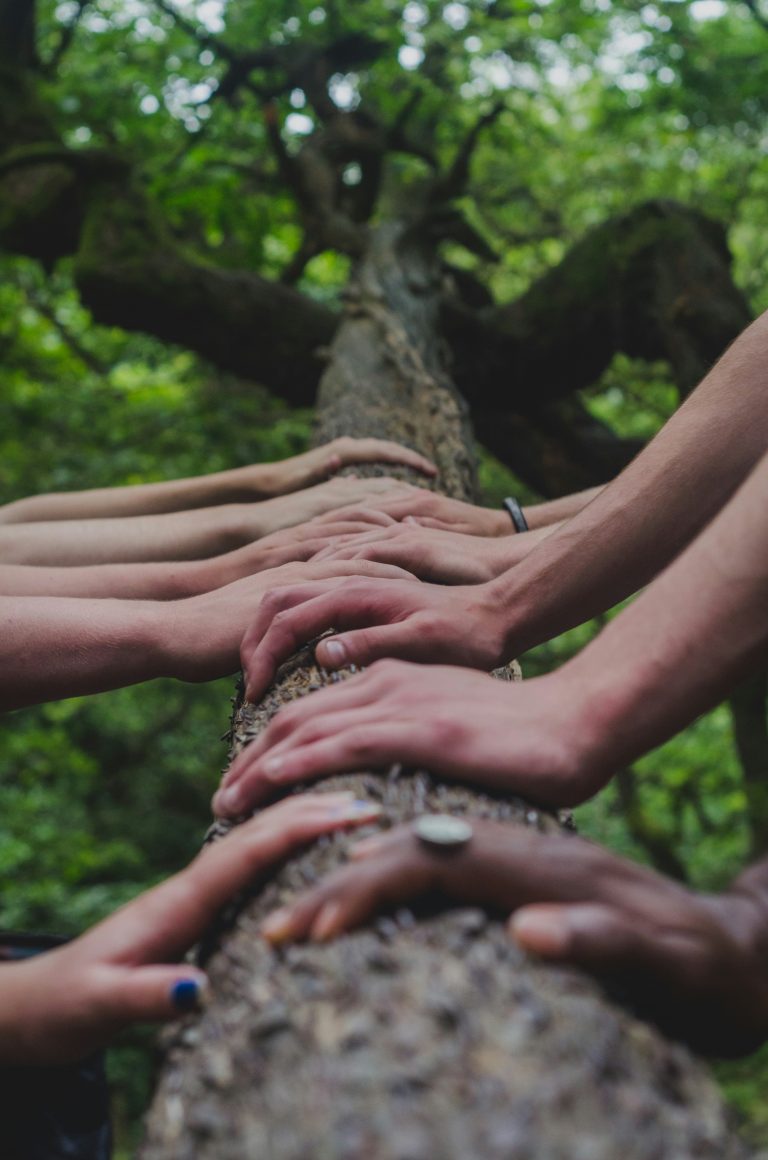
They’re not in the same room, but it feels like a global lunch table—the kind where the coffee goes cold because the stories keep getting better. Today’s menu: survival skills. Not the glamorous TV-show kind, but the quiet, everyday art of not falling apart when life presses in from all sides.
The long-haul flight, the migraine, and the nine-hour school day
The conversation doesn’t start in a jungle. It starts in an airport.
Frank has just survived what he calls the “sardine experience” of long-haul economy: squeezed into the middle seat, trapped between his wife Mary and “a big mama” who spends most of the flight turned away, chatting across the aisle.
“A church bench is more comfortable than an airline seat,” he sighs.
He describes hanging from the metaphoric ceiling, legs draped over armrests, noise roaring in his ears, sleep refusing to visit. It’s funny—until you realise he’s describing a very modern kind of survival: enduring discomfort you can’t change.
Across the ocean in São Paulo, Rosie’s survival story is quieter but no less intense: a day-long migraine that pins her to bed. The only saving grace is that it falls on Black Awareness Day, a public holiday in Brazil that honours Afro-Brazilian history and identity. Her schools celebrate with photographs, theatre, songs, students proudly sharing their stories.
As she describes the events, you can almost see the smiling faces taped up on classroom walls, feel the hum of children rehearsing their lines.
And then there’s the nine-hour school day.
Rosie laughs as she explains how her students stay at school from morning to night to prepare performances. Janita jumps in with the obvious question:
“How does one survive nine hours of school?”
“Wine,” someone jokes. Survival, once again, looks suspiciously like humour and community.
When survival isn’t about fire or shelter—but panic and control
Janita segues neatly: “So, our topic today is survival skills… Survival skills aren’t always just about the wilderness. They are about keeping calm, being resourceful, making smart choices when things get tough.”
She paints the classic picture: building a shelter, finding clean water, staying warm. Then she flips it.
“In modern times, we don’t end up in the wilderness. We end up in other wild places.”
Emails. Motorways. Hospitals. Families. Minds that spiral in the dark.
She reminds them—and us—that panic is often the real danger. When we panic, we burn energy on fear instead of solutions. When we stay calm, we can focus, plan, and use what we know.
So she throws out three questions—one for each guest.
Rosie: “I want to master staying calm… and staying silent”
Rosie’s first question is practical:
Can you start a fire without a lighter?
Her answer is an accidental confession: no, not really. She has always had someone—her brother-in-law, her nephew—to do the messy work of coaxing life out of charcoal, paper and flame.
And then, very naturally, she pivots from fire to feelings.
Asked which survival skill she’d most like to master, Rosie doesn’t say “first aid” or “navigation.” She says:
“To try to be calm in some difficult situation… maybe stay in silence. Just listen.”
She describes moments when people are angry with her and she chooses not to react—not to throw fuel on the fire, but to breathe, listen and decide this problem is “not mine, it’s yours.”
It sounds simple. It isn’t.
Staying silent when your nervous system is screaming to defend itself is its own kind of wilderness training. Rosie frames it as a decision you can “train,” a habit you can practise with sisters, colleagues, the people who know exactly which button to press.
Bruce: “First, avoid panic. Then deal with everyone else’s”
Bruce in London receives the question that sits at the heart of the episode:
What is a modern-day survival skill everyone should know?
His answer is immediate: avoiding panic.
“First of all, managing panic yourself,” he says. “Then working out how you can deal with other people who are in a state of panic.”
It’s a deeply honest admission. Bruce says he has a natural problem-solving focus—he wants to look to the future and fix things. But when others are melting down, their emotional agenda collides with his rational one.
And yet, the stories keep returning to moments when someone has to stay calm: the cut on Janita’s son’s toe, blood on the floor, husband panicking, child crying. Janita recalls shutting out the noise, focusing only on the task: stop the blood, clean the wound, decide whether to go to the hospital.
“I panic afterwards,” she admits. “In the moment I’m calm. Later, I have the wine.”
Bruce listens, impressed.
“If you can do that, that’s fantastic in my view,” he says.
Later, he reaches for a different example: driving. He talks about four car accidents in earlier decades—two as driver, two as passenger—none fatal, all potentially catastrophic. The legacy is a cautious driver who knows exactly what can go wrong.
He links it to young male drivers and “indulgent driving”—the thrill of control right up to the moment it’s lost.
And then, with the dry humour of a man who has seen a few things, he drops one of those marriage survival skills that belongs on a tea towel:
“Someone once said the secret of a successful marriage was two words: ‘Yes, dear.’ The way you pronounce it is important.”
It’s a joke. It’s also not a joke. Sometimes survival is strategy. Sometimes it’s surrender.
Frank: “Trust me—but not blindly”
When Janita asks Frank to share a time he had to think fast and adapt, he doesn’t reach for the small stuff.
When asked which survival skill he’d like to master, he doesn’t choose caution. He chooses competence.
“If someone had a serious health issue on the street,” he says quietly, “I’m not sure I would know how to help… I’d probably need a refresher in first aid.”
It’s a different kind of panic: not fear for yourself, but the fear of failing someone else.
Later, in the “silly question” segment (a Pineapple classic), Janita throws Frank into a surreal scenario:
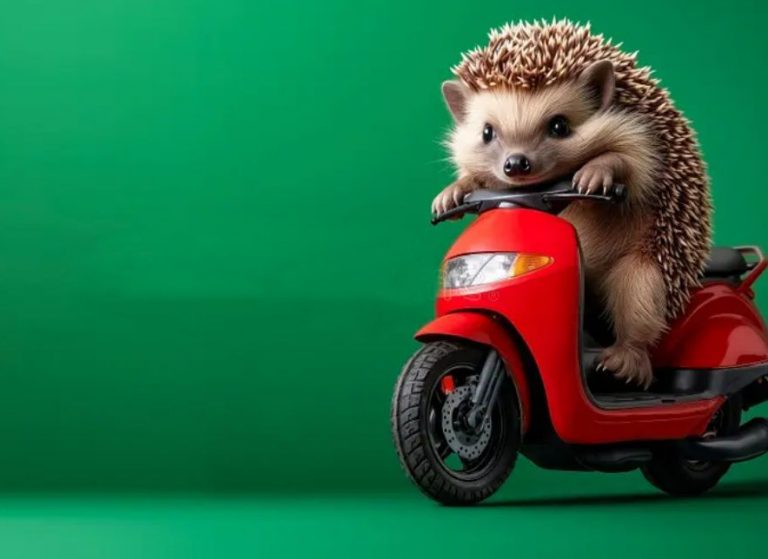
You’re stuck in a jungle and a llama offers you advice. What wise words does the llama give you?
Frank doesn’t miss a beat.
“Two words: trust me.”
But he adds a crucial qualifier: trust—but not blindly. Trust those who know more than you, but keep your common sense switched on. Learn, observe, feel for the edges of your own expertise.
And where might you need to whisper to yourself, like that imaginary llama: trust me—you’ve got this?
The invisible survival kit—calmness, humour, and tiny houses
Threaded through the conversation is a soft insistence: survival today is more mental than physical.
Janita names it clearly:
“What makes survival skills mental is that your mind controls how you react. Even if you know the physical skills, your thinking decides whether you use them well.”
Control your fear—at least enough to act. Steady your mind long enough to choose something better than your first impulse.
When she asks each of them which survival skill they’d love to master, the answers form a kind of invisible survival kit:
- Rosie: the power to stay calm and silent in conflict.
- Bruce: the ongoing practice of calm as energy wanes with age—and perhaps the practiced “Yes, dear” that greases the wheels of long relationships.
- Frank: the competence and confidence to offer first aid when it matters most.
- Janita: the ability to build a shelter from leaves and branches in the wild—because why not?
That last answer says something about desire. Many of us are drawn to the romance of visible survival skills—fires, shelters, knife skills—while secretly knowing the hardest work happens inside: in our nervous systems, our habits, our history.
Still, there’s something compelling about Janita’s dream: a woman in South Africa, who already holds a tiny house in her life, wanting to learn to build a leaf-shelter “the hard way.” There’s the Amazon series she mentions, people surviving 15 or 20 days in the wilderness; shelters flooded out, food hard to find.
What is she really reaching for? Maybe it’s proof. Proof that we could, if we had to, step outside the safety of our built world and cope with the rawness of nature.
Or, perhaps more realistically: proof that we’re not as fragile as we sometimes feel.
Facing fear, making seasons, choosing your weather
As the conversation winds down, the tone turns philosophical.
Rosie tells a story of a colleague driving an hour to reach her panicking boyfriend in hospital, talking to him the entire way, asking him to breathe, pray, “listen only to my voice” while he battled terrifying, hallucinatory thoughts. It’s not just a story about panic; it’s a story about anchoring someone when they are losing their grip on reality.
Bruce points out the pattern:
“The key issue in a lot of situations is to get the person to focus on another agenda.”
Distraction, reframing, the subtle nudge away from the cliff edge of fear—these, too, are survival skills.
Near the end, Frank reads out a quote from his cat calendar—by Ralph Waldo Emerson, translated quickly from German:
Do the thing that scares you, and the fear will stop.
Face the fear; move forward. There is no courage without discomfort.
Somewhere between Cleebourg, London, São Paulo and South Africa, a quiet consensus emerges: survival is not just about staying alive. It’s about staying human while you do it. Using humour when seats are cramped. Practising silence when voices get loud. Learning enough first aid to feel useful. Choosing, again and again, to steer away from panic—yours or someone else’s.
And underneath it all sits one last, gentle idea: we don’t control the weather, but we do have some say in our season.
Frank once joked in another conversation that we can “create our own summer” even when the skies are grey—by choosing warmth, curiosity and connection over isolation and fear. Today’s call is proof of that: four people, four countries, one shared lunch hour that quietly becomes a masterclass in modern survival.
So here’s your invitation:
Think about the season you’re in—the cramped-flight season, the migraine season, the nine-hour-day season, the cautious-driver season.
- What is it asking you to learn?
- Which survival skill is quietly presenting itself as the next thing to practice?
- And what would it look like to create a little more summer—a little more inner warmth—right where you are?
You don’t need a tent, or a jungle, or a llama. You just need this moment, this question, and the courage to answer honestly.