Leaving a Piece of Your Heart in Kruger
There’s something about hearing Janita’s voice when she speaks about Kruger National Park — it’s not nostalgia, exactly. It’s reverence. A kind of quiet ache that lingers long after the unpacking is done and the last mountain of laundry remains untouched.
In this latest episode of Peeling Potatoes, Frank and Janita reconnect after her family trip into the wild heart of South Africa. It’s less a travel story and more a love letter — to nature, to stillness, and to the slow art of noticing.
The Return
“Welcome back,” Frank begins, with his characteristic warmth. “Last time we spoke, you were about to disappear into Kruger. Then you fell off the planet.”
“I did,” Janita laughs, “and I came back with about a trillion and a half photos.”
The conversation flows like a long-distance friendship renewed. There’s no hurry here — only the gentle rhythm of shared memory. They begin not with elephants or sunsets, but with something profoundly human: post-holiday blues and a mountain of laundry. Because every great return begins with the ordinary.
Frank teases, “You left more than your heart in Kruger. You left your energy there too.”
Janita agrees. “It takes a few days to get back into routine. But that’s the sign of a good holiday, isn’t it?”
The Road to the Wild
Picture this: 4:00 a.m. in South Africa. A family of three loads the car in darkness — coffee steaming in travel mugs, a sleepy child bundled into the back seat, and a six-hour journey ahead.
The plan is meticulous (Janita loves her lists): sunscreen, mosquito repellent, binoculars, and the map. “The Kruger doesn’t have signal,” she explains. “You could get lost. We once did.”
Frank chuckles. “Teasers are being strategically planted,” he says, sensing more stories to come.
There’s a magic in the simplicity — a roadside breakfast of garage pies and coffee, crispy cream doughnuts devoured before sunrise, and the thrill of an empty highway cutting through the awakening bush. “We didn’t want to wait for restaurants to open,” Janita admits. “We just wanted to get there.”
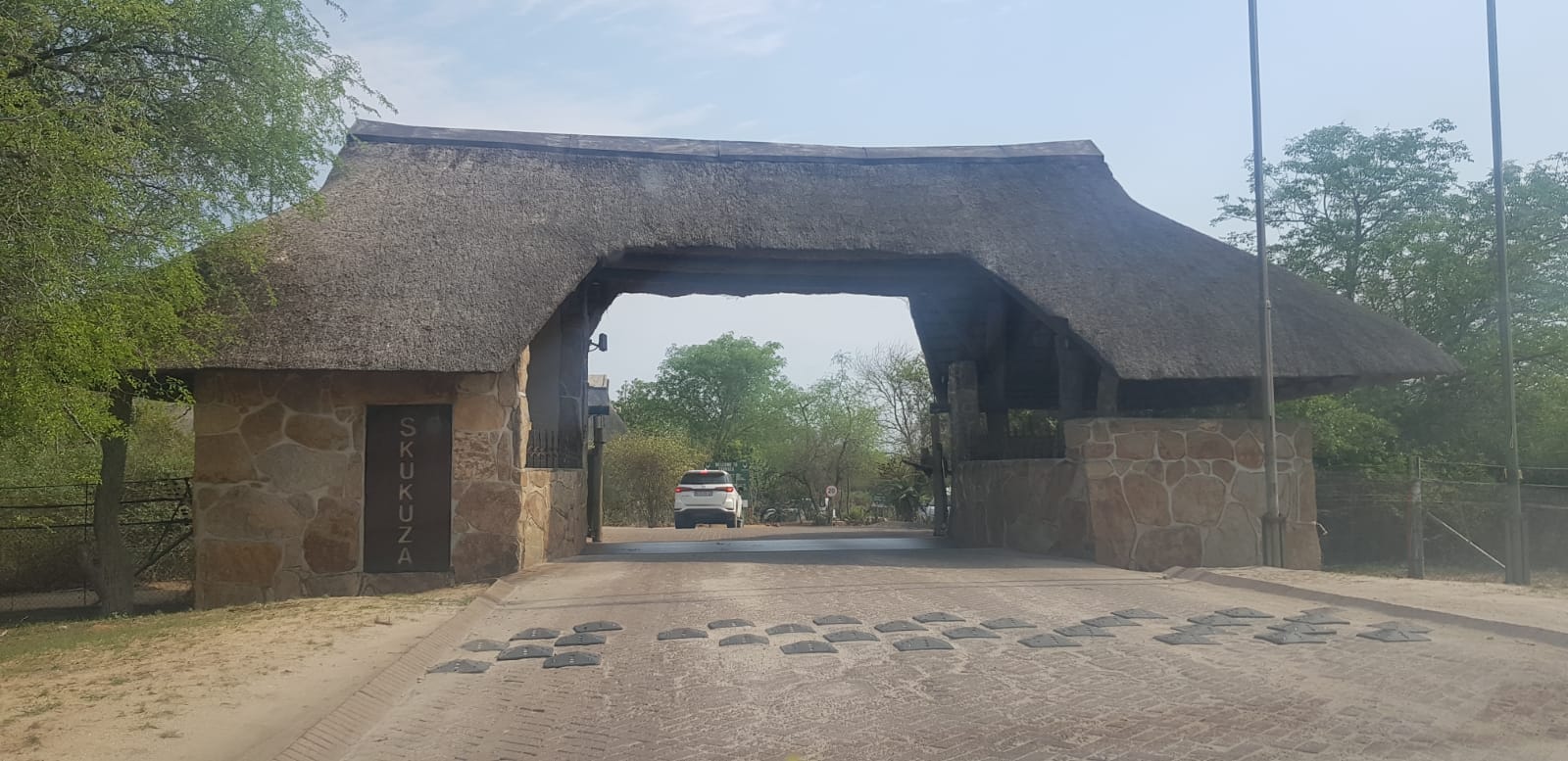
And when they finally do — the gate at Malelane looms like a threshold between two worlds. Forms are signed, coolers checked (no alcohol, no drones, no firearms), and suddenly civilization fades behind them.
“You see the romantic side,” Janita tells Frank, “the campfires, the animals. But there’s also the real side — the checkpoints, the rules, the respect for what you’re entering.”
The Living Theatre of Kruger
From here, the story unfurls like the savanna itself — alive, sprawling, unpredictable.
They drive past hyenas, blue wildebeest, wild dogs, owls, and elephants. “Do you still feel the same wow each time?” Frank asks.
“Yes,” she answers without hesitation. “Every time.”
Even after many visits, Janita sees Kruger with childlike wonder. Her son mirrors that excitement — eyes wide, face pressed to the window, spotting giraffes and zebras before the adults do. “Sometimes we stay quiet,” she says. “We want him to discover it first.”
There’s laughter, too. “We’ve seen so many rock lions and tree lions,” Janita confesses. “You think it’s something majestic — and it’s just a stump.”
Frank grins. “You’re training your eyes to really see. Does that change how you see things back home?”
“Yes,” she replies softly. “When I drive here, I spot rabbits in the grass or falcons on the power lines. Kruger teaches you to look differently.”
Life at the Camp
By afternoon, the family reaches Pretoriuskop. The hut is small — round, thatched, and humble. “About five meters across,” Janita says. “Three beds, a fridge, an air conditioner — and a walk to the showers.”
Frank laughs. “Half in civilization, half in the bush.”
“It’s not five-star,” Janita smiles, “but it’s real.”
Outside, elephants move like shadows beyond the trees. There’s a fire crackling, laughter from nearby huts, and the deep quiet that only wilderness can hold. “The food doesn’t matter,” she says. “What matters is sitting outside, hearing the night.”
She pauses. “It’s the silence that isn’t really silent — the rustle, the calls, the breath of the earth.”
Reflection:
When was the last time you sat in true silence — not the absence of noise, but the presence of life?
Encounters and Lessons
The second day brings “commotion” — a rare sighting of African wild dogs. “There were so many cars,” Janita recalls. “People jump on the brakes. You know something’s there.”
For her, these aren’t just sightings. They’re small miracles. “We saw elephants, giraffes, zebras, hyenas… even snapping turtles. But each one feels new.”
Frank listens, fascinated. “We think of it as paradise,” he says, “but we forget the discipline that keeps it alive — the conservation, the anti-poaching teams.”
Janita nods. “You see them everywhere — rangers, anti-poaching units. They live in the bush with the rhinos. Protecting them. It’s not just beauty; it’s work. It’s care.”
Later, she’s pulled over — by park police, not for speeding but mistaken identity. “For a moment I thought, what did I do wrong? But she was looking for another car. The poachers use cars like mine,” she laughs.
Reflection:
Sometimes protection requires vigilance — in parks, in life, in how we guard what matters.
The Night Drive
Every Kruger story needs its moment of magic. For Janita, it’s the night drive.
At 8 p.m., they climb into an open truck under a vast African sky. The air hums with unseen life. “You sign indemnity forms,” she laughs. “Just in case.”
They see owls, chameleons, elephants — each revealed by a flicker of light. “The guide said he doesn’t know how to find lions, but he can spot chameleons,” Janita says. “I swear they make a sound.”
Frank laughs. “So even the chameleons have secrets.”
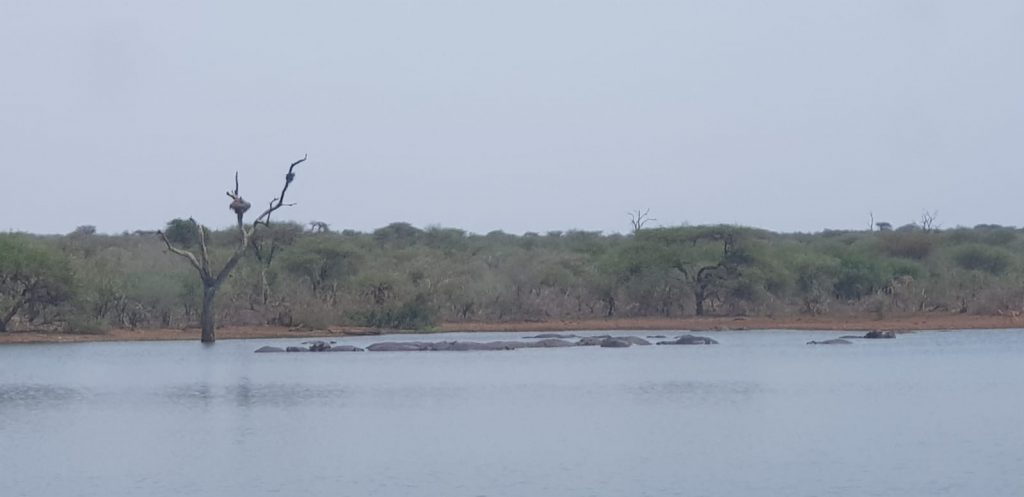
At a quiet lake, the guide stops. “The hippos aren’t home,” he says. “They graze at night.”
Frank marvels. “Such enormous animals — and yet they have sensitive skin?”
“Yes,” she smiles. “That’s why they hide in the water by day.”
It’s in these gentle contradictions — strength and vulnerability, grandeur and tenderness — that the park reveals its deeper truth.
Home and Heart
The trip ends not with lions, but with laughter — warthogs, zebras, and one memorable moment when her son scares off impalas with fart noises. “Nothing else worked,” Janita laughs. “But the fart noises did.”
The ordinary, once again, becomes extraordinary.
Frank listens, smiling. “I think I understand now why you always say you leave a piece of your heart in Kruger.”
“I do,” Janita says. “Even my husband said, how can you miss a place this much?”
And maybe that’s the quiet magic of travel: the way a landscape can hold your memory and send you home just a little changed.
The Takeaway
Kruger teaches more than patience or photography. It teaches presence — how to see rather than look, how to listen rather than hear.
As Frank reflects, “You come back with a heavy heart, but enlightened by the anticipation that there will be another visit.”
And perhaps that’s the lesson for all of us:
To keep planning the next journey, even when the bags are still unpacked.
To look closer. To see more. To leave a little piece of ourselves in every place that moves us.