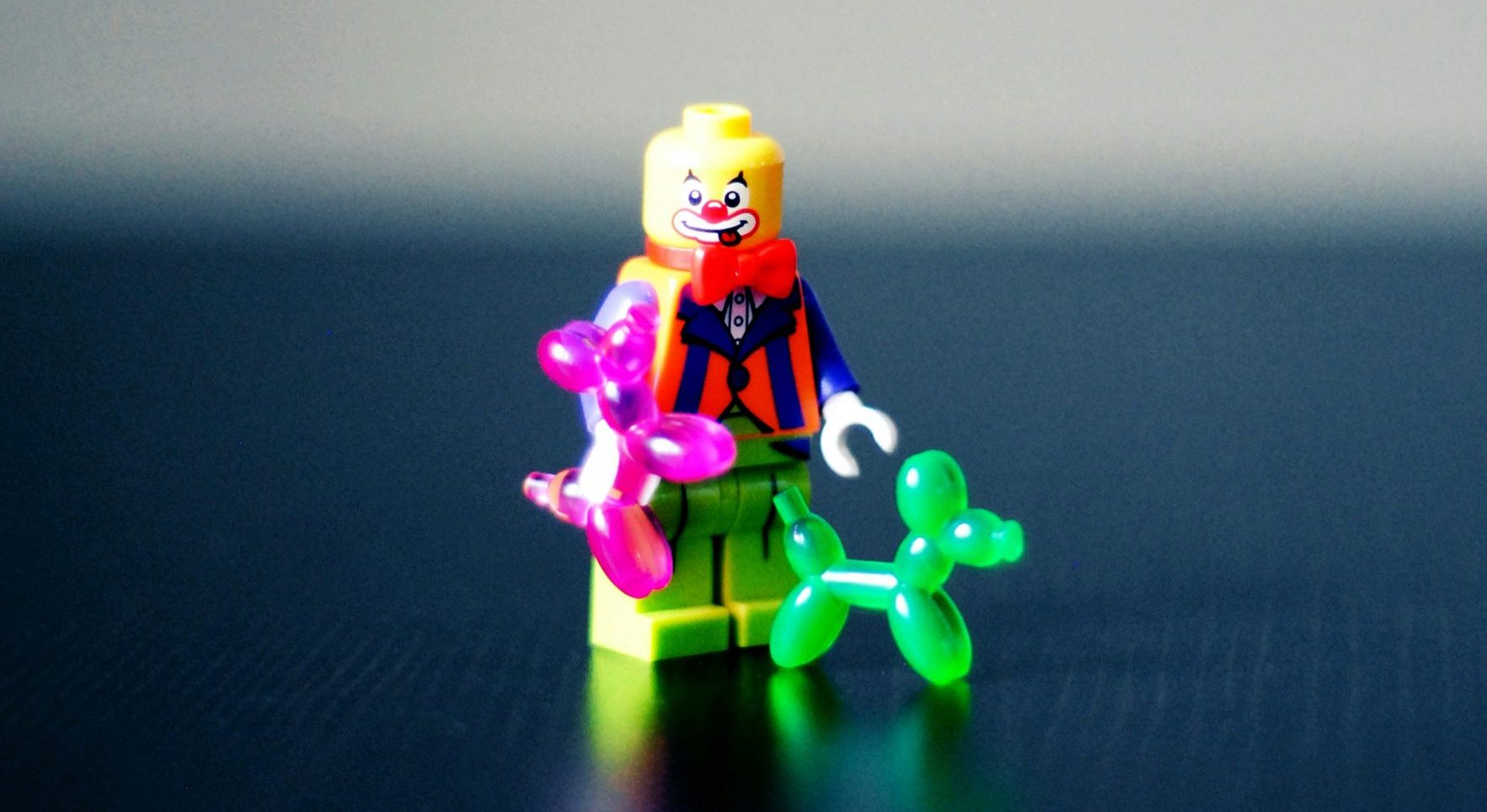
I am not a clown; I want to sing like Beyonce.
Finding Your Hidden, Fun Skills: The skills we don’t put on our CVs
On the shared screen, a definition appears: Hidden skills are the small, surprising abilities we don’t often show. They explore it like two people poking at a treasure map.
The teacher offers examples that sound almost childlike in their simplicity:
- balancing a spoon on your nose,
- imitating cartoon voices like SpongeBob,
- knowing random trivia—like the fact that elephants can’t jump or that a newborn giraffe falls two metres when it’s born.
None of these would ever make it onto LinkedIn.
And yet, they light up the call.
The student laughs, then tries to define it in her own words: I think it’s skills we don’t know we have. We can do it, but we don’t show anyone.”
It’s an imperfect sentence in English, but a perfect definition of the human condition. How much of who you are lives in that quiet space, between what you can do and what you actually show the world?
Discovering each other’s secret talents
As the lesson warms up, the teacher asks the student to look outward: Have you ever discovered a surprising skill in someone else?
Her answer is immediate and tender: yes—her best friend can draw.
At first, she knew nothing about it. Then one day, she saw one of her friend’s drawings. It was beautiful. She didn’t expect it. Her surprise is still fresh in her voice as she tells the story.
That’s how hidden skills often appear: not in spotlight moments, but in quiet reveals. A notebook sketch shown shyly. A song hummed under someone’s breath. The way a “serious” colleague suddenly tells a joke that has everyone in stitches.
The teacher shares her own example: her mother, who learned to type on a typewriter at school. She can type incredibly fast—faster than her daughter—but she doesn’t really know how to use a laptop. The skill is there, but almost unused, like a piano left in the corner of the room.
Hidden skills live in these contradictions:
- talented but shy,
- capable but silent,
- learned long ago but rarely called on.
“I don’t know what I can do” — the tenderness of not knowing
When asked about her own hidden skill, the student hesitates. She frowns. She tries a few ideas on for size and takes them off again. “I don’t know what I can do,” she admits. Then, more softly: “I think I am really good at remembering some things… maybe that is a skill.”
She finally lands on something solid: she can cook in the forest when it’s raining.
She learned this with the scouts—building a fire, making food outside under wet skies. It’s specific, practical, almost cinematic: you can feel the smoke in your clothes and the damp in your socks.
Is it glamorous? No.
Is it a hidden skill? Absolutely.
There’s a kind of vulnerability in not knowing your own gifts. She wants to be good at painting. She wants to be “humorous” like professional comedians. She wants her hidden skills to be big and spectacular and funny.
And yet, her teacher gently reminds her of something she’s already done:
Last week, she told her about wrting a poem for a school competition—and won a prize. She forgot to list that as a talent. Writing, it seems, doesn’t feel “funny enough” for her.
How often do we do the same thing—downgrading our own gifts because they don’t look like the ones we admire? Because they don’t look loud enough, glamorous enough, Instagrammable enough?
Hidden skills as emotional first aid
Soon the conversation shifts from what these skills are to why they matter.
They talk about drawing after a bad day at school: “When you have a bad day and you go back home and you just drawing,” the student says, searching for the right words, “it can be relaxing, and it can remake the smile.”
It’s imperfect grammar and perfect therapy. Hidden, fun skills become a form of emotional first aid:
- a way to regulate stress,
- a shortcut back to joy,
- a reset button for your nervous system.
The teacher adds that these small activities can help us feel stress free, even for a moment. That’s a big promise for something as simple as sketching, baking, or whistling a tune—but the science quietly agrees: playfulness soothes.
They drift into the idea of a ripple effect. One person dancing in the kitchen while cooking. Others watching, laughing, joining in. Suddenly the room is warmer, the day feels softer, the air is lighter.
How often do we underestimate the power of one playful act to shift the emotional temperature of an entire space?
The contagious power of showing your fun side
The student has a clear sense of how joy moves between people: “When you smile and laugh, you are very calm after that. You have good mood… And you can share your good humour with another person.”
She describes walking down the street. A stranger smiles and says, “Have a nice day.” Suddenly, her mood shifts: Oh, it’s a very beautiful day. She wants to pass that feeling on to someone else.
That’s neuro-linguistic persuasion in its simplest human form:
a tiny sensory cue (a smile, a tone of voice) rewires your state, and your state rewires your behaviour.
Hidden skills amplify this.
The friend who dares to sing in front of others makes it safer for everyone else to look a little silly. The colleague who cracks the first joke in a tense meeting gives the room permission to exhale. The teenager who admits she wants to be “humorous” shows her desire not just to be admired, but to make others feel at ease.
When laughter is training, not an accident
Later, the teacher asks a wonderfully absurd question: If laughter were a skill, how would you train it?
The student thinks about it and decides she would train her laugh with funny videos: big laugh for very funny, small laugh for a little funny. There’s method in the madness—a calibration of joy.
They talk about those internet challenges where people drink water, try not to laugh, and end up spraying it everywhere. The student tried it with her friends once. “Bad idea,” she grins. “Maybe good to train laughing, but bad to test your friends.”
It’s silly. It’s pointless. It’s also deeply human.
When did we decide that training ourselves had to be serious, efficient, optimised? What if “getting better” at life included training our ability to laugh, to be ridiculous, to fail publicly—and be okay?
Confidence, borrowed talents, and Beyoncé
Hidden skills aren’t only about joy; they’re about confidence.The student explains it in her own way: When you realise you are good at an activity, “it can boost your confidence and reassure you.”
If you spend all day feeling “bad” at school, work, or life admin, discovering one thing you’re good at—no matter how small—can anchor you. I can cook outside in the rain. I can write a poem. I can make people laugh. I can remember movie lines perfectly.
Then comes another playful prompt: Would you rather perform your secret skill on a stage or teach it to a robot?
Without hesitation, she chooses a stage. She wants people to see this “very, very funny and interesting skill,” even though she doesn’t yet know exactly what it is.
If she could borrow a skill from anyone in the world, she says, it would be Beyoncé’s voice. Why? Because Beyoncé is charismatic. Because her voice is powerful. Because, as she says with a kind of teenage reverence: “She is Beyoncé.”
Hidden skills sit somewhere between what you already are and what you dream of becoming. You might never belt like Beyoncé—but learning to use the voice you have, in the room you’re in, is its own kind of stage.
“Please find me” — the voice of a hidden talent
Near the end of the lesson, the teacher asks a question that could have felt cheesy—but doesn’t: If your hidden skills could talk, what would they say? The student doesn’t miss a beat: “Please find me.”
She adds a magnifying glass emoji to her answer, as if her talents were clues in a detective story, waiting to be uncovered. She imagines that when she finally finds them, there will be a party—surprise, music, laughter.
She believes, quite firmly, that everyone has at least one hidden talent. “For me, you are born with intelligence,” she says. “You can make a lot of things with that, or you can just don’t see it… but everyone has a talent.”
It’s a philosophy worthy of a self-help book, delivered in halting sentences and emojis and the background sound of her grandmother asking which movie to watch. Real life blends in. That’s the beauty of it.
Your season of hidden skills
The call ends with something very ordinary: a scheduling reminder for the next lesson, a promise to send test dates, a shared joke about Mariah Carey “defrosting” for Christmas. Life goes on. Homework still exists. There are still essays to write, tests to prepare for.
And yet, something subtle has shifted.
Hidden skills used to be a vague idea—something abstract, far away.
Now they feel closer:
- a drawing nobody has seen yet,
- a poem tucked into a notebook,
- a laugh that’s still learning its full volume,
- a pot of soup over a tiny forest fire in the rain.
So here’s the soft invitation this conversation leaves behind:
What season of life are you in with your hidden, fun skills?
- Are you in winter, where everything is under the surface, waiting, unsure?
- Are you in spring, where you’re just starting to experiment—trying new hobbies, making little messes, telling a joke you’d usually keep inside?
- Are you in summer, where you’re ready to share your hidden talents on a stage, however small—your kitchen, your classroom, your group chat?
- Or maybe autumn, where you’re pruning, choosing which skills to keep, which to let fall away?
You don’t need to decide right now. Just notice.
And maybe tonight, between the emails and the dishes and the scrolling, you’ll give five minutes to something pointless and joyful that only you can do the way you do.
Your hidden skills are already calling.
You don’t need to be Beyoncé.
You just need to answer.